
Your peanut butter’s storage depends on its ingredient list because natural varieties contain only peanuts, salt, or sugar and lack preservatives, making them more prone to oil separation and quicker spoilage. You’ll need to store it in an airtight container in the fridge to slow oxidation and prevent rancidity. Processed types with added stabilizers last longer at room temperature. Staying aware of ingredients helps you keep your peanut butter fresh and tasty—just keep exploring to learn more.

Get kitchen staples and gadgets delivered free with Prime
- Fast, free delivery on millions of items
- Prime Video, Amazon Music and more included
- Member-only deals all year
Key Takeaways
- Natural ingredients lack preservatives, requiring refrigeration to extend shelf life and prevent spoilage.
- Ingredient lists indicate the presence of stabilizers, influencing whether storage at room temperature is sufficient.
- Oils in natural peanut butter can separate, necessitating proper mixing and storage to maintain quality.
- Products with minimal processing are more prone to rancidity, so storage methods depend on ingredient composition.
- Understanding ingredient content helps determine if the peanut butter needs refrigeration or can be stored at room temperature.
Have you ever wondered if you’re storing peanut butter the right way? The truth is, proper storage depends heavily on the ingredient list. Different types of peanut butter have unique needs, especially when it comes to natural oils and shelf stability. If you’re buying natural peanut butter, you’ll notice it separates more often and requires a different approach compared to processed varieties. These natural oils tend to rise to the top, creating a layer of oil that’s perfectly normal. But that also means you need to be more attentive when storing it, as natural oils can turn rancid if exposed to air or heat too long.
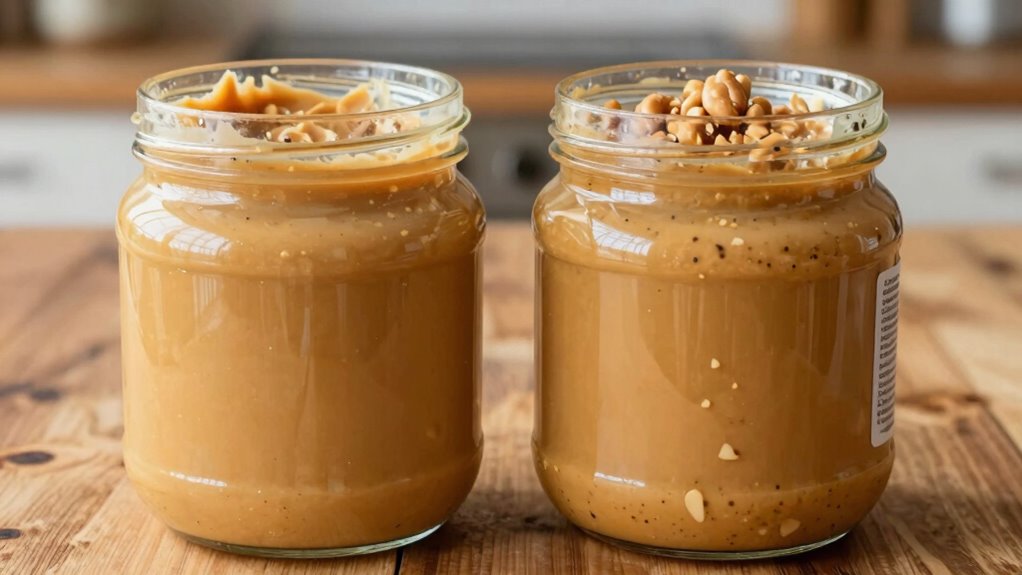
Because natural peanut butter contains only peanuts and maybe a bit of salt or sugar, it lacks preservatives or stabilizers. This means its shelf stability is lower, and you’re more likely to see oil separation and a shorter shelf life. To keep it fresh and maintain its quality, you should store natural peanut butter in an airtight container in the fridge. Cold temperatures slow down the oxidation process that causes oils to spoil, so refrigeration helps extend its shelf life. Plus, keeping it cool prevents the natural oils from going rancid, which can give the peanut butter an off-flavor or smell. Just remember, chilling natural peanut butter might make it a bit harder to spread initially, so give it a few minutes to soften before using. Additionally, understanding the ingredient list can help you determine the best storage method for your specific peanut butter type, since oil content influences how quickly it can spoil. Being aware of the natural oils content can also guide your storage choices, helping you preserve freshness for longer. For example, oil separation is a common natural occurrence that doesn’t necessarily mean the product is spoiled, but it does require proper mixing before use. Regularly checking the freshness of your peanut butter can help you avoid consuming rancid oils and ensure it tastes great every time.
airtight peanut butter storage container
As an affiliate, we earn on qualifying purchases.
As an affiliate, we earn on qualifying purchases.
Frequently Asked Questions
Does Natural Peanut Butter Require Refrigeration After Opening?
Yes, natural peanut butter usually requires refrigeration after opening. Since it contains fewer preservatives and more natural oils, it’s prone to oil separation and spoilage if left at room temperature. Refrigeration helps slow down microbial growth and maintains freshness. Remember to stir the oil back in before spreading, and keep the jar tightly sealed to prevent contamination. This way, your natural peanut butter stays fresh and delicious longer.
How Can I Tell if Peanut Butter Has Gone Bad?
You can tell peanut butter has gone bad if you notice mold on the surface or a sour smell. Oil separation is normal, especially in natural varieties, but if the oil looks rancid or discolored, it’s a sign it’s spoiled. Also, if the texture feels off—like excessive dryness or clumping—discard it. Always trust your senses; when in doubt, it’s safer to throw it out.
Is It Safe to Freeze Peanut Butter?
Yes, you can freeze peanut butter to extend its shelf life. When doing so, the peanut oil may separate, especially if it contains roasted peanuts, but stirring it after thawing restores its texture. Freezing works well for natural peanut butters made from roasted peanuts with minimal additives. Just make certain you store it in an airtight container, and it should stay fresh for several months.
Do Added Sugars Affect Peanut Butter Shelf Life?
Yes, added sugars can influence peanut butter’s shelf life by acting as preservatives, aiding in added sugar preservation. The sugar content influence helps prevent microbial growth and rancidity, prolonging freshness. When choosing peanut butter, check the ingredient list—higher sugar levels can mean longer shelf life. However, keep in mind that too much added sugar might alter taste and health benefits. Proper storage in a cool, airtight container still remains essential for ideal freshness.
Should I Store Chunky or Smooth Peanut Butter Differently?
You should store chunky and smooth peanut butter differently, especially if you care about preserving their perfect textures. Chunky peanut butter benefits from a sealed, airtight container to prevent ingredients from drying out or separating. Smooth peanut butter, on the other hand, stays fresh longer in a cool, dark place. Your storage choices influence texture preferences, keeping each type at its best. Use airtight containers to maintain freshness, no matter your preferred texture.
Conclusion
So, next time you reach for that jar of peanut butter, remember that its storage depends on what’s inside. Whether it’s creamy or chunky, natural or processed, proper storage keeps it fresh and ready to spread. Imagine opening your pantry and the smooth, nutty aroma welcoming you—each jar a promise of perfect bites ahead. Keep it sealed, store it right, and enjoy that fresh, inviting scent every time you indulge.
NFL season / tailgating Picks
team gear
As an affiliate, we earn on qualifying purchases.