
Peanut butter makes a good post-workout snack because it’s rich in healthy fats, protein, and calories that support muscle repair and energy recovery. However, it can’t provide all essential nutrients or the quick carbs needed to replenish glycogen quickly. To get the best benefits, pair it with carbohydrate-rich foods like fruit or whole grains. Want to discover smarter ways to include it in your recovery? Keep exploring to learn more.

Get kitchen staples and gadgets delivered free — and shop member deals
- Fast, free delivery on millions of items
- Access to Prime Big Deal Days deals on October 6–7
- Prime Video, Amazon Music and more included
Key Takeaways
- Peanut butter provides healthy fats and protein, supporting muscle repair and sustained energy after workouts.
- It lacks sufficient carbohydrates needed for rapid glycogen replenishment.
- Combining peanut butter with carbohydrate-rich foods enhances recovery and nutrient intake.
- It is versatile for meals but should be consumed in moderation to avoid digestive issues and excess calories.
- Peanut butter alone cannot replace a balanced meal; pairing it with other nutrient sources optimizes recovery.

After a tough workout, your body needs nutrients to recover and build muscle, and peanut butter can be an excellent choice for this purpose. It’s rich in healthy fats, protein, and calories, all of which support muscle repair and replenishment of energy stores. When you consume peanut butter post-exercise, you’re providing your body with essential nutrients that aid in nutrient absorption, guaranteeing your muscles get what they need to recover effectively. Its dense nutritional profile helps stabilize blood sugar levels and keeps you feeling full longer, preventing overeating later. Plus, peanut butter’s flavor versatility means you can incorporate it into various post-workout meals, from smoothies to toast to energy bites, making it a convenient and tasty option.
However, it’s important to recognize what peanut butter can’t do. While it supplies healthy fats and protein, it isn’t a complete source of all essential nutrients your body needs after a workout. For example, it’s low in carbohydrates, which are vital for replenishing glycogen stores in your muscles. If you rely solely on peanut butter, you might miss out on quick-digesting carbs that help speed up recovery. To maximize benefits, pair peanut butter with carbohydrate-rich foods like fruit or whole-grain bread. Additionally, not all peanut butters are created equal—some contain added sugars and unhealthy oils that diminish their nutritional value. Opting for natural or minimally processed varieties ensures you’re getting the most benefit without unnecessary additives.
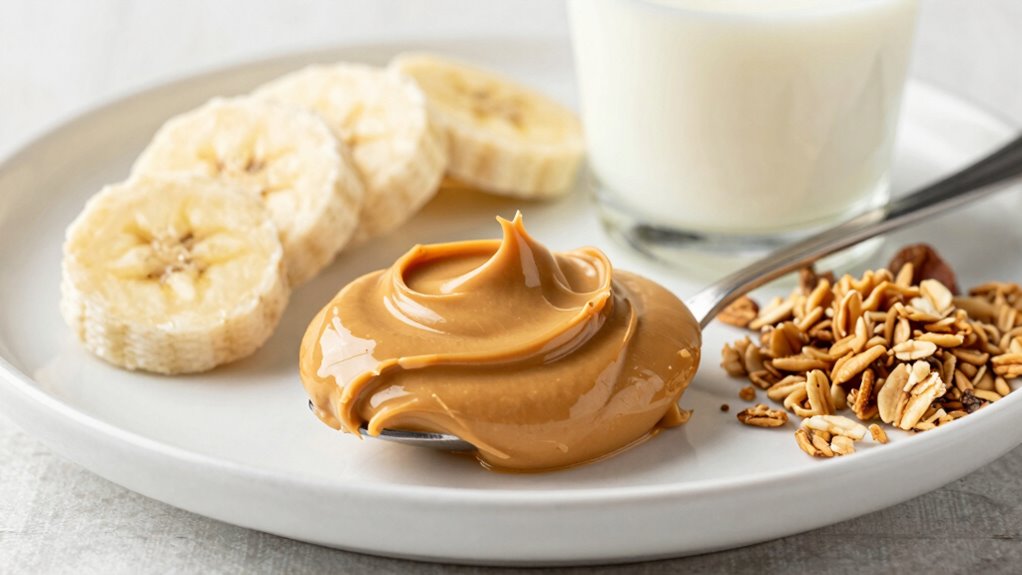
While the flavor versatility of peanut butter makes it easy to enjoy in many ways, it’s not a magic solution for muscle recovery. Consuming it alone won’t address all your post-workout needs. It’s best used as part of a balanced meal or snack that includes a variety of nutrients. For example, spreading natural peanut butter on whole-grain toast with banana combines healthy fats, protein, and carbs, providing a well-rounded recovery fuel. It’s also worth noting that while peanut butter contains some fiber, overdoing it can cause digestive discomfort for some people. Moderation is key, especially if you’re trying to manage calorie intake or sensitive digestion. Incorporating nutrient timing into your post-workout routine can further optimize recovery and performance. Additionally, paying attention to portion sizes ensures that you get the benefits without excess calories.
natural peanut butter with no added sugar
As an affiliate, we earn on qualifying purchases.
As an affiliate, we earn on qualifying purchases.
Frequently Asked Questions
Can Peanut Butter Help With Muscle Recovery?
Yes, peanut butter can aid muscle recovery because it provides healthy fats and protein. You can enhance its benefits with flavor pairing, like adding honey or banana, to make it tastier. If you need ingredient substitutions, try almond or sunflower seed butter for variety. While it supports recovery, pair it with carbs like whole-grain bread or fruit to optimize replenishment and help your muscles repair faster.
Is Peanut Butter Suitable for All Dietary Restrictions?
Is peanut butter suitable for all dietary restrictions? Think of it as a double-edged sword—you might find vegan options that suit your needs, but nut allergies turn it into a dangerous trap. If you’re vegan, look for varieties made without animal products. If you’re allergic, steer clear to avoid a serious reaction. Always read labels carefully; peanut butter’s versatility doesn’t mean it’s safe for everyone.
How Much Peanut Butter Should I Consume Post-Workout?
You should aim for about 1 to 2 tablespoons of peanut butter post-workout, depending on your calorie needs. Combine it with flavor combinations like banana or honey for added taste. Store your peanut butter in an airtight container in a cool, dry place to keep it fresh. This amount provides healthy fats and protein without overdoing calories, supporting recovery without excess.
Does Peanut Butter Cause Weight Gain if Eaten After Exercise?
Eating peanut butter after exercise doesn’t automatically cause weight gain if you practice calorie control. Its high fat content means it’s calorie-dense, so portion size matters. If you enjoy it as part of a balanced post-workout meal and stay within your daily calorie limits, it can support recovery without leading to weight gain. Just be mindful of your overall intake, and peanut butter can be a healthy addition.
Are There Better Nut-Based Options for Post-Workout Nutrition?
Yes, there are better nut-based options for post-workout nutrition, depending on your dietary preferences. Almonds and cashews are excellent choices because they offer healthy fats, protein, and essential nutrients without added sugars or unhealthy oils. Walnuts provide omega-3s, which support recovery. Choosing a variety of nuts can maximize nutrient intake, and tailoring your selection to your dietary needs guarantees you get the most benefits after exercise.
Conclusion
So, next time you finish your workout, consider reaching for peanut butter. It’s a tasty way to get some healthy fats and protein, helping your muscles recover. But remember, it’s not a magic fix—pair it with carbs for ideal recovery. Isn’t it smarter to give your body what it truly needs rather than just what tastes good? With the right choices, you’ll be stronger and feeling better in no time.
Fall Picks
fall essentials
As an affiliate, we earn on qualifying purchases.