
If your cold brew turns bitter, it’s often because your grind size and steep time aren’t aligned. Using a fine grind with a short steep can cause harsh, over-extracted flavors, while a coarse grind with too long a steep may dull the brew’s vibrancy. Proper pairing helps prevent over- or under-extraction, ensuring smooth, balanced flavor. Keep this in mind, and you’ll discover how to fine-tune your process for better results.

Get kitchen staples and gadgets delivered free — and shop member deals
- Fast, free delivery on millions of items
- Access to Prime Big Deal Days deals on October 6–7
- Prime Video, Amazon Music and more included
Key Takeaways
- Mismatched grind size and steep time cause over-extraction, releasing bitter compounds prematurely.
- Fine grind with short steep times leads to harsh, bitter flavors due to rapid extraction.
- Coarse grind with long steep times can result in dull, flat, or off-flavored brew.
- Inconsistent particle sizes cause uneven extraction, increasing bitterness and off-flavors.
- Properly pairing grind size with appropriate steep duration ensures balanced, smooth cold brew.
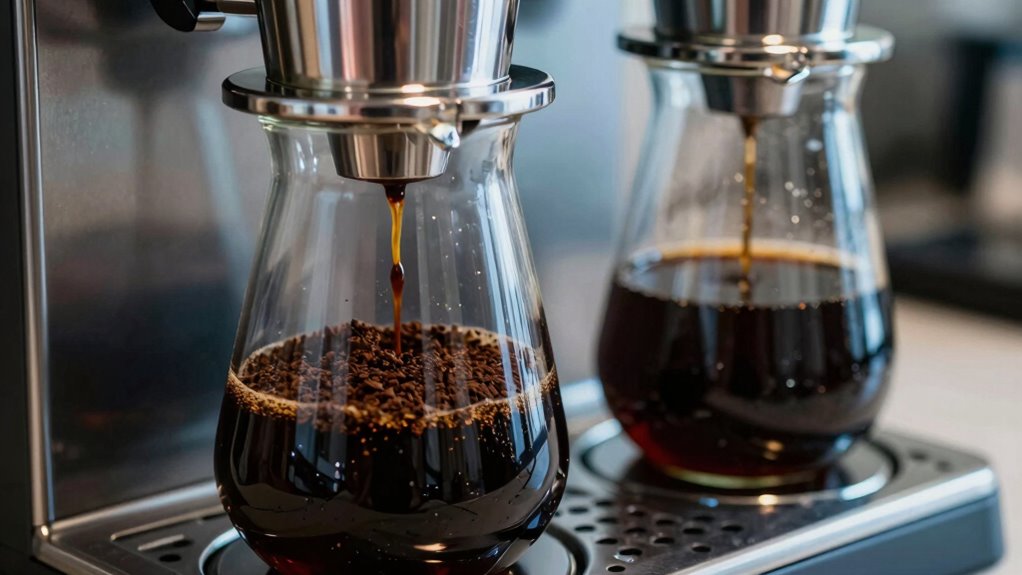
Have you ever wondered how to make smooth, flavorful cold brew coffee at home or in a commercial setting? The secret lies in understanding how flavor extraction and grind uniformity work together during the brewing process. When these elements are out of sync, your cold brew can turn bitter instead of smooth and rich. If your grind size isn’t matched properly to your steep time, you risk over-extracting the coffee grounds, which releases undesirable bitter compounds.
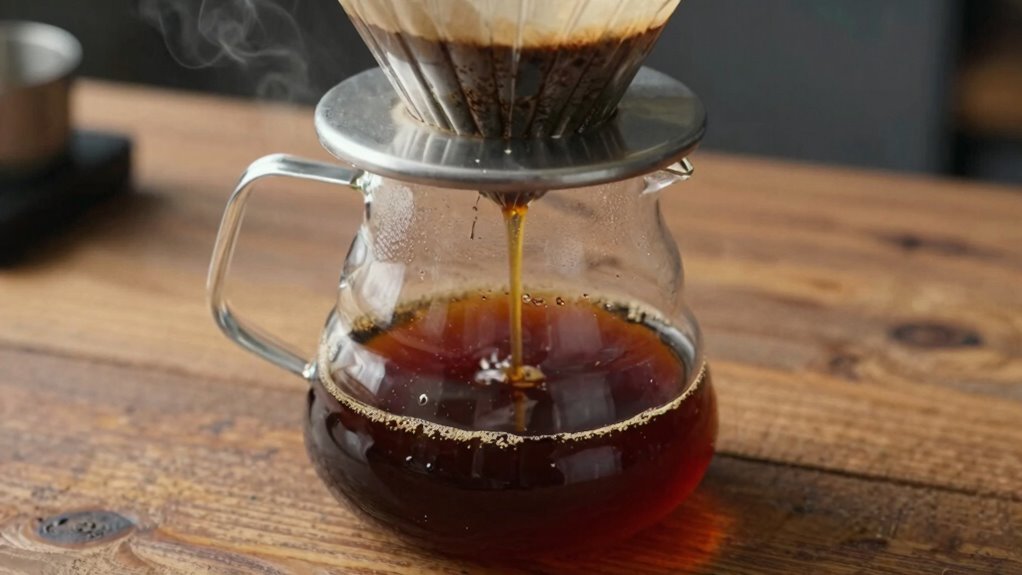
Flavor extraction is a delicate balance. During cold brew, you want to pull out the coffee’s best flavors—those that are smooth, sweet, and aromatic—without extracting the bitter and astringent notes that come from over-extraction. The key is controlling how long the coffee grounds stay in contact with water and how easily water can penetrate them. If you leave the grounds in too long or use a grind that’s too fine, you’ll extract more bitter compounds. Conversely, a grind that’s too coarse or a short steep time can result in a weak, underwhelming brew lacking depth.
Achieve balanced cold brew by controlling steep time and grind size to enhance flavor and avoid bitterness.
Grind uniformity plays a vital role in this process. If your grind size isn’t consistent, some particles will extract faster than others, leading to uneven flavor profiles. Fine particles tend to over-extract quickly, giving your cold brew a bitter edge, while larger particles might under-extract, leaving the brew dull. When your grind size is inconsistent, it’s challenging to control the extraction process, making bitterness more likely. Achieving a grind size consistency ensures that all coffee particles extract evenly, resulting in a balanced flavor profile. Additionally, proper grind distribution can help in maintaining this uniformity and improving overall extraction efficiency. Incorporating consistent particle size techniques can further enhance your cold brew’s clarity and flavor harmony.
Matching grind size with steep time is essential. For cold brew, a coarse grind is typical because it slows down extraction, allowing flavors to develop over a longer period—usually 12 to 24 hours. If you try to steep with a finer grind, the extraction accelerates, and bitter compounds are released prematurely. Similarly, if you steep for too long with a coarse grind, you might lose brightness or develop off-flavors. The goal is to find the right combination where flavor extraction is optimized without crossing into bitterness territory. Additionally, investing in grain size consistency can significantly improve the overall quality of your cold brew.
In the end, understanding the relationship between grind uniformity, grind size, and steep time helps you craft a cold brew that’s rich, smooth, and perfectly balanced. When these elements are properly aligned, your cold brew will avoid that bitter, over-extracted taste and stay true to the vibrant flavors you’re aiming for. Pay attention to these details, and you’ll consistently produce cold brew that’s enjoyable from the first sip to the last.
cold brew coffee maker with adjustable grind size
As an affiliate, we earn on qualifying purchases.
As an affiliate, we earn on qualifying purchases.
Frequently Asked Questions
How Do Grind Size and Brew Time Specifically Affect Cold Brew Bitterness?
If your cold brew turns bitter, it’s likely because your grind size and brew time aren’t balanced. A too-fine grind or overly long brew time extracts bitter compounds, disrupting flavor balance. To maintain brewing consistency, adjust the grind size and brew duration carefully. Coarser grounds and shorter times typically lead to smoother, less bitter cold brew, helping you achieve a well-rounded flavor profile every time.
What Are Common Signs of Over-Extraction in Cold Brew?
Imagine your cold brew as a delicate tapestry; over-extraction frays its threads. Common signs include a harsh, overly bitter flavor that masks the coffee’s natural brightness, indicating imbalance. You might also notice a hollow, dull taste, revealing the coffee’s freshness has faded or been overextended. These signs point to over-extraction, disrupting flavor balance and diminishing the vibrant notes you seek. Stay attentive to brewing times and grind size to preserve your brew’s true essence.
Can Different Coffee Beans Impact Bitterness Regardless of Grind Size?
Yes, different coffee beans can impact bitterness regardless of grind size. Freshness plays a big role—fresher beans often result in brighter, less bitter flavors, whereas older beans may taste dull or overly bitter. Roast level effects also matter; darker roasts tend to be more bitter than lighter ones. So, choosing fresh, appropriately roasted beans influences your cold brew’s bitterness more than grind size alone.
How Often Should I Adjust Grind Size When Changing Brew Times?
You should adjust your grind size whenever you change brew times to maintain balance, ensuring freshness by storing coffee properly to preserve flavor, and controlling cold brew acidity. Regularly tweak your grind, tasting each batch, to prevent bitterness caused by mismatched grind size and brew time. Think of it as a cycle—adjust, taste, store—so your cold brew remains smooth, flavorful, and perfectly balanced every time.
Are There Equipment Settings to Help Prevent Bitterness in Cold Brew?
To prevent bitterness in your cold brew, focus on proper equipment calibration and adjusting settings for ideal flavor balance. Make sure your grinder produces consistent grind sizes and calibrate your brewing system regularly. Use a slightly coarser grind if your brew becomes bitter, and monitor brew times to avoid over-extraction. These tweaks help maintain smooth, balanced flavors and prevent bitterness caused by mismatched grind size and brew duration.
Conclusion
So, next time you’re brewing cold brew, remember—the perfect balance of grind size and time is vital. Mess with it, and you risk ending up with a bitter, off-flavored brew. But what if there’s a simple tweak that could transform your experience entirely? Don’t settle for less—discover the secret to consistently smooth, rich cold brew. The key might be closer than you think. Are you ready to access it?
Evergreen bestsellers Picks
bestsellers
As an affiliate, we earn on qualifying purchases.