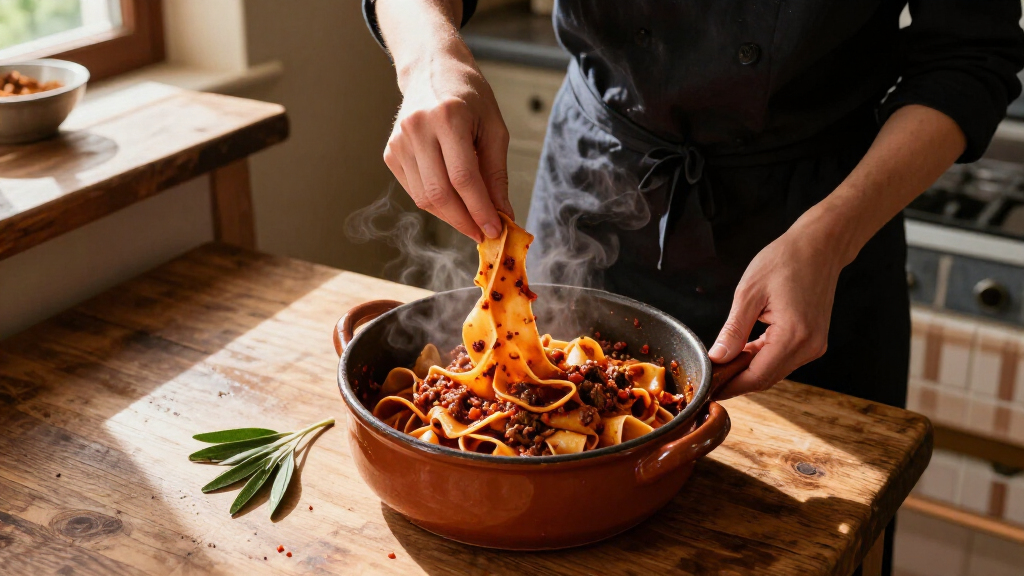

🔍 Read the full analysis: Pappardelle Al Cinghiale: Wild Boar Ragù, The Tuscan Autumn Standard on Mad Tasting

Get kitchen staples and gadgets delivered free with Prime
- Fast, free delivery on millions of items
- Prime Video, Amazon Music and more included
- Member-only deals all year
TL;DR
Pappardelle al cinghiale pairs broad pasta ribbons with a slow-braised wild boar ragù associated with Tuscany, especially cold-weather meals. Recipes differ in their use of tomato, red wine and marinating; the source describes a cooking guide, not a new event. Use inspected meat, refrigerate it during marinating, and braise until tender.
Mad Tasting’s guide to pappardelle al cinghiale explains how broad pasta is served with a slow-braised wild boar ragù associated with Tuscany, and outlines choices in wine, tomato and marinating. The practical point for home cooks is that recipes vary, while inspected meat, careful handling and cooking until tender remain central to the preparation.
The dish combines pappardelle, wide ribbon pasta, with ragù made from cinghiale, or wild boar. The source says the pasta’s width helps it hold thick sauce and pieces of meat. Wild boar is generally leaner and more strongly flavored than domestic pork, making a gentle, extended braise a better fit than quick frying for firm cuts.
There is no single version in the guide. Cooks may use more tomato or let red wine and herbs play a larger role; marinating the meat is optional. A wine marinade with onion, carrot, celery and aromatics can add fragrance, but it does not replace the braise or deeply tenderize the meat. The source recommends browning in batches, then softening the vegetables, adding wine and returning the meat with herbs and tomato, stock or both.
Cooking time depends on the cut, its size and the steadiness of the heat. The guide advises keeping the pot at a quiet simmer and judging readiness by texture: the meat should be tender enough to pull apart or chop. It also says to buy from a reputable, inspected supplier, keep raw meat and juices away from ready-to-eat food, refrigerate meat during marinating, and discard used marinade or bring it to a full boil before adding it to the sauce.
Tuscan Table · Seasonal Cooking Guide
Pappardelle al Cinghiale: Wild Boar Ragù, the Tuscan Autumn Standard
Broad pasta ribbons meet a slow-braised ragù in a cold-weather dish associated with Tuscany. Recipes vary; careful sourcing, safe handling and a patient braise are the steady essentials.
01 · The building blocks
Why this pairing works
The dish balances pasta shape, meat texture and a slow cooking method. The guide presents several choices for the sauce rather than one fixed regional formula.
Broad ribbons
Pappardelle’s width helps it carry thick sauce and pieces of meat. Another broad pasta can stand in if pappardelle is unavailable.
Lean, robust boar
Wild boar is generally leaner and more strongly flavored than domestic pork. Firm cuts benefit from patient, gentle cooking.
Room for variation
Tomato, red wine and herbs can take different roles. Marinating is optional and adds fragrance; it does not replace braising.
02 · A practical sequence
From browning to tender
Keep the heat steady and avoid rushing the meat. The cut, piece size and cooking conditions all affect timing.
Brown in batches
Build color on the meat without crowding the pot.
Soften aromatics
Cook onion, carrot and celery; add wine and herbs.
Braise quietly
Return the meat with tomato, stock or both. Keep to a gentle simmer.
Check the texture
Serve when tender enough to pull apart or chop; use time as a guide.
03 · Handle with care
Safety belongs in the recipe
The guide emphasizes inspected sourcing and careful handling. Local rules and availability can vary by place and season.
Ask about inspection
Buy from a reputable, inspected supplier. Ask a supplier or restaurant about meat provenance; a menu name alone does not establish origin.
Keep it refrigerated
If marinating, refrigerate the meat. Wine with vegetables and aromatics can add fragrance, but does not deeply tenderize the meat.
Protect ready-to-eat food
Keep raw meat and its juices away from ready-to-eat foods, and handle them separately.
Discard or boil fully
Discard used marinade, or bring it to a full boil before adding it to the sauce.
04 · Cook’s questions
Choices, answered
The source describes a flexible cooking approach, not a single standard recipe or fixed cooking time.
Does the ragù have to be marinated?
No. Marinating is optional. A red wine marinade with vegetables and aromatics can add fragrance, but the slow braise remains central.
How do I know the boar is done?
Check for tenderness: the meat should pull apart or chop easily. Timing varies with cut, size and heat.
Must the sauce use tomato?
No single version is specified. Some preparations lean more toward tomato; others emphasize red wine and herbs.
What does the guide not establish?
No publication date, named chef, restaurant, specific event, fixed recipe, meat provenance or internal cooking temperature is provided.
The dish, in four connected ideas
Source: Mad Tasting. The guide presents Tuscan-style cooking context and practical preparation advice; check local suppliers or authorities for current sourcing and handling requirements.
Why the Braise Shapes the Dish
The preparation advice matters because wild boar can be lean and firm. A short, aggressive cook may leave it tough, while a hard boil can reduce the sauce before the meat becomes tender. A low, steady braise gives cooks a practical way to manage both texture and sauce concentration.
The guide also treats sourcing as part of the meal’s flavor and safe handling. Wild boar availability and regulations vary by location and season, and a menu name alone does not establish where the meat came from. Asking a supplier or restaurant about provenance can help diners understand what they are being served and which handling guidance applies.
Products Worth Considering

KitchenAid Artisan 5-Quart Tilt-Head Stand Mixer, Blue Velvet

Vitamix VX1 Professional-Grade Blender, 64 oz, Black

Traeger Tailgater 20 Portable Wood Pellet Grill and Smoker, 300 sq. in.
As an affiliate, we earn on qualifying purchases.
A Tuscan Cold-Weather Tradition
The source describes pappardelle al cinghiale as closely associated with Tuscany, where wild boar appears in country cooking and colder-weather menus. Its autumn reputation reflects the warming qualities of a long-cooked sauce, but the guide does not identify a particular date, festival or new restaurant launch. It presents the dish as suitable for the colder months generally.
Regional and household recipes differ. The amount of tomato, the prominence of wine and herbs, and whether the meat is marinated can all change the sauce’s character. The guide frames these as choices rather than rules, and says another broad pasta can be served if pappardelle is unavailable.
What the Source Does Not Establish
The source provides no publication date, named chef, restaurant, new survey or specific announcement. It is a cooking guide, not a report of a newly confirmed event. It does not give a single standard recipe or fixed cooking time, and it does not identify the provenance of meat served at any particular restaurant.
Wild boar sourcing rules and availability depend on location and season, according to the guide. Readers would need to check with local suppliers or authorities for current requirements. The source also gives no specific internal cooking temperature, so it should not be read as a complete food-safety standard for every jurisdiction.
Questions for Cooks and Diners
For a home preparation, the next steps are to ask a reputable supplier about the meat’s inspection and suitability for braising, choose whether the sauce will lean toward tomato or wine and herbs, and decide whether marinating fits the cut. Keep any marinade refrigerated and handle raw meat separately from ready-to-eat foods.
During cooking, use the clock as a guide and check the meat for tenderness before serving. Diners ordering the dish can ask a restaurant whether its ragù is tomato-forward or wine-forward and where the wild boar came from. The source does not report a scheduled follow-up or further development.
Key Questions
What is pappardelle al cinghiale?
It is wide pappardelle pasta served with wild boar ragù. The dish is associated with Tuscany and is often described as a cold-weather meal.
Does wild boar ragù have to be marinated?
No. The source says marinating is optional. A red wine marinade with vegetables and aromatics can add fragrance, but it does not replace slow braising.
How can I tell when the boar is done?
Cook it gently until it is tender enough to pull apart or chop. The guide says cooking time varies with the cut, size and heat, so a fixed clock time is not a reliable measure by itself.
How should I handle the meat and marinade safely?
Buy from a reputable, inspected supplier, refrigerate meat while it marinates, and keep raw meat and juices away from ready-to-eat foods. Discard used marinade or bring it to a full boil before adding it to the sauce.
Source: Mad Tasting