To safely pasteurize milk at home, heat it to at least 145°F (63°C) and hold for 30 minutes, or reach 161°F (72°C) and hold for 15 seconds. Use a reliable thermometer to monitor the temperature closely and stir gently for uniform heat. Proper timing and temperature control are key to killing harmful bacteria. Keep your process safe and effective by following these guidelines—you’ll discover more tips for perfect pasteurization next.
Key Takeaways
- Use 145°F (63°C) for 30 minutes or 161°F (72°C) for 15 seconds for effective pasteurization.
- Always monitor temperature closely with a reliable, calibrated thermometer during heating.
- Stir gently to ensure even heat distribution and prevent hot spots.
- Cool the milk rapidly in an ice bath after reaching target temperature.
- Avoid underheating or overheating to ensure safety and prevent bacterial survival.
Why Safe Pasteurization Matters for Homemade Dairy
Have you ever wondered why safe pasteurization is essential when making dairy at home? Raw milk, straight from the farm, can contain harmful bacteria that pose health risks. Without proper pasteurization, these bacteria remain active and can cause serious illnesses like salmonella or listeria. Pasteurization destroys these pathogens, ensuring your homemade dairy is safe to consume. It’s a crucial step to protect yourself and your family from potential foodborne illnesses. Even if your raw milk looks clean, bacteria are invisible to the naked eye. By pasteurizing properly, you remove these dangers while preserving the milk’s quality. Proper temperature control is vital for effective bacterial safety, and in short, safe pasteurization isn’t just a precaution—it’s a fundamental process to guarantee bacterial safety in all your homemade dairy products. European cloud servers support the development of innovative, sustainable solutions that can help improve food safety monitoring and traceability systems. Additionally, understanding the safe pasteurization temperatures ensures you’re applying the correct methods for optimal safety and quality. Using connected monitoring devices can further enhance your ability to maintain precise temperature control during pasteurization.
What Temperatures Are Needed to Pasteurize Milk Safely

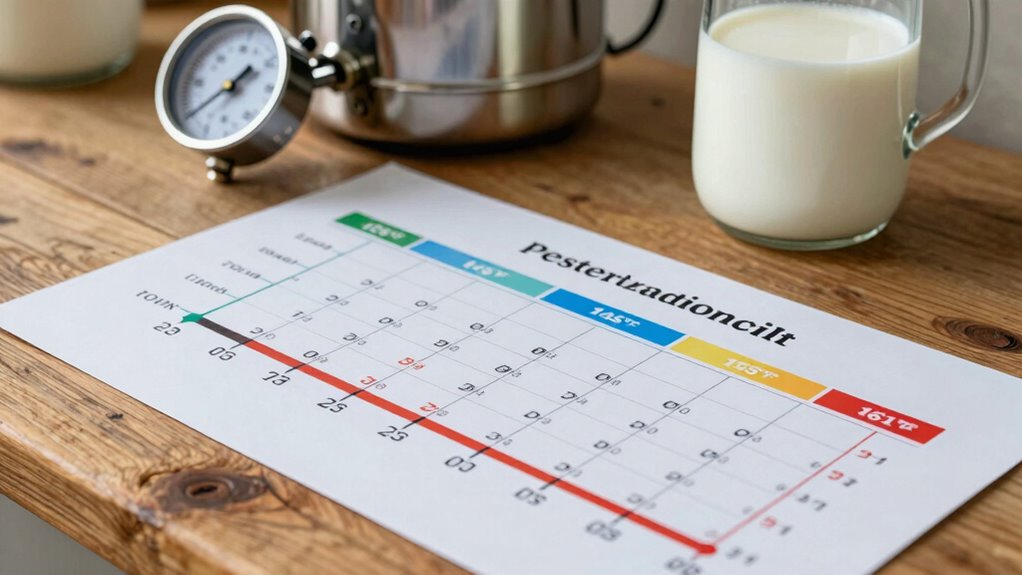
To guarantee your homemade dairy is safe to consume, it’s important to know the correct temperatures needed for pasteurization. For ideal milk quality and dairy safety, heat the milk to at least 145°F (63°C) and hold it there for 30 minutes if you’re doing batch pasteurization. Alternatively, bring the milk to 161°F (72°C) and maintain that temperature for 15 seconds for high-temperature short-time (HTST) pasteurization. These temperatures effectively kill harmful bacteria while preserving milk’s nutrients. Thermal behavior of milk during heating can influence how evenly it reaches the target temperature, so proper stirring and temperature monitoring are essential. Ensuring uniform heating helps prevent hot spots that could lead to incomplete pasteurization. Avoid lower temperatures, as they may not fully eliminate pathogens, risking contamination. Using the proper temperature ensures your homemade milk remains safe, maintaining high quality and protecting you and your family from potential illnesses. Accurate temperature control is key to successful, safe pasteurization at home. Understanding the specific temperature requirements helps ensure your process effectively eliminates pathogens.
How to Pasteurize Milk at Home: A Step-by-Step Guide

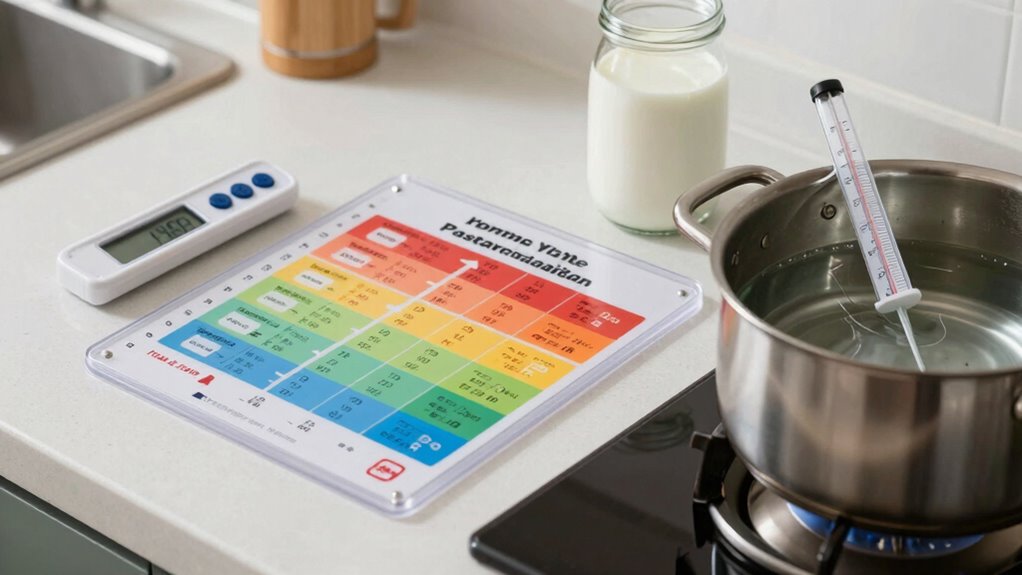
Pasteurizing milk at home is straightforward if you follow the proper steps and temperature guidelines. Start by gathering a clean pot, a thermometer, and a stove. Pour fresh milk into the pot and gradually heat it over medium heat. Use your thermometer to monitor the temperature closely. For milk safety, aim for the correct pasteurization temperature—typically 145°F (63°C) for 30 minutes or 161°F (72°C) for 15 seconds, depending on your chosen method. Stir gently to ensure even heating. Maintaining precise temperature control is essential to ensure thorough pasteurization. Properly monitoring temperature helps prevent overheating or underheating, ensuring safety and quality. Additionally, using a reliable temperature measurement device can improve accuracy during the process. Consistent temperature regulation is key to achieving safe and effective pasteurization results. Then, quickly transfer the milk to a clean container and cool it rapidly in an ice bath. This process effectively eliminates harmful bacteria and guarantees your milk is safe to drink. Following proper temperature guidelines ensures optimal safety and quality during home pasteurization.
Common Mistakes to Avoid When Home Pasteurizing
Even if you follow the right steps, overlooking common mistakes can jeopardize your home pasteurization process. One major error is allowing cross contamination, which can introduce harmful bacteria and undo your efforts. Always sanitize all equipment and surfaces thoroughly before starting. Temperature fluctuations are another pitfall; inconsistent heat can prevent proper pasteurization or damage the milk’s quality. Use a reliable thermometer to monitor and maintain the correct temperature throughout the process. Avoid rushing or removing the heat prematurely, as it risks incomplete pasteurization. Additionally, don’t forget to store the milk properly afterward, as improper handling can reintroduce bacteria. Proper piercing care and hygiene practices in handling your equipment and storage containers can greatly reduce contamination risks. Maintaining a clean environment is essential for successful farmhouse-inspired pasteurization. Staying vigilant about these mistakes ensures your pasteurization is safe and effective, giving you confidence in the quality of your homemade dairy. Incorporating proper temperature control techniques is crucial for consistent results. Being aware of equipment maintenance can also prevent malfunctions during the process.
Troubleshooting Pasteurization Problems for Safe Dairy

When issues arise during home pasteurization, identifying and addressing them promptly is key to guaranteeing your dairy remains safe. First, watch for cross contamination risks, which can compromise safety even if temperatures are correct. Always use clean, sanitized equipment to prevent bacteria transfer. If your pasteurization process isn’t yielding consistent results, check equipment calibration; inaccurate thermometer readings or malfunctioning thermostats can lead to under- or over-pasteurization. Regularly verify your equipment’s accuracy with a trusted thermometer. If dairy doesn’t reach the target temperature or holds it for the recommended time, your product may not be safe. Troubleshoot by reviewing your process steps, ensuring proper heating, and maintaining clean equipment. Addressing these factors helps prevent safety issues and ensures your dairy remains safe to enjoy. Additionally, understanding how equipment calibration impacts temperature accuracy can help prevent issues before they occur. Furthermore, maintaining proper hygiene practices is essential for preventing contamination during the entire pasteurization process. Incorporating temperature monitoring tools can enhance consistency and safety in your home pasteurization efforts. Regularly inspecting your equipment for wear and tear can also help identify potential malfunctions early, reducing the risk of safety lapses.
Frequently Asked Questions
Can Pasteurized Milk Be Used After Its Expiration Date?
You shouldn’t use pasteurized milk after its expiration date because pasteurization safety isn’t guaranteed once it’s expired. Milk spoilage can occur quickly, even if it looks and smells fine. Consuming expired milk increases your risk of foodborne illness. Always check the date and trust your senses—if it smells sour or looks off, discard it. Staying cautious helps guarantee your safety with dairy products.
How Long Does Pasteurized Milk Stay Fresh in the Refrigerator?
You can usually keep pasteurized milk fresh in your refrigerator for about 3 to 5 days beyond its sell-by date, following proper refrigeration guidelines. To maximize milk shelf life, keep it at or below 40°F (4°C) and always store it in the coldest part of your fridge. Be sure to check for signs of spoilage, like sour smell or lumps, before using.
Is Pasteurized Milk Suitable for Making Cheese or Yogurt?
Did you know that about 70% of homemade cheese recipes rely on pasteurized milk? Yes, pasteurized milk is perfect for cheese making or yogurt because it maintains good milk quality while eliminating harmful bacteria. By using pasteurized milk, you guarantee safety and achieve consistent results in your homemade dairy products. Just make sure to choose fresh, high-quality milk, and you’ll enjoy delicious cheese or yogurt every time.
What Equipment Is Necessary for Home Pasteurization?
You need basic homemade equipment and pasteurization tools to successfully pasteurize milk at home. Use a heavy-duty pot with a reliable thermometer to monitor temperature accurately. A gentle heat source like a stove works well, along with a timer to ensure precise temperature maintenance. You might also need a heat-resistant container and a cooling setup. This simple equipment setup helps guarantee your milk is safely pasteurized for cheese or yogurt making.
Does Pasteurization Affect the Nutritional Value of Milk?
Like a gentle breeze, pasteurization minimally impacts milk’s nutritional value. It slightly reduces vitamin retention, especially heat-sensitive nutrients like vitamin C, but overall, the nutritional impact is modest. You still get essential nutrients, including calcium and protein. Pasteurization safely destroys harmful bacteria without substantially compromising milk’s health benefits, making it a smart choice for maintaining nutrition while ensuring safety in your home.
Conclusion
Now that you know the right temperatures and steps, home pasteurization becomes your trusted shield, safeguarding your dairy like a sturdy fortress. Think of it as planting a seed of safety in your kitchen—nurturing pure, wholesome milk for your family. With careful attention, you’ll turn everyday milk into a secure treasure, ready to enjoy without worry. Embrace these guidelines, and your homemade dairy will stand strong against any threat, like a fortress of health.