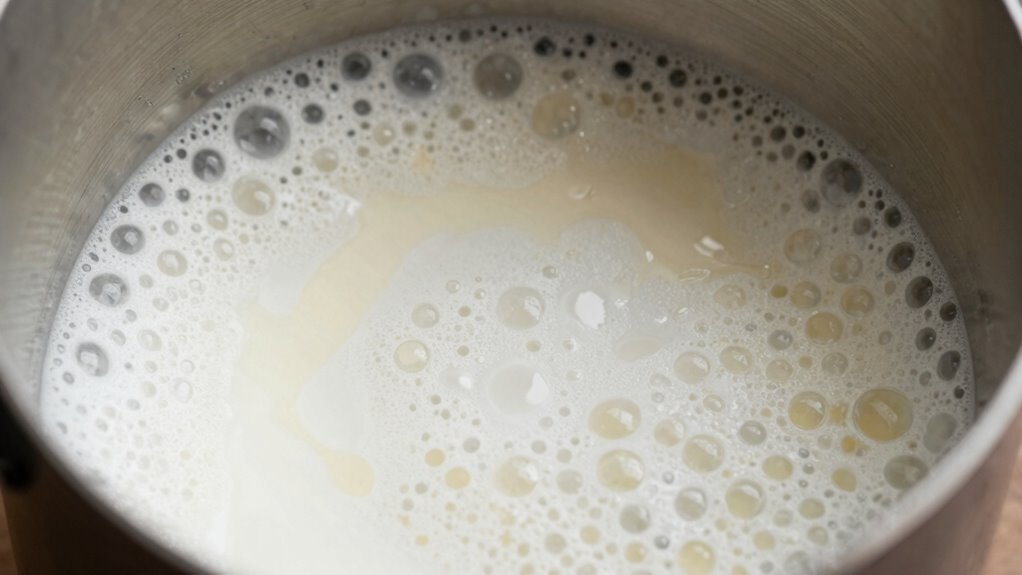

Your milk frother may fail because you don’t fully understand how proteins and fats behave during frothing. Proteins, mainly casein, trap air to form foam, while fats add richness and stability. If you don’t pay attention to temperature or fat content, the foam can become unstable or collapse. Proper technique and understanding these interactions can greatly improve your results. Keep exploring, and you’ll discover how to master the perfect froth every time.

Get kitchen staples and gadgets delivered free with Prime
- Fast, free delivery on millions of items
- Prime Video, Amazon Music and more included
- Member-only deals all year
Key Takeaways
- Incorrect milk type or fat content can lead to unstable or weak foam.
- Overheating or underheating milk impairs protein structure, causing frothing failures.
- Insufficient or excessive aeration disrupts protein networks, destabilizing the foam.
- Poor milk freshness reduces protein quality, affecting foam stability.
- Lack of proper technique and temperature control prevents optimal protein and fat interaction.
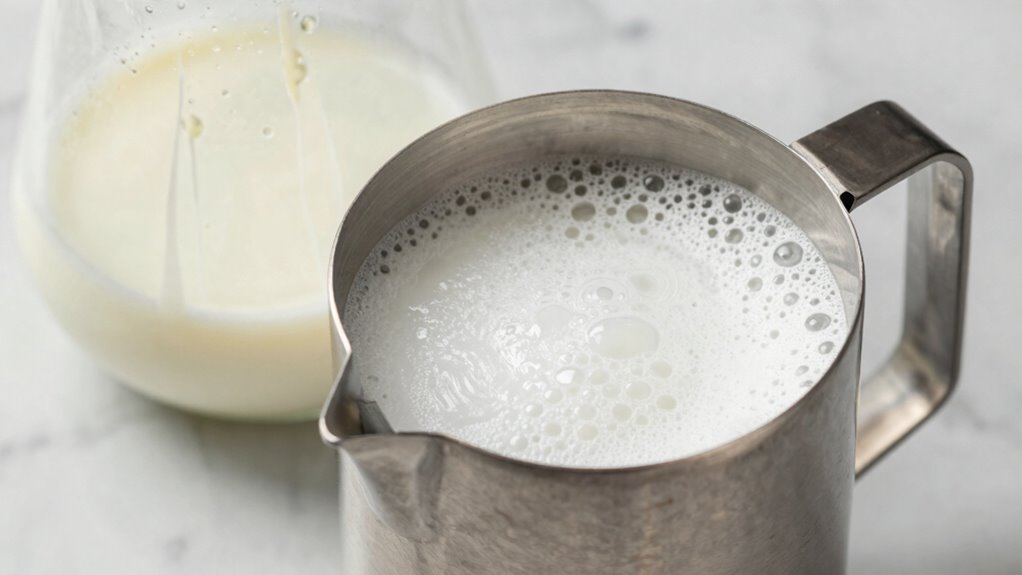
Frothing milk might seem straightforward, but most failures happen because people confuse how protein and fat behave during the process. When you’re trying to create that perfect foam, understanding these components is essential. Milk’s proteins, mainly casein, are responsible for forming the stable structure that gives your foam its shape. Fat, on the other hand, affects the richness and creaminess, influencing both flavor enhancement and texture consistency. If you don’t pay attention to how these elements interact, your froth may fall flat or become too thick and heavy.
One common mistake is using milk that’s too cold. Cold milk tends to produce less stable foam because the proteins are less active. As you heat it, proteins unfold and form a network that traps air, creating a velvety foam. But if you overheat, the proteins can denature excessively, leading to a less stable froth that quickly collapses. Finding that sweet spot in temperature helps you achieve a balance where flavor enhancement is maximized, and the texture remains smooth and creamy. Remember, the fat content plays a role here too—whole milk generally creates richer, creamier foam, whereas skim milk produces lighter, more airy froth. Knowing this allows you to tailor your frothing to match your desired flavor and mouthfeel.
Another issue arises when you don’t introduce enough air into the milk. Proper aeration is essential for creating the light, fluffy texture you want. If you’re too vigorous or too gentle, the foam might be inconsistent, with some parts dense and others overly airy. The key is to find that rhythm where the proteins stretch and trap air evenly, giving you that satisfying texture consistency. This process also influences flavor enhancement; the right foam can elevate the taste of your coffee or espresso, making it more enjoyable and well-rounded. Additionally, understanding how proteins and fats behave during heating can help you troubleshoot common frothing problems more effectively. Paying attention to the milk’s freshness, temperature, and fat content helps guarantee your frothing efforts succeed. Using high-quality milk ensures the best possible proteins and fats are available for creating stable, luxurious foam.
Furthermore, experimenting with different types of milk and their protein and fat ratios can help you discover the ideal frothing conditions for your preferences. Understanding how protein and fat influence both flavor enhancement and texture consistency allows you to troubleshoot common problems and optimize frothing techniques, ensuring consistently beautiful, lasting foam every time.
As an affiliate, we earn on qualifying purchases.
Frequently Asked Questions
How Can I Prevent Milk From Clogging My Frother?
To prevent milk from clogging your frother, always pay attention to milk texture and use fresh, cold milk. Clean your frother regularly with warm, soapy water after each use to guarantee proper maintenance. Avoid overfilling it, and if you notice any buildup, give it a thorough clean. Proper frother maintenance and choosing the right milk texture help keep it functioning smoothly, preventing clogs and ensuring perfect frothed milk every time.
What Types of Milk Are Best for Frothing?
Isn’t it tempting to think all milk froths equally? When choosing milk, consider its composition—low-fat or skim milk often produces the best frothing consistency because their lower fat and protein levels create a stable foam. Whole milk, with more fat, can be richer but may be harder to froth. For the best results, experiment with different types to find what works best for your frother and taste.
Does Temperature Affect How Well Milk Froths?
Yes, temperature considerably affects how well milk froths. When you heat milk to around 140-160°F, it enhances frothing consistency, creating a creamy, stable foam. If the milk is too cold, it won’t froth well; if it’s too hot, the proteins can break down, resulting in poor foam. For perfect froth, aim for that ideal milk temperature, which helps you achieve the best texture and stability in your frothing.
How Do I Clean My Milk Frother Properly?
Coincidentally, the best way to keep your milk frother in top shape is by following a consistent cleaning schedule. After each use, promptly wipe down the interior to remove milk residue. Deep clean with warm water and a gentle brush weekly, ensuring no buildup of fats or proteins. Regularly cleaning prevents clogs and maintains frothing quality, so your machine works perfectly every time.
Can Plant-Based Milks Be Frothed Successfully?
Yes, plant-based milks can be frothed successfully, but you might face some frothing challenges. Different plant milk alternatives, like almond, soy, or oat milk, have varying protein and fat levels that affect frothing. To get the best foam, choose varieties labeled “barista” or specifically formulated for frothing. Heating the milk slightly and using a powerful frother can also improve your results, making your drinks creamy and frothy.
Conclusion
Next time your milk frother struggles, remember it’s often due to protein and fat confusion. For example, if you try frothing whole milk and it’s too foamy or doesn’t foam at all, switching to a different milk type or adjusting your technique can help. Don’t get frustrated—just experiment a bit. With a little patience and understanding of the milk’s composition, you’ll be crafting perfect froth in no time, impressing everyone with your barista skills.
Fall Picks
fall essentials
As an affiliate, we earn on qualifying purchases.