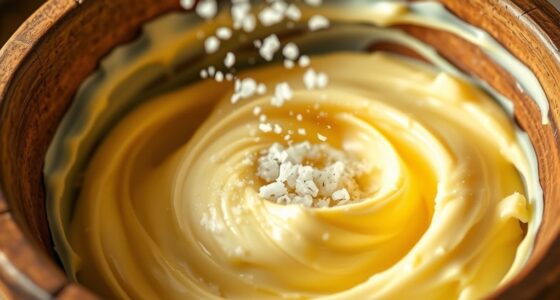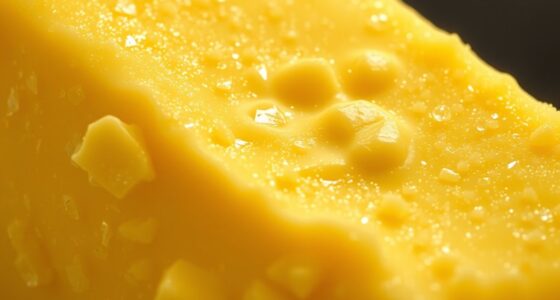
The milk fat globule membrane (MFGM) plays a vital role in butter’s texture and flavor. It provides a creamy mouthfeel and enhances stability, preventing separation during processing. MFGM also boosts butter’s nutritional profile with bioactive compounds that may improve gut health and support immunity. When cooking, it helps maintain flavor and texture, ensuring great results. Want to explore how MFGM impacts butter’s culinary applications even further?
Key Takeaways
- MFGM surrounds fat globules in milk, enhancing butter’s texture and preventing fat separation during production.
- It contributes to the creamy mouthfeel and rich flavor of butter, improving overall sensory experience.
- Bioactive compounds in MFGM may promote gut health and support immune function, adding nutritional value to butter.
- MFGM stability helps maintain butter’s structure and flavor during cooking, reducing the risk of burning.
- Enhanced emulsification properties from MFGM improve butter’s spreadability and shelf life in culinary applications.
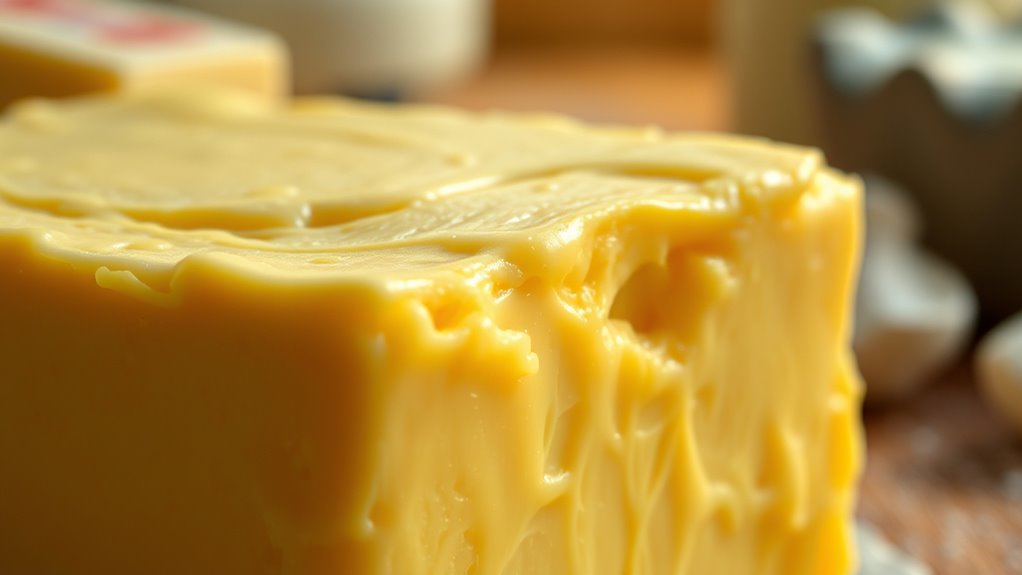
Have you ever wondered what gives milk its creamy texture and health benefits? The answer lies largely in the milk fat globule membrane (MFGM), a fascinating structure that surrounds fat globules in milk. This membrane isn’t just a protective barrier; it’s packed with bioactive compounds that contribute to the nutritional profile of dairy products, including butter. Understanding how the MFGM impacts butter can help you appreciate its unique qualities.
When you make butter from milk, you’re essentially transforming the milk’s fat while retaining some of the MFGM. This membrane plays a pivotal role in maintaining membrane stability, which is indispensable for both the texture and flavor of butter. The bioactive compounds found in the MFGM, like phospholipids and proteins, enhance emulsification properties, making butter spreadable and creamy. These compounds also have health benefits, potentially improving gut health and reducing inflammation.
As you spread butter on your toast or melt it into a pan, you’re enjoying the effects of the MFGM firsthand. The stability provided by the membrane helps prevent the fat from separating, giving you that luscious mouthfeel that you crave. It’s this very stability that allows butter to retain its rich flavor and creamy texture while also delivering essential nutrients. Furthermore, the MFGM’s bioactive compounds can even help boost your immune system and support overall health.
In addition to taste and health benefits, the MFGM also influences how butter behaves in cooking and baking. When you heat butter, the MFGM helps it maintain its structure, reducing the risk of burning or becoming too greasy. This means you can achieve the perfect sauté or bake with the rich flavors you love without sacrificing quality.
butter with MFGM supplement
As an affiliate, we earn on qualifying purchases.
As an affiliate, we earn on qualifying purchases.
Frequently Asked Questions
How Does Milk Fat Globule Membrane Affect Butter’s Flavor Profile?
The milk fat globule membrane enhances butter’s flavor profile by encapsulating fat and nutrients, which contributes to a richer, creamier taste. You’ll notice that when it’s present, the flavor becomes more complex and enjoyable. Additionally, it aids in texture modification, giving butter a smoother consistency that melts beautifully. This combination of flavor enhancement and texture improvement makes your butter more appealing, elevating your culinary creations to a whole new level.
Can Milk Fat Globule Membrane Improve Butter’s Shelf Life?
Yes, milk fat globule membrane can enhance butter’s shelf life. Imagine a fortress guarding your creamy treasure from the ravages of time. By boosting oxidative stability, it slows down rancidity, while also supporting microbial preservation, keeping unwanted bacteria at bay. This means your butter stays fresher longer, maintaining its delicious flavor and texture. So, you can spread that golden goodness on your toast with confidence, knowing it’s well-protected and ready to savor.
Is Milk Fat Globule Membrane Present in All Butter Types?
Yes, milk fat globule membrane is present in all butter types, although the concentration can vary. This membrane composition plays a vital role in the texture and flavor of butter. When you choose butter, you’re likely getting the benefits of this membrane, which helps emulsify fat and water, enhancing the overall quality. So, regardless of the type you pick, you’re enjoying the natural advantages that come from the milk globule membrane in butter.
How Is Milk Fat Globule Membrane Extracted for Butter Production?
To extract the milk fat globule membrane for butter production, you start with cream separation, much like a magician revealing hidden wonders. You gently separate the cream from the milk, then use a process called membrane isolation. This involves centrifuging the cream to separate the fat globules and their membranes from the liquid. The result is a rich, flavorful butter that maintains the beneficial properties of the milk fat globule membrane, enhancing taste and texture.
Does Milk Fat Globule Membrane Influence Butter’s Nutritional Value?
Yes, the milk fat globule membrane does influence butter’s nutritional value. It offers nutritional enhancement by providing beneficial compounds that can improve fat digestibility. When you consume butter with intact milk fat globule membranes, you’re likely to absorb fats more efficiently, which can lead to better overall health benefits. So, choosing butter that retains these membranes can make a positive difference in your diet, enhancing both flavor and nutrition.
nutritional butter with bioactive compounds
As an affiliate, we earn on qualifying purchases.
As an affiliate, we earn on qualifying purchases.
Conclusion
In essence, the milk fat globule membrane isn’t just a minor player in butter’s composition; it’s the unsung hero that enhances flavor and texture. Without it, butter would lose its creamy richness, like a song missing its melody. So, the next time you spread that golden delight on your toast, remember the magic of the milk fat globule membrane working behind the scenes, elevating every bite to a new level of deliciousness. It truly makes all the difference.
butter spreadability enhancer
As an affiliate, we earn on qualifying purchases.
As an affiliate, we earn on qualifying purchases.
butter cooking stability
As an affiliate, we earn on qualifying purchases.
As an affiliate, we earn on qualifying purchases.