
To melt butter without splattering, cut it into small, even pieces to guarantee uniform melting. Use a microwave-safe container with a lid or cover, like a microwave-safe plate or wax paper, to trap steam and prevent messes. Set the microwave to low power and heat in short 10-15 second bursts, stirring after each interval. Keep a close eye on the texture, and carefully remove the container once smooth. More tips for a clean melt await you.

Get kitchen staples and gadgets delivered free with Prime
- Fast, free delivery on millions of items
- Prime Video, Amazon Music and more included
- Member-only deals all year
Key Takeaways
- Cut butter into small, even pieces to promote uniform melting and minimize splattering.
- Use microwave-safe containers with lids or covers to contain steam and prevent messes.
- Set microwave to low power and heat in short intervals, stirring thoroughly between each.
- Watch for a smooth, silky texture, and remove promptly to avoid overheating and bubbling.
- Handle hot containers and steam carefully with oven mitts and lift covers away from your face.
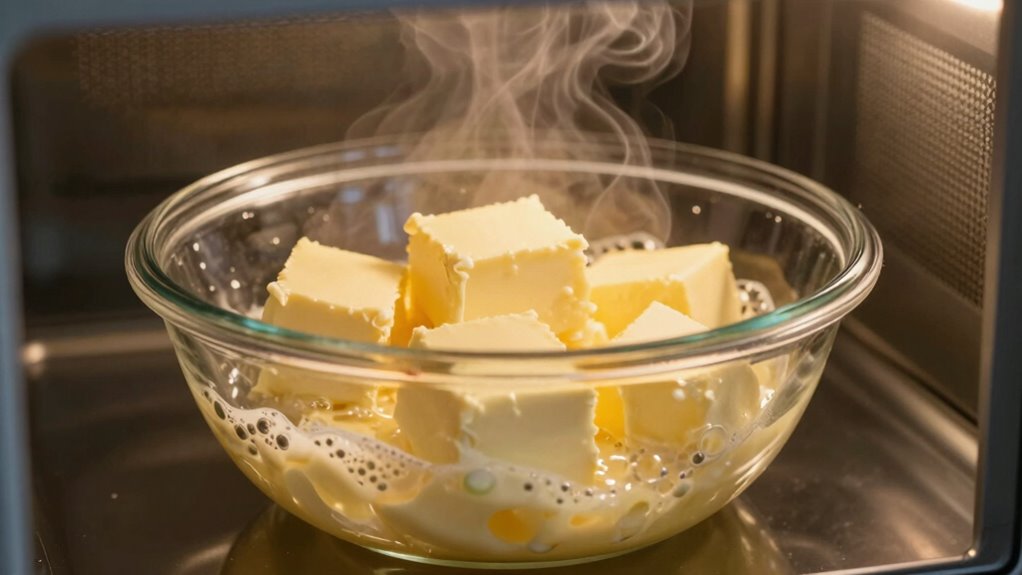
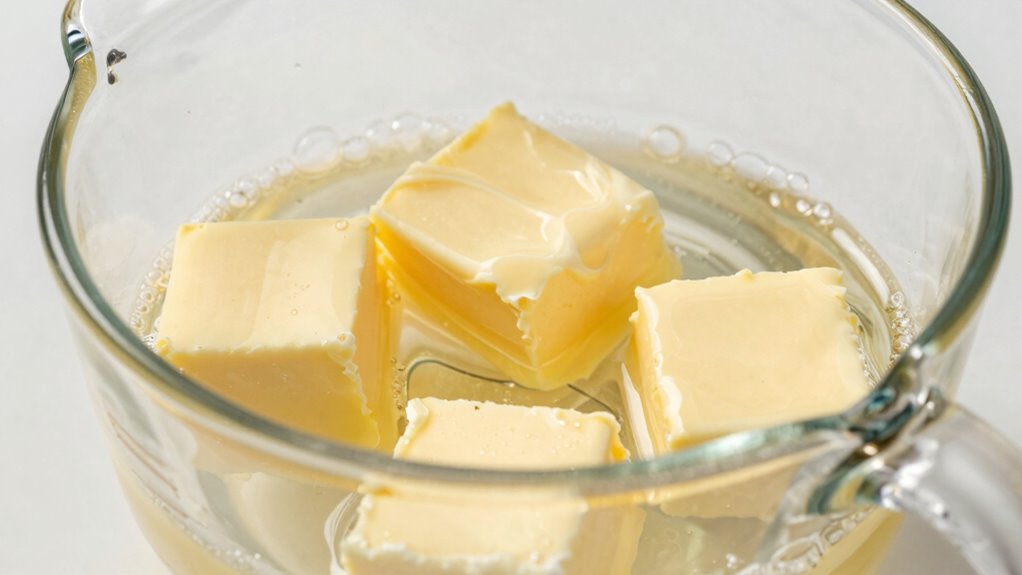
Melting butter in the microwave can be quick and convenient, but it often leads to splatters that make cleanup a hassle. To avoid this, you need to pay attention to the butter’s consistency and prioritize microwave safety. First, cut the butter into small, even pieces before microwaving. Smaller pieces melt more evenly, reducing the chance of sudden boiling or splattering. When you do this, you’ll notice a more controlled melt, which helps avoid overflows and preserves the texture you want.
Next, use a microwave-safe container with a lid or cover. A microwave-safe plate or a microwave cover can trap steam and prevent butter from splattering all over your microwave interior. If you don’t have a cover, a paper towel or microwave-safe wax paper works well too. Covering the container not only keeps the mess contained but also promotes even heating. It’s important to ensure the cover is microwave-safe to prevent melting or releasing harmful chemicals. Microwave safety is essential to prevent accidents. Additionally, choosing the right microwave-safe container can further improve your results and reduce mess.
Set the microwave to a low power setting—around 30% or “defrost” mode—and heat the butter in short intervals, about 10 to 15 seconds at a time. After each interval, pause to stir the butter thoroughly. Stirring helps distribute the heat evenly, which maintains a smooth, uniform butter consistency and prevents hot spots that cause splattering. It also allows you to gauge the progress, so you can remove the butter as soon as it’s just melted, avoiding overheating. Using proper microwave techniques can further improve your results and reduce mess.
Pay attention to the butter’s appearance and texture during the process. Your goal is a silky, smooth consistency—never boiling or bubbling vigorously. Overheating can lead to butter splattering due to superheated pockets of liquid forming inside. Always keep your eye on the process, and don’t rush it. Patience ensures you get perfectly melted butter without mess or risk. Additionally, understanding the importance of biodiversity and conservation can help you appreciate the value of preserving natural resources, including those used in kitchen practices. Recognizing how sustainable practices can minimize waste and environmental impact is also beneficial when choosing cooking methods. Being mindful of energy consumption during microwave use can also contribute to more sustainable kitchen habits. Choosing eco-friendly kitchen tools and methods can make your cooking more environmentally responsible.
Finally, be cautious when removing the container from the microwave. Use oven mitts or a towel, as the container may be hot. Carefully lift the cover away from your face to avoid steam burns. By following these steps, you’ll achieve a smooth, melted butter with the right consistency, all while keeping microwave safety in check. With a little practice, melting butter in the microwave will become a clean, easy part of your cooking routine.
microwave butter melter with lid
As an affiliate, we earn on qualifying purchases.
As an affiliate, we earn on qualifying purchases.
Frequently Asked Questions
Can I Melt Butter in a Glass Container Safely?
Yes, you can melt butter safely in a glass container. Just make sure your glass is microwave-safe to prevent accidents. Store your butter properly in an airtight container to keep it fresh. When melting, use short intervals and stir frequently to avoid splattering or overheating. Always follow microwave safety guidelines, and avoid using cracked or damaged glass, which can break during heating. This helps you melt butter efficiently and safely.
How Long Does It Take to Melt Butter in the Microwave?
Like a magician with a flick of a wand, you can melt butter in the microwave in about 15 to 30 seconds. Keep an eye on it to achieve your desired butter consistency, whether soft or fully melted. Use microwave-safe containers to guarantee safety, and stop the process every few seconds to stir. This quick technique keeps your butter smooth without splattering, making your cooking magical and mess-free.
Is It Better to Melt Butter at Lower Power Settings?
Yes, melting butter at lower power settings is better because it helps you control the butter’s consistency and prevents overheating. Using a lower power guarantees gentle melting, reducing splatter and maintaining microwave safety. It also allows you to check the butter’s texture frequently, avoiding over-melting or scorching. This method gives you a smooth, evenly melted butter, perfect for your recipes, with less mess and safer microwave use.
Can I Use a Paper Towel to Cover the Butter?
Yes, you can use a paper towel to cover the butter, but make sure it’s safe for microwave use. Paper towel safety is important, so avoid thick or recycled towels that might catch fire. For butter coverage tips, lightly cover the butter with the towel to prevent splattering while allowing steam to escape. This simple step helps melt your butter evenly and keeps your microwave clean.
What Type of Microwave Is Best for Melting Butter?
Your microwave choice can make all the difference—aim for a model with even heating and good microwave safety features. A microwave with a turntable ensures consistent butter melting, preventing uneven heat that could turn your butter into a molten volcano. For ideal butter consistency, avoid high wattage settings and select lower power to prevent splattering. This way, your butter melts smoothly, and your microwave stays spotless—saving you from a culinary catastrophe!
Conclusion
Now that you know how to melt butter without a splatter storm, your microwave will be your smooth, silent ally in the kitchen. Think of it as gently coaxing a delicate ballet dancer into a perfect pirouette—graceful and controlled. With these simple tricks, you’ll turn a messy mishap into a seamless, buttery masterpiece every time. So go ahead, embrace the magic of mess-free melting and let your culinary creativity dance without a fuss!
Halloween Picks
halloween
As an affiliate, we earn on qualifying purchases.