
To keep your homemade peanut butter smoother longer, store it in airtight glass jars in a cool, dark place to slow oil separation. Regularly stir to reincorporate oils and prevent separation. Add a small amount of oil during preparation or after stirring for a creamier texture. Keep the jar sealed tightly and avoid temperature fluctuations, which can cause oil to seep out. For extra smoothness and longer freshness, learn more about proper storage techniques and flavor tips.

Get kitchen staples and gadgets delivered free with Prime
- Fast, free delivery on millions of items
- Prime Video, Amazon Music and more included
- Member-only deals all year
Key Takeaways
- Regularly stir the peanut butter to reincorporate separated oils and maintain a smooth texture.
- Add a small amount of peanut or neutral oil during preparation or after stirring to prevent separation.
- Store in airtight, glass containers in a cool, dark place to slow oxidation and oil separation.
- Avoid repeated temperature fluctuations by only removing portions as needed and resealing promptly.
- Incorporate flavorings thoroughly to help stabilize the texture and reduce oil separation over time.

Homemade peanut butter can become grainy or separated over time, but you can keep it smoother for longer with a few simple tips. The key is understanding how to store it properly and how to incorporate flavor variations that help maintain a creamy texture. First, choose the right storage containers. Airtight jars or food-safe glass containers with tight-fitting lids are your best options. These prevent air exposure, which can cause the oils in peanut butter to separate and lead to a grainy texture. Avoid plastic containers that aren’t airtight or that absorb oils, as they can speed up spoilage. When you store your peanut butter in a proper container, you minimize moisture and air contact, both of which contribute to separation and spoilage.
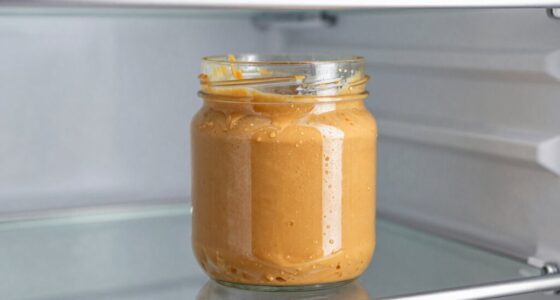
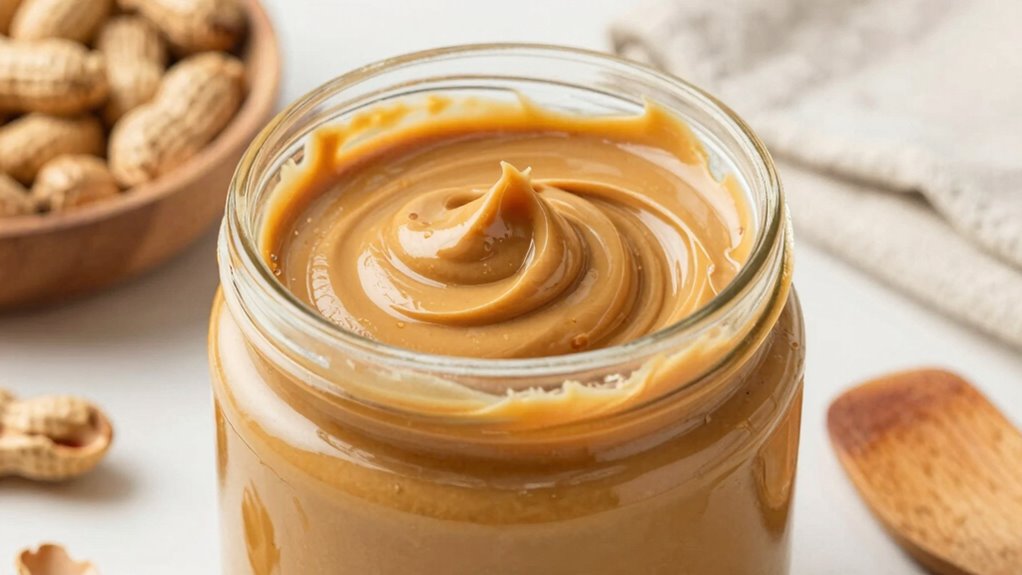
Store in airtight jars to keep homemade peanut butter smooth and prevent oil separation.
Additionally, consider stirring your peanut butter regularly, especially if you notice the oils beginning to separate. This helps reincorporate the oils into the paste, keeping it smooth. To extend its creamy consistency, you might even add a small amount of oil—like peanut oil or a neutral oil—when you first make the butter or after stirring. This creates a more uniform texture and can help prevent the separation process from happening as quickly. If you prefer flavor variations, adding ingredients like honey, maple syrup, or cinnamon can enhance taste without compromising the smoothness. Just mix them in thoroughly, and these additions can sometimes stabilize the texture by reducing the separation of oils. Proper handling, including storage practices, also plays a crucial role in preserving its quality over time. Using proper storage temperature can help slow down the oxidation process and keep your peanut butter tasting fresh longer. Maintaining the correct temperature also helps prevent the oils from going rancid, ensuring a longer-lasting smoothness.
Furthermore, temperature control is essential since fluctuations can cause the oils to separate or spoil faster. The way you handle your homemade peanut butter also impacts its longevity. Keep it in a cool, dark place away from direct sunlight, which can cause the oils to go rancid faster. Refrigeration isn’t always necessary unless you’re making it with perishable ingredients or want to prolong shelf life; however, storing it in the fridge can help maintain freshness and prevent spoilage. When you’re ready to use it, take out only what you need to avoid exposing the entire jar to warm temperatures repeatedly, which could cause the oils to separate more quickly. Properly sealing your jar after each use also minimizes air exposure, further extending the smoothness and freshness. Finally, experimenting with flavor variations can also influence texture, especially if you add ingredients that contain moisture or fat. Use these wisely, and always stir well to keep your peanut butter smooth. With proper storage containers, regular stirring, and mindful handling, your homemade peanut butter will stay creamy longer, making each spoonful just as delicious as the first.
airtight glass jar for peanut butter
As an affiliate, we earn on qualifying purchases.
As an affiliate, we earn on qualifying purchases.
Frequently Asked Questions
Can Adding Oil Improve Homemade Peanut Butter’s Smoothness?
Adding oil can definitely improve your homemade peanut butter’s smoothness by promoting oil infusion, which helps create a creamier texture. It also enhances texture stability, preventing it from becoming dry or gritty over time. When you blend in a small amount of oil gradually, it guarantees a more uniform consistency and keeps the peanut butter smoother longer. Just be careful not to add too much, as it might make it overly greasy.
How Does Storage Temperature Affect Peanut Butter Texture?
Storing peanut butter at cooler temperatures helps maintain its texture consistency and prolongs shelf stability. When kept in the fridge, it stays smoother and prevents oil separation, making it easier to spread. However, if you store it at warmer temperatures, the oil may separate more quickly, leading to a less smooth texture. For peak freshness, keep your homemade peanut butter in a cool, dark place or refrigerated.
Is It Better to Refrigerate or Keep at Room Temperature?
A stitch in time saves nine, so it’s best to refrigerate your homemade peanut butter to prolong shelf stability and preserve flavor. Cold storage slows oxidation and prevents the oils from separating, keeping it smoother longer. While room temperature keeps it softer initially, it risks quicker spoilage and textural changes. For lasting freshness and ideal texture, refrigerate your peanut butter, especially if you won’t use it within a few weeks.
Will Adding Sweeteners Impact the Smoothness Over Time?
Adding sweeteners can impact the smoothness of your homemade peanut butter over time. While they enhance flavor, some sweeteners may cause slight changes in texture, affecting texture stability. To keep it smooth longer, opt for liquids like honey or syrup, which blend well without causing separation. Be mindful that too much sweetener might alter the consistency, so add gradually and stir thoroughly to maintain a creamy, stable texture.
How Long Can Homemade Peanut Butter Stay Smooth Without Separation?
You can keep homemade peanut butter smooth for about 2 to 3 weeks if you focus on flavor preservation and texture stabilization. Store it in an airtight container and refrigerate it to prevent separation. Stir it well before each use to maintain a consistent texture. Adding a small amount of oil can help stabilize the texture further, ensuring it stays creamy longer without developing lumps or separation.
Conclusion
To keep your homemade peanut butter irresistibly smooth longer, remember that patience and proper storage are your best friends. Think of your peanut butter as a fine wine—it gets better with care. By stirring in a touch of oil and keeping it sealed tightly, you’ll guarantee each spoonful feels just as creamy as the first. So, treat it like a cherished treasure, and your smooth, delicious peanut butter will remain a delightful staple in your kitchen for days to come.
Halloween Picks
halloween
As an affiliate, we earn on qualifying purchases.