
Beyond just texture, creamy and crunchy peanut butter offer subtle flavor differences influenced by their processing methods; creamy is smooth and mixed thoroughly, while crunchy contains larger peanut pieces that add a slight flavor boost and crunch. These variations also affect their culinary uses—creamy works best for sauces and spreads, while crunchy adds bite to snacks and baked goods. Both provide similar nutritional benefits, so your choice mainly depends on what texture suits your taste or recipe. Keep exploring to discover even more!

Get kitchen staples and gadgets delivered free with Prime
- Fast, free delivery on millions of items
- Prime Video, Amazon Music and more included
- Member-only deals all year
Key Takeaways
- Both types have similar nutritional profiles, with minor differences like increased fiber in crunchy peanut butter due to peanut pieces.
- Processing methods influence flavor nuances and shelf life, affecting overall taste beyond just texture.
- Creamy peanut butter is better suited for smooth recipes like sauces and smoothies, while crunchy adds texture to spreads and baked goods.
- Added ingredients such as sugars or oils can modify flavor and nutritional content in both types.
- Personal preference and intended culinary use primarily guide the choice between creamy and crunchy peanut butter.
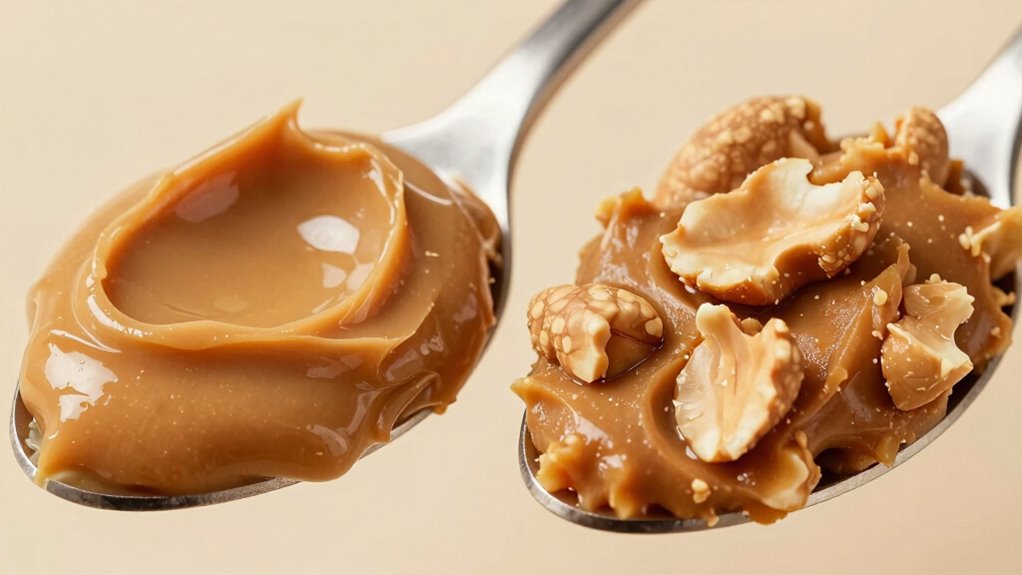
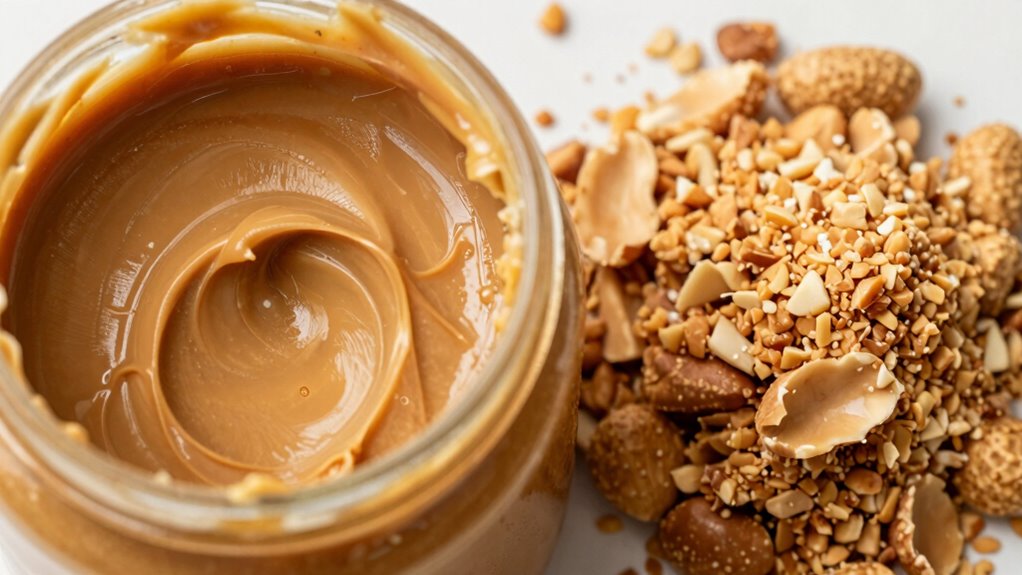
When it comes to peanut butter, choosing between creamy and crunchy often comes down to personal preference, but understanding the differences can help you make a more informed decision. While the texture is the most obvious distinction, it’s worth noting that there are subtle differences in nutritional content and culinary uses as well. Both types are made from ground peanuts, but the way they’re processed influences these factors. Creamy peanut butter is blended until smooth, giving it a uniform texture that melts easily in your mouth. Crunchy peanut butter, on the other hand, contains larger peanut pieces, providing a contrasting crunch with every bite. This difference in texture can impact how you incorporate peanut butter into recipes or snacks.
In terms of nutritional differences, the variations are minimal. Both types generally offer similar calorie counts, protein content, and healthy fats, since they’re made from the same base ingredient. However, some brands add sugar, salt, or oils, which can slightly modify nutritional profiles. If you’re watching your intake of added sugars or preservatives, it’s good to read labels regardless of your choice. The presence of peanut pieces in crunchy peanut butter might mean a slightly higher fiber content, as the pieces contain more of the peanut’s natural fiber, but the difference isn’t significant enough to influence your diet substantially. Overall, both options provide a nutritious source of plant-based protein and healthy fats, making them a good fit for balanced diets.
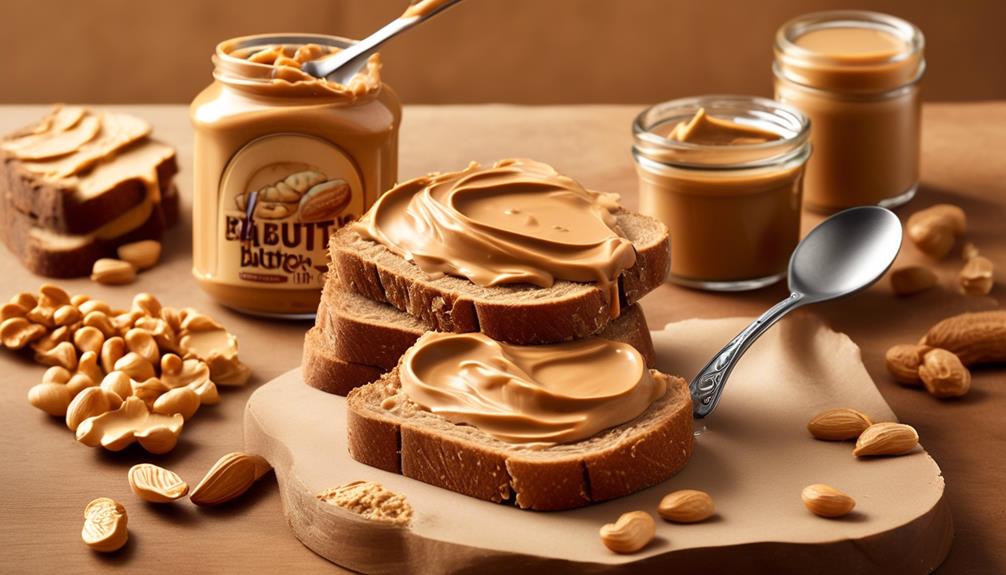
Additionally, the processing method influences the peanut texture, impacting how each type holds up in recipes and snacks. Processing techniques can also affect the flavor profile of each variety, influencing your preference depending on taste. Culinary uses vary depending on texture preferences. Creamy peanut butter is excellent for spreading on bread, blending into smoothies, or using in recipes where a smooth consistency is desired. Its uniform texture ensures it mixes well without clumping, making it ideal for sauces, dressings, or baking. Crunchy peanut butter, with its added texture, works well when you want a bit of bite in your snack or dish. It’s great for spreading on toast if you enjoy the crunch, or stirred into oatmeal and yogurt for added texture and flavor. Some people prefer crunchy peanut butter in baked goods like cookies, where the peanut pieces add an extra layer of flavor and visual appeal. Moreover, the processing methods used can influence the shelf life and flavor profile of each type, further guiding your choice. It’s also interesting to note that the processing process can sometimes lead to slight differences in flavor complexity between the two types.
Ultimately, your choice depends on how you like to experience peanut butter and what you intend to do with it. Both creamy and crunchy options deliver similar nutritional benefits but cater to different culinary preferences. Whether you prefer the smooth, velvety feel or the satisfying crunch, understanding these nuances lets you pick the best peanut butter for your taste and needs.
As an affiliate, we earn on qualifying purchases.
Frequently Asked Questions
Which Type of Peanut Butter Has More Preservatives?
Crunchy peanut butter generally has more preservatives than creamy because of the additive differences in manufacturing processes. Manufacturers often add preservatives to maintain texture and freshness, especially in chunky varieties with larger peanuts. The processing methods for crunchy peanut butter may involve more stabilizers to keep the nuts evenly distributed. So, if you’re choosing based on preservatives, crunchy peanut butter might have a slight edge in added preservatives compared to creamy.
Are There Flavor Differences Besides Texture?
You’ll notice flavor differences beyond texture, with crunchy peanut butter offering a more robust, nutty taste and creamy varieties providing a smoother, sweeter profile. Interestingly, 65% of peanut butter lovers prefer the flavor nuances of crunchy for added depth. Your taste preferences influence which you enjoy more, as crunch enhances the nutty aroma, while creamy offers a mellow, balanced flavor. Try both to discover which suits your palate best!
How Do Shelf Lives Compare Between Creamy and Crunchy?
The shelf life of creamy and crunchy peanut butter is quite similar, typically lasting about 6 to 9 months unopened, thanks to their comparable ingredients and preservatives. Once opened, both maintain flavor consistency for several months if stored properly in a cool, dry place. The main difference lies in texture variation, which doesn’t considerably impact shelf life. Proper storage is key to keeping both types fresh and flavorful over time.
Is One Type More Environmentally Sustainable?
You’ll find that crunchy peanut butter generally has a slightly higher environmental impact because it often involves more processing to include the chopped peanuts, which can increase energy use. However, both types can be environmentally sustainable if sourced from farms practicing sustainable farming methods. Choosing brands that prioritize eco-friendly practices and sustainable farming can help reduce your overall environmental impact, regardless of whether you prefer creamy or crunchy varieties.
Do Different Peanut Butters Contain Varying Allergens?
You might not realize it, but different peanut butters can have vastly different allergen levels. Some brands may contain traces of peanuts or other nuts due to cross-contamination concerns, which can be dangerous for those with peanut allergy awareness. Always check labels carefully, especially if you’re highly sensitive. Remember, even creamy varieties can have allergens, so knowing your product and its manufacturing process is essential for safety.
Conclusion
As you reach for your peanut butter, it’s funny how a simple choice can feel so personal. Whether you prefer the smooth embrace of creamy or the satisfying crunch of crunchy, it’s more than just texture—it’s a small moment of joy, a reminder that sometimes, the little things bring the biggest comfort. In this quiet decision, you find a bit of yourself, a reminder that even in the simplest choices, there’s a touch of magic waiting to be enjoyed.
Halloween Picks
halloween
As an affiliate, we earn on qualifying purchases.