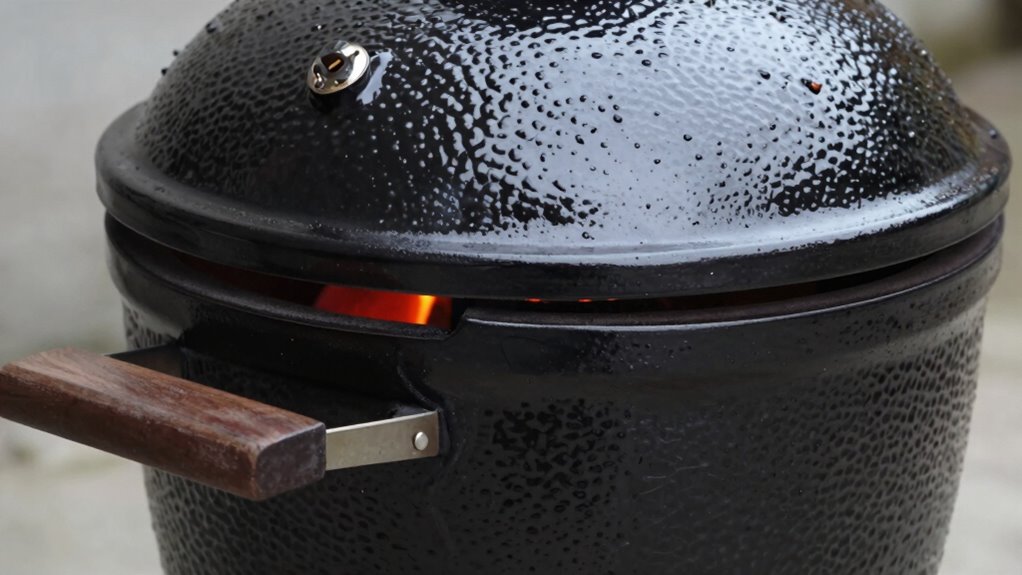

Kamado grills hold heat better because their slow airflow creates a more controlled environment, helping you maintain steady temperatures. This slower airflow prevents hotspots and temperature swings, making your cooking more consistent and efficient. The ceramic insulation works with the airflow to trap and radiate heat evenly, so you use less fuel. If you want to understand how this combination keeps your grill hotter longer, keep exploring how these features work together.

Get kitchen staples and gadgets delivered free with Prime
- Fast, free delivery on millions of items
- Prime Video, Amazon Music and more included
- Member-only deals all year
Key Takeaways
- Slower airflow inside kamado grills reduces heat loss, helping them retain heat longer.
- The ceramic insulation traps heat and works with slow airflow to maintain stable temperatures.
- Reduced airflow prevents temperature swings and hotspots, ensuring consistent heat retention.
- Gentle airflow circulation promotes even heat distribution, minimizing fuel consumption.
- The combined effect of slow airflow and ceramic insulation creates a controlled, heat-retentive environment.
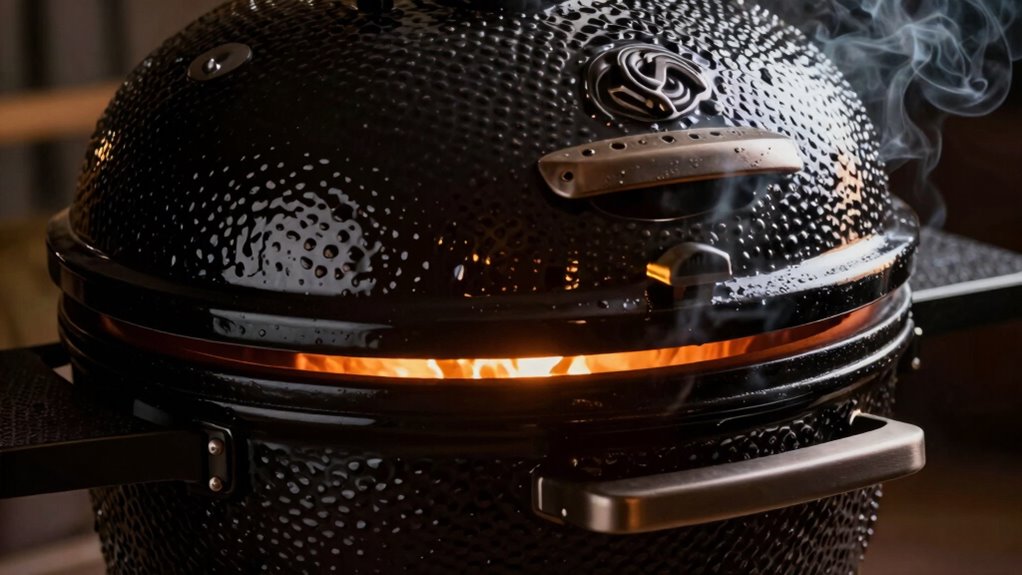
Kamado grills are renowned for their exceptional heat retention, making them a popular choice for BBQ enthusiasts. Their ability to maintain consistent temperatures isn’t accidental — it’s rooted in their unique design, especially their use of ceramic insulation. This ceramic material acts as a powerful barrier, trapping heat inside and preventing it from escaping. When you cook on a kamado, this ceramic insulation keeps the temperature stable, allowing you to cook low and slow or sear at high heat without constant adjustments. Because the heat stays put, you don’t need to add as much fuel, which makes the grill more fuel-efficient overall. Less fuel means fewer trips to reload, saving you both time and money, especially during long smoking sessions.
Kamado grills excel at heat retention, ensuring steady temperatures and fuel efficiency for perfect BBQ results.
One of the main reasons kamado grills hold heat better is how airflow moves within the chamber. Unlike traditional grills, where air flows quickly and causes fluctuations in temperature, kamados are designed so that airflow moves more slowly. This slow airflow creates a more controlled environment, allowing the heat to circulate evenly around the food. You won’t experience the same temperature swings or hotspots that you might with other grills. Instead, the gradual movement of air helps maintain a steady heat, giving you precise control over your cooking process. This steady airflow also helps the ceramic insulation perform its job more effectively, locking in heat and preventing it from dissipating too quickly. The airflow, in particular, plays a crucial role in maintaining the grill’s overall efficiency and temperature stability. Additionally, the insulation properties of the ceramic material contribute significantly to this heat retention, further enhancing the grill’s performance. The thermal mass of the ceramic helps absorb and radiate heat evenly, supporting this controlled environment. Furthermore, the slow-moving airflow minimizes temperature fluctuations, making your cooking process more predictable and consistent. Moreover, the design of kamado grills encourages a gentle airflow, which helps in achieving consistent cooking temperatures.
Because of this slow airflow, your kamado grill becomes more efficient in using fuel. When heat stays trapped inside, you don’t need to constantly add charcoal or other fuel sources. Instead, the heat keeps circulating, allowing you to cook for hours on a small amount of fuel. This efficiency is especially beneficial if you’re smoking or slow-cooking, where maintaining a consistent temperature over many hours is vital. You’ll find that your fuel lasts longer, which not only saves you money but also reduces the hassle of frequent refueling. Additionally, the ceramic insulation helps maintain this steady environment, further reducing the need for continuous adjustments during cooking.
In essence, the combination of ceramic insulation and the slow-moving airflow inside kamado grills creates a cooking environment that’s both stable and fuel-efficient. You get consistent results without constantly fussing over temperature adjustments or running out of fuel halfway through your cook. This design makes kamado grills a smart choice for anyone serious about their barbecue — they hold heat better and do so more efficiently, helping you achieve perfect results every time.
As an affiliate, we earn on qualifying purchases.
Frequently Asked Questions
How Does the Shape of a Kamado Influence Heat Retention?
The shape of a kamado greatly influences heat retention through its insulation properties. Its thick, egg-shaped design creates a natural barrier that traps heat efficiently, minimizing heat loss. This shape influence guarantees consistent temperatures, making it ideal for slow cooking and smoking. You’ll notice that the rounded form helps distribute heat evenly, enhancing your cooking experience while conserving fuel and maintaining steady heat levels longer than other grill types.
Are Kamado Grills More Energy-Efficient Than Traditional Grills?
Yes, kamado grills are more energy-efficient than traditional grills. Their excellent heat retention reduces energy consumption because you don’t need to keep adding fuel or heat during cooking. Additionally, their efficient airflow management lowers environmental impact by using less charcoal or electricity. This means you get more consistent heat with less resource use, making kamado grills a smarter, eco-friendly choice for grilling enthusiasts who want to minimize their footprint.
Can Kamado Grills Be Used for Baking or Roasting?
Yes, you can bake a pizza or roast vegetables in a kamado grill. Imagine the aroma of crispy crust and roasted veggies filling your backyard as the grill’s retained heat surrounds your food like a cozy blanket. Its steady temperature lets you bake bread or roast vegetables evenly. With proper setup, your kamado transforms into a versatile oven, making delicious meals beyond traditional grilling.
What Materials Are Commonly Used in Kamado Construction?
You’ll find that kamado grills are commonly built from high-quality ceramic materials, which provide excellent durability and insulation. The ceramic’s durability guarantees your grill withstands high temperatures and outdoor elements, while its insulation properties help retain heat efficiently. These features make kamado grills ideal for precise cooking, such as baking and roasting, because they maintain consistent temperatures, allowing you to cook evenly and achieve great flavor every time.
How Does Weather Affect a Kamado Grill’s Heat Retention?
Imagine you’re in a medieval castle, and the weather impact on a kamado grill is like defending against the elements. Wind resistance plays a big role; strong winds can cool down your grill quickly, making it harder to maintain steady heat. Rain or snow also affect heat retention, as moisture can seep through and cause temperature fluctuations. To keep your cookout on point, shield your kamado from harsh weather and wind.
Conclusion
So, when you fire up a kamado grill, you’re inviting a cozy, heat-retaining nest to your backyard. Its thick walls and slow airflow act like a warm, embracing hug, keeping your food toasty and flavorful. Think of it as a trusty dragon guarding its treasure — steadfast and fierce in holding onto heat. With a kamado, you’re not just grilling; you’re hosting a warm, fiery symphony that plays out every time you cook.
NFL season / tailgating Picks
team gear
As an affiliate, we earn on qualifying purchases.