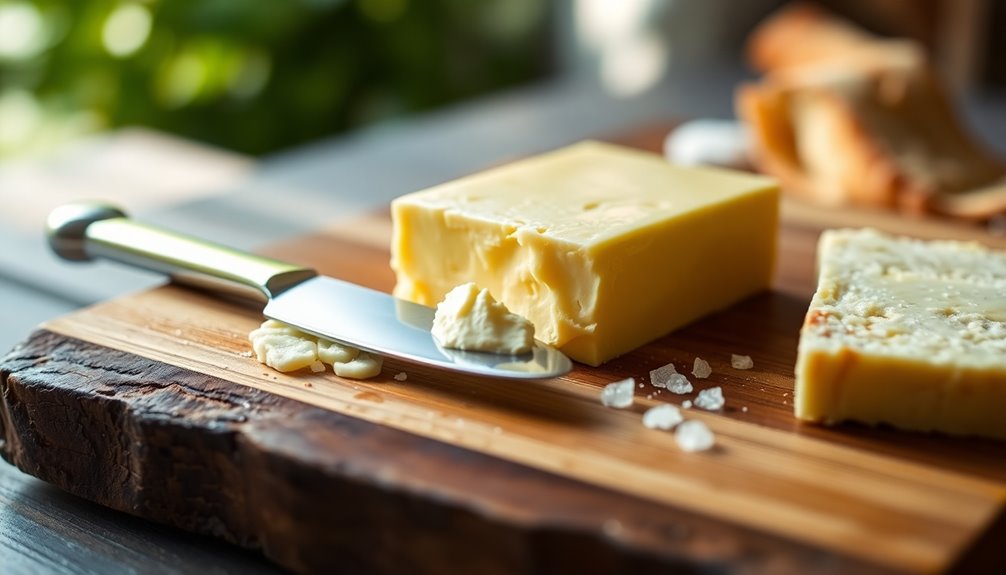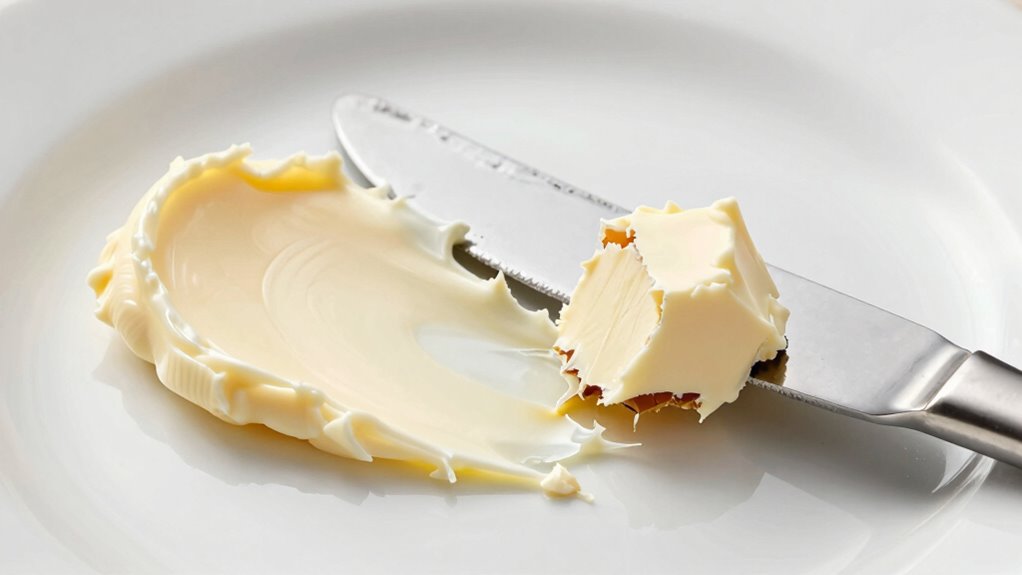

The spreadability of butter depends on its composition, processing, and storage. Butter with higher moisture tends to crumble, while more fat makes it smoother. Proper processing also affects how it behaves at different temperatures, and storing it in a cool, consistent environment helps maintain the right texture. If you keep it at the right temperature and in the right conditions, it’ll spread easily. Want to discover more about how to get the perfect butter texture?
Key Takeaways
- Higher fat content and optimal moisture levels promote smooth spreading; low fat or excessive moisture cause crumbling.
- Proper storage at consistent, cool temperatures keeps butter pliable for easy spreading.
- Butter’s processing methods influence its firmness and responsiveness to temperature changes.
- Allowing butter to reach room temperature enhances spreadability and prevents breaking apart.
- Airtight containers prevent moisture loss and odor absorption, maintaining the desired texture.
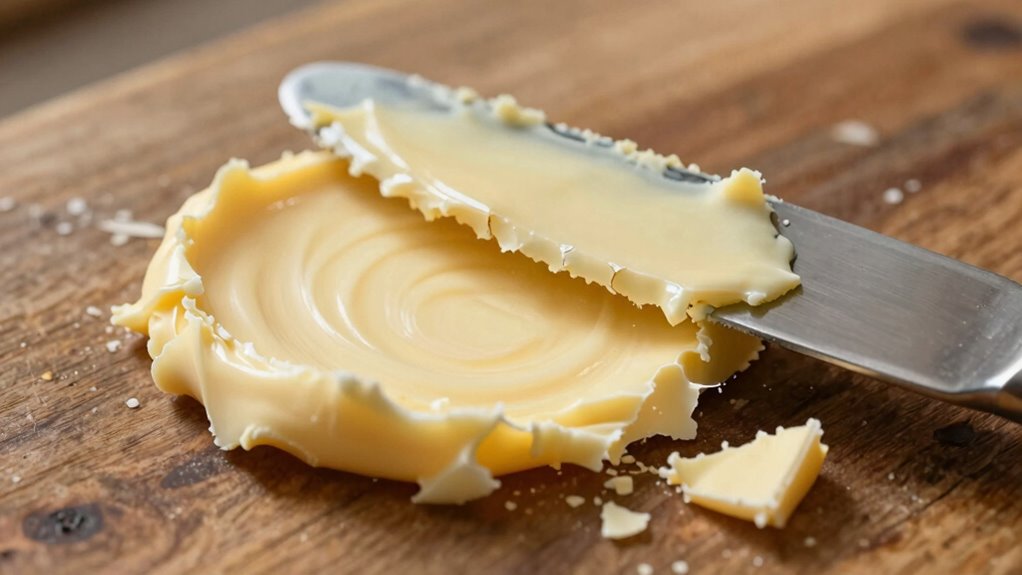
Have you ever wondered why some butters glide smoothly across your toast while others crumble into crumbs? The answer lies in a combination of factors, primarily their composition, nutritional differences, and how you store them. The texture of butter isn’t just about personal preference; it’s influenced by its fat content, moisture levels, and processing methods. When you spread butter and it slips effortlessly, it’s often because it’s been prepared to be soft and pliable at room temperature. Conversely, when butter is cold or has a high moisture content, it tends to break apart rather than spread smoothly. processing methods also play a crucial role in determining how the butter behaves at room temperature. Storage conditions are equally important. Butter stored in the fridge remains solid and difficult to spread, especially if it’s cold. If you want smooth spreading, it’s best to let it sit at room temperature for a bit before use. However, how long you leave it out depends on the butter’s composition and your environment. Too warm, and the butter may become greasy or start to spoil; too cold, and it won’t spread well. Proper storage in a cool, consistent environment helps maintain its intended texture. Additionally, storing butter in an airtight container prevents it from absorbing odors and moisture from the fridge, which can alter its consistency over time. Understanding the butter’s composition can help you choose the best storage and serving methods for optimal texture. Adjusting the temperature during storage can significantly influence its spreadability and overall quality.
As an affiliate, we earn on qualifying purchases.
Frequently Asked Questions
Does Temperature Affect Butter’s Spreadability?
Yes, temperature affects butter’s spreadability. When you keep butter warm, it reaches its melting point, making it softer and easier to spread, ensuring better taste consistency. Conversely, cold butter is firmer and may break apart when you try to spread it. By adjusting the temperature, you control how smoothly butter spreads, improving your experience. Slight warming can make a significant difference in achieving that perfect, creamy texture.
Are Plant-Based Butters More Prone to Breaking?
Plant-based butters are more prone to breaking because they’re like delicate glass, affected by their flavor consistency and nutritional differences. Their composition often includes more water and less fat, making them less stable and more likely to crack when spread. While they offer diverse flavors and nutritional benefits, these differences can impact how smoothly they spread, especially in colder temperatures. So, their breakability is a trade-off for plant-based goodness.
How Does Processing Influence Butter’s Texture?
Processing notably influences butter’s texture by affecting butter crystallization and fat composition. During processing, temperature control and churning methods determine how fats crystallize, impacting smoothness. Higher fat content generally results in creamier textures, while improper processing can lead to uneven crystallization, causing breakage. So, the way butter is processed directly shapes whether it spreads smoothly or breaks apart, making careful control essential for the desired texture.
Can Adding Oil Improve Butter’s Spreadability?
Adding oil to butter acts like a secret ingredient that transforms its spreadability, making it glide smoothly like silk. It can also help maintain flavor consistency and improve nutritional content by introducing healthy fats. However, be mindful that too much oil might alter the butter’s texture and taste. Ultimately, a small amount of added oil can turn a stubborn block into a spread that’s as easy as spreading butter on warm toast.
Does Packaging Impact Butter’s Texture Over Time?
Yes, packaging impacts butter’s texture over time. Packaging preservation and container material play vital roles in maintaining butter’s consistency. Airtight containers prevent moisture loss and oxidation, keeping the butter smooth and spreadable longer. Plastic or glass containers with tight seals are ideal, as they protect against air and light exposure that can cause the butter to become crumbly or rancid. Proper packaging guarantees your butter stays fresh and easy to spread.
Conclusion
So, next time you reach for that jar of butter, remember it’s all about the balance of fat and moisture. When these elements are just right, spreading becomes a breeze, and you avoid the frustration of breakage. Think of it as a dance—if the ingredients are in harmony, everything flows smoothly. Don’t let butter be a sticking point; with a little knowledge, you can keep things moving effortlessly in your kitchen.