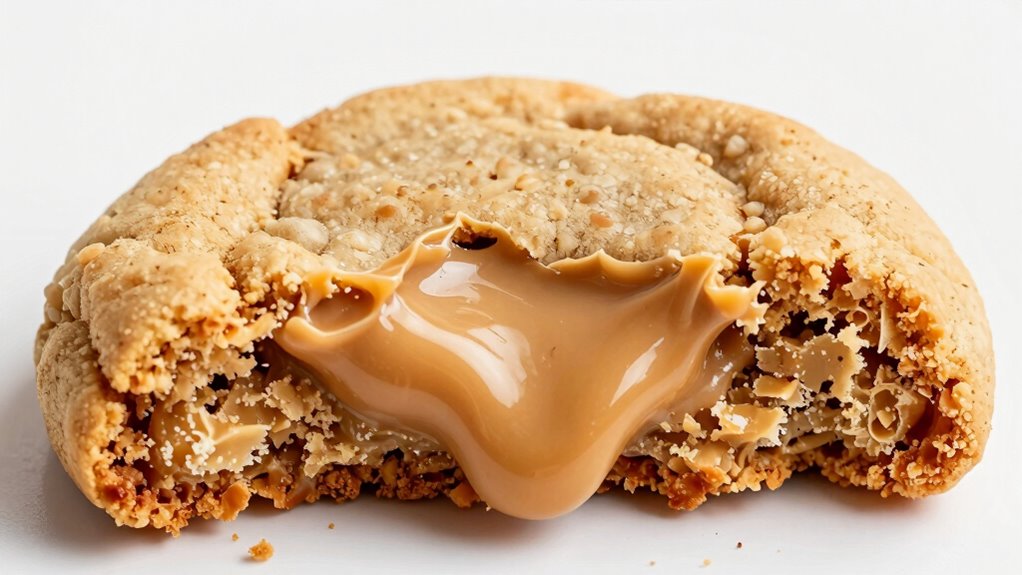

Adding peanut butter to your cookie dough makes them softer, chewier, and moister inside, thanks to its dense, moist nature. It acts as a binder, helping ingredients stick together and preventing excessive spreading, which results in thicker, more uniform cookies. The fats in peanut butter retain moisture and slow down drying, keeping the cookies tender and chewy longer. With proper baking techniques, you can enhance these effects and create irresistible treats—keep exploring to discover more ways peanut butter influences your cookies.

Get kitchen staples and gadgets delivered free — and shop member deals
- Fast, free delivery on millions of items
- Access to Prime Big Deal Days deals on October 6–7
- Prime Video, Amazon Music and more included
Key Takeaways
- Peanut butter makes cookies softer, chewier, and more moist due to its dense, fat-rich composition.
- It adds a nutty flavor and aroma, enhancing overall taste and sensory appeal.
- As a binder, peanut butter helps improve dough structure, preventing excessive spreading.
- Its moisture-retaining properties keep cookies softer and chewy over time.
- Proper baking techniques are essential to balance peanut butter’s effects and achieve desired texture.
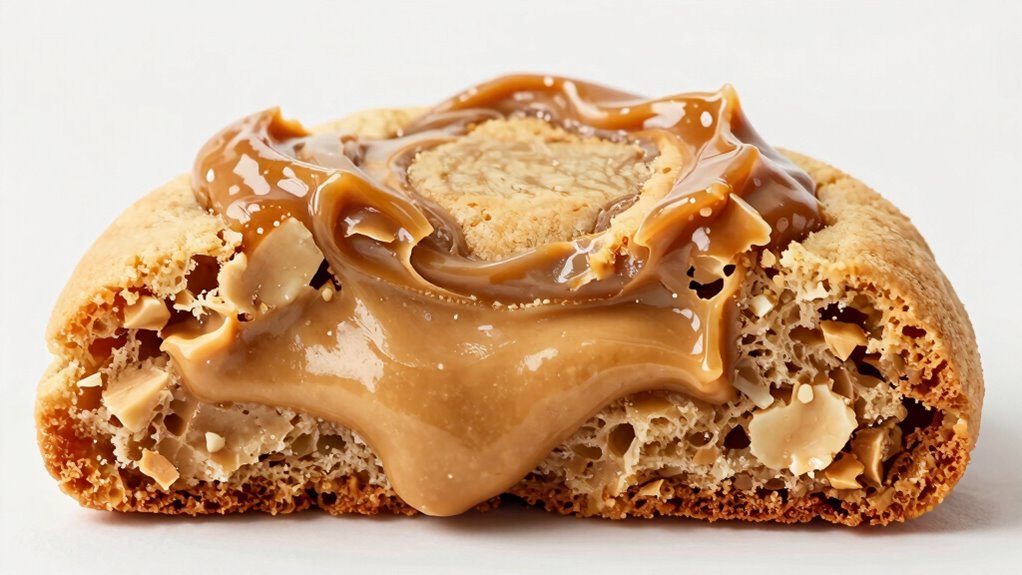
Peanut butter has a significant impact on the texture of cookies, often making them softer and chewier. When you add peanut butter to your dough, you’re introducing more than just flavor—you’re modifying the entire mouthfeel. Its creamy consistency blends smoothly into the batter, giving your cookies a dense, moist interior that’s hard to resist. The creamy nature of peanut butter helps create a tender crumb, reducing the need for additional fats or moisture in your recipe. As a result, your cookies are more likely to be chewy rather than crispy, with a slightly moist bite that lingers on your palate.
Peanut butter makes cookies softer, chewier, and adds a moist, tender crumb that’s hard to resist.
Beyond texture, peanut butter contributes a distinctive nutty flavor that enhances the overall taste profile of your cookies. This nutty flavor adds depth and richness, making each bite more complex and satisfying. The flavor isn’t overpowering but complements other ingredients like chocolate, oats, or honey perfectly. When baked, the nutty aroma intensifies, filling your kitchen with a warm, inviting scent. This aroma signals that your cookies are almost ready, and it’s a great cue to keep an eye on the baking process to prevent overbaking, which could turn the soft, chewy interior into a dry, crumbly one.
The creamy consistency of peanut butter also plays a role in how your dough interacts with other ingredients. It acts as a binder, helping to hold everything together and giving the cookies a cohesive structure. This prevents spreading too much during baking, resulting in cookies with a thicker, more uniform shape. Because peanut butter is rich and dense, it can also influence the moisture content of your dough, making the cookies less brittle and more pliable. You’ll notice that cookies made with peanut butter tend to stay softer longer, even after cooling, because the fat and moisture in the nut butter slow down the drying process. Additionally, the presence of fats in peanut butter can help improve the overall moisture retention, contributing to the cookie’s soft texture over time. Incorporating proper baking techniques can further enhance these effects, ensuring your cookies turn out just right. Understanding the baking process can help you adjust times and temperatures to optimize the texture when using peanut butter. Moreover, paying attention to ingredient ratios can make a significant difference in achieving the ideal consistency.
Furthermore, using the right baking times and temperatures can help prevent cookies from becoming overly dry or tough, especially when incorporating dense ingredients like peanut butter. The nutty flavor, combined with the creamy consistency, ensures that each cookie not only tastes delicious but has a satisfying, chewy texture that’s hard to beat. When you incorporate peanut butter thoughtfully into your recipes, it elevates your cookies from ordinary to irresistibly soft, chewy, and flavorful treats that keep everyone coming back for more.
As an affiliate, we earn on qualifying purchases.
Frequently Asked Questions
Does Natural Peanut Butter Affect Cookie Texture Differently Than Processed Varieties?
Yes, natural peanut butter affects cookie texture differently than processed varieties. Natural peanut butter tends to be oilier and less stable, which can make cookies softer and crumblier. Processed peanut butter has added stabilizers, resulting in a firmer, more uniform texture. Additionally, natural peanut butter enhances flavor more authentically, giving your cookies a richer, more nuanced taste. Your choice influences both texture and flavor, so pick based on your desired cookie outcome.
How Does Peanut Butter Quantity Influence Cookie Chewiness?
When you add more peanut butter, the cookie’s chewiness ramps up, thanks to its density and moisture content. Imagine biting into a thick, fudgy treat that resists your teeth—more peanut butter means softer, more elastic bites. But be cautious—too much can make your cookies overly moist and dense, losing that perfect balance. Adjust the quantity carefully to craft cookies with just the right chewiness you crave.
Can Peanut Butter Substitute for Butter in Cookie Recipes Without Affecting Texture?
Yes, you can substitute peanut butter for butter in cookie recipes, but expect a different texture and flavor. Peanut butter adds a rich, nutty taste and enhances flavor, while also providing nutritional benefits like protein and healthy fats. Keep in mind, peanut butter’s moisture content may make cookies softer or chewier. Adjust baking time or add a little flour if needed, to achieve your desired texture.
What Role Does Peanut Oil Content Play in Cookie Crumb Structure?
Peanut oil content markedly influences your cookie crumb structure by affecting moisture and fat distribution. Higher peanut oil levels create a softer, more tender crumb, as the oil coats flour particles, inhibiting gluten formation. Conversely, lower peanut oil results in a firmer, crumblier texture. Managing peanut oil helps you control the cookie’s overall crumb structure, ensuring it matches your desired consistency and mouthfeel.
How Does Roasting Peanuts Before Making Peanut Butter Impact Cookie Texture?
Roasting peanuts before making peanut butter enhances flavor and impacts cookie texture considerably. You’ll notice a deeper, richer taste because roasting boosts flavor enhancement. This process also affects the oil release, making the peanut butter creamier and more cohesive, which in turn creates a softer, more tender cookie texture. So, by roasting your peanuts, you not only improve flavor but also achieve cookies with a better, more desirable crumb.
Conclusion
So, next time you add peanut butter to your cookie dough, prepare for a texture transformation so dramatic it’s like giving your cookies a secret superpower. They’ll be irresistibly chewy, unexpectedly tender, and so rich they could make a cookie lover faint! Peanut butter isn’t just an ingredient; it’s a magic wand that turns ordinary cookies into legendary, mouthwatering masterpieces. Trust me, once you try it, your cookies will never be the same—prepare for a flavor revolution!
Fall Picks
fall essentials
As an affiliate, we earn on qualifying purchases.