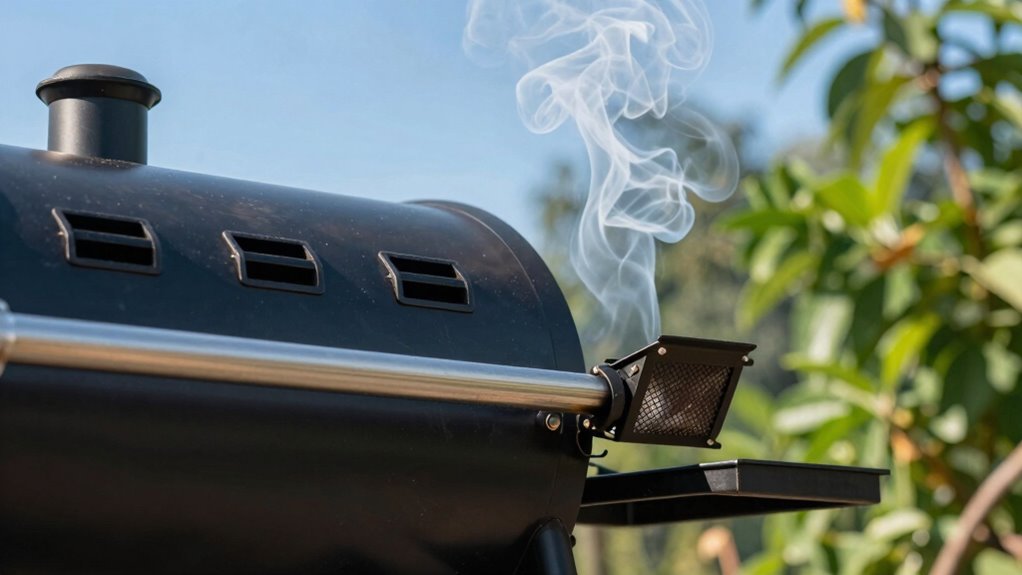

Your success with a backyard smoker largely depends on how well you manage airflow. Proper airflow ensures stable temperatures, consistent smoke, and even cooking. Too much airflow causes temperature spikes and overpowering smoke, while too little results in weak flavor and uneven heat. By fine-tuning vents and dampers, you can control oxygen flow, which is essential for flavor and temperature stability. Keep adjusting and monitoring—there’s more to reveal here that can make your smoked dishes perfect.
Key Takeaways
- Proper airflow management ensures consistent temperature control, preventing the smoker from fluctuating or rising unexpectedly.
- Effective airflow regulation enhances smoke flavor, avoiding overpowering or weak smoke that can cause the smoker to “rise” or “fall.”
- Precise vent and damper adjustments promote even heat distribution, critical for reliable, high-quality smoking results.
- Poor airflow control leads to temperature swings, causing the smoker to rise (overheat) or fall (cool down).
- Consistent airflow is essential for maintaining steady cooking conditions and achieving optimal smoking performance.
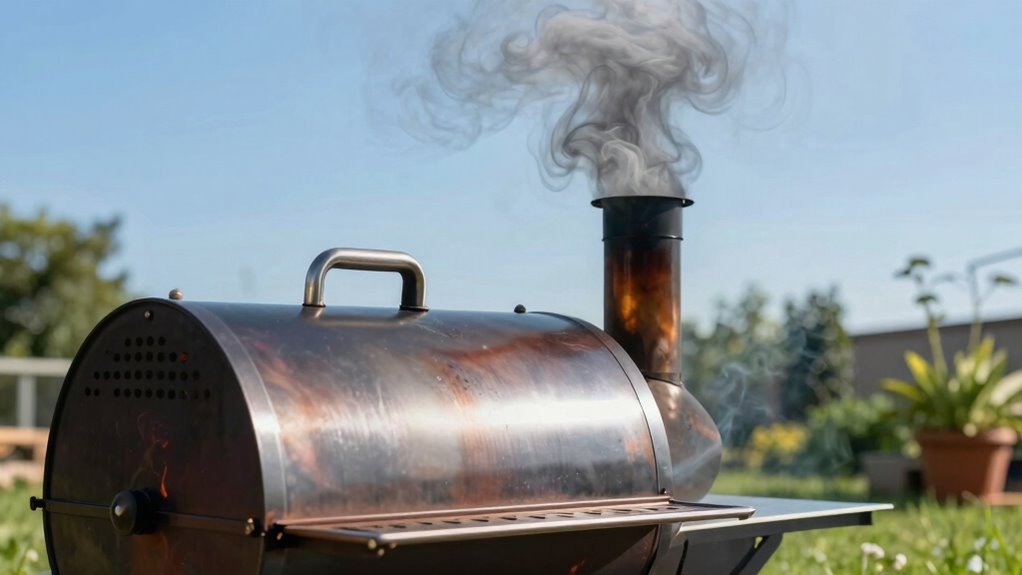
Proper airflow management can make or break your backyard smoking experience, as it directly influences temperature control and smoke flavor. When you master airflow, you guarantee your smoker maintains consistent heat and delivers rich, smoky flavors without constant adjustments. Without it, you risk fluctuating temperatures that can lead to uneven cooking and compromised flavor retention. Achieving steady temperature stability depends heavily on your ability to control how air enters and exits your smoker. Too much airflow can cause your temperature to spike, while too little can cause it to drop, making your meat cook unevenly. Fine-tuning your vents and dampers is key; opening them slightly increases airflow, raising the temperature, and closing them reduces airflow, lowering the heat. This balance allows you to keep your smoker at the desired temperature for hours, which is essential for slow-cooked cuts and larger roasts. Airflow control is a crucial aspect of maintaining this delicate balance and ensuring optimal cooking conditions. Ensuring consistent airflow patterns can prevent temperature swings and promote even cooking throughout the process.
Airflow also plays a pivotal role in flavor retention. When you control the amount of oxygen fueling the fire, you influence the type and intensity of smoke produced. Proper airflow ensures a clean, steady burn that generates a consistent, flavorful smoke without harsh or bitter notes. If airflow is too restricted, your fire may smolder, producing weak smoke that doesn’t fully flavor your meat. Conversely, too much airflow can create a roaring fire, producing overly intense smoke that can overpower the meat’s natural flavors. By carefully managing the vents, you help produce a balanced smoke that penetrates the meat evenly, enhancing flavor without overwhelming it. Additionally, understanding the importance of smoke quality can help you achieve the perfect flavor profile for your smoked dishes. Ensuring proper air circulation inside your smoker also prevents heat spots and promotes even cooking, which is essential for achieving consistent results.
backyard smoker airflow vent damper
As an affiliate, we earn on qualifying purchases.
As an affiliate, we earn on qualifying purchases.
Frequently Asked Questions
How Do Outdoor Weather Conditions Affect Airflow in Backyard Smokers?
Outdoor weather conditions greatly affect airflow in your backyard smoker. Wind impact can either boost or hinder airflow, making temperature control tricky. Strong gusts may cause uneven heat, while calm conditions help maintain steady temperature and smoke flow. Temperature effects also matter—hot days can increase airflow, risking over-smoking, whereas cold weather can slow it down. Adjust your vents accordingly to compensate for these weather influences and keep your smoking consistent.
What Materials Are Best for Constructing Airflow Vents?
You should choose materials like stainless steel or high-temperature ceramic for constructing airflow vents because of their durability and resistance to heat. Proper vent placement is vital—position vents where they can optimize airflow without restricting it. These materials guarantee longevity and reliable performance, even with outdoor weather changes. By focusing on durable materials and strategic vent placement, you improve airflow management, resulting in better smoke control and consistent cooking temperatures.
Can Airflow Management Improve Smoke Flavor Consistency?
Imagine you’re a jazz musician fine-tuning your sax—airflow management is your secret. Yes, it can improve smoke flavor consistency by ensuring proper smoke control and even heat distribution. When you carefully adjust vents, you enhance flavor enhancement and prevent bitter or weak notes in your smoked dishes. Proper airflow keeps your smoker performing at its best, giving you predictable, delicious results every time, just like a well-played tune.
How Often Should Airflow Components Be Cleaned or Replaced?
You should clean your airflow components regularly, ideally after every few uses, to maintain proper airflow and prevent buildup. Follow maintenance schedules recommended by the manufacturer to guarantee component durability. Regular cleaning helps prevent blockages and extends the lifespan of parts like vents and dampers. Replace any worn or damaged components promptly to keep your smoker functioning efficiently, ensuring consistent smoke flavor and ideal cooking results.
Are There Specific Airflow Techniques for Different Types of Backyard Smokers?
If you want consistent flavor preservation, you should customize airflow based on your smoker type. For example, with a kamado-style smoker, opening vents gradually controls heat and smoke flow, enhancing flavor. For offset smokers, adjusting the intake damper allows precise airflow management. Tailoring airflow techniques like these optimizes smoke circulation, ensuring your backyard smoking results are flavorful and tender every time.
Conclusion
Mastering airflow is like tending a delicate garden — when you nurture it just right, your backyard smoker thrives, delivering smoky perfection every time. If you ignore the vents or block the breeze, your efforts can go up in smoke. Keep a close eye on airflow, adjust as needed, and you’ll turn your outdoor cooking space into a flavorful oasis. Remember, good airflow is the wind that propels your smoking journey to success.