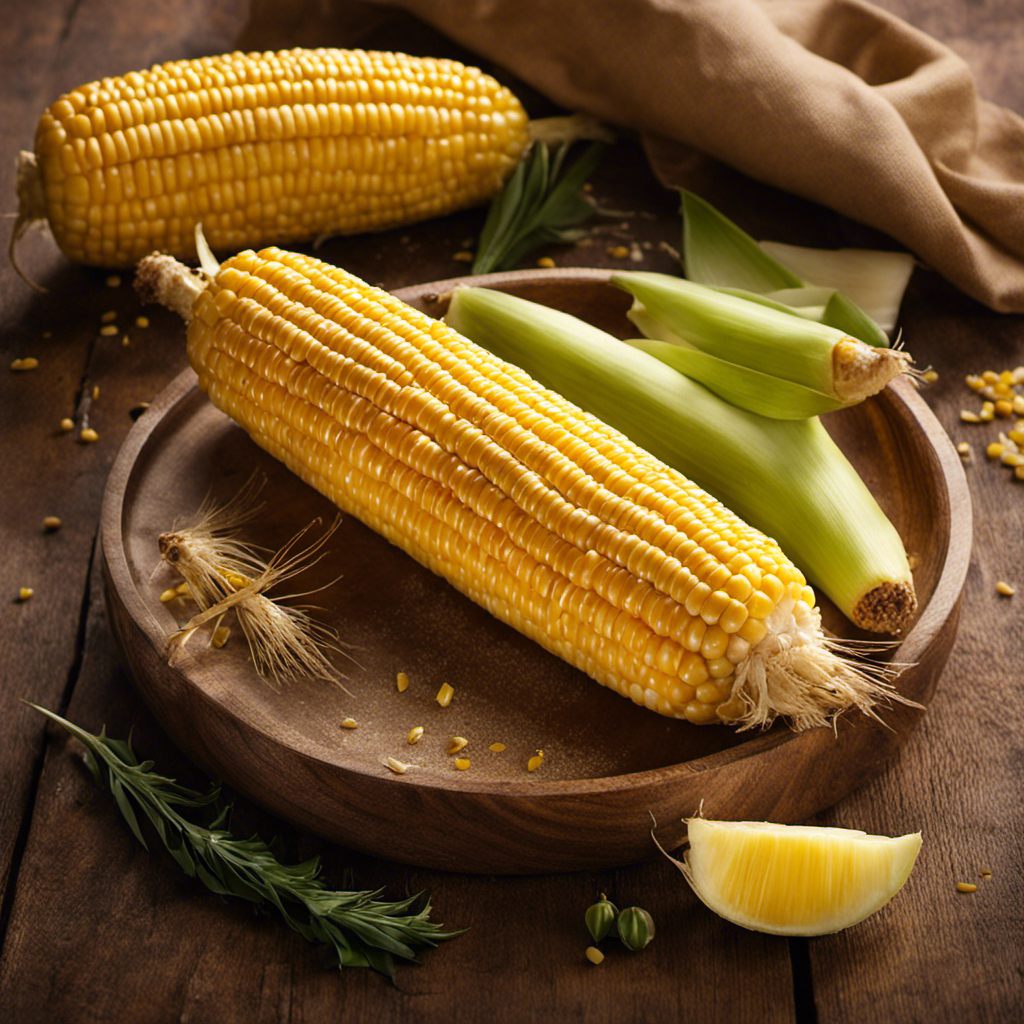

While devouring a butter-slathered ear of corn on the cob, I can’t help but ponder how many carbohydrates I am consuming.

Get kitchen staples and gadgets delivered free — and shop member deals
- Fast, free delivery on millions of items
- Access to Prime Big Deal Days deals on October 6–7
- Prime Video, Amazon Music and more included
In this article, we’ll delve into the nutritional value of corn on the cob and break down its carbohydrate content.
We’ll also explore how the addition of butter affects the carb count.
By understanding these factors, we can make informed choices and effectively manage our carb intake while enjoying this delicious summer treat.
Key Takeaways
- Corn on the cob is rich in vitamins A, B, and C, as well as minerals like magnesium and potassium.
- One medium-sized ear of corn typically contains around 20 grams of carbohydrates, and this amount can vary depending on the size and preparation of the corn.
- Adding butter to corn on the cob adds a small amount of additional carbs and can affect the glycemic index of the corn.
- To manage carbs in corn on the cob, consider portion control by sticking to one ear per serving and opting for healthier toppings like olive oil, lemon juice, or herbs.
The Nutritional Value of Corn on the Cob
You’ll be happy to know that corn on the cob is not only delicious but also packed with essential nutrients. It is a great addition to any balanced diet.
Corn on the cob provides numerous nutritional benefits. It is rich in vitamins A, B, and C, as well as minerals like magnesium and potassium. These nutrients support a healthy immune system, promote good vision, and aid in digestion. Additionally, corn on the cob is a good source of dietary fiber, which helps regulate blood sugar levels and promotes good digestive health.
When it comes to cooking methods, boiling and grilling are two popular options. Boiling helps retain the corn’s natural sweetness, while grilling adds a smoky flavor.
Now, let’s delve into the carbohydrate content in corn on the cob.
Carbohydrate Content in Corn on the Cob
Don’t forget to consider the carbohydrate content when enjoying a delicious corn on the cob slathered in butter.
Corn on the cob is a popular summer treat, but it’s important to be mindful of its carbohydrate count, especially if you’re following a low-carb or ketogenic diet. One medium-sized ear of corn typically contains around 20 grams of carbohydrates. However, the amount of carbs can vary depending on the size of the corn and how it’s prepared.
Boiling or grilling corn on the cob is a common and delicious way to enjoy it, and these cooking methods don’t significantly alter the carbohydrate content. Adding butter to your corn on the cob will add a small amount of additional carbs, but it’s a flavorful and traditional choice. Just be sure to keep track of your overall carbohydrate intake for the day, especially if you’re watching your carb count.
Breaking Down the Carbs in Corn on the Cob
Boiling or grilling corn on the cob doesn’t significantly change its carbohydrate content. The amount of carbs in corn largely depends on the variety.
For instance, sweet corn, which is the most common type, contains about 19 grams of carbs per 100 grams. On the other hand, field corn, also known as dent corn, has a higher carbohydrate content, with around 74 grams per 100 grams.
Despite the variation in carb content, corn on the cob is still a healthy addition to your diet. It is a good source of dietary fiber, providing about 2 grams per serving. Corn also contains essential vitamins and minerals, such as vitamin C, thiamine, and folate. Moreover, it is rich in antioxidants that can help protect against chronic diseases.
How Butter Affects the Carb Count in Corn on the Cob
When adding butter to corn on the cob, it’s important to consider its impact on the overall carbohydrate count. Butter is a popular addition to corn on the cob, but it can affect the carb content in different ways.
One important factor to consider is the effect of cooking methods on corn’s carbohydrate content. Boiling corn on the cob actually helps to retain its carbohydrate content, while grilling or roasting can result in a slight reduction.
Additionally, butter can also affect the glycemic index of corn. The glycemic index measures how quickly carbohydrates are digested and raise blood sugar levels. Adding butter to corn can slow down the digestion process, leading to a lower glycemic index.
Therefore, when enjoying corn on the cob with butter, it’s important to keep in mind its impact on both the carbohydrate count and glycemic index.
Making Informed Choices: Managing Carbs in Corn on the Cob
It’s important to be informed when managing carbohydrate intake while enjoying corn on the cob.
Corn on the cob is a delicious summer staple, but it can be high in carbohydrates. If you’re looking for low carb alternatives, consider substituting regular corn with grilled zucchini or eggplant slices. These vegetables are lower in carbs and still provide a satisfying crunch.
When it comes to portion control, it’s helpful to remember that one medium-sized ear of corn contains about 25 grams of carbs. To manage your intake, try to stick to one ear of corn per serving.
Additionally, avoid slathering your corn with butter or mayonnaise, as they can add unnecessary calories and carbs. Instead, opt for healthier toppings like olive oil, lemon juice, or herbs to enhance the flavor without adding excessive carbs.
Frequently Asked Questions
Can I Eat Corn on the Cob if I Am on a Low-Carb Diet?
Yes, I can eat corn on the cob while on a low-carb diet. Although corn does contain carbs, it can still be enjoyed in moderation. It’s important to be mindful of portion sizes to stay within your carb limits.
Does the Cooking Method Affect the Carbohydrate Content of Corn on the Cob?
Does the cooking method affect the carbohydrate content of corn on the cob? Absolutely! Different cooking methods can impact the nutritional value of corn. Boiling retains more carbs compared to grilling or roasting, so choose wisely!
How Does the Size of the Corn on the Cob Affect Its Carbohydrate Content?
The size of the corn on the cob can impact its carbohydrate content. There is a relationship between corn size and nutritional value, with larger cobs generally containing more carbs.
Are There Any Health Benefits of Eating Corn on the Cob?
Eating corn on the cob has several health benefits. It is a good source of fiber, vitamins, and minerals. It can aid in digestion, promote heart health, and support weight management. Its nutritional value shouldn’t be overlooked.
Can I Add Other Toppings Besides Butter to My Corn on the Cob Without Significantly Increasing the Carb Count?
I love exploring alternative toppings for corn on the cob. There are plenty of carb-friendly options like herbs, spices, and low-carb sauces. Experimenting with different flavors can make your corn on the cob even more delicious!
Conclusion
In conclusion, corn on the cob with butter can be a delicious and satisfying treat.
However, it is important to be mindful of its carbohydrate content, especially for those watching their carb intake.
By understanding the nutritional value and breaking down the carbs in corn on the cob, individuals can make informed choices.
Remember, managing carbs is like steering a ship through rough seas – with knowledge and awareness, we can navigate towards a healthier lifestyle.
Fall Picks
fall essentials
As an affiliate, we earn on qualifying purchases.