
Yes, grass-fed butter is different nutritionally from conventional butter. It contains higher levels of omega-3 fatty acids, conjugated linoleic acid (CLA), and fat-soluble vitamins like A, D, E, and K2, thanks to the cows’ natural diet of fresh pasture. It also has more antioxidants, which help protect your cells. These nutritional benefits, along with its richer flavor, make grass-fed butter a better choice if you want to support your health and the environment. Keep exploring to learn why.
Key Takeaways
- Grass-fed butter contains higher levels of omega-3 fatty acids, supporting heart health and reducing inflammation.
- It has increased conjugated linoleic acid (CLA), linked to weight management and anti-inflammatory effects.
- Richer in fat-soluble vitamins A, D, E, and K2 due to cows grazing on nutrient-dense pasture.
- Contains more antioxidants, helping protect cells from oxidative stress.
- Nutrient retention during production preserves these beneficial compounds, making it nutritionally superior.
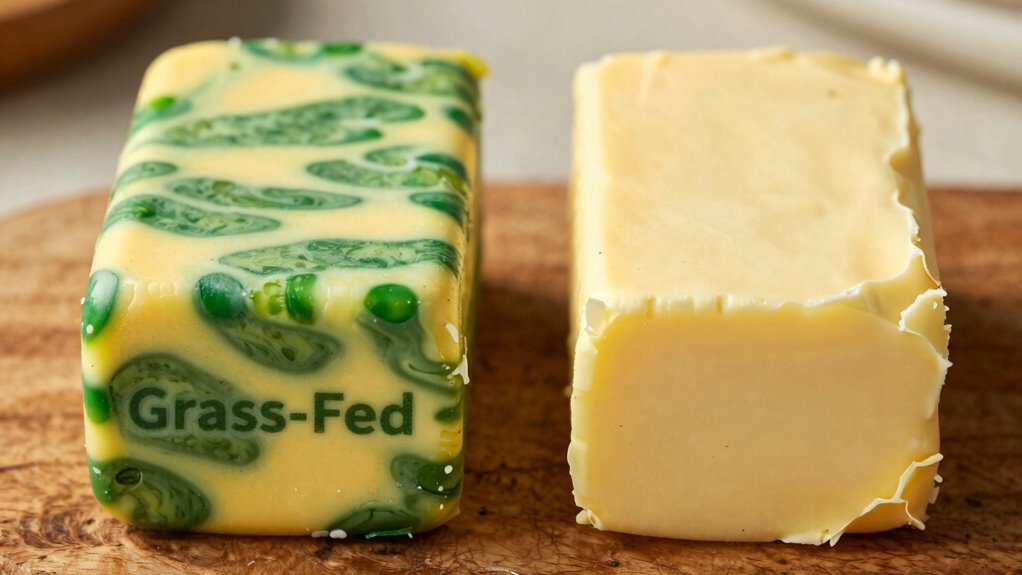
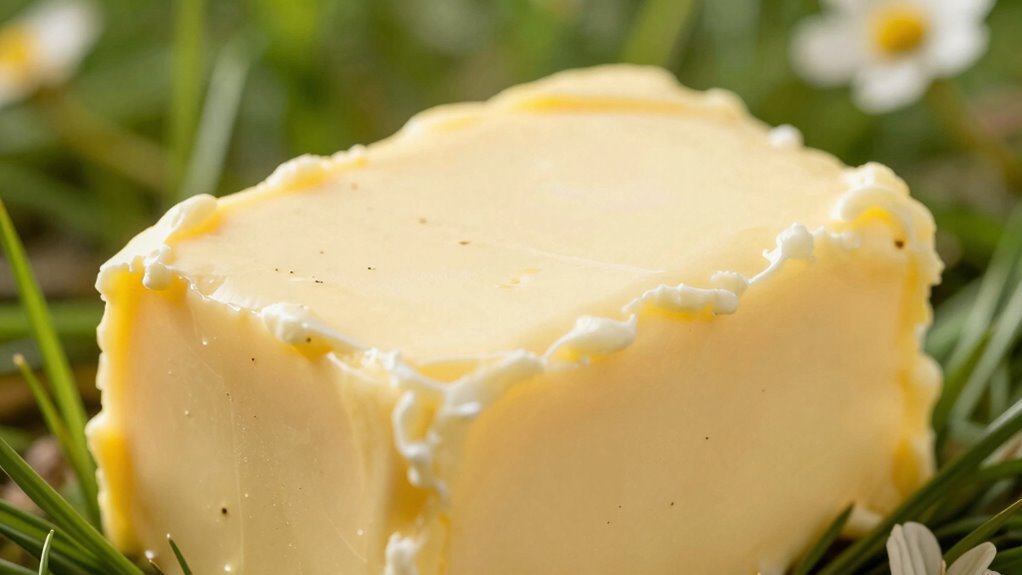
If you’re comparing different types of butter, you’ll notice that grass-fed butter often stands out for its nutritional profile. This difference mainly comes from the farming practices used to raise the cows. Grass-fed dairy cows graze on fresh pasture, which influences the butter’s flavor and nutrient content. Unlike conventional cows, which are often fed processed grains and supplements, grass-fed cows eat a natural diet, resulting in butter with a richer, more complex butter flavor. This natural diet not only enhances taste but also boosts the butter’s nutritional value.
Because of the farming practices involved, grass-fed butter tends to contain higher levels of beneficial nutrients. You’ll find more omega-3 fatty acids, which are known for supporting heart health and reducing inflammation. Conventional butter, made from grain-fed cows, usually has lower omega-3s and a higher omega-6 to omega-3 ratio, which isn’t ideal for maintaining a healthy balance. Grass-fed butter also typically boasts higher amounts of conjugated linoleic acid (CLA), a fat linked to potential weight management and anti-inflammatory effects. These nutrients are naturally present in the cows’ diet and are retained in the butter made from their milk. Additionally, nutrient retention during the production process helps preserve these valuable compounds.
Grass-fed butter is rich in omega-3s and CLA, supporting heart health and reducing inflammation.
In addition, grass-fed butter is often richer in fat-soluble vitamins like vitamins A, D, E, and K2. Because these vitamins are found in the lush pasture grasses, cows grazing on pasture produce milk that’s naturally more nutrient-dense. When you consume grass-fed butter, you’re getting a product that’s more aligned with the nutrients found in a natural, plant-based diet. Some studies also suggest that grass-fed butter contains higher levels of antioxidants, which help protect your cells from oxidative stress. Furthermore, the sustainable farming practices associated with grass-fed dairy often support biodiversity and environmental health, making it a more eco-conscious choice. This approach can also contribute to soil health, promoting a more sustainable agricultural ecosystem. Incorporating sustainable farming practices can enhance the overall quality of the product and the environment. Additionally, these practices often lead to better water conservation, benefiting the broader ecosystem.
The flavor profile of grass-fed butter can be noticeably different from conventional butter. It tends to have a more robust, grassy, and sometimes slightly sweet taste, reflecting the cows’ diet. This enhanced flavor can elevate your cooking and baking, adding depth and richness that’s hard to replicate with grain-fed butter. The farming practices that produce grass-fed butter also tend to be more sustainable and environmentally friendly, which may influence your choice if you’re conscious of ecological impact.
As an affiliate, we earn on qualifying purchases.
Frequently Asked Questions
Does Grass-Fed Butter Taste Different From Conventional Butter?
Yes, grass-fed butter tastes different from conventional butter. You’ll notice a richer, more complex flavor with a slightly grassy or earthy note, making it more vibrant than the milder, sweeter taste of regular butter. Texture differences are subtle but noticeable; grass-fed butter tends to be creamier and sometimes softer. Overall, the flavor comparison highlights its more robust, natural taste, enhancing your culinary experience.
Is Grass-Fed Butter More Environmentally Sustainable?
Think of grass-fed butter as a greener path through a lush meadow. It generally has a smaller carbon footprint because cows graze on open land, reducing emissions compared to conventional farming. Plus, it often uses less land overall, supporting better land use practices. By choosing grass-fed, you’re helping to promote sustainable agriculture and lessen environmental impact, making your choice more eco-friendly and harmonious with nature.
How Does Grass-Fed Butter Affect Cholesterol Levels?
Grass-fed butter can positively impact your cholesterol levels by increasing HDL, or “good” cholesterol, which supports heart health. It contains higher omega-3 fatty acids and conjugated linoleic acid (CLA), known to promote better cholesterol balance. While it may slightly raise total cholesterol, the overall effect tends to favor heart health. Just remember to consume it in moderation and maintain a balanced diet for ideal benefits.
Can Grass-Fed Butter Be Used in Baking the Same Way?
Yes, you can use grass-fed butter in baking the same way as regular butter. Its flavor profile offers a richer, more complex taste, which can enhance baked goods. Plus, grass-fed butter’s baking versatility makes it suitable for cookies, cakes, and pastries. Just keep in mind that its slightly different consistency might require minor adjustments in your recipes, but overall, it works seamlessly for all your baking needs.
Is Grass-Fed Butter More Expensive Than Regular Butter?
Yes, grass-fed butter is generally more expensive than regular butter. When you look at the pricing comparison, it’s clear that the premium comes from the higher-quality feed and ethical farming practices. Consumer preferences lean toward grass-fed for its perceived health benefits and better taste, making it worth the splurge for many. While it costs more, many believe it’s a small price to pay for the added benefits.
Conclusion
While some might think the nutritional differences between grass-fed and conventional butter are minor, they can add up over time, especially if you prioritize omega-3s and vitamin K2. Don’t dismiss grass-fed butter as just a fad; it offers genuine benefits that support your health. If you’re concerned about cost, remember that investing in quality food can lead to better long-term wellness. Isn’t your health worth the extra effort?