Butter, my adored one! You are the silky, luscious delight that adds taste and depth to countless meals.

Get kitchen staples and gadgets delivered free with Prime
- Fast, free delivery on millions of items
- Prime Video, Amazon Music and more included
- Member-only deals all year
But have you ever wondered just how many calories are hiding in a tablespoon of this delectable spread? Well, wonder no more!
In this article, we’ll dive into the calorie content of a tablespoon of butter and explore how it compares to other ingredients. Armed with this knowledge, you’ll be able to make informed choices and manage your butter intake without sacrificing taste.
Let’s get started!
Key Takeaways
- A tablespoon of butter contains around 100-120 calories.
- Butter is high in fat, with 11 grams per tablespoon.
- Butter’s high saturated fat content can raise bad cholesterol levels.
- Consider healthier alternatives to butter, such as avocado or olive oil.
Understanding Butter Calories
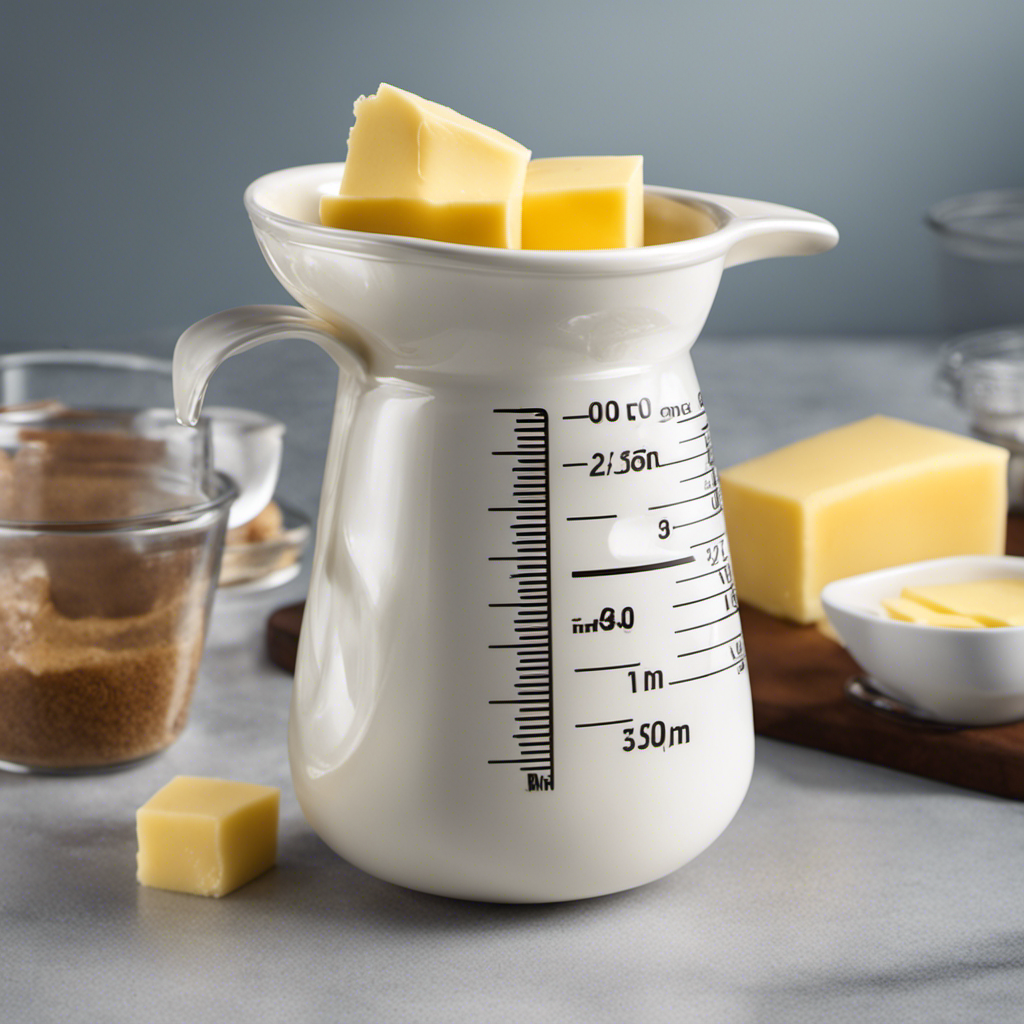
You’ll want to know how many calories are in a tablespoon of butter. When it comes to butter nutrition, understanding the serving size is crucial.
A tablespoon of butter typically contains around 100-120 calories. It may seem high, but it’s important to remember that butter is a concentrated source of fat. Additionally, butter is rich in saturated fat, which can increase cholesterol levels if consumed in excess.
However, it’s also worth noting that butter provides essential fatty acids and fat-soluble vitamins. To incorporate butter into a balanced diet, moderation is key. Opt for smaller portion sizes and try alternative spreads like olive oil or avocado when possible.
Being mindful of your overall calorie intake and balancing it with other nutrient-dense foods is important for maintaining a healthy lifestyle.
Calorie Breakdown of a Tablespoon of Butter
If you’re curious, a tablespoon of butter has a specific breakdown of its calorie content. Butter is a delicious and versatile ingredient that adds richness to many dishes. However, it is important to be mindful of its calorie content and nutritional value. Here is a breakdown of the calories and nutritional information for a tablespoon of butter:
| Nutrient | Amount per tablespoon |
|---|---|
| Calories | 102 |
| Fat | 11 grams |
| Saturated fat | 7 grams |
| Cholesterol | 31 milligrams |
As you can see, a tablespoon of butter contains 102 calories, making it a calorie-dense ingredient. It is also high in fat, particularly saturated fat, which can contribute to heart disease if consumed in excess. Additionally, butter is a significant source of cholesterol. While butter can add flavor to your meals, it is important to use it in moderation and consider other healthier alternatives when possible.
Comparing Butter Calories to Other Ingredients
When comparing the calorie content of different ingredients, it’s important to consider the nutritional value of each. Let’s take a look at how butter stacks up against other commonly used ingredients.
A tablespoon of butter contains around 100 calories. On the other hand, a tablespoon of olive oil has about 120 calories. While butter may have slightly fewer calories, it’s also important to consider the nutritional benefits.
Butter is high in saturated fats, which can raise cholesterol levels and increase the risk of heart disease. Olive oil, on the other hand, is a healthier option as it contains monounsaturated fats that can help lower bad cholesterol levels.
When comparing butter to margarine, both have similar calorie content, but margarine is often made from vegetable oils and may be a better choice for those looking to reduce saturated fat intake.
How Butter Calories Affect Your Diet
To maintain a healthy diet, it’s important to be mindful of how the calorie content of butter can impact your overall intake. Butter is delicious and adds flavor to many dishes, but it’s also high in calories. Each tablespoon of butter contains about 100 calories, which can quickly add up if you’re not careful.
Here are two key points to consider:
-
The impact of butter calories on weight gain: Consuming excess calories from butter can contribute to weight gain. It’s essential to balance your calorie intake with physical activity to maintain a healthy weight.
-
The role of butter calories in heart health: Butter is high in saturated fat, which can raise bad cholesterol levels and increase the risk of heart disease. Limiting your intake of butter can help promote heart health.
To manage your butter calories effectively, it’s important to make mindful choices and practice portion control.
Tips for Managing Butter Calories
You can effectively manage your butter calories by being mindful of your choices and practicing portion control.
When it comes to portion control, it’s important to remember that a little goes a long way. Instead of slathering your toast with a thick layer of butter, try using a small amount and spreading it evenly. This way, you can still enjoy the flavor without consuming excessive calories.
Additionally, consider healthier alternatives to butter. Avocado, for example, is a great substitute that provides healthy fats and fewer calories. Another option is using olive oil or coconut oil in cooking instead of butter. These alternatives can help you reduce your butter intake while still adding flavor to your meals.
Frequently Asked Questions
Can I Substitute Butter With Margarine or Oil to Reduce Calorie Intake?
Sure, you can substitute butter with margarine or oil to reduce calorie intake. However, it’s important to consider the health implications. The best alternatives would be ones that are lower in saturated fats and trans fats.
How Many Calories Are in Salted Versus Unsalted Butter?
When comparing salted and unsalted butter, it’s important to consider the calorie difference. Salted butter typically has slightly more calories than unsalted butter. It’s good to be mindful of calorie intake when using either option.
Does the Type of Butter (Organic, Grass-Fed, Etc.) Affect Its Calorie Content?
The type of butter (organic, grass-fed, etc.) can affect its calorie content. Calorie content variations and nutritional differences may exist between different types of butter, so it’s important to check the labels for accurate information.
Are There Any Health Benefits Associated With Consuming Butter in Moderation?
In moderation, butter can be part of a balanced diet. It contains essential fatty acids and vitamins. However, consuming excess butter can lead to health risks such as weight gain and high cholesterol levels.
Can I Still Enjoy Butter in My Diet if I Am Trying to Lose Weight?
Yes, you can still enjoy butter in your diet while trying to lose weight. However, it’s important to consume it in moderation. Consider using butter alternatives and be mindful of its impact on cholesterol levels.
Conclusion
In conclusion, a tablespoon of butter contains approximately 102 calories. This may not seem like much, but compared to other ingredients, it can add up quickly.
Managing butter calories is important for maintaining a healthy diet. Just like a drop of rain can make a ripple in a pond, every calorie counts towards our overall health.
By being mindful of our butter intake and opting for healthier alternatives, we can make a big impact on our well-being.
Fall Picks
fall essentials
As an affiliate, we earn on qualifying purchases.