A smart freezer organization system ends lost food forever by keeping everything easy to find, accessible, and well-preserved. Start by decluttering and creating designated zones for different food types, using transparent containers and labels for quick identification. Implement habits like regular rearranging and discarding expired items to maintain order. Maximize space with stacking and grouping, while keeping contents fresh with proper sealing and odor control. Keep this system in mind, and you’ll soon find it easier to prevent waste and locate items effortlessly.
Key Takeaways
- Implement clear zones for different food categories using labeled, transparent containers for quick identification.
- Use color-coded bins and labels to easily track expiration dates and prevent forgotten items.
- Regularly rearrange and discard expired foods to maintain an organized, clutter-free freezer.
- Maximize space by stacking similar items, dividing leftovers into smaller portions, and maintaining proper airflow.
- Incorporate odor control techniques, like essential oils, and proper storage methods to preserve freshness and prevent food loss.
Why a Cluttered Freezer Causes Food Waste and Frustration

A cluttered freezer makes it easy to lose track of what you have, leading to forgotten food and unnecessary waste. When items are buried under others, you might overlook older food that’s nearing spoilage, increasing the risk of food spoilage. This not only wastes perfectly good items but also costs you money. Additionally, a disorganized freezer hampers energy efficiency. When airflow is obstructed by clutter, you might notice **reduced energy efficiency** as the appliance works harder to maintain the right temperature, consuming more energy. Over time, this increases your energy bills and shortens your freezer’s lifespan. A **well-organized freezer promotes optimal airflow, which enhances energy efficiency and reduces operational costs. Keeping your freezer tidy ensures you use items before they spoil and helps maintain ideal food safety and energy efficiency. A clean and organized freezer** reduces waste and saves you money, making your kitchen more efficient overall.
Evaluate Your Freezer’s Organization and Spot Problem Areas

To effectively organize your freezer, start by taking everything out and evaluating how items are currently stored. Check if your freezer maintains a consistent temperature, as fluctuations can lead to frozen food spoilage. Examine the door insulation; gaps or damage can cause temperature variations, making storage less reliable. Identify cluttered areas where items are hard to see or reach, leading to forgotten food. Look for frozen items buried under others or expired products that need discarding. Notice if there are uneven ice buildup or frost, which might indicate temperature issues. Additionally, ensuring proper air circulation helps maintain consistent temperatures and prevents frost buildup. Regularly inspecting and maintaining the freezer’s door seals can help improve energy efficiency and temperature stability. Ensuring proper food storage practices can also prevent freezer burn and extend the shelf life of your food. Proper organization also involves using storage containers to keep items separated and easy to identify. Checking your freezer’s temperature settings regularly is essential to prevent spoilage and optimize performance. Finally, assess whether your current system allows quick access to frequently used items. Spotting these problem areas helps you optimize space, maintain proper freezer temperature, and prevent food waste.
Design an Easy-to-Access Freezer Layout
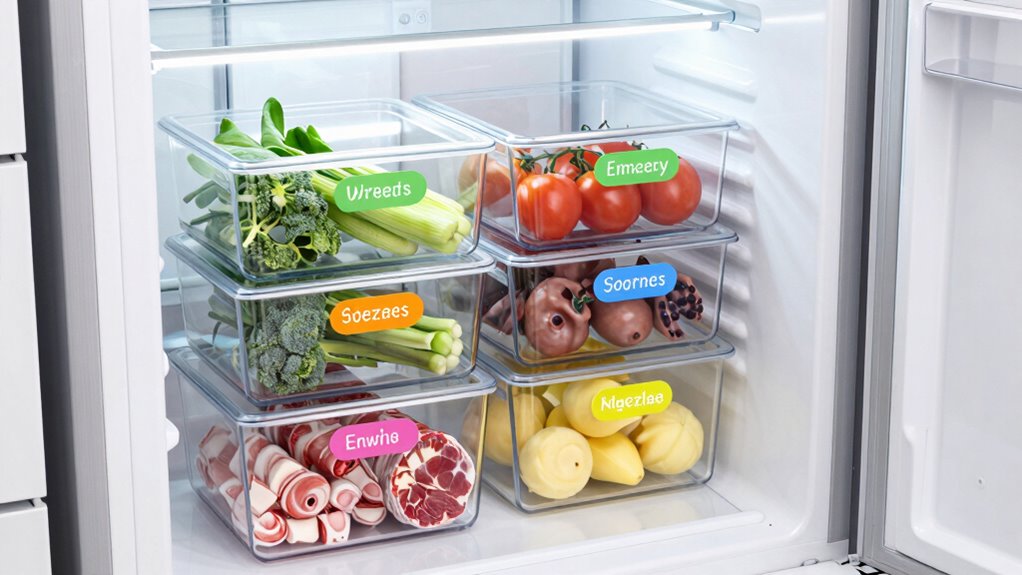
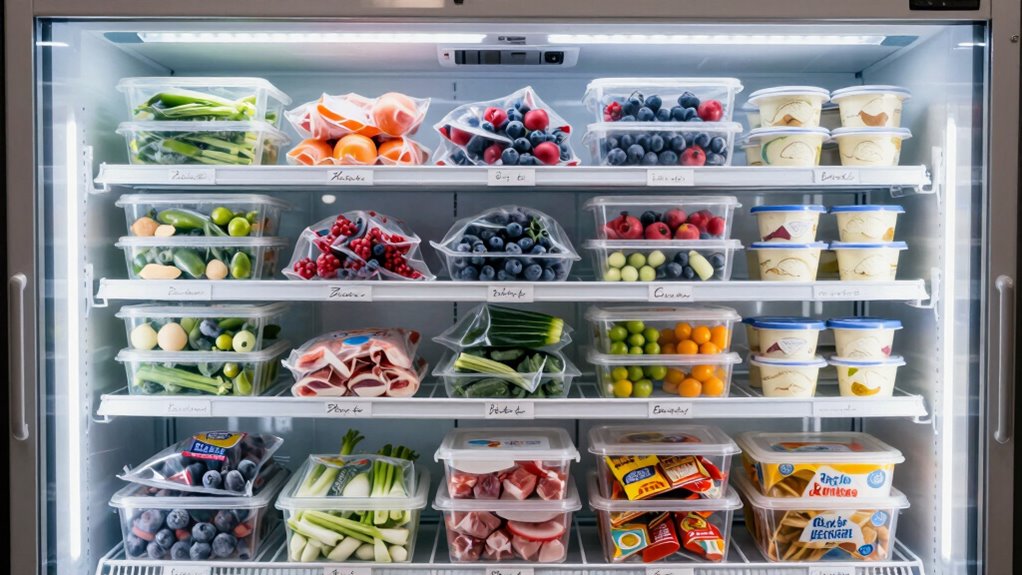
To make your freezer more accessible, start by creating clear zones for different types of food, so everything stays organized. Use transparent containers to easily see what’s inside without opening each one. Place frequently used items on easy-access shelves to save time and effort when grabbing what you need. Incorporate Free Floating storage techniques to maximize space and prevent items from shifting during movement. Additionally, implementing a proper airflow system can help maintain consistent temperatures and improve overall freezer efficiency. Optimizing filtration within your freezer can also reduce frost buildup and keep your food fresher longer, especially when paired with connected appliances that monitor and adjust temperature settings automatically. Recognizing the importance of air circulation can further enhance your freezer’s performance and prolong its lifespan.
Clear Zones for Categorized Food
Have you ever struggled to find what you need quickly in your freezer? Creating clear zones for categorized food helps you locate items instantly. Designate specific sections for meal prep, seasonal storage, and everyday essentials. Use labels or color-coded bins to keep everything visible and organized. This way, you can easily grab frozen vegetables for dinner or find ingredients for next week’s meal prep without digging through piles. Keeping similar items together reduces waste and prevents food from getting lost. Think about how you use your freezer regularly and assign zones accordingly. Clear zones make it simple to maintain your system, saving time and reducing frustration. Proper categorization ensures you always know where your frozen favorites are, which helps prevent food waste and keeps your freezer tidy.
Use Transparent Containers Effectively
Using transparent containers is a simple way to maximize the effectiveness of your organized freezer layout. They allow you to see contents instantly, reducing frost buildup caused by repeatedly opening and closing. Plus, clear containers help prevent freezer odors from mixing with your food, keeping everything fresh. To optimize your layout, label containers with contents and dates, so you don’t waste time searching. Arrange containers by category for easy access and avoid stacking too high, which can cause frost buildup and make retrieval difficult. Proper food storage techniques can extend the freshness and safety of your frozen items. Ensuring proper air circulation within your freezer can also prevent frost accumulation and help maintain consistent temperatures. Adequate temperature control is essential for preserving the quality of frozen foods. Here’s a suggested setup:
| Vegetables | Meats | Fruits |
|---|---|---|
| Left side | Center | Right side |
| Layered for access | Organized by date | Easy to see |
This setup keeps your freezer neat, accessible, and odor-free.
Prioritize Easy-Access Shelves
Creating an easy-to-access freezer layout guarantees you can quickly find what you need without rummaging through layers of food. Start by placing frequently used items on shelves at eye level, where they’re easiest to reach. Use freezer baskets to group similar items, making retrieval faster. Adjust shelving height to create compartments that fit your storage needs, preventing clutter. Keep less-used items on higher or lower shelves. Clearly label each shelf or basket for quick identification. Regularly review and reorganize to maintain accessibility.
- Place everyday essentials at eye level for quick access
- Use freezer baskets to organize small or loose items
- Adjust shelving height for custom compartments
- Keep seasonal or rarely used items on higher or lower shelves
- Label shelves and baskets for easy identification
Choose Storage Bins, Labels, and Categories to Stay Organized
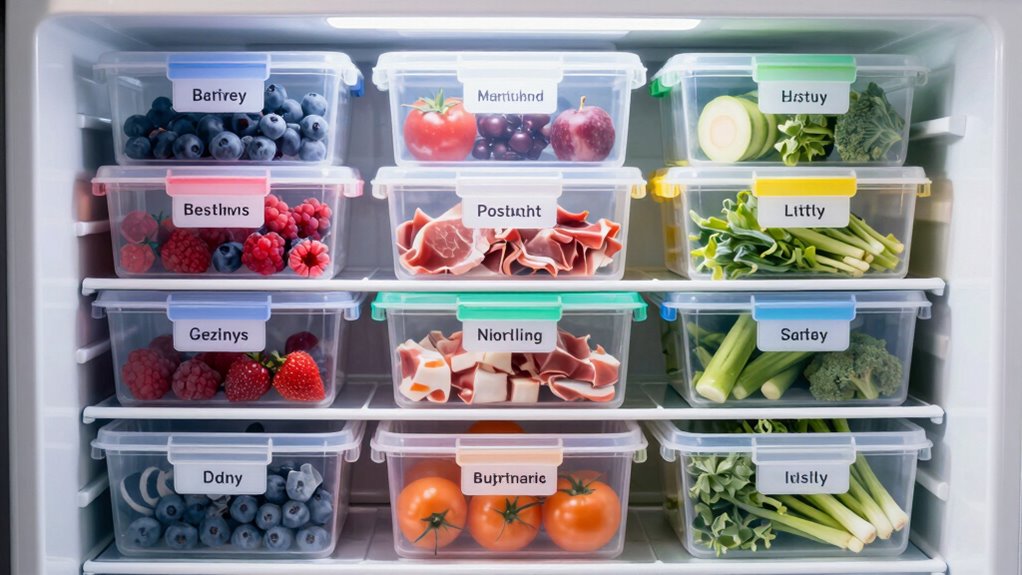
Choosing the right storage bins, labels, and categories is essential for a well-organized freezer. Using effective storage bin options helps maximize space and keeps items accessible. Clear labels with consistent labeling techniques ensure you’ll always know what’s inside without rummaging. Categorize foods such as vegetables, meats, and leftovers to streamline retrieval. Consider this setup:
| Category | Storage Bin Options | Labeling Techniques |
|---|---|---|
| Vegetables | Stackable clear bins | Use waterproof markers |
| Meats | Airtight containers | Label with date & item |
| Leftovers | Divided bins or trays | Use color-coded labels |
| Fruits | Bins with lids | Write descriptions & dates |
Implementing a systematic approach to freezer organization helps maintain order and reduces food waste over time. Additionally, arranging items by categories makes it easier to locate and rotate supplies efficiently. Using proper food storage techniques can also extend the freshness of your frozen items and prevent freezer burn. Incorporating essential oils, such as lavender or eucalyptus, into your organization routine can also help keep your freezer smelling fresh and free of odors. Proper air circulation within the freezer can further improve food preservation and prevent odors from lingering.
Build Simple Habits to Maintain Your Freezer’s Order
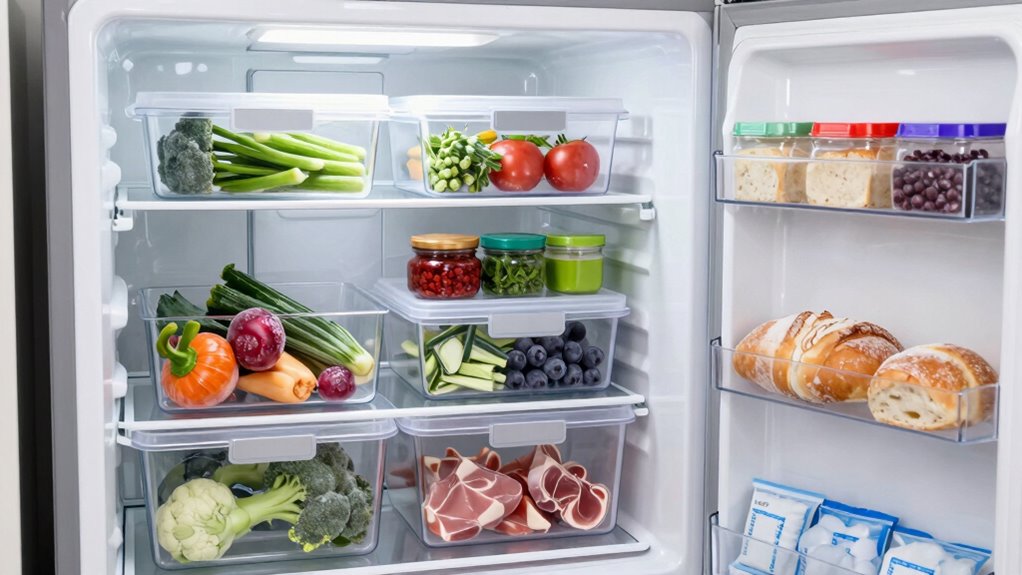
To keep your freezer organized over time, establishing simple habits is key. Consistent routines ensure your system stays effective, especially for meal prep and seasonal storage.
Establish simple, consistent habits to keep your freezer organized and efficient over time.
- Dedicate a few minutes weekly to rearrange items and discard expired food.
- Label containers immediately after filling them to track contents easily.
- Use clear categories like meats, vegetables, or desserts to streamline access.
- Rotate seasonal storage, placing newer items behind older ones.
- Incorporate a quick check before shopping to avoid overstocking or duplicates.
- Remember that electric bikes options can also be stored efficiently in your freezer to diversify your morning meals.
These habits help prevent clutter and make it easier to find what you need quickly. Small, regular actions keep your freezer organized, reducing food waste and saving you time in the long run.
Maximize Space and Keep Food Fresh With Your New System

Maximizing space and keeping food fresh starts with smart organization techniques that make the most of your freezer’s capacity. Use clear containers for frozen leftovers, so you can see what’s inside without rummaging. Label everything with dates to prevent waste and ensure freshness. Freeze liquids like broth or sauces in ice cube trays; once frozen, transfer the cubes to a labeled bag for easy portioning. Stack similar items and group like foods together to optimize space. Avoid overcrowding, which hampers air circulation and accelerates spoilage. Regularly check for expired items and reorganize as needed. These simple steps help you utilize every inch of your freezer efficiently and keep your food fresher for longer. This way, you’ll always have the right ingredients ready without wasted space.
Frequently Asked Questions
How Often Should I Reassess My Freezer Organization?
You should reassess your freezer organization every three to six months. This helps you stay on top of meal prep needs and maintain ideal space utilization. Regular checks allow you to discard expired items and reorganize for better space optimization. By doing this, you’ll prevent food waste and keep your freezer efficient, ensuring you always know what’s available and can quickly find ingredients for your next meal.
What Are the Best Materials for Freezer Storage Bins?
You should choose durable plastic containers and stackable bins for freezer storage. Look for BPA-free plastic that’s sturdy and airtight to prevent freezer burn. Stackable bins save space and keep your food organized. Clear plastic containers help you see contents at a glance, making it easier to find what you need. Opt for sizes that fit your freezer space and are easy to label for quick identification.
How Can I Prevent Freezer Burn on Stored Food?
A stitch in time saves nine, so start by setting your freezer temperature to 0°F. Always use airtight containers to prevent moisture exposure, which causes freezer burn. Wrap foods tightly with plastic wrap or aluminum foil before placing them in containers. Label everything clearly, and avoid opening the freezer frequently. By maintaining the right temperature and sealing foods properly, you’ll keep your food fresh and prevent freezer burn effectively.
Are There Specific Labels Recommended for Freezer Items?
Yes, you should use labels with strong durability for freezer items. Labeling best practices include using waterproof, smudge-proof labels that won’t peel or fade over time. You can opt for permanent markers or printable labels designed specifically for freezing. Make certain your labels are clearly written, include the date, and are securely attached to prevent them from falling off or smudging, keeping your freezer organized and your food easily identifiable.
How Do I Handle Expired or Spoiled Frozen Food Properly?
When handling expired or spoiled frozen food, prioritize freezer safety by checking for spoilage indicators like off-odor, discoloration, or sliminess. If you notice any signs, promptly dispose of the items in sealed bags to prevent contamination. Never refreeze spoiled food, as it can pose health risks. Regularly inspect your freezer to catch spoilage early, ensuring your food remains safe and your freezer stays organized.
Conclusion
When your freezer stays organized, you’ll find what you need before it slips your mind—and before it slips past its prime. Coincidentally, a tidy freezer often means fewer surprises at mealtime and less wasted food. By sticking to your new system, you’ll save time, money, and frustration. So, keep up the habits you’ve built, and you’ll enjoy a freezer that works for you—rather than against you—every single day.