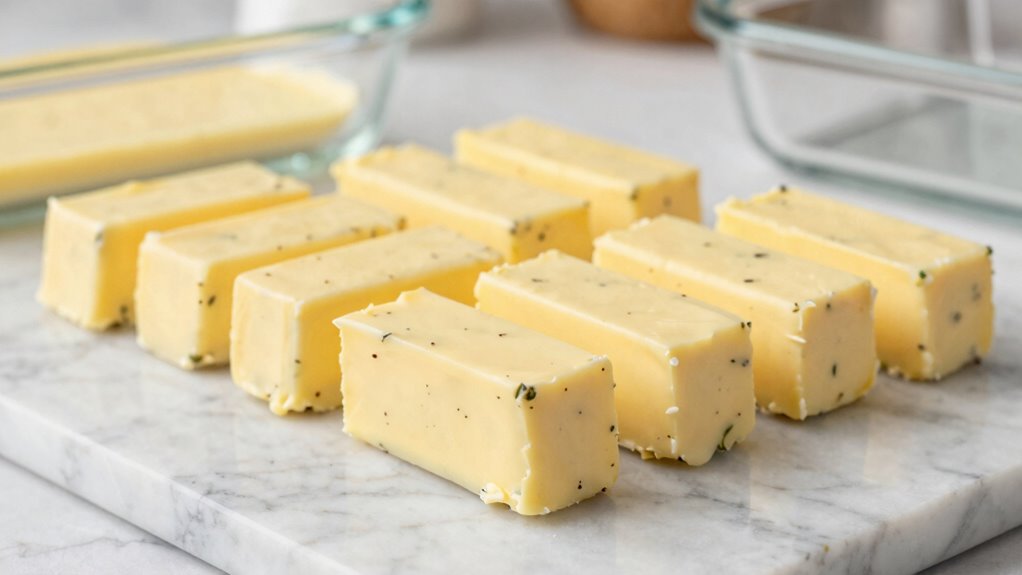

To best freeze your compound butter logs, thoroughly shape them into tight logs using plastic wrap or parchment paper, ensuring they’re smooth and well-blended. Wrap each log tightly in plastic or foil to prevent moisture and air exposure, then place them in airtight containers or resealable freezer bags. Keep your freezer at 0°F (-18°C) and minimize door openings to prevent temperature fluctuations. Proper packing and storage will keep your flavors fresh and vibrant for months—continue on to discover more tips for perfect preservation.

Get kitchen staples and gadgets delivered free with Prime
- Fast, free delivery on millions of items
- Prime Video, Amazon Music and more included
- Member-only deals all year
Key Takeaways
- Wrap the compound butter logs tightly in plastic wrap or parchment paper to prevent air and moisture exposure.
- Place the wrapped logs in resealable freezer bags or airtight containers, removing excess air.
- Label each package with the date and flavor for easy identification and rotation.
- Store at a consistent 0°F (-18°C) to prevent freezer burn and preserve flavor.
- Minimize handling and avoid frequent freezer openings to maintain optimal freezing conditions.
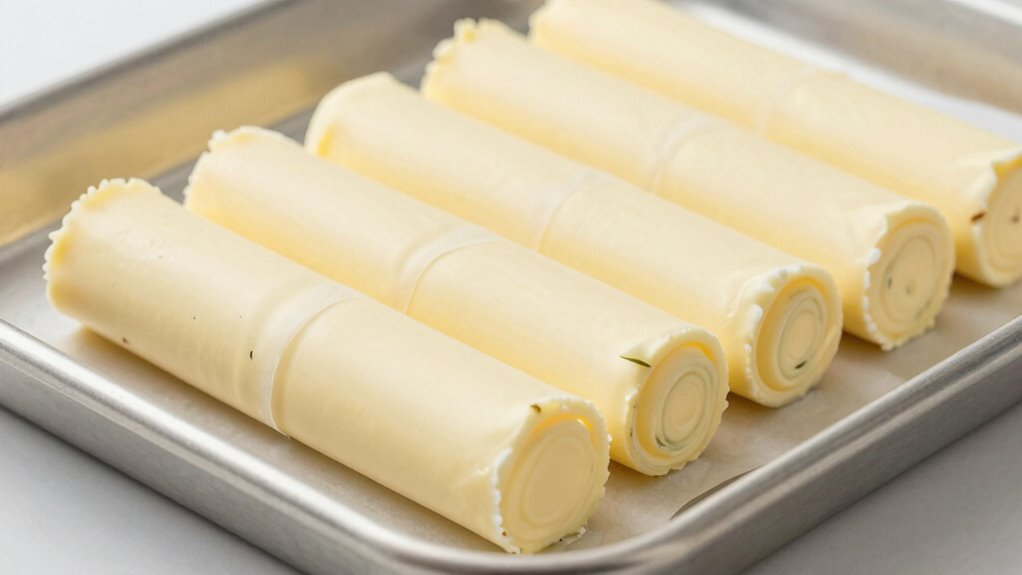
Freezing compound butter logs is a simple way to keep flavorful, ready-to-use butter on hand for whenever you need it. This method preserves the rich flavors and allows you to easily add a burst of taste to your dishes. To get the best results, focus on flavor infusion from the start. When preparing your butter, choose fresh herbs, spices, garlic, or other ingredients that complement your culinary goals. Finely chop or crush these flavorings to ensure they distribute evenly throughout the butter. Mix them thoroughly into softened butter, tasting as you go, so the flavor is balanced and intense. Once your compound butter is well-blended, shape it into logs using plastic wrap or parchment paper, rolling tightly to form a uniform cylinder. This shape makes it easy to slice off just the amount you need later, without defrosting the entire batch.
When it comes to storage tips, the key is to minimize moisture and air contact, which can cause freezer burn and compromise flavor. Wrap each log tightly in plastic wrap or foil, ensuring no gaps where air can seep in. For extra protection, place the wrapped logs inside a resealable freezer bag or an airtight container. Label each package with the date and flavor profile so you can easily identify your frozen treasures. Proper storage helps lock in the flavor infusion, keeping the butter tasting fresh and vibrant for months. Additionally, understanding freezer temperature requirements is crucial to maintaining optimal preservation. Maintaining a consistent freezing temperature of 0°F (-18°C) prevents the formation of ice crystals that can damage the texture and flavor of your butter. Ensuring your freezer is well-maintained and functioning correctly is also essential for preservation and quality. A well-maintained freezer helps prevent freezer burn, which can negatively affect both flavor and texture. When you’re ready to use your compound butter, there’s no need to defrost the entire log. Simply remove the desired amount, let it sit at room temperature for a few minutes, or cut directly from the freezer if you prefer. This approach maintains the integrity of the butter and preserves the flavor infusion for maximum impact.
To prevent melting or spoilage, always keep your freezer at a consistent temperature of 0°F (-18°C). Avoid opening the freezer too often, which can cause temperature fluctuations. If you’re planning to store the butter for an extended period, consider double wrapping or vacuum-sealing to further protect against freezer burn. Remember, good storage practices not only prolong shelf life but also ensure your compound butter retains its delicious flavor and smooth texture. With these simple steps, you’ll always have a flavorful, ready-to-use butter on hand, making your cooking quicker, more flavorful, and a lot more enjoyable.
compound butter log storage containers
As an affiliate, we earn on qualifying purchases.
As an affiliate, we earn on qualifying purchases.
Frequently Asked Questions
How Long Can I Store Compound Butter Logs in the Freezer?
You can store compound butter logs in the freezer for up to 3 months, preserving their flavor combinations and freshness. To maximize storage durations, wrap them tightly in plastic wrap or foil, then place them in an airtight container. This way, you prevent freezer burn and flavor loss. When you’re ready to use them, just thaw in the fridge for a few hours, and enjoy the rich, flavorful results.
Can I Freeze Flavored or Herb-Infused Compound Butter Separately?
Imagine tightly wrapping your herb-infused compound butter in plastic wrap, then placing it in an airtight container—this preserves flavor and prevents freezer burn. Yes, you can freeze flavored or herb-infused compound butter separately. Use good packaging techniques like double wrapping or vacuum sealing to maintain flavor preservation. This way, each batch stays fresh, vibrant, and ready to melt into your favorite dishes whenever you need them.
Should I Wrap the Logs Tightly or Leave Them Open During Freezing?
You should wrap the logs tightly during freezing to prevent freezer burn and preserve flavor. Use wrapping techniques like plastic wrap or aluminum foil, ensuring there’s no air exposure. For ideal freezing methods, consider placing the wrapped logs in an airtight container or resealable bag. This approach maintains freshness and prevents odor transfer. Tightly wrapping your compound butter logs is the best way to keep them fresh and flavorful until you’re ready to use them.
Can I Refreeze Compound Butter After It’s Thawed?
Yes, you can refreeze compound butter after it’s thawed, but it’s not ideal for maintaining quality. Proper butter storage with effective freezing techniques helps preserve flavor and texture. When refreezing, make sure the butter is tightly wrapped to prevent freezer burn. Keep in mind, repeated freezing can degrade the quality, so only refreeze if necessary and try to use it promptly to enjoy the best flavor and consistency.
What Is the Best Way to Thaw Frozen Compound Butter Logs?
To thaw frozen compound butter logs, you should transfer them from the freezer to the refrigerator and let them sit for about 1-2 hours until softened. This gentle thawing preserves butter quality and flavor. For best butter storage, avoid rapid thawing at room temperature, which can cause spoilage. Use proper freezing techniques, like wrapping tightly in plastic wrap or foil, to prevent freezer burn and maintain freshness during storage.
Conclusion
Freezing your compound butter logs is like giving them a cozy winter coat—they stay fresh and flavorful until you’re ready to use them. Wrap each log tightly and store in an airtight container to prevent freezer burn, and you’ll have delicious, ready-to-spread butter at your fingertips. When you need a burst of flavor, simply slice off what you need—it’s as easy as slicing through butter itself. Happy freezing!
Halloween Picks
halloween
As an affiliate, we earn on qualifying purchases.