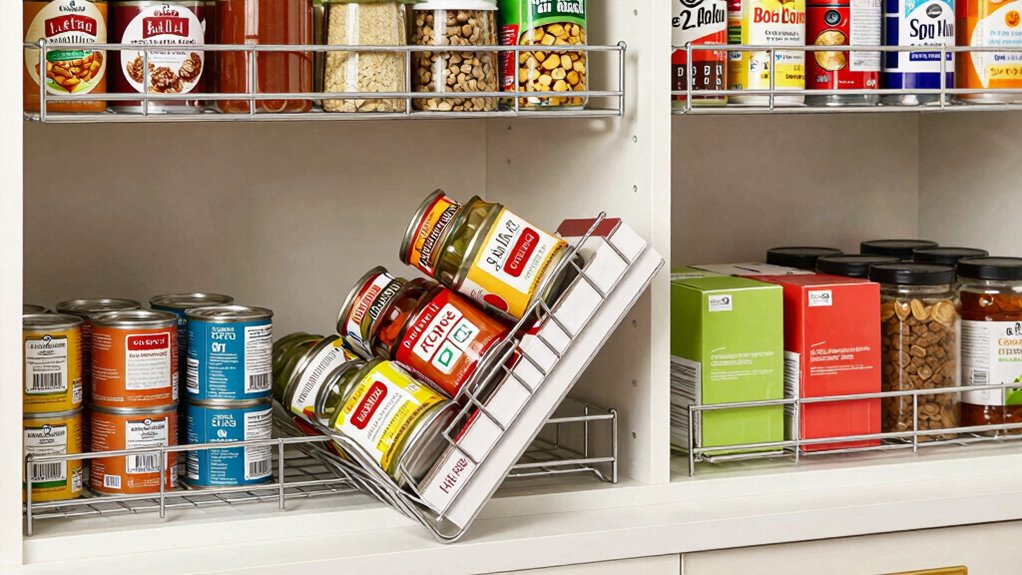
When you ignore weight limits, your pantry organizer is likely to fail prematurely or cause safety issues. Using cheap or flimsy materials, overloaded shelves, or poorly installed hardware can cause sagging, cracking, or collapsing. Proper support, manufacturer guidelines, and sturdy materials are essential for durability. If you want to avoid common pitfalls and guarantee your organizer lasts, keep these factors in mind—you’ll discover more insights that can save your setup.

Get kitchen staples and gadgets delivered free with Prime
- Fast, free delivery on millions of items
- Prime Video, Amazon Music and more included
- Member-only deals all year
Key Takeaways
- Ignoring weight capacity can cause shelves to bow, warp, or collapse under heavy loads.
- Using low-quality or flimsy materials increases the risk of organizer failure when overloaded.
- Improper installation or inadequate hardware compromises stability and safety with heavy items.
- Failing to assess material strength and support leads to structural damage over time.
- Overloading without proper weight distribution accelerates wear and shortens the organizer’s lifespan.
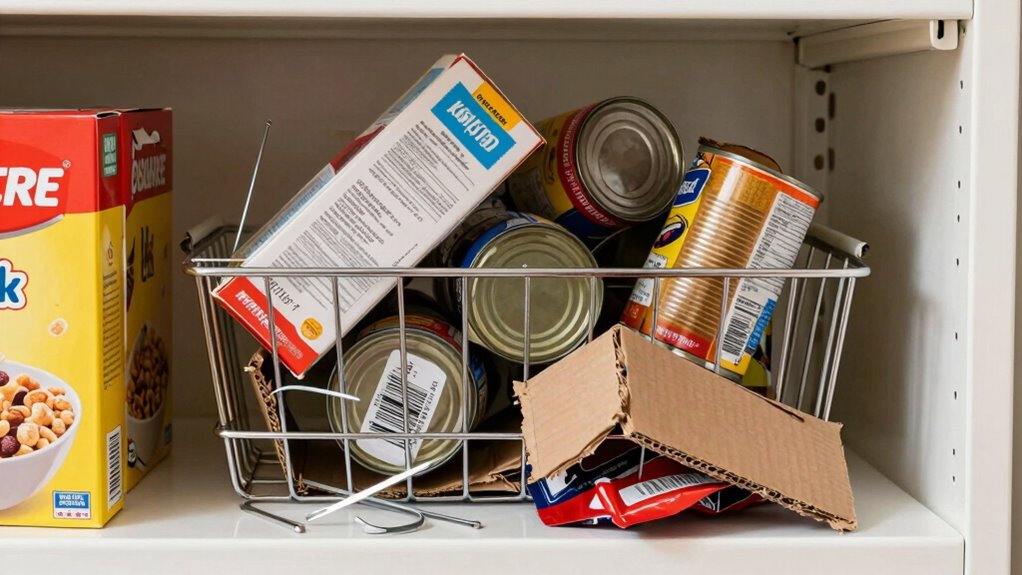
Many pantry organizers fail because they overlook one essential factor: weight capacity. It’s tempting to focus on how sleek or spacious a shelf looks, but ignoring how much weight it can handle often leads to frustration and wasted money. When you’re selecting an organizer, you might not think about the material durability, but it’s critical for ensuring your storage solution lasts. Cheap or flimsy materials may seem like a good deal upfront, but they tend to buckle or break under heavy loads. For example, plastic options might seem lightweight and easy to install, yet they often crack or warp when overloaded. Metal, on the other hand, tends to be more durable, but it can rust if not properly coated, especially in humid kitchens. Wood can be sturdy, but if it’s poorly treated or low-quality, it might warp or splinter over time. Choosing a material that balances durability with your specific needs is key. Additionally, considering the material strength can help prevent these issues before they occur.
A well-designed organizer also considers weight distribution, which is crucial for maintaining stability under load. Properly distributing weight across the shelves prevents sagging and extends the life of the unit. Installation challenges also play a big role in the success or failure of your pantry organizer. Many products seem straightforward to set up, but once you start loading them, you realize that the mounting hardware or design isn’t robust enough for the weight you’re putting on it. Incorrect installation can cause shelves to sag or detach, making your entire pantry unsafe and unusable. To prevent this, you need to pay attention to the installation instructions and use the recommended tools and anchors. Sometimes, even well-designed organizers require additional reinforcement for heavier loads. Ignoring these details can turn a simple setup into a frustrating experience, especially if you have to redo the entire installation.
Furthermore, some organizers are designed with aesthetics in mind but overlook the structural support needed for heavier items. When you load a shelf with canned goods, bulk packages, or small appliances, the weight can quickly exceed the limits of poorly constructed units. If the organizer isn’t built with strong materials and proper mounting in mind, it may bow or collapse. This can cause damage to your items and create a safety hazard. To avoid this, you should assess not only the capacity stated by the manufacturer but also the quality of the materials and the installation process. Being aware of structural integrity can help you choose a more reliable option that withstands daily use.
In short, understanding the importance of material durability and installation challenges helps you pick a pantry organizer that truly meets your needs. Don’t just focus on appearance or size—think about how much weight it can hold and how well it’s built to support that weight. When you do, you’ll save yourself the hassle of replacing broken or unsafe organizers and enjoy a more organized, functional pantry for years to come.
heavy-duty pantry shelf brackets
As an affiliate, we earn on qualifying purchases.
As an affiliate, we earn on qualifying purchases.
Frequently Asked Questions
How Do I Determine the Weight Capacity of My Pantry Organizer?
To determine your pantry organizer’s weight capacity, check the manufacturer’s label or packaging for specifications. If unavailable, use a kitchen scale to weigh a typical load and compare it to the organizer’s material (metal, plastic, wood) to estimate its strength. For better storage tips, distribute weight evenly and avoid overloading. Incorporate organization hacks like stacking lighter items and using clear containers to maximize space and prevent damage.
Are There Specific Materials Better Suited for Heavy Pantry Items?
Think of your pantry as a fortress, where material durability acts as the sturdy walls protecting your supplies. For heavy items, opt for metal or solid wood shelves, which excel in weight distribution and resist warping. Avoid flimsy plastics, which can buckle under pressure. Selecting materials designed for weight guarantees your organizer remains reliable, keeping your heavy pantry items secure without risking collapse or damage.
Can Weight Limits Affect the Longevity of Pantry Shelving?
Yes, weight limits can affect the longevity of your pantry shelving. When you overload shelves beyond their capacity, it compromises storage durability and shelf stability. Over time, excessive weight causes warping, sagging, or even collapsing, which shortens the lifespan of your shelves. To guarantee longevity, always consider weight limits, distribute heavy items evenly, and choose sturdy materials designed for heavier loads. This keeps your pantry organized and safe.
How Often Should I Check for Signs of Overloading?
You should check for signs of overloading at least once a month. Regularly inspecting your pantry allows you to spot sagging shelves, cracks, or misaligned brackets early. Use storage tips and organization hacks, like spreading weight evenly and avoiding heavy items on upper shelves, to prevent damage. Staying vigilant helps extend your shelving’s lifespan and keeps your pantry safe and organized.
What Are the Safety Risks of Exceeding Weight Limits?
Exceeding weight limits jeopardizes storage safety by risking shelf collapse or breaking. You might cause injuries or damage to your pantry if heavy items fall or shelves buckle. Proper weight management ensures shelves stay stable and safe for use. Always check your pantry’s weight limits and distribute weight evenly. Ignoring these limits can lead to dangerous accidents, so prioritize safe storage practices to protect your home and loved ones.
Conclusion
If you ignore weight limits, your pantry organizers become the Titanic heading straight for disaster. Don’t let your storage solutions sink under the weight of neglected limits—that’s a recipe for chaos and crushing frustration. Always consider how much your shelves can handle before loading them up; otherwise, you’re asking for a disaster of epic proportions. With a little foresight, your pantry can stay organized and strong, standing tall like a fortress, not a crumbling ruin.
NFL season / tailgating Picks
team gear
As an affiliate, we earn on qualifying purchases.