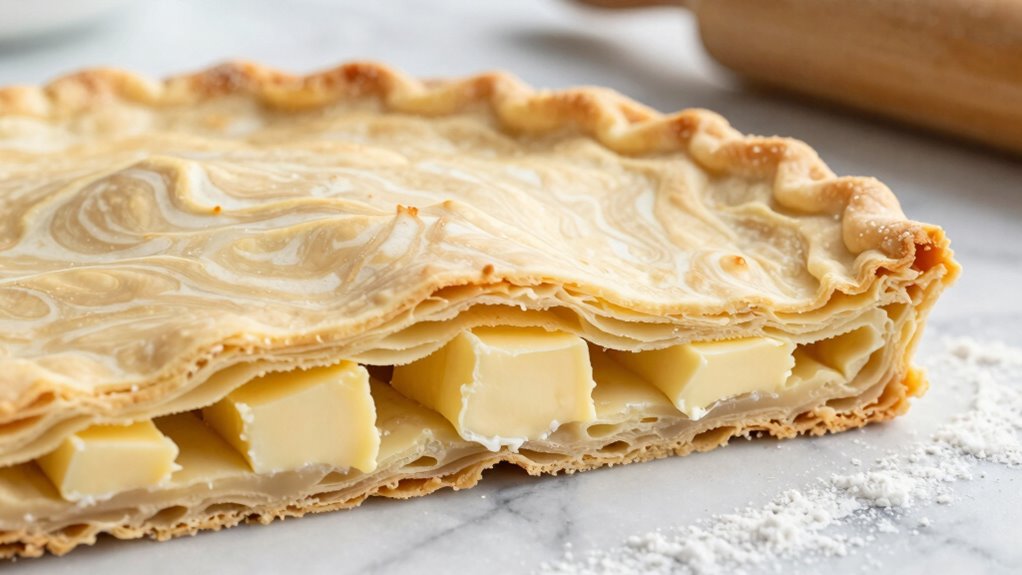

To make flakier pie dough with better butter placement, start by cutting cold butter into your flour using a pastry cutter or fingertips, leaving visible, uneven pieces. This creates pockets that melt during baking, forming steam and layers. Avoid overmixing, handle dough gently, and work quickly to keep everything cold. Resting the dough in the fridge also relaxes gluten and enhances flakiness. For more tips, keep exploring these proven techniques.

Get kitchen staples and gadgets delivered free with Prime
- Fast, free delivery on millions of items
- Prime Video, Amazon Music and more included
- Member-only deals all year
Key Takeaways
- Use cold, unevenly cut butter to create visible, larger pieces that form steam pockets during baking.
- Gently incorporate butter into flour with a pastry cutter or fingertips to leave some bits intact.
- Avoid overmixing dough to maintain distinct butter pieces for better layering.
- Handle dough quickly and lightly during rolling to prevent butter from melting and losing flakiness.
- Rest the dough in the refrigerator to keep butter cold and allow layers to develop fully.
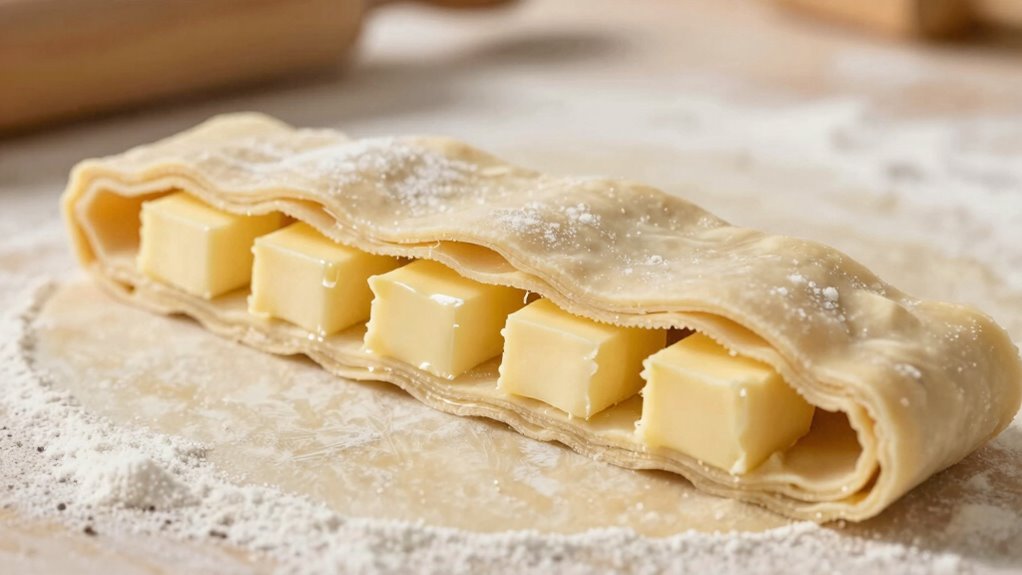
Ever wondered how to achieve irresistibly flaky pie dough every time? The secret lies in understanding pie crust variations and mastering gluten development techniques. Flakiness depends on how you handle your dough, especially in how you incorporate butter and how you develop gluten. By paying attention to these details, you can create a tender, flaky crust that rivals any bakery.
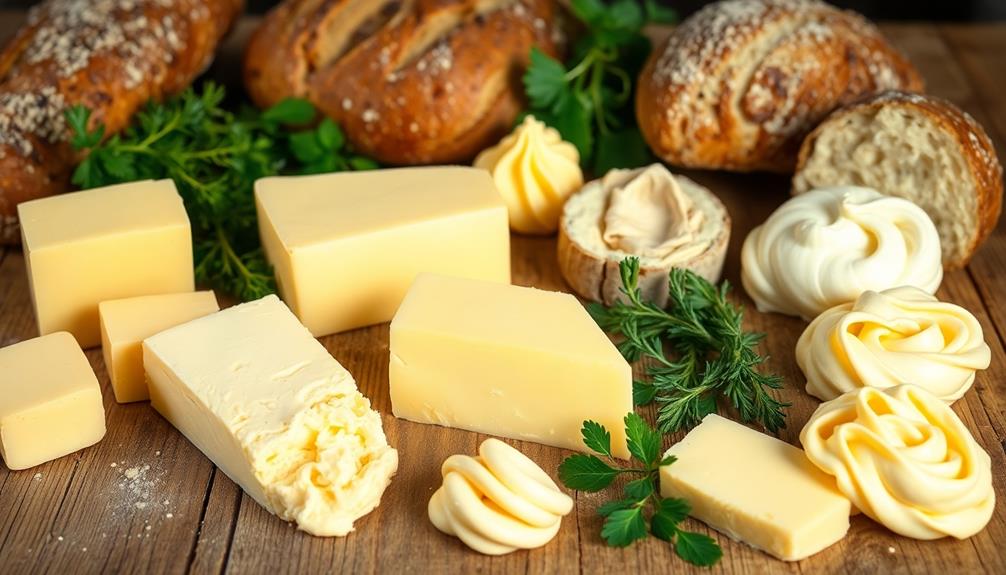
Start by choosing the right fat. Better butter placement is key to flaky layers. When you cut cold butter into your flour, aim for uneven pieces—some larger, some smaller. This creates pockets of butter that melt during baking, leaving steam to puff up the layers. Instead of mixing everything into a uniform dough, gently cut in the butter using a pastry cutter or your fingertips, making sure some bits remain visible. This technique ensures that the layers form properly, giving your crust that irresistible flakiness.
Use uneven, cold butter pieces for flaky layers by gently cutting it into flour, leaving some bits visible.
Next, consider the variety of pie crusts you want to make. Pie crust variations range from classic double-crust to single-crust, lattice, or even gluten-free options. Each variation affects how you handle gluten development. To achieve the right balance, it’s important to understand gluten formation, which influences the texture of your crust. For a flaky crust, you want to limit gluten formation. Overworking the dough can develop gluten too much, resulting in a tough crust. To prevent this, mix your dough just until the ingredients come together, and handle it as little as possible. When rolling out, work quickly and lightly, maintaining cold temperatures to keep the butter solid. Cold dough produces better layers because the butter remains intact, creating steam pockets that produce flakiness. Proper dough handling is essential for maintaining these layers and ensuring a tender crust.
Incorporate gluten development techniques that prioritize tenderness over elasticity. For example, when adding water, do so gradually and sparingly. Use ice-cold water to help keep the butter cold and prevent gluten from developing excessively. After mixing, rest the dough in the refrigerator for at least 30 minutes. This resting period relaxes gluten strands and allows the flour to hydrate fully, which enhances flakiness. Controlling gluten formation and maintaining cold ingredients are essential steps in achieving a perfect flaky crust. Additionally, paying attention to dough handling techniques can make a significant difference in the final texture. When you’re ready to roll out, dust your surface lightly with flour, and roll from the center outward with gentle pressure. This helps maintain even layers and prevents overworking the dough.
Finally, pay attention to baking temperature. A hot oven, around 425°F, helps the butter melt quickly, creating steam and puffing up the layers. Properly handling your dough with attention to pie crust variations and gluten development techniques ensures each bite is perfectly flaky, tender, and flavorful. Master these steps, and you’ll consistently produce stunning, flaky pie crusts that impress every time.
As an affiliate, we earn on qualifying purchases.
Frequently Asked Questions
Can I Use Margarine Instead of Butter for Flakier Crust?
Yes, you can use margarine instead of butter for a flakier crust. Margarine substitution often results in a tender, flaky texture similar to butter, especially if you choose a high-fat variety. If you’re vegan, consider vegan butter options, which also work well and can produce excellent results. Just keep in mind that the flavor might differ slightly, but overall, margarine and vegan butter options are great alternatives for achieving a flaky pie crust.
How Does Butter Temperature Affect Pie Dough Flakiness?
Think of butter temperature as the heartbeat of your dough. When butter melts too quickly, it creates pools, making your dough overly greasy and less flaky. Cold butter keeps the consistency firm, creating distinct layers that puff up during baking. For perfect flakiness, keep your butter just chilled—firm enough to stay in pieces—so the dough remains tender and layered, like pages of a well-loved book.
Should I Chill the Dough Before or After Mixing?
You should chill the dough after mixing to allow for proper dough relaxation, which helps develop flavor and makes rolling easier. Chilling before rolling guarantees the butter stays cold, creating flakiness. Timing is key—refrigerate the dough for at least an hour, or overnight, to optimize texture. This resting period prevents shrinking and enhances dough consistency, leading to a flakier, more tender pie crust.
What Type of Flour Yields the Flakiest Results?
Like a whisper of the wind through a wheat field, using pastry flour yields the flakiest results. Its lower gluten development, thanks to a lower flour protein content, creates a tender, delicate crust. Unlike bread flour, which develops more gluten, pastry flour keeps the dough tender and flaky. You’ll notice a crisp, layered texture, perfect for pie, when you choose this type of flour to keep gluten formation in check.
How Can I Prevent Overworking the Dough?
To prevent overworking the dough, focus on gentle mixing techniques like folding and minimal handling. Use a light touch when combining ingredients, stopping as soon as everything just comes together. After mixing, let the dough rest in the fridge for at least 30 minutes; this relaxes the gluten and prevents toughness. Resting also helps distribute fat evenly, resulting in a flakier crust without overworking the dough.
Conclusion
Now that you’ve mastered better butter placement, your pie dough will turn out irresistibly flaky and buttery—like something straight out of grandma’s kitchen. Remember, patience and attention to detail are your best allies. As you roll out your dough, channel the spirit of a pioneer baking under open skies, embracing the simple joy of creating something truly special. With each pie, you’re weaving tradition into a modern masterpiece—truly a culinary win for the ages.
NFL season / tailgating Picks
team gear
As an affiliate, we earn on qualifying purchases.