
Butter doesn’t need refrigeration for up to two weeks if you keep it covered and away from light and air. However, refrigerating it extends its quality and safety for several months. Salted butter lasts longer since salt acts as a preservative. Always check for signs of spoilage like off smells or discoloration. For the best storage practices and to keep your butter fresh, there’s more to explore about its types and shelf life.
Key Takeaways
- Butter can be stored at room temperature for 1-2 weeks if protected from light and air in a covered dish.
- Refrigeration extends butter’s shelf life to several months, keeping it safe and preventing odor absorption.
- Salted butter lasts longer than unsalted butter due to salt’s preservative properties.
- Freezing butter further extends its shelf life and preserves flavor, requiring proper wrapping to avoid freezer burn.
- Always check for spoilage signs like off smells or discoloration before using butter, regardless of storage method.
When you store butter, knowing the right refrigeration practices can make all the difference in preserving its flavor and quality. Butter’s unique composition makes it a versatile ingredient, but its storage can be a bit tricky. You might wonder whether you should keep it in the fridge or on the counter. The truth is, butter can have some shelf stability, depending on how you store it.
Knowing the right way to store butter is essential for preserving its flavor and quality in your kitchen.
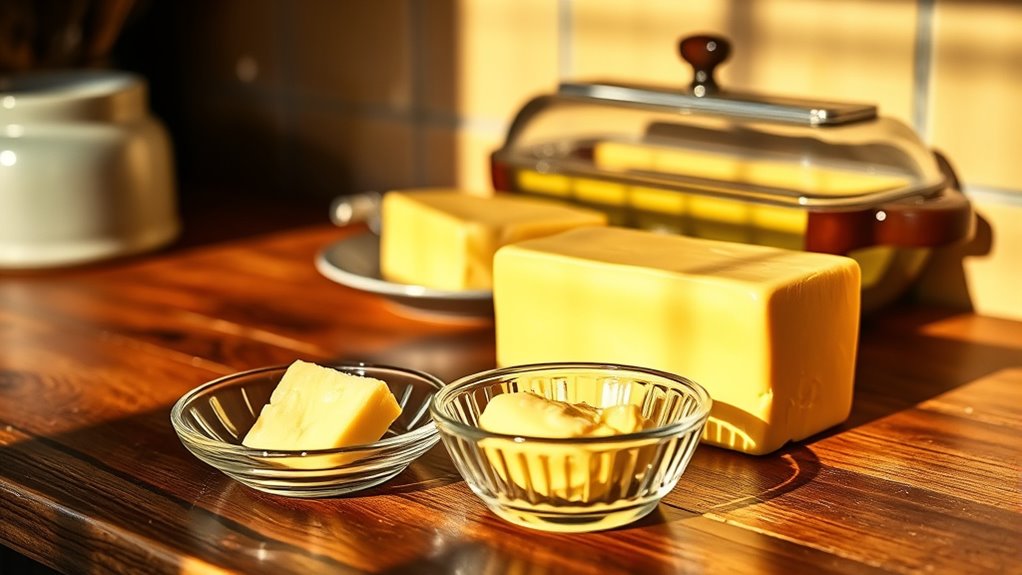
If you’re planning to use butter within a week or two, you can safely keep it at room temperature. Just make sure it’s in a covered butter dish or a butter bell to protect it from light and air, which can lead to rancidity. However, if you live in a warm climate, it’s best to stick with refrigeration. Exposure to heat can quickly spoil the butter’s rich flavor and creamy texture. When you store butter in the fridge, it’s essential to wrap it properly to prevent it from absorbing strong odors from other foods.
Refrigerated butter can last for several months, but it’s important to note that different types of butter have different shelf lives. Salted butter tends to last longer than unsalted butter due to the salt acting as a preservative. So, if you’ve got a stash of various butters, keep this in mind. If you’re unsure about how long your butter has been in the fridge, trust your senses. If it smells off or shows signs of discoloration, it’s time to toss it.
Freezing butter is another option if you want to extend its shelf stability further. Wrap it tightly in plastic wrap, foil, or an airtight container to prevent freezer burn. When you’re ready to use it, simply thaw it in the fridge overnight. This process helps to maintain its quality and flavor.
In your quest for delicious meals, how you store your butter matters more than you might think. By understanding the nuances of butter storage and refrigeration, you can ensure that you’re always using the best quality product. Following these simple steps can help you get the most out of your butter, whether it’s for baking, cooking, or spreading on fresh bread. Additionally, knowing the differences in shelf lives of various butters can further enhance your butter storage strategy. So, go ahead and enjoy that creamy goodness, knowing you’re doing it right!
Frequently Asked Questions
Can I Freeze Butter for Long-Term Storage?
Yes, you can freeze butter for long-term storage. Freezing extends its shelf life considerably, allowing you to keep it for several months. Just make sure to wrap it tightly to preserve its texture and prevent freezer burn. When you’re ready to use it, thaw the butter in the fridge to maintain its quality. You’ll find that frozen butter retains its flavor and usability, making it a practical option for your cooking needs.
What Types of Butter Require Refrigeration?
If you’re using fresh, unsalted butter or flavored butters, you’ll want to keep ’em in the fridge to maintain their texture and extend their shelf life. Salted butter can sit at room temperature for a bit, but it’s best to refrigerate it to preserve quality. You’ll notice that refrigeration helps prevent spoilage and keeps that creamy consistency. So, if you’re a butter lover, don’t be shy about storing them right!
How Long Can Butter Be Left Out Unrefrigerated?
You can typically leave butter out unrefrigerated for up to two hours at room temperature. After that, the butter’s consistency may start to change, becoming softer and more prone to spoilage. If you’re keeping it out for spreading, consider a butter dish with a lid to maintain freshness. Just remember, the longer it sits, the more you risk losing that delicious, creamy texture you love. Enjoy it while it’s at its best!
Does Salted Butter Need Refrigeration?
Salted butter doesn’t necessarily need refrigeration, especially if you’re using it within a week or two. Keeping it at room temperature can enhance flavor preservation, making it easier to spread. However, if you leave it out too long, you might notice texture changes, like it becoming too soft or even rancid. If you prefer a firmer consistency or want to store it longer, it’s best to refrigerate it.
Can I Store Butter in a Butter Dish?
Yes, you can store butter in a butter dish! A butter dish is a great storage container that keeps your butter easily accessible. Just make sure to keep it covered to prevent it from absorbing other odors in the fridge or on the counter. If you’re using salted butter, it can last a bit longer at room temperature. Just remember to watch for any signs of spoilage during storage!
Conclusion
So, while you might think butter needs to be refrigerated to stay safe, it actually can sit out for a while without any issues. Just keep it in a covered dish or butter bell to protect it from light and air. If you’re worried about spoilage, remember that good quality butter can be left at room temperature for about a week. Embrace the creamy goodness—your toast will thank you!