Cutting cold butter into flour’s essential for flaky pastries. You can use a pastry cutter or fork, applying a pressing and twisting motion to create pea-sized chunks. Alternatively, your hands work well if they stay cool; just rub the butter into the flour quickly. A food processor can save you time, but pulse it carefully to avoid paste. Each method keeps the butter cold for ideal texture. Stick around to discover even more tips and techniques!

Get kitchen staples and gadgets delivered free — and shop member deals
- Fast, free delivery on millions of items
- Access to Prime Big Deal Days deals on October 6–7
- Prime Video, Amazon Music and more included
Key Takeaways
- Use a pastry cutter or fork to cut cold butter into flour, aiming for pea-sized chunks for optimal texture.
- Keep your hands cool while rubbing butter into flour to prevent melting and achieve a flaky consistency.
- In a food processor, pulse cold butter and flour until crumbly, avoiding over-processing to maintain texture.
- Maintain cold butter throughout the process to ensure even distribution and enhance the flakiness of pastries.
- Experiment with different cutting techniques to find the method that provides the best control and desired texture for your baking.
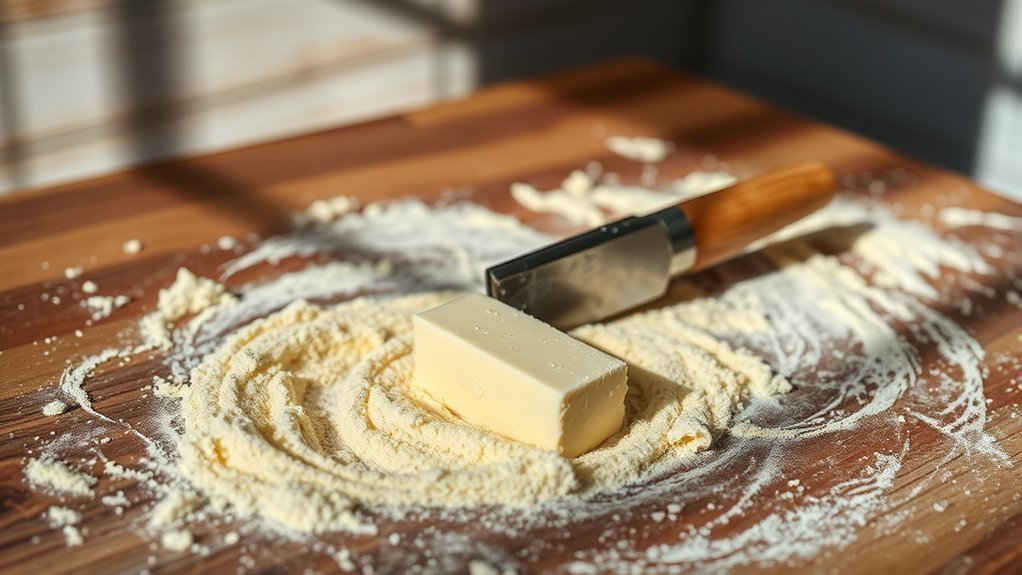
When you’re making pastries or biscuits, cutting cold butter into flour is an essential step that can make all the difference in texture. The right butter temperature is critical here; ideally, you want your butter to be very cold, right from the fridge. This helps create that flaky, tender texture we all crave in baked goods. When butter melts during baking, it creates steam, which in turn helps to lift the dough. So, keeping that butter cold is key to achieving perfectly light and airy pastries.
Now, let’s talk about mixing techniques. You’ve got a few options when it comes to cutting butter into flour. One popular method is using a pastry cutter or a fork. With this technique, you press down and twist the cutter into the butter and flour mixture, breaking the butter into small pieces. Aim for pea-sized chunks. This method gives you a bit more control over the size of the butter pieces, which is important for achieving that desired texture.
One effective method for cutting butter into flour is using a pastry cutter, aiming for pea-sized chunks for optimal texture.
Another technique you might consider is using your hands. If you choose this route, make sure your hands are cool to prevent the warmth from melting the butter too quickly. You’ll want to rub the butter into the flour between your fingers, quickly breaking it down until you get that same pea-sized consistency. This method can be a bit messier, but it allows you to feel the texture of the mixture as you work, which can be quite helpful.
If you’re looking for a faster option, using a food processor is also a viable choice. Just pulse the cold butter and flour together until you reach that desired crumbly texture. Be cautious not to overwork the mixture; it’s easy to turn it into a paste if you’re not careful. With this method, you’ll save time, but you may miss out on the tactile experience of making it by hand. Additionally, optimal angles for your mixing bowl can enhance the efficiency of your mixing techniques, ensuring an even distribution of ingredients.
No matter which mixing technique you choose, remember that the goal is to keep that butter cold and ensure it’s evenly distributed throughout the flour. This will help you achieve the perfect pastry or biscuit every time. So, embrace these methods, and you’ll be well on your way to delicious, flaky baked treats that everyone will love. Happy baking!
As an affiliate, we earn on qualifying purchases.
Frequently Asked Questions
Can I Use Margarine Instead of Butter for This Method?
Yes, you can use margarine instead of butter for this method. While butter vs margarine can yield slightly different flavors and textures, margarine substitution often works well in recipes. Just make certain your margarine is cold, similar to how you’d use butter. The key is to cut it into the flour until you achieve a crumbly texture. Keep in mind that some margarine varieties might have added water, which can affect your final result.
What Type of Flour Works Best for Cutting in Butter?
When you’re looking to create a buttery masterpiece, all-purpose flour is your best friend. It strikes a nice balance with its moderate protein content, allowing just the right amount of gluten development without being too clingy. If you’re after something a bit more delicate, pastry flour is a lovely option too, providing a tender crumb. So, take your pick, and enjoy the delightful results of your buttery creation!
How Can I Tell When Butter Is Cut in Properly?
You’ll know butter’s cut in properly when you see a crumbly texture with pea-sized pieces throughout the flour. Look for a consistent mixture where the butter blends seamlessly without large chunks. The visual cues to watch for include a slightly grainy appearance, indicating the butter’s been worked into the flour. If it resembles coarse sand or has a uniform consistency, you’re on the right track for perfect pastry or dough!
Should the Butter Be Salted or Unsalted for Baking?
You should use unsalted butter for baking. This way, you can control the salt level in your recipes, ensuring the perfect flavor balance. Unsalted butter’s advantages include freshness and the ability to better gauge the seasoning in your dish. While salted butter has benefits, like added flavor, it can lead to inconsistent results in baked goods. Stick with unsalted for the best outcomes, and enjoy the precision it offers in your baking!
Can I Use a Food Processor for Cutting Butter Into Flour?
Absolutely, you can use a food processor for cutting butter into flour. Think of it as the trusty compass guiding you through the wilderness of baking. The efficiency of a food processor speeds up the process, blending everything smoothly. However, if you prefer a more hands-on approach, alternative cutting methods like a pastry cutter or forks can still create that perfect crumb. Choose the tool that resonates with your baking spirit and enjoy the journey!
Conclusion
Cutting cold butter into flour is essential for achieving that perfect flaky texture in baked goods. Did you know that pastries made with properly cut butter can have up to 50% more layers than those mixed without care? By mastering these methods, you’re not just baking; you’re creating a delicate dance of textures and flavors. So, don’t rush the process—take your time and enjoy the art of baking. Your taste buds will thank you!
Fall Picks
fall essentials
As an affiliate, we earn on qualifying purchases.