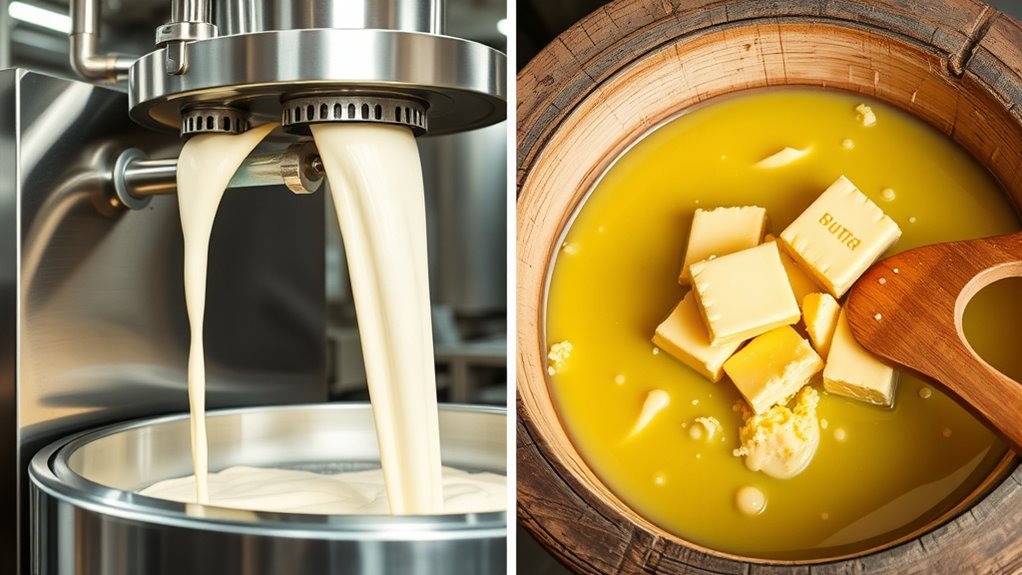

When deciding between continuous and batch churning systems, consider your production needs. Continuous systems run non-stop and boost efficiency for high volumes, minimizing downtime and costs. Batch systems, on the other hand, offer flexibility for various products and formulations. They allow quick adaptations, perfect for experimentation. Your choice hinges on your operational goals and production complexity. Want to uncover the nuances that can impact your decision further?
Key Takeaways
- Continuous churning systems operate non-stop for consistent product flow, ideal for high-volume production.
- Batch churning systems process materials in distinct quantities, offering flexibility for varying formulations and experimentation.
- Continuous systems minimize downtime, reducing operational costs and facilitating scalability for large-scale production.
- Batch systems may incur higher costs during transitions but allow for product diversity and quick adaptations.
- The choice between continuous and batch systems depends on production goals, efficiency priorities, and operational needs.
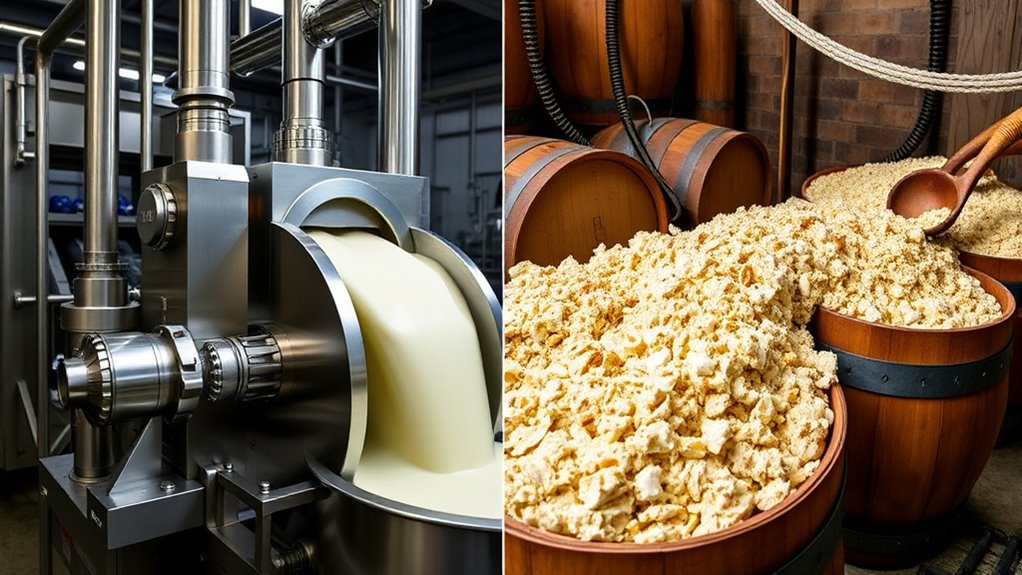
When it comes to churning systems, you’ll find two primary approaches: continuous and batch. Understanding these methods is vital for optimizing your production processes. Continuous systems operate non-stop, allowing for a steady flow of product, while batch systems process materials in discrete quantities. Each approach has its benefits and drawbacks, and the best choice often hinges on your specific production goals and operational constraints.
Understanding continuous and batch churning systems is essential for optimizing production processes and achieving your operational goals.
Continuous churning systems excel in automation efficiency. With their ability to run indefinitely, you can minimize downtime and maximize output. This constant flow not only keeps your production line moving but also facilitates real-time monitoring and adjustments. If you’re looking to scale up your operations, continuous systems can be your best bet, as they require less manual intervention and can handle larger volumes of product seamlessly.
On the other hand, batch systems offer flexibility that continuous systems can sometimes lack. If your production needs vary or you wish to experiment with different formulations, a batch approach allows you to adapt quickly. You can conduct a cost analysis to determine the economic feasibility of producing various products without committing to a continuous run. This adaptability is particularly valuable in industries where consumer preferences shift rapidly.
However, it’s essential to recognize that batch systems might lead to higher operational costs due to increased downtime during each batch transition. You’ll need to weigh these costs against the benefits of flexibility and control. For instance, if you’ve got a diverse product line, the ability to switch between different batches may justify the additional expenses.
In terms of overall efficiency, continuous systems typically shine, particularly when you’re dealing with high-volume production. They reduce labor costs and optimize the use of resources. But don’t overlook the importance of a thorough cost analysis. This includes looking at initial setup costs, maintenance, and the potential for product waste during transitions in batch systems.
Ultimately, the choice between continuous and batch churning systems boils down to your specific production needs. If you prioritize high output and efficiency, continuous systems may serve you better. However, if your focus is on versatility and experimentation, a batch approach might be more suitable. By understanding these dynamics, you can make an informed decision that aligns with your operational goals and economic constraints. Additionally, considering the importance of open communication can help in aligning production teams with operational changes effectively.
Frequently Asked Questions
How Do Maintenance Costs Compare Between Continuous and Batch Churning Systems?
Maintenance costs can fluctuate markedly between systems. You’ll likely find that continuous systems require more regular maintenance scheduling due to their constant operation, which can lead to higher overall costs. In contrast, batch systems might have lower maintenance costs since they operate intermittently, allowing for scheduled downtime. However, you should consider that unexpected breakdowns in either system can lead to increased costs, impacting your overall maintenance budget.
Which System Is More Energy-Efficient in Production?
When it comes to energy efficiency in production, think of a well-tuned engine humming smoothly. Continuous systems often win this race due to their lower energy consumption and higher process efficiency. They maintain a steady flow, reducing energy spikes and maximizing output. In contrast, batch systems can be like a car stopping and starting, consuming more energy during those pauses. So, if energy savings matter, continuous systems usually take the lead.
What Industries Primarily Use Continuous Churning Systems?
You’ll find continuous churning systems primarily in pharmaceutical manufacturing and food processing industries. In pharmaceuticals, these systems help sustain consistent quality and efficiency during the production of medicines. Similarly, in food processing, continuous churning allows for the steady production of items like ice cream or yogurt. By utilizing these systems, both industries can enhance productivity and ensure a uniform product, ultimately meeting consumer demands more effectively.
Can Batch Systems Be Automated Effectively?
Yes, batch systems can be automated effectively, but you’ll face automation challenges and scalability issues. While automation can streamline processes and improve efficiency, the inherent nature of batch systems may limit flexibility. You’ll need to invest in technology that adapts to varying batch sizes and configurations. If you address these challenges, you can achieve a more efficient workflow and enhance productivity, making your batch operations more competitive in the market.
How Do Product Quality Standards Differ in Each System?
Product quality standards vary markedly between systems. In batch systems, you often focus on quality control during each batch, ensuring product consistency before moving on. This allows for more targeted adjustments if issues arise. In contrast, continuous systems emphasize ongoing quality checks, where maintaining product consistency is key. You’ll find that the real-time monitoring in continuous systems can lead to faster adjustments, but both require diligent quality control to meet standards.
Conclusion
In the grand symphony of production, choosing between continuous and batch churning systems is like selecting the right tempo for your melody. Continuous systems flow like a river, ensuring a steady stream of output, while batch systems dance in measured steps, crafting quality with precision. Ultimately, it’s about harmonizing efficiency and quality to create a masterpiece that resonates with your goals. So, whether you prefer the rhythm of consistency or the grace of careful crafting, your choice will shape the final composition.