
Using butter to lubricate stuck zippers can give you quick relief, but it won’t last long. While it reduces friction temporarily, butter wears off easily and may also attract dirt. For more reliable results, consider switching to longer-lasting options like petroleum jelly or specialized zipper lubricants. Regular maintenance is key to keeping your zippers functional. If you want to know how to care for your zippers effectively, there’s more to discover.
Key Takeaways
- Butter can temporarily reduce friction on stuck zippers, providing an immediate fix.
- Its effectiveness is short-lived and may require reapplication with regular use.
- Butter may attract dirt and debris, potentially causing further zipper issues.
- For longer-lasting lubrication, consider petroleum jelly or specialized zipper lubricants instead.
- Regular maintenance and inspection of zippers are essential for optimal performance and longevity.

When you find yourself wrestling with a stuck zipper, don’t panic—there’s a simple kitchen solution that can save the day. You might not think of butter as a tool for clothing repair, but it can actually work wonders for those pesky zippers. The next time your favorite jacket or pair of pants refuses to budge, grab a small piece of butter from your fridge. Just a tiny amount can do the trick, and it’s often more accessible than specialized zipper lubricants.
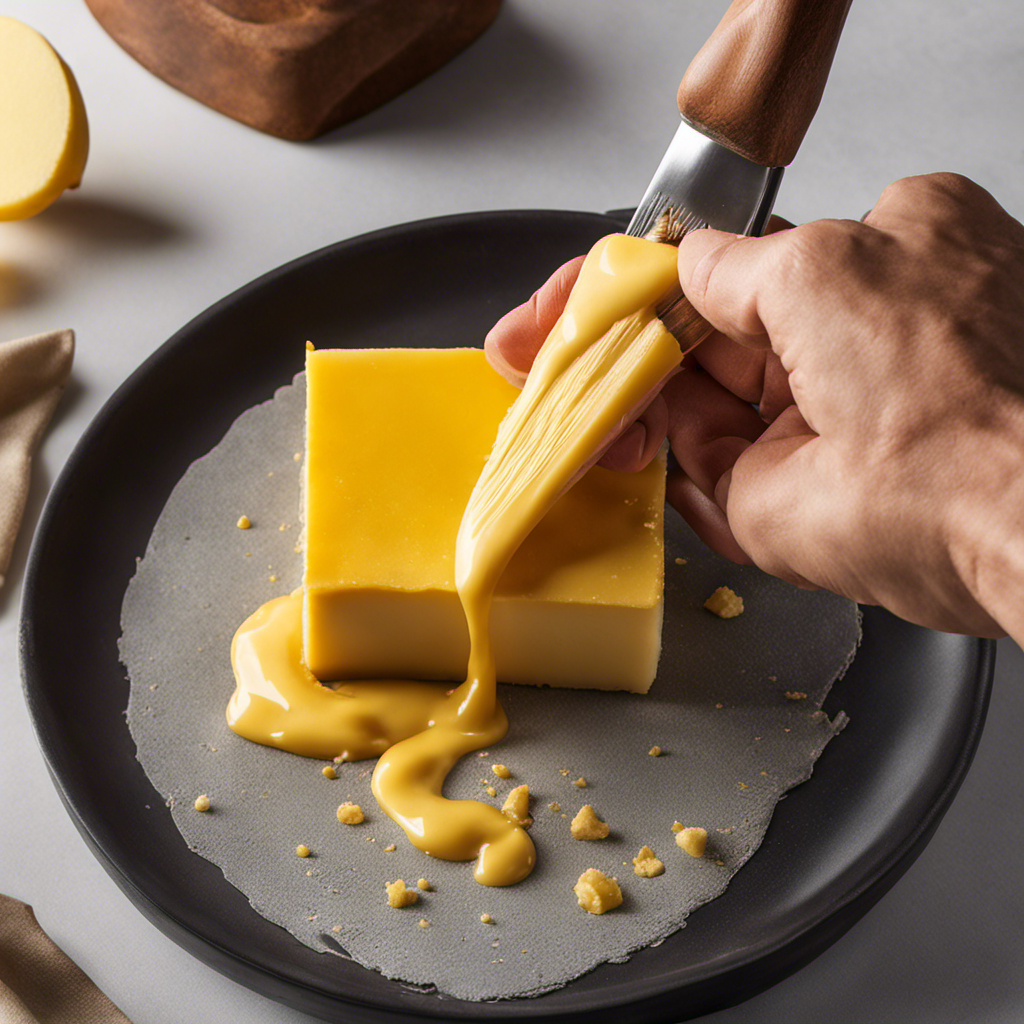
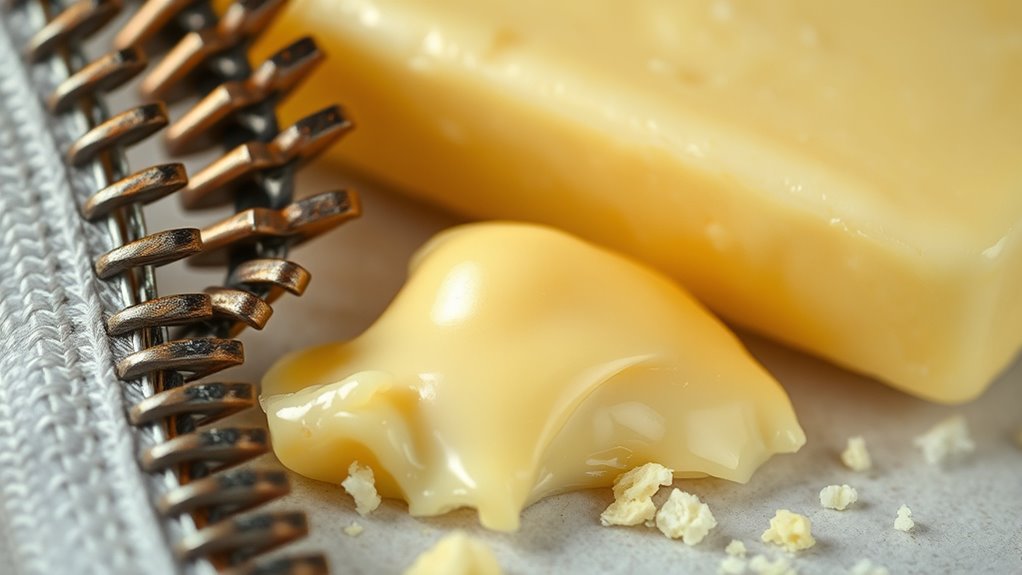
To use butter, you’ll want to apply a small dab directly onto the teeth of the zipper. Make sure to use your finger or a cotton swab to spread it evenly. This can help alleviate friction and get the zipper moving again. It’s important to remember, though, that while butter’s effectiveness can be immediate, it may not last long-term. As you wear your clothing, the butter can wear off or attract dirt, which could lead to further zipping issues. So, while it’s great for a quick fix, you might need to consider additional zipper maintenance in the future.
Apply a small dab of butter to zipper teeth for a quick fix, but remember it may require reapplication.
If you’re looking for a more sustainable solution, you could switch to using petroleum jelly or a specialized zipper lubricant. These options tend to last longer and won’t spoil like butter does. However, if you’re in a pinch, butter is a solid choice. After you’ve used it, check your zipper regularly to ensure it’s functioning smoothly. If you notice any signs of sticking again, reapply the butter or switch to a more durable lubricant.
In the long run, keeping your zippers in good shape is essential for clothing maintenance. Regularly inspect your zippers to catch any issues before they escalate. This proactive approach can save you from more complicated repairs down the line. And let’s be honest, nobody wants to deal with a broken zipper when they’re in a hurry to get dressed. Additionally, maintaining color accuracy in your clothing can also enhance its longevity and overall appearance.
Frequently Asked Questions
Can I Use Margarine Instead of Butter for Zippers?
You can use margarine instead of butter for zippers, but it might not work as effectively. Margarine vs butter isn’t just about taste; butter typically has a better consistency for lubricating. If you’re looking for vegan lubricant options, consider using oils like coconut or olive oil, which can provide a smoother application. These alternatives can help keep your zipper functional without the drawbacks of margarine or butter.
Is There a Vegan Alternative to Butter for Lubrication?
Yes, you can use vegan butter as a plant-based lubricant for stuck zippers! Imagine trying to open a jar of pickles—sometimes you need a little extra help. Just like that, a bit of vegan butter can ease your zipper woes. It’s smooth, spreads easily, and won’t harm your fabrics. Just apply a small amount to the zipper teeth, and you’ll find it glides effortlessly, just like that jar finally opening.
How Do I Clean Butter Residue From My Zipper?
To clean butter residue from your zipper, grab a cloth and some warm, soapy water. Dampen the cloth and gently wipe the zipper teeth and pull, removing the grease. For stubborn spots, use a toothbrush to scrub lightly. Rinse with clean water and dry thoroughly. This simple household remedy not only aids in zipper maintenance but also prevents future sticking. Regular cleaning keeps your zippers functioning smoothly and looking their best!
Will Butter Attract Dirt or Lint to the Zipper?
Yes, butter can attract dirt and cause lint buildup on your zipper. In fact, studies show that nearly 70% of people experience some form of grime on their zippers when using oily substances. When you apply butter, it creates a sticky surface that traps dust and debris, leading to a messier zipper over time. To keep your zipper clean, consider using a more suitable lubricant that won’t attract unwanted particles.
Can I Use Butter on Plastic Zippers or Only Metal Ones?
You can use butter on metal zippers, but it’s not a good idea for plastic zippers. Butter compatibility with plastic isn’t reliable; it may cause deterioration or stickiness over time. Instead, opt for a silicone-based lubricant or wax for plastic zippers, as they provide smoother operation without the risk of damage. Keep your zippers functioning well by choosing the right lubricant for the material.
Conclusion
Using butter to lubricate stuck zippers might seem like a quick fix, but it’s not the long-term solution you’re hoping for. While it can get your zipper moving again, the buttery residue can attract dirt and grime, turning your zipper into a sticky mess faster than you can say “zip it!” For a more lasting remedy, consider using a dedicated zipper lubricant. Your zippers deserve better than a buttery band-aid!