
Butter crystals are tiny solid bits that form naturally as you make or handle butter. These crystals develop when the fat molecules in butter come together, affecting its smoothness and how easily it spreads. Cooler temperatures keep the crystals small for a silky feel, while warmer ones allow them to grow larger and make butter grainy. If you’re curious about how these crystals influence butter’s texture, keep exploring—there’s more to discover about this simple yet fascinating process.
Key Takeaways
- Butter crystals are tiny solid bits that form when cream is churned into butter.
- Smaller crystals make butter feel smooth and easy to spread, while larger ones can make it grainy.
- Cooler temperatures help keep crystals small, making butter creamier and more spreadable.
- Agitation during churning encourages many small crystals for better texture.
- Recognizing crystal size helps understand butter’s quality and how it feels in your mouth.

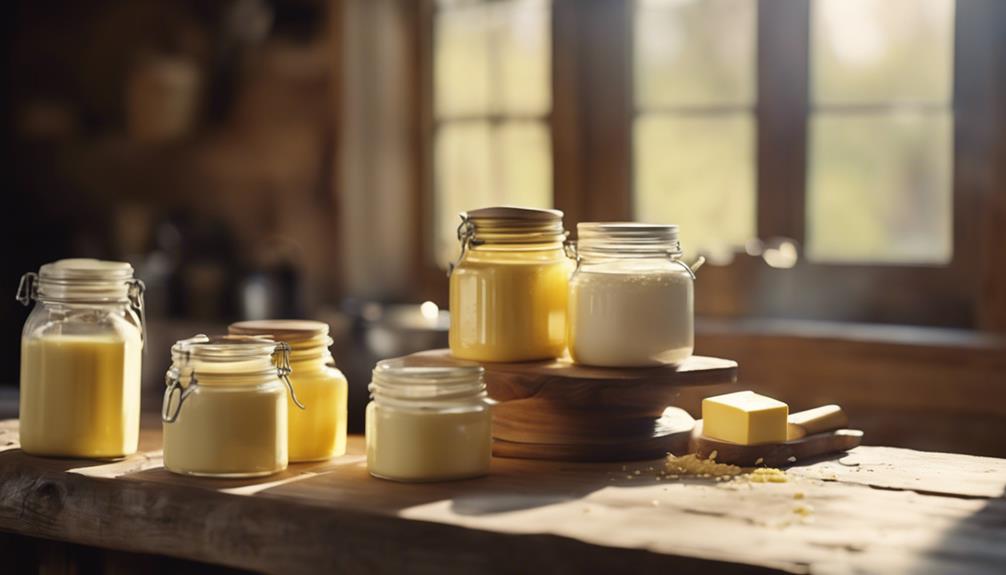
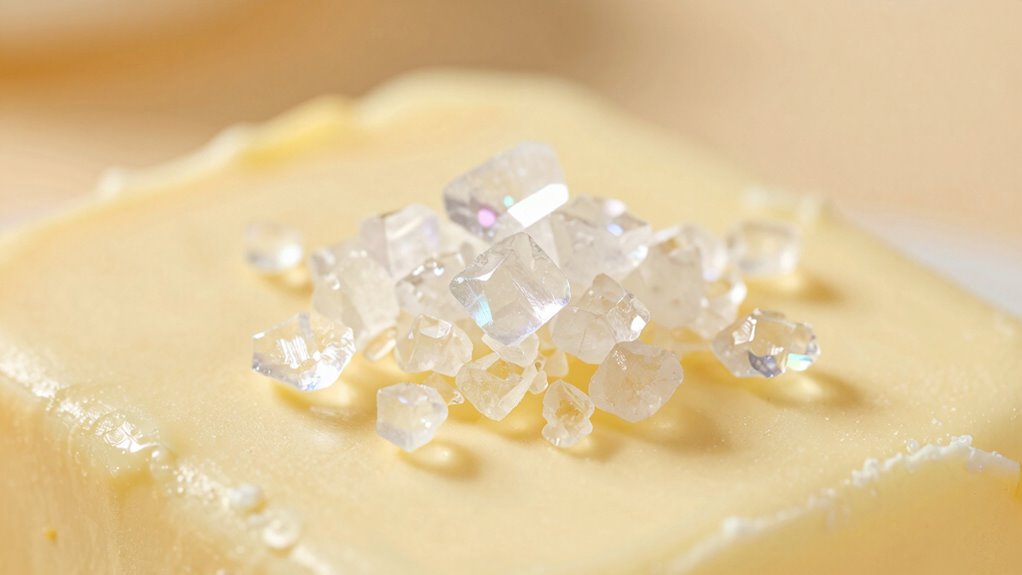
Have you ever noticed tiny, shimmering specks in your butter that seem almost crystal-like? Those little flecks are actually butter crystals, and understanding them doesn’t require a degree in food science. When you look closely at butter, you’re seeing the result of a natural process called crystallization. Butter is made from cream, which has a smooth, velvety cream texture. When cream is churned into butter, it separates into fat and liquid. During this process, tiny fat particles come together and form crystals—small, solid bits of butter that give it that distinctive appearance.
The crystallization process begins as soon as cream is churned. As the fat molecules collide and stick together, they form tiny solid structures. These structures are what you see as butter crystals. At first, they’re microscopic and invisible to the naked eye, but as churning continues, they grow larger and become more noticeable. The size and distribution of these crystals influence the butter’s texture and mouthfeel. When the crystals are small and evenly distributed, the butter feels smooth and creamy. If larger crystals form, the butter can feel grainy or crumbly.
Small, evenly distributed crystals make butter smooth; larger ones can cause a grainy, crumbly texture.
The formation of butter crystals is affected by several factors, including temperature and the way the cream is handled. Cooler temperatures tend to promote the formation of smaller, more uniform crystals, giving the butter a silky, spreadable quality. Warmer temperatures might cause crystals to grow larger, resulting in a coarser texture. That’s why butter stored at different temperatures can feel quite different when you spread it on your toast. The crystallization process is also influenced by agitation; more churning encourages the formation of many tiny crystals, creating that perfect, smooth butter you love. Additionally, the crystallization process in butter is a natural and predictable event that can be controlled to achieve desired textures. Recognizing how factors like temperature and agitation influence crystal growth can help in producing butter with specific qualities. Moreover, understanding the scientific principles behind crystal formation can assist in optimizing butter manufacturing for different textures and uses.
In fact, temperature control is a key aspect in managing the size and distribution of butter crystals during production. Recognizing how this process is influenced by various conditions helps producers create consistent quality butter.
In essence, those tiny, sparkling specks are a natural part of how butter transforms from cream. They’re a sign that the crystallization process has taken place, locking fat molecules into stable structures. While they’re small, those crystals have a big impact on how butter feels and spreads. So, next time you see those shimmering specks, you’ll know they’re a beautiful, natural result of butter’s journey from liquid cream to solid delight. Understanding this simple process helps you appreciate the subtle textures and qualities that make butter so versatile and beloved in your kitchen.

KITCHENDAO One-handed Airtight Butter Dish with Lid for Countertop and Refrigerator Door Shelf, Butter Holder with One Press to Open/Close Secure Latching Buckle for West/East Coast Butter (White)
- Suitable for Eastern and Western Butter: Capacity for various butter types
- One-Handed Open/Close: Secure latching buckle for easy operation
- Keeps Butter Fresh: Sealing ring maintains freshness and airtight seal
As an affiliate, we earn on qualifying purchases.
As an affiliate, we earn on qualifying purchases.
Frequently Asked Questions
Can Butter Crystals Be Found in All Types of Butter?
Butter crystals aren’t found in all types of butter. Their presence depends on factors like storage temperature and butter crystal types. If you keep butter cold enough, you’ll promote crystal formation, but warmer storage can prevent it. Different butter crystal types form under various conditions, so the crystals’ existence varies. To see them, store butter properly, usually refrigerated, ensuring the right temperature for crystal development.
Do Butter Crystals Affect the Flavor of Butter or Baked Goods?
Yes, butter crystals can influence both flavor and texture. While they don’t drastically change the overall taste, they do contribute to flavor enhancement, making baked goods richer. Simultaneously, they cause a subtle texture alteration, giving a smoother or creamier mouthfeel. Think of butter crystals like tiny flavor boosters and texture modifiers—small, but powerful enough to make your baked treats more delightful and satisfying.
How Do Butter Crystals Form During Storage?
Butter crystals form during storage through crystal formation, which happens when fat molecules in butter align and solidify. Storage conditions, like temperature fluctuations and humidity, influence this process. If butter is kept too warm or exposed to temperature changes, crystals develop more easily. To minimize crystal formation, store butter in a consistent, cool environment, ideally in an airtight container, to preserve its texture and quality over time.
Are Butter Crystals Safe to Eat?
Yes, butter crystals are safe to eat. During butter crystal formation, tiny solid fat crystals develop, and these are harmless. When you taste butter with crystals, you’re not risking anything; it’s simply a natural part of the butter’s texture. Crystal tasting safety isn’t a concern because these crystals are just solidified fat, which doesn’t pose health risks. Enjoy your butter, even if it has some crystals!
Can You Prevent Butter Crystals From Forming?
Sometimes, it feels like butter crystals appear out of nowhere, but you can prevent them with proper storage techniques. Keep your butter at a consistent temperature, ideally in the fridge or freezer, to slow crystal formation. Sealing it tightly also helps. By controlling humidity and avoiding temperature fluctuations, you minimize butter crystal prevention issues, ensuring your butter stays smooth and fresh, just like you want it to be.
Conclusion
Now that you understand butter crystals, think of them as tiny dance partners in your butter, moving perfectly in sync to create that smooth, creamy texture you love. When you handle your butter with care—keeping it at just the right temperature—you’re guiding these crystals to do their best work. So, next time you spread butter, remember it’s not just a simple topping but a marvel of tiny crystals working together like a well-rehearsed ballet.