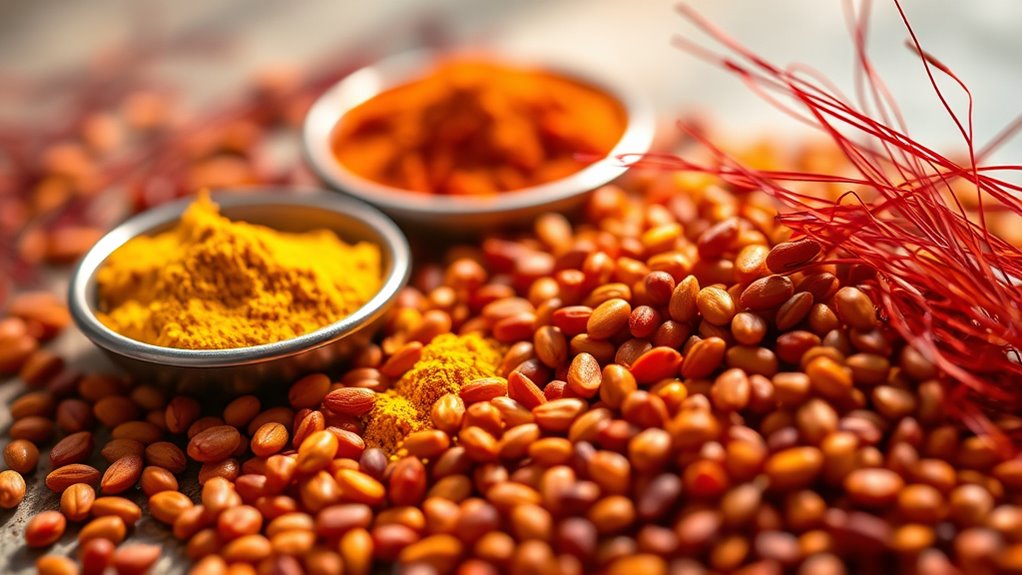

Butter colorants like annatto enhance your butter’s visual appeal and boost its perceived quality. Annatto, derived from achiote seeds, offers a vibrant yellow-orange hue that consumers love. If you prefer alternatives, beta-carotene from vegetables provides color and health benefits, including vitamin A. As more consumers seek natural ingredients, the demand for these colorants grows, aligning with trends toward clean-label products. Discover more about how these colorants impact your butter choices and quality.
Key Takeaways
- Annatto, derived from achiote tree seeds, provides a natural yellow-orange color that enhances butter’s visual appeal and signals quality.
- Beta-carotene, sourced from carrots and vegetables, serves as a nutritious alternative to annatto, adding color while providing health benefits.
- Natural extraction methods for colorants meet consumer demand for clean-label products, avoiding synthetic additives while maintaining aesthetic qualities.
- The growing trend towards health-conscious and ethically sourced products drives the reformulation of butter to include natural colorants like annatto and beta-carotene.
- Using natural colorants aligns with sustainability efforts and enhances product appeal, catering to consumers’ values for natural and nutritious ingredients.
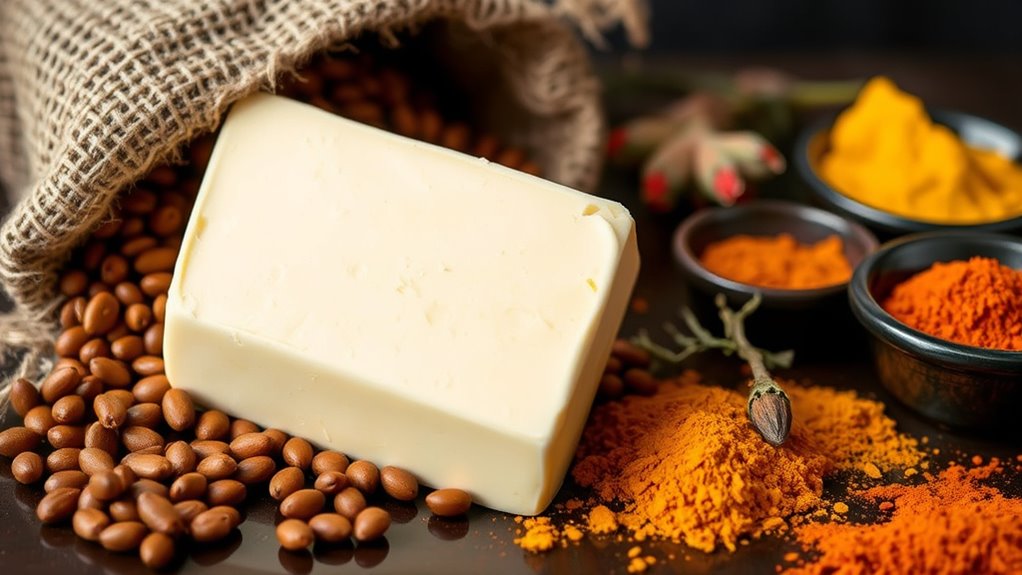
Butter colorants are key ingredients that enhance the visual appeal of butter, making it more attractive to consumers. When you walk through a grocery store, you might not realize how vital these colorants are in your choice of butter. They play a significant role in how you perceive quality and freshness. A rich, golden hue can signal that the butter is made from high-quality cream, while a paler shade might suggest otherwise. This is where natural extraction methods come into play, allowing manufacturers to create appealing products without relying on synthetic additives.
Butter colorants enhance its appeal, influencing perceptions of quality and freshness while promoting natural ingredients over synthetic additives.
You might be familiar with annatto, one of the most popular natural colorants used in butter. Derived from the seeds of the achiote tree, annatto provides that vibrant yellow-orange tint. With its roots in traditional practices, annatto has found its way into commercial applications, ensuring that butter remains visually appealing. When you choose butter that’s colored with annatto, you’re opting for a product that aligns with a growing consumer preference for natural ingredients. Many people are increasingly conscious about what they put in their bodies, and utilizing natural colorants can be a selling point.
Of course, annatto isn’t the only option out there. You might come across alternatives like beta-carotene, another natural colorant that offers health benefits alongside its coloring properties. Derived from carrots and other vegetables, beta-carotene not only adds a pleasing shade but also provides vitamin A, promoting better health. As you explore butter options, consider how these natural extraction processes contribute to both the visual and nutritional aspects of the product.
In the commercial landscape, the demand for natural butter colorants is steadily rising. Manufacturers are adapting to consumer preferences, often reformulating their products to eliminate artificial colorants. It’s not just about aesthetics; it’s about meeting the expectations of health-conscious customers like you. Choosing butter with natural colorants can also help you feel more connected to the food you eat, knowing that it’s made with ingredients that align with your values. Additionally, the trend towards sustainability in food production reflects a broader movement within the industry, as consumers increasingly seek out products that are both visually appealing and ethically sourced.
Frequently Asked Questions
Are There Any Health Risks Associated With Synthetic Butter Colorants?
Yes, there are potential health risks associated with synthetic butter colorants. When you consume products with synthetic additives, you might encounter health concerns such as allergic reactions or sensitivities. Some studies suggest a link between certain synthetic colorants and hyperactivity in children. It is crucial to read labels and be aware of what you’re eating. Opting for natural alternatives can help you avoid these risks while still enjoying your favorite foods.
How Do Consumers Perceive Natural Versus Artificial Butter Colorants?
You might notice a vibrant, golden hue in your butter that draws you in. When it comes to natural versus artificial colorants, many consumers lean towards natural options, valuing consumer trust and labeling transparency. They often feel reassured by ingredients they can recognize, envisioning wholesome farms and fresh produce. In contrast, artificial colorants can evoke skepticism, making you question what’s really in your food. Ultimately, you want to feel good about what you’re spreading on your toast.
Can Butter Colorants Affect the Flavor of the Product?
Yes, butter colorants can affect the flavor of the product. While the primary purpose of these colorants is to enhance visual appeal, some may influence flavor impact due to their natural compounds. For instance, certain natural colorants can add subtle flavors that enhance the overall taste. Additionally, color stability can play a role; if the color fades, it might alter your perception of flavor, leading you to experience the butter differently.
What Regulations Govern the Use of Butter Colorants in Food Products?
Regulatory standards govern the use of butter colorants, ensuring they’re safe for consumption. The FDA sets guidelines that color additives must meet, including safety evaluations. You’ll also find labeling requirements that mandate any colorants used must be declared on the packaging. This transparency helps you make informed choices about what you’re eating. If you’re curious about specific colorants, checking the label can provide clarity on what’s been added to your butter.
Are There Vegan Alternatives to Traditional Butter Colorants?
Yes, there are vegan alternatives to traditional butter colorants. You can use plant-based dyes like beet juice or turmeric for natural coloring. These options not only provide vibrant hues but also align with a vegan lifestyle. Experimenting with different plant-based dyes allows you to achieve the desired shade without compromising your values. Just remember to check the source of your dyes to verify they’re completely plant-derived and free from animal products.
Conclusion
In the world of butter colorants, annatto stands out as a natural choice, but don’t overlook the alternatives. Whether you’re whipping up a batch of homemade cookies or crafting a gourmet dish worthy of a Michelin star, the right color can make all the difference. So, next time you’re in the kitchen, channel your inner 18th-century chef and experiment with these vibrant options. Your culinary creations will shine brighter, and your taste buds will thank you!