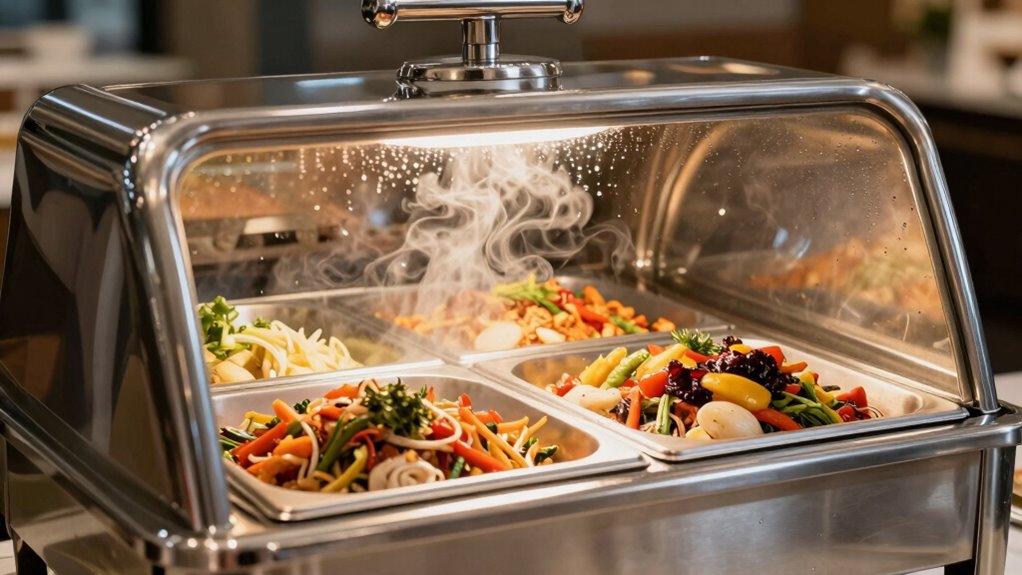
Buffet warmers do a good job keeping food hot, but moisture loss is a major challenge you’ll face toward the end of service. As dishes sit in warmers, moisture evaporates, causing food to dry out and lose flavor and texture. To combat this, cover dishes with lids or moisture-retaining covers, and monitor temperatures regularly. Proper techniques can help preserve quality and keep your food fresh longer—stick around to learn more tips and tricks for better results.

Get kitchen staples and gadgets delivered free — and shop member deals
- Fast, free delivery on millions of items
- Access to Prime Big Deal Days deals on October 6–7
- Prime Video, Amazon Music and more included
Key Takeaways
- Buffet warmers maintain food temperature but often cause moisture evaporation, leading to dryness and flavor loss.
- Covering dishes and using moisture-retaining accessories help prevent moisture loss during warming.
- Proper placement and avoiding drafts improve humidity retention and food quality.
- Balancing heat levels prevents over-drying while keeping food safe and hot.
- Regularly monitoring and adjusting temperature ensures moisture preservation without compromising safety.
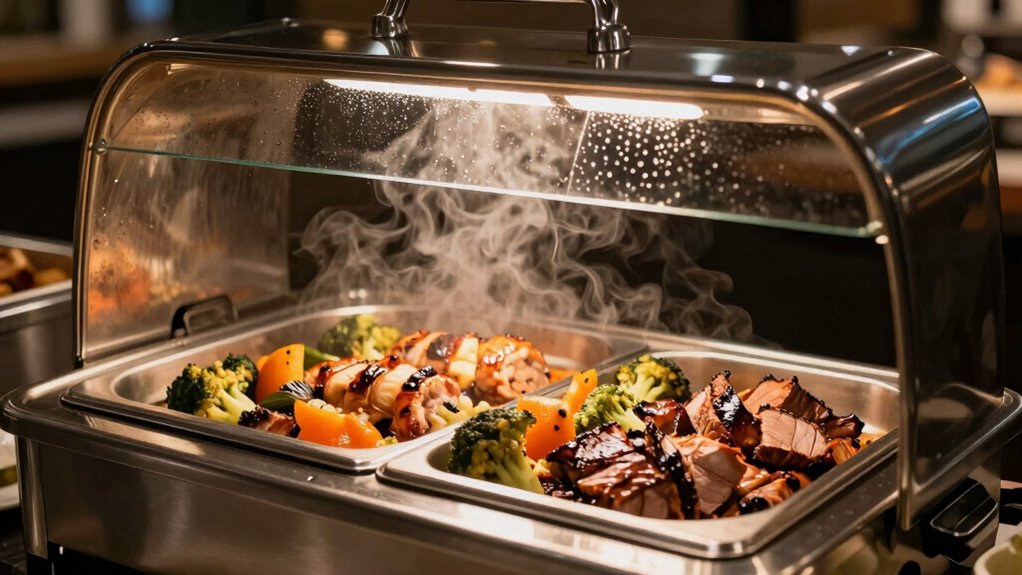
When serving a buffet, keeping food hot is essential to guarantee both safety and flavor. Hot foods inhibit bacterial growth, reducing the risk of foodborne illnesses, so maintaining proper temperatures isn’t just about taste—it’s about health. Buffet warmers are your go-to tools for this task, but managing them effectively involves more than just turning them on. You need to understand how they work and the challenges they pose, especially concerning moisture loss and energy use.
Buffet warmers are designed to keep food at a consistent, safe temperature, typically above 140°F (60°C). They do this with minimal energy, making them an efficient choice for large quantities of food. However, while they excel at maintaining heat, they often cause moisture to evaporate from the food. This moisture loss can dry out dishes, diminishing their flavor and texture—something you’ll want to avoid. Covering food properly and using lids or moisture-retaining covers can help lock in humidity, preserving the dish’s quality over time. Wet heat sources, like steaming trays, can also be beneficial to keep dishes moist while maintaining safety standards. Additionally, proper temperature control is vital to balancing moisture retention with food safety. Understanding how different warmers operate and their effects on moisture can help you select the best equipment for your needs.
Buffet warmers keep food safe above 140°F but can dry out dishes; use lids and steaming to retain moisture effectively.
Energy consumption remains a critical consideration. Buffet warmers are generally designed to be energy-efficient, but leaving them on for extended periods can still rack up electricity costs. It’s wise to monitor the food’s status regularly and turn off warmers when food is no longer being served. Doing so not only saves energy but also prevents overcooking or drying out the food. Proper placement of warmers—away from drafts or cold spots—can further optimize their performance, ensuring consistent temperature without unnecessary energy drain. Being aware of energy efficiency tips can significantly reduce operational costs and environmental impact.
Maintaining food safety while managing moisture and energy use requires a balanced approach. You want the food hot enough to prevent bacteria growth, but not so hot that it dries out prematurely. Using the right equipment—such as insulated covers or warming trays with adjustable heat controls—gives you greater control over temperature and humidity. Regularly checking the temperature with a food-safe thermometer ensures you’re meeting safety standards without wasting energy. This balance ensures your buffet food remains safe, appealing, and economical to serve.
In the end, the key to effective buffet service is understanding how warmers influence both food safety and moisture retention, as well as how to operate them efficiently. When you pay attention to these details, you keep your dishes delicious and safe, all while managing energy costs wisely. Proper handling of buffet warmers turns an ordinary setup into a well-orchestrated, cost-effective catering solution that delights guests and keeps health standards intact.
buffet food warmer with moisture cover
As an affiliate, we earn on qualifying purchases.
As an affiliate, we earn on qualifying purchases.
Frequently Asked Questions
How Often Should I Refill the Water in a Buffet Warmer?
You should refill the water in your buffet warmer as needed, typically every few hours, to combat water evaporation and maintain consistent temperature control. Keep an eye on the water level, especially during busy service times, to guarantee the warmer stays moist and food stays hot without drying out. Regular refills prevent temperature fluctuations and moisture loss, helping you serve fresh, safe, and delicious food throughout your event.
Can Buffet Warmers Be Used for Frozen Foods?
Yes, you can use buffet warmers for frozen food, but it’s best to thaw it first. Using frozen food directly can slow the thawing process and might cause uneven heating, risking food safety. To guarantee proper temperature and moisture retention, allow the food to fully thaw before placing it in the warmer. This helps maintain quality and prevents issues caused by the thawing process.
What Is the Safest Temperature Setting for Buffet Warmers?
Think of temperature control like a tightrope walk—balance is key. You should set your buffet warmer to 140°F (60°C) to keep food safe. This temperature inhibits bacteria growth while preventing overcooking. Always follow safety precautions, like using a thermometer to verify the correct setting, and avoid overheating. Maintaining this safe temperature guarantees your food stays warm, moist, and safe for your guests to enjoy.
Do Different Foods Require Different Warming Times?
Yes, different foods require different warming times to maintain ideal food texture and guarantee warming efficiency. For example, delicate items like fish need shorter warming periods to prevent drying out, while denser foods like casseroles can stay warm longer without quality loss. Adjusting warming times helps you keep food moist and appealing, reducing moisture loss and preserving flavor. Always monitor the temperature to avoid over- or under-heating, ensuring consistent quality.
How Do I Clean and Maintain Buffet Warmers Properly?
Think of your buffet warmer as a trusted garden that needs regular tending. You should follow a cleaning schedule, wiping down surfaces and emptying out debris daily, to keep it sparkling and hygienic. Use gentle cleansers to preserve warmth consistency and prevent buildup. Regularly check heating elements for signs of wear, ensuring your warmer provides steady heat without interruptions. Proper maintenance keeps your buffet inviting and food perfectly warm.
Conclusion
While buffet warmers are great for keeping your food hot, don’t forget the moisture loss that can dry out your dishes. If you’re worried about losing flavor or texture, try covering your dishes or adding a splash of broth to keep things moist. It’s a simple step that makes a big difference, ensuring your guests enjoy delicious, fresh-tasting food without sacrificing warmth. With a little care, your buffet will stay inviting and tasty all day long.
Fall Picks
fall essentials
As an affiliate, we earn on qualifying purchases.