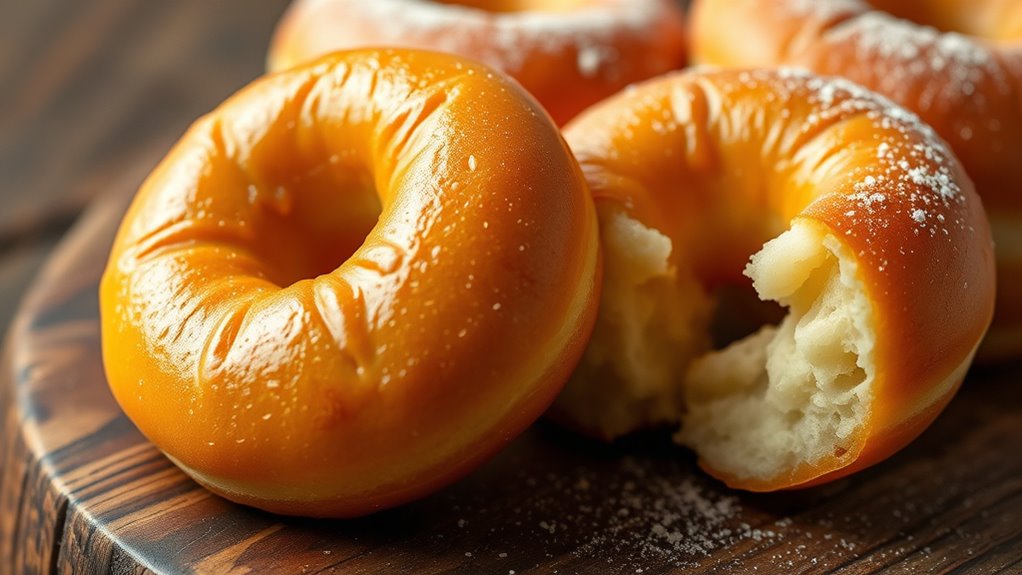

Using clarified butter in brioche doughnuts helps keep them airy by reducing moisture and creating a more stable dough. It coats gluten strands, tenderizing the texture and allowing air to expand during baking. The rich, concentrated flavor also enhances the overall experience. When properly incorporated, clarified butter prevents the dough from becoming too sticky or dense, resulting in light, fluffy doughnuts. For more tips on perfecting this technique, keep exploring.
Key Takeaways
- Clarified butter reduces moisture in the dough, promoting better gluten development and airy texture.
- It coats gluten strands, tenderizing the dough and allowing for easier expansion during baking.
- The fat’s stability at high temperatures helps dough rise evenly without collapsing.
- Gradual incorporation of clarified butter maintains dough elasticity and traps air effectively.
- Its rich flavor enhances overall dough quality without compromising fluffiness.
The Role of Fats in Doughnut Texture
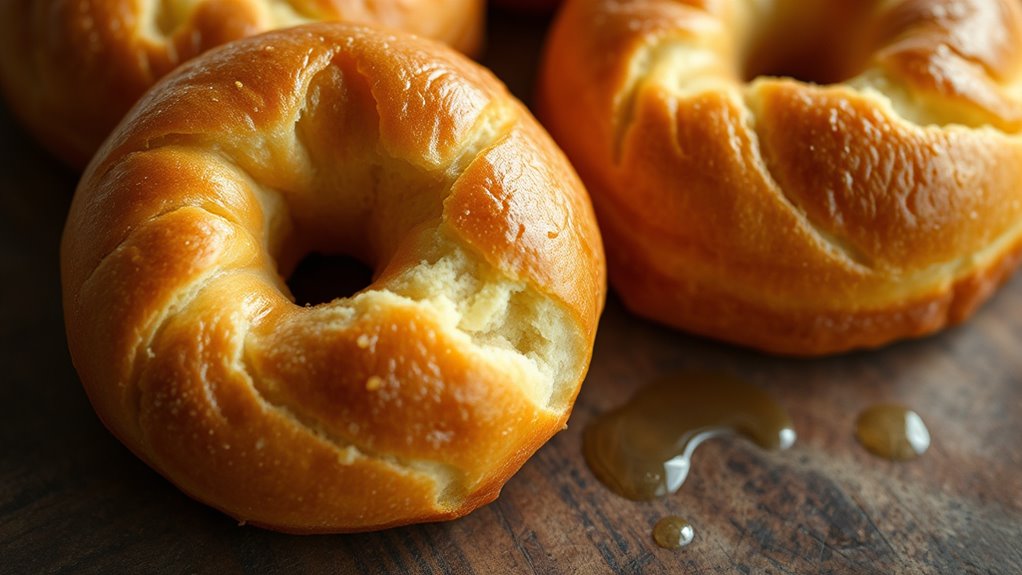
Fats play a crucial role in shaping the texture of doughnuts, especially in brioche doughnuts where richness is key. When you add fats, they help with emulsification, blending liquids and solids smoothly. This process improves dough consistency and guarantees ingredients combine evenly. Fats also influence dough elasticity, making it more pliable and easier to work with. As you knead, the fats coat gluten strands, which tenderizes the dough and helps it rise better. Proper fats content creates a tender, airy crumb in your finished doughnut. Without sufficient fats, the dough might be tough or dense. Additionally, fat distribution within the dough ensures consistent texture throughout the doughnut, preventing uneven areas. So, balancing fats not only enhances flavor but also guarantees your dough has the right structure and texture for light, fluffy brioche doughnuts.
What Is Clarified Butter and Why Is It Special?
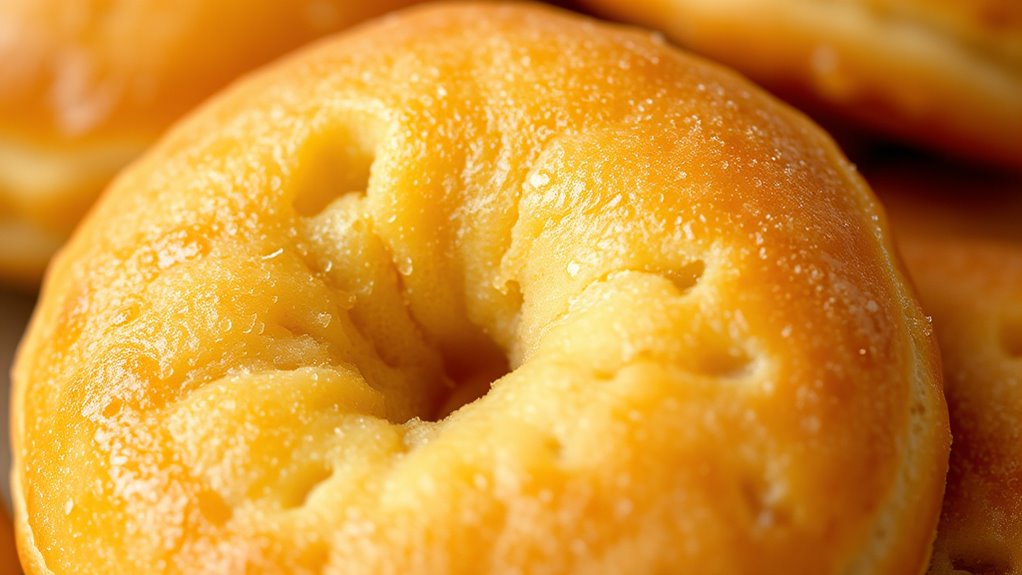
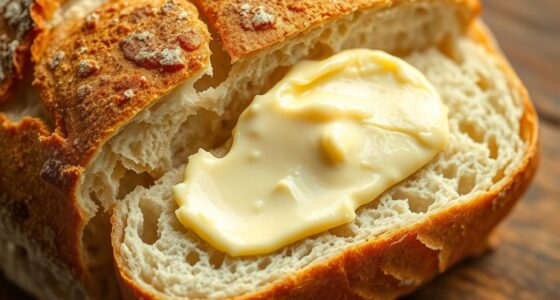
Clarified butter, also known as ghee, is butter that has been gently melted and separated to remove water and milk solids. This process makes it more stable for butter storage, allowing it to last longer without refrigeration. Because it’s free of moisture, clarified butter has a rich, concentrated flavor that enhances baked goods like brioche doughnuts. Its clean, nutty notes add depth without the heaviness of regular butter. Unlike regular butter, clarified butter doesn’t burn easily, making it ideal for high-temperature cooking. When you use it in baking, you get a smoother, more consistent dough, and the flavor profile becomes more refined. This unique butter is truly special because it combines longevity with superior flavor enhancement, elevating your baking results. Additionally, using asset division strategies in business or property negotiations can also lead to more efficient and equitable outcomes, much like the benefits gained from choosing high-quality ingredients in baking.
How Clarified Butter Affects Dough Consistency

Because clarified butter contains less moisture than regular butter, it creates a smoother and more stable dough. This reduction in water prevents the dough from becoming overly sticky or loose, making it easier to work with. As a result, your brioche dough develops a consistent, elastic texture that’s perfect for achieving that melt-in-mouth feel. The clarified butter also imparts a rich, buttery aroma, enhancing the overall sensory experience. Its smooth incorporation helps create a uniform dough that bakes evenly, ensuring each doughnut has a perfect rise. By maintaining the right consistency, clarified butter allows the dough to trap air effectively, contributing to a light, airy crumb. This stability is essential for achieving the ideal balance of tenderness and structure in your brioche doughnuts. Additionally, understanding AI security measures can help safeguard your recipes and baking techniques from digital threats.
Techniques for Incorporating Clarified Butter Into Brioche Dough

To incorporate clarified butter into your brioche dough effectively, start by guaranteeing the butter is at the right temperature—warm but not hot—so it blends smoothly without cooking the yeast or flour. Use bakery techniques like gradually adding the clarified butter in small portions, mixing thoroughly after each addition to maintain dough elasticity. This approach prevents the fat from breaking the gluten structure. If you’re using ingredient substitution, such as replacing butter with clarified butter, adjust the mixing time to ensure even distribution. Incorporating clarified butter gradually helps create a uniform dough that retains airiness. Additionally, understanding the role of fats in baking can help you better control the texture and rise of your brioche. Keep your technique consistent, and avoid rushing the process to maintain the delicate balance needed for a light, fluffy brioche.
Tips for Achieving Optimal Fluffiness With Clarified Butter
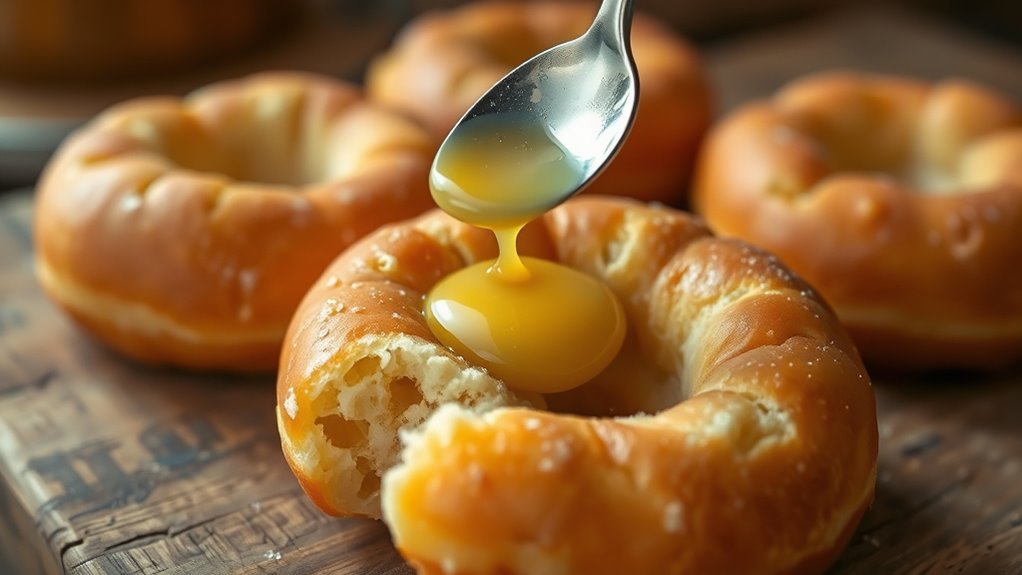
Achieving maximum fluffiness in your brioche dough hinges on how you incorporate clarified butter. To maximize results, consider butter substitution carefully—using clarified butter reduces moisture, helping the dough stay airy. Guarantee you add the butter gradually, allowing the gluten to develop fully without collapsing. Keep the dough at the right temperature to prevent overworking, which can deflate the rise. Using clarified butter also enhances flavor without overwhelming the dough’s delicate structure. Additionally, understanding the role of dough elasticity can help you fine-tune your mixing technique for optimal fluffiness.
Frequently Asked Questions
Can Clarified Butter Be Substituted With Other Fats in Brioche Dough?
You can definitely substitute clarified butter with alternative fats in brioche dough, but it affects flavor variations and texture. Oils like vegetable or canola offer a neutral taste, while butter or margarine add richness. Keep in mind, each fat changes the dough’s consistency and flavor, so choose based on your desired outcome. Using different fats allows you to customize your brioche dough, giving you unique flavor profiles and textures.
How Does Temperature Influence the Effectiveness of Clarified Butter in Dough?
Think of temperature control like tuning a guitar; if it’s off, the sound’s off. When you work with clarified butter, keeping the right temperature guarantees it melts just enough to incorporate smoothly into the dough. Too hot, and the fat melts too quickly, losing its aeration benefits; too cold, and it won’t blend well. Maintaining proper temperature optimizes fat melting, helping your dough stay airy and light.
Are There Health Benefits to Using Clarified Butter Over Regular Butter?
Using clarified butter can offer health benefits over regular butter. It contains fewer milk solids and water, which means it may help improve heart health by reducing saturated fat intake. This can positively influence your cholesterol levels, lowering the risk of heart disease. If you’re mindful of your heart health, opting for clarified butter helps you enjoy rich flavors while potentially supporting better cholesterol management.
What Are Common Mistakes to Avoid When Adding Clarified Butter to Dough?
When adding clarified butter to dough, you wanna avoid overmixing, which can break down the gluten and make your dough dense. Also, watch out for sudden temperature changes—adding hot clarified butter to cold dough can cause uneven mixing or curdling. To keep things smooth, incorporate the butter gradually and at room temperature, ensuring a light, airy result. Stay gentle and patient for best texture.
How Long Does It Take for Brioche Dough to Rise Properly With Clarified Butter?
Ever wonder how long it takes for brioche dough to rise properly with clarified butter? Typically, fermentation timing depends on room temperature, usually about 1.5 to 2 hours for the first rise, and an additional 1-2 hours after shaping. Keep an eye on dough consistency—should be airy and slightly puffy. Don’t rush the process; patience guarantees your dough develops the perfect texture and flavor.
Conclusion
By using clarified butter, you’re giving your brioche doughnuts a light, airy texture that’s as delicate as a cloud. It’s like adding a secret ingredient that lifts your baking to new heights, ensuring each bite is fluffy and tender. When you master this technique, you’ll discover that perfect doughnut isn’t just a dream — it’s a buttery, fluffy reality waiting to happen. So go ahead, embrace clarified butter and enjoy doughnuts that melt in your mouth.