If your crust turns out too thick, try using a simple steam hack. Preheat your oven with a pizza stone or steel, then add a shot of hot water or place a water pan inside before baking. This moisture creates steam that helps the dough expand evenly and develop a crisp, lighter crust. Managing steam correctly can truly transform your results—stick around to discover how mastering this trick can upgrade your baking.
Key Takeaways
- Use steam early in baking to keep crust moist, promoting expansion and preventing thick, tough crusts.
- Preheat a pizza stone or steel to high temperature for even heat and crispness.
- Add hot water or create steam by placing a water pan in the oven for the first few minutes.
- Reduce oven humidity after initial steam to prevent crust thickening and achieve a crispy exterior.
- Proper dough hydration and gentle handling prevent uneven thickness and support optimal crust development.
Why Your Pizza Crust Is Too Thick: And How to Fix It

If your pizza crust keeps turning out too thick, the main culprit is often the amount of dough you’re using. Too much dough results in a dense, heavy crust. Adjusting dough hydration can help; higher hydration levels make the dough more pliable and easier to stretch thin, preventing thickness. Make sure you’re not overloading the dough with flour or water, which can affect its stretchiness and overall texture. Additionally, oven temperature plays a role—baking at a hotter temperature helps the crust crisp up quickly, reducing the chance it puffs up and turns thick. Properly managing dough hydration and ensuring your oven is hot enough will give you a thinner, crisper crust. Monitoring dough consistency and experimenting with these factors will help you see a noticeable difference in your pizza’s thickness. Paying attention to kneading techniques can also improve the elasticity of your dough, making it easier to work with. Using the right dough handling methods can further enhance your results and achieve a perfectly thin crust.
Tools You Need for a Crispy, Even Crust
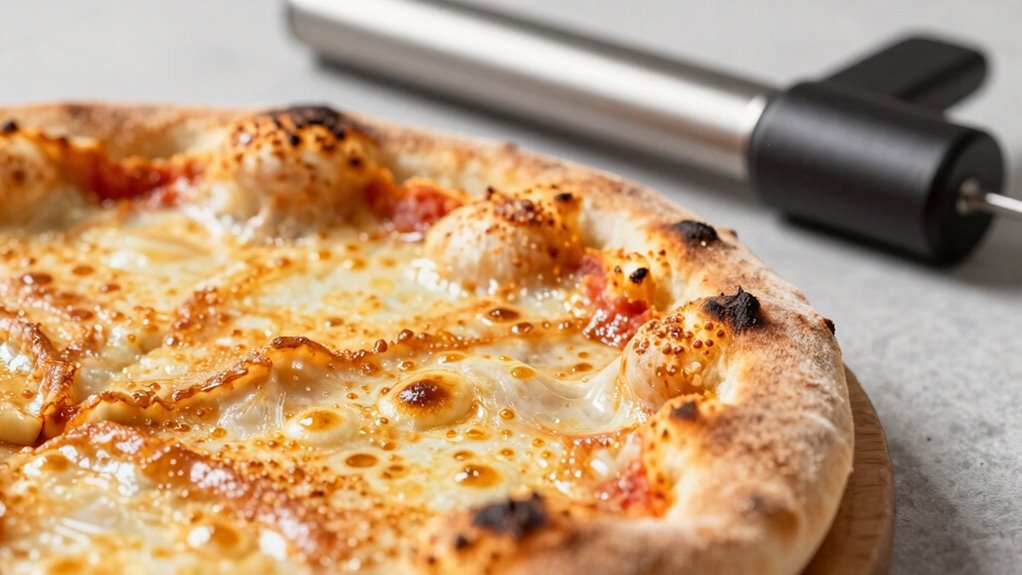
Achieving a crispy, even crust relies heavily on having the right tools at your disposal. A reliable pizza peel helps transfer dough easily into the oven, ensuring minimal disturbance to its shape. Use a digital thermometer to monitor oven temperature accurately—high heat is essential for crispness. A pizza stone or steel provides even heat distribution, promoting uniform crust texture. Pay attention to dough hydration; a slightly wetter dough creates a lighter, crispier crust. Proper tools also include a dough scraper for handling sticky dough and a baking surface that withstands high temperatures. When your oven is preheated to the right temperature, and your tools support consistent dough handling, you’re set to achieve that perfect crispy, even crust every time. Additionally, understanding heat transfer methods can help optimize your baking process for better results. Mastering thermal conductivity of your baking surface can further enhance crust crispness and consistency. Incorporating knowledge of baking physics allows you to fine-tune your techniques for optimal crust development.
How Steaming Changes Your Pizza Crust: The Science Explained

Steaming plays an essential role in transforming your pizza crust by influencing its texture and structure. When you introduce steam during baking, it helps activate the yeast more evenly, boosting dough elasticity. This process allows the dough to expand smoothly, creating a lighter, airier crust. The heat and moisture from the steam break down gluten strands, making the dough more pliable and easier to shape. Additionally, steam helps keep the outer layer moist longer, preventing it from drying out too quickly and forming a thick, tough crust. As a result, your pizza develops a perfect balance of crispness and tenderness. Supporting dough development understanding how steaming affects yeast activation and dough elasticity supports better baking results and allows for more consistent crust quality. By understanding how steaming affects yeast activation and dough elasticity, you can achieve a crust that’s both thin and sturdy, with a delightful texture. Understanding dough chemistry provides deeper insight into these transformations.
How to Use Steam During Baking for Perfect Results

To harness the benefits of steam during baking, you’ll want to create an environment that traps moisture inside your oven. Start by preheating your oven to the ideal temperature for your dough type. Just before baking, add a cup of hot water or place a pan filled with water on the oven’s lower rack. This increases dough hydration and generates steam. Use the table below to understand how oven temperature and dough hydration influence steam effectiveness:
| Oven Temperature | Dough Hydration | Effect on Crust |
|---|---|---|
| High | High | Thin, crispy crust |
| High | Low | Thick, chewy crust |
| Low | High | Soft, moist interior |
| Low | Low | Dense crust, less steam |
| Moderate | Moderate | Balanced texture |
Adjust based on your desired crust outcome.
Common Mistakes When Using Steam and How to Avoid Them

One common mistake is opening the oven door too often during baking, which releases steam and disrupts the ideal environment for crust development. This can lead to uneven oven temperature and affect dough consistency, resulting in a thicker crust. To avoid this, resist the urge to peek frequently; instead, rely on a timer or oven light to monitor progress. Ensure your oven maintains a steady temperature, as fluctuations hinder proper steam buildup. Proper oven temperature helps create the right atmosphere for a thin, crispy crust, especially when using steam. Additionally, check that your dough has the correct consistency before baking—too wet or too dry can impact how well steam influences crust formation. Maintaining consistent oven conditions is crucial for achieving the perfect crust, as fluctuations can hinder steam effects and result in uneven baking. Incorporating smart kitchen appliances that monitor oven temperature and humidity can further optimize baking conditions for the perfect crust. Being aware of how baking environment factors influence steam and crust quality can make a significant difference in your results, especially considering how reliable connections and stable power supply in your kitchen can help maintain consistent oven performance. Paying attention to steam management techniques and ensuring your oven seals well can also greatly improve crust crispness.
Troubleshooting Thick Crusts: What Else Could Be Wrong?

Even if you’ve managed to avoid opening the oven too often, a thick crust can still form due to other factors. One vital issue is oven temperature; if it’s too low, the dough won’t crisp properly, resulting in a denser, thicker crust. Make sure your oven reaches the recommended temperature for your bread or pizza. Additionally, dough hydration plays an essential role. If your dough has too much water, it can become overly soft and produce a thick, chewy crust instead of a crisp one. Adjust your hydration levels accordingly—using slightly less water can help achieve a thinner, more even crust. Proper temperature control is crucial for optimal baking results. Monitoring and fine-tuning these factors can markedly improve your crust’s final texture and thickness. Understanding how baking science influences crust development can help you troubleshoot and perfect your baking techniques. Being aware of oven heat distribution can also ensure more consistent results across different areas of your oven.
Steaming for Different Breads and Pizzas: Custom Tips

Steaming can considerably influence the texture and crust development of different breads and pizzas, but it requires tailored techniques to get the best results. For lighter, airy breads, keep dough hydration moderate to prevent overly thick crusts, as excess moisture can trap steam and hinder crust crispness. When baking pizzas, adjusting fermentation timing is key; a longer fermentation develops flavor and gluten strength, which helps the crust withstand steam without becoming too thick. For denser breads like sourdough, introduce steam early to create a shiny, crisp crust, then reduce humidity to avoid a doughy interior. Always monitor dough hydration levels closely, as they directly impact how steam affects the final product. Proper baking environment and temperature control are also crucial for achieving the desired crust texture. Fine-tuning these variables ensures your baked goods develop the perfect crust texture for each bread or pizza type. Paying attention to steam management during baking can further optimize crust quality and prevent undesirable thickening. For consistent results, understanding how baking techniques influence steam interaction can make all the difference in your baking outcomes.
Extra Tips for Achieving Crispy, Evenly Cooked Crusts

To get that perfect crispy crust, start by using a pizza stone and preheating your oven well in advance. Proper dough handling also makes a difference, so don’t overload it or stretch unevenly. These simple tips help make certain your crust cooks evenly and turns out just right. Additionally, utilizing smart kitchen tools such as a digital thermometer can help monitor the oven temperature more precisely, ensuring consistent results.
Use a Pizza Stone
Using a pizza stone can considerably improve your crust’s texture by providing consistent, high heat directly to the dough. This even heat distribution helps prevent thick, undercooked spots and promotes a crispy, golden crust. To maximize its benefits, place the stone in the oven during preheating so it’s thoroughly heated before baking. The steam technique works well with a pizza stone because the stone absorbs moisture and then releases it evenly, creating a crispy exterior. When you slide your dough onto the hot stone, it immediately begins to cook evenly, minimizing thick, doughy areas. This method enhances crust crispiness without burning, giving you a beautifully baked pizza with a firm, well-cooked base. Using a pizza stone is a game-changer for achieving restaurant-quality crusts at home, especially when combined with proper heat distribution techniques.
Preheat Your Oven
Preheating your oven thoroughly is essential for achieving a crispy, evenly cooked crust. Set your oven to a high oven temperature, around 475°F to 500°F, to ensure the heat is intense enough to crisp the crust quickly. A properly preheated oven creates the ideal environment for your dough’s hydration to work in your favor, promoting a balanced rise and a golden exterior. Avoid rushing the process—give the oven enough time to reach the desired temperature before baking. This ensures the heat penetrates evenly, preventing thick spots. Remember, the right oven temperature combined with well-hydrated dough will help you achieve a crust that’s both crispy and perfectly cooked throughout. Patience here makes all the difference.
Proper Dough Handling
Handling your dough properly is essential for a crispy, evenly cooked crust. To achieve this, focus on dough elasticity, which allows you to stretch it without tearing. Proper kneading promotes gluten development, giving your dough strength and structure. Be gentle but thorough during mixing; overworking it can make the crust dense. Rest the dough sufficiently so the gluten relaxes, making it easier to shape and less likely to develop thick spots. When shaping, handle the dough with care to maintain even thickness. Avoid pressing too hard, which can damage gluten networks. By managing dough elasticity and ensuring proper gluten development, you’ll produce a crust that’s crispy on the outside and evenly cooked throughout. This careful handling is key to perfect pizza or bread crusts.
Why This Steam Hack Will Transform Your Home Baking
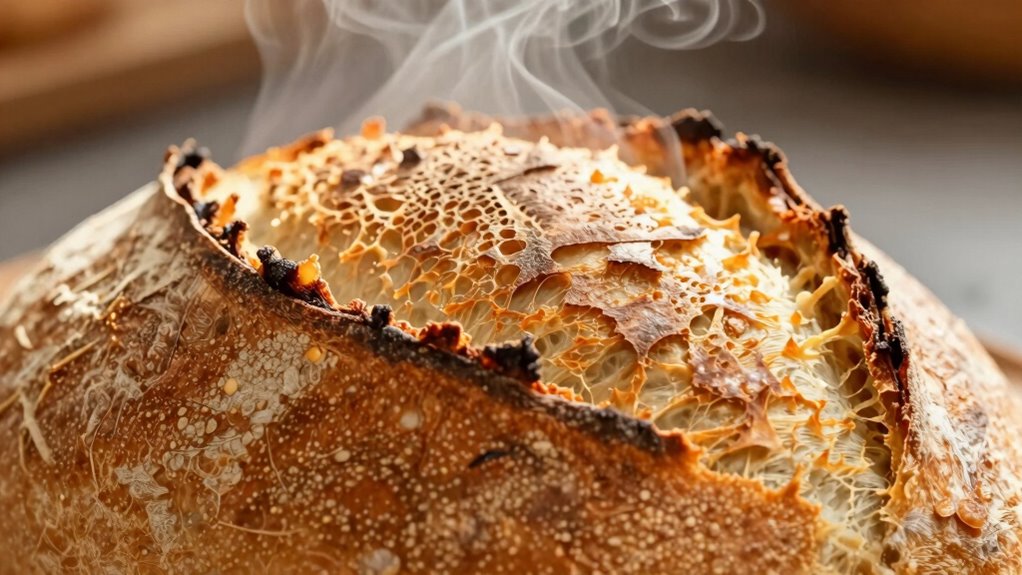
One simple trick can dramatically improve your home-baked bread: adding steam during the baking process. This technique creates a moist environment that encourages a better crust and a shiny finish. When you introduce steam, it slows down the crust formation initially, allowing your dough to expand fully and develop a lighter, airier crumb. Plus, using high-quality ingredients and proper dough fermentation enhances gluten development, making the crust more responsive to steam.
Adding steam during baking creates a shiny crust and helps bread expand fully.
Consider these key points:
- Proper dough fermentation ensures even expansion and flavor
- Ingredient quality impacts crust texture and color
- Steam helps achieve a crisp, golden crust
- Faster oven spring results in a better rise
- Consistent moisture prevents a thick, tough crust
This hack transforms your baking, making professional-quality bread at home simple and achievable.
Frequently Asked Questions
Can This Steam Hack Work With Gluten-Free Dough?
Yes, this steam hack can work with gluten-free dough. It helps achieve a better gluten-free texture by creating steam that keeps the crust moist and prevents it from becoming too thick or hard. You can use this method with alternative crusts like cauliflower or chickpea-based options. Just be mindful of the dough’s consistency and adjust the steaming time accordingly to get the perfect, tender crust.
How Does Steam Affect Different Types of Pizza Toppings?
Steam helps retain topping moisture, keeping ingredients juicy and flavorful. It also improves topping adhesion, preventing toppings from sliding off or shrinking during baking. For delicate toppings like fresh herbs or thinly sliced vegetables, steam creates a gentle environment that preserves their texture and color. You’ll notice toppings stay in place better, and flavors meld more evenly. Just be mindful of excess moisture, which can make toppings soggy if not managed properly.
Is a Steamer Necessary or Can I Improvise at Home?
You don’t need a professional steamer; DIY alternatives work great for steaming your pizza crust. You can improvise at home using a covered pot with a steaming rack or a heatproof bowl placed over boiling water. Steaming tools like bamboo steamers are helpful but not essential. The key is to trap the steam effectively, so get creative with everyday kitchen items to achieve that perfect, thin crust every time.
How Long Should I Use Steam During the Baking Process?
You should use steam during the initial 10-15 minutes of baking, as this is essential for achieving a crispy crust and proper oven spring. During this period, the steam timing helps keep the dough surface moist, allowing it to expand fully. Afterward, reduce or turn off the steam to let the crust set. Keep an eye on your baking duration to prevent overbaking, and adjust steam as needed for perfect results.
Will Steaming Make My Crust Soggy Instead of Crispy?
Steaming won’t make your crust soggy if you use the right steaming technique. It actually helps create a crisp crust by adding moisture early in baking, which then evaporates, leaving a beautifully crunchy texture. To avoid sogginess, make sure you remove excess moisture after steaming and bake at the right temperature. Properly applied, steaming enhances crust texture, giving you a perfect balance of crunch and tenderness.
Conclusion
Don’t let a thick crust ruin your pizza. By incorporating steam into your baking process, you’ll get a crisp, evenly cooked crust every time. Some might worry it’s complicated, but with a simple setup, it’s easy to master. Trust this hack—once you try it, you’ll wonder how you baked without steam before. Your homemade pizzas will never be the same, and you’ll love how perfect every slice turns out.