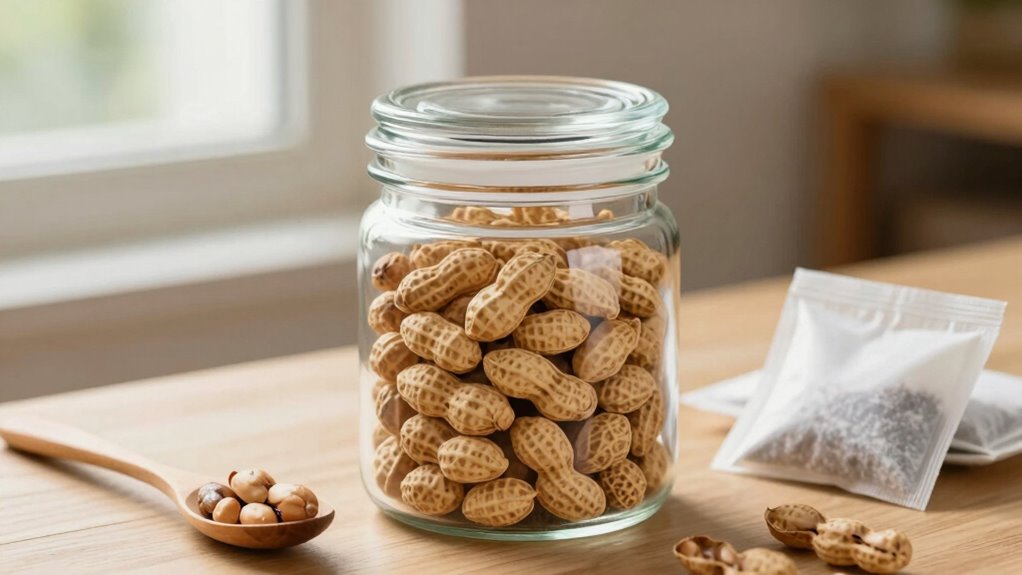
To handle peanuts safely at home and reduce aflatoxin risk, store them in a cool, dry, airtight container away from sunlight and moisture. Always check for mold, off smells, or discoloration before eating or roasting. Discard any peanuts that show fuzzy mold, strange odors, or slimy textures, as they may contain harmful toxins. Proper storage and inspection help keep your peanuts safe; learn more about maintaining quality and avoiding contamination below.
Key Takeaways
- Store peanuts in a cool, dry, airtight container away from sunlight to prevent mold growth and aflatoxin formation.
- Ensure peanuts are fully dried after shelling before storage to inhibit mold development.
- Regularly inspect stored peanuts for visible mold, strange odors, or off tastes; discard if contaminated.
- Roast peanuts thoroughly at 350°F (175°C) for 15-20 minutes to reduce potential toxins and ensure safety.
- Choose high-quality peanuts from reputable sources and follow proper storage practices to minimize aflatoxin risk.
What Are Aflatoxins and Why Do They Appear in Peanuts?
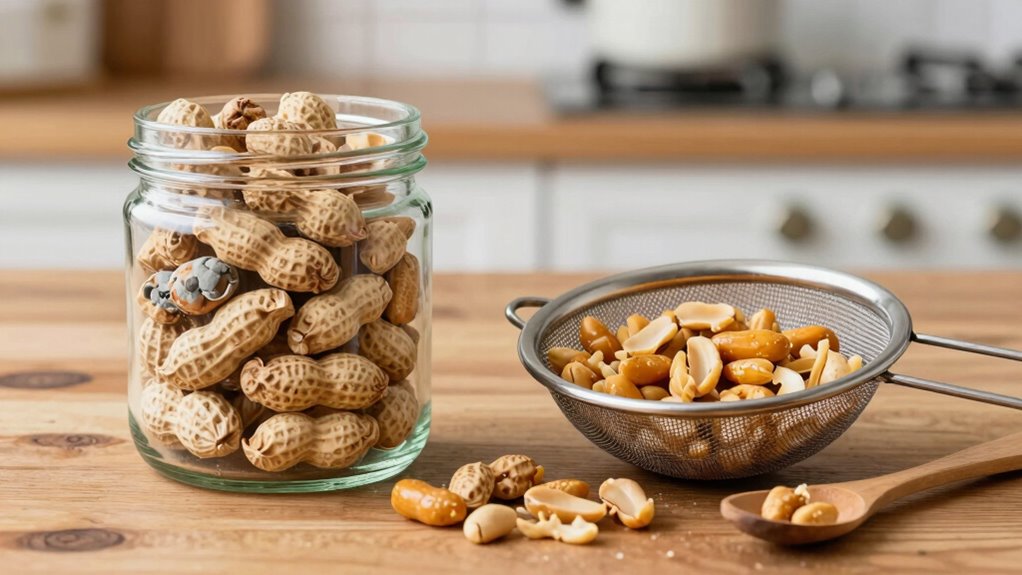
Aflatoxins are toxic compounds produced by certain molds, mainly Aspergillus flavus and Aspergillus parasiticus, that grow on peanuts under specific conditions. When peanuts are stored in warm, humid environments, mold can develop, leading to aflatoxin contamination. While aflatoxins are dangerous to health, they also pose concerns for those with peanut allergies, as contaminated peanuts can trigger allergic reactions. To reduce risks, mold prevention is essential—store peanuts in cool, dry places and inspect them for mold or discoloration before use. Proper handling and storage help prevent mold growth and limit aflatoxin formation, making peanuts safer to consume. Being vigilant about mold prevention not only protects against toxins but also supports overall allergy safety. Additionally, proper storage conditions play a crucial role in minimizing mold development and ensuring peanut safety. Maintaining optimal storage practices can significantly reduce the likelihood of aflatoxin presence in your peanuts. Ensuring good harvesting techniques can also help reduce initial mold contamination, further safeguarding peanut quality.
How to Detect Mold and Aflatoxins in Peanuts
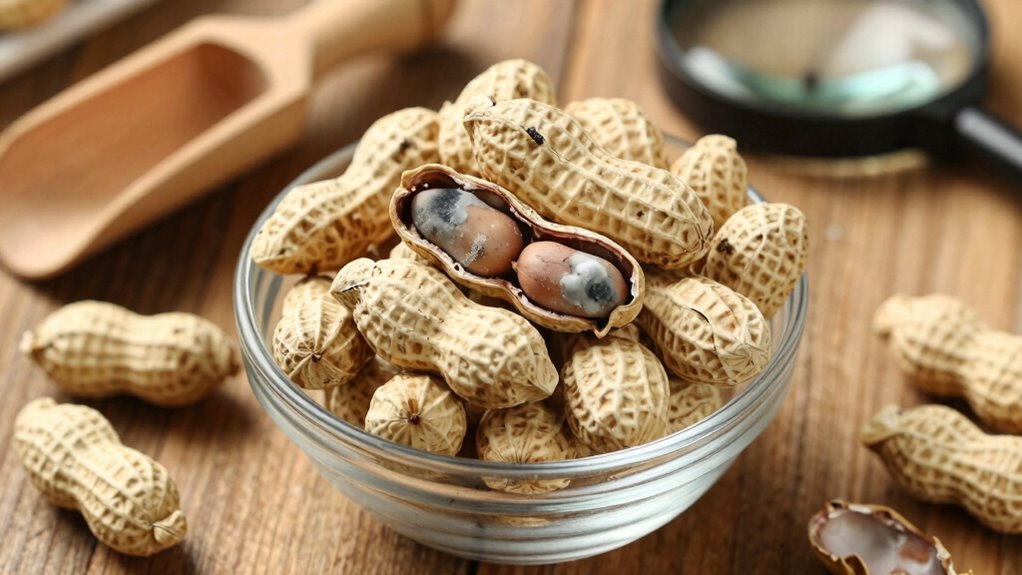
Detecting mold and aflatoxins in peanuts requires careful observation and testing because visual signs alone can be unreliable. Peanut mold often appears as fuzzy, discolored patches, usually green, gray, or black, but sometimes mold can hide beneath the shell or inside the nut. Relying solely on looks can miss contaminated peanuts. Toxin detection involves more than just inspection; you might need specialized testing, like rapid test kits or lab analysis, to confirm the presence of aflatoxins. Always discard peanuts with visible mold, strange odors, or an off taste. Remember, mold growth can occur even without obvious signs, so when in doubt, it’s safer to avoid consuming suspect peanuts. Proper detection helps prevent health risks associated with aflatoxin ingestion. Understanding the impact of cookies used by websites can also help you stay informed about how your data is managed during testing and inspection processes. Additionally, using testing kits designed for aflatoxins can provide more accurate results at home. Be aware that advanced testing methods can sometimes be necessary for definitive results, especially when visual inspection is inconclusive. Conducting proper storage of peanuts, such as keeping them in a cool, dry place, can also help prevent mold growth.
How Do Aflatoxins Affect Your Health?

Consuming peanuts contaminated with aflatoxins can pose serious health risks. Aflatoxins are toxic compounds that may cause liver damage, immune suppression, and even increase the risk of liver cancer over time. While peanuts provide nutritional benefits like healthy fats, protein, and essential vitamins, ingesting contaminated ones can negate these advantages. The toxins can also affect your body’s ability to absorb nutrients, weakening your immune system. If you regularly use peanuts in your culinary uses—whether in snacks, baked goods, or sauces—it’s vital to verify they’re safe. Proper storage methods reduce mold growth and help protect your peanuts from contamination at home. Maintaining proper humidity levels and using airtight containers are crucial steps in preventing mold development, which can lead to aflatoxin formation. Regularly inspecting your peanuts for signs of mold or spoilage is an important food safety practice that can prevent potential health issues. Being mindful of peanut quality helps protect your health while still enjoying their delicious flavor and nutritional benefits, especially when combined with proper handling techniques.
How to Store Peanuts Safely at Home to Prevent Aflatoxin Growth
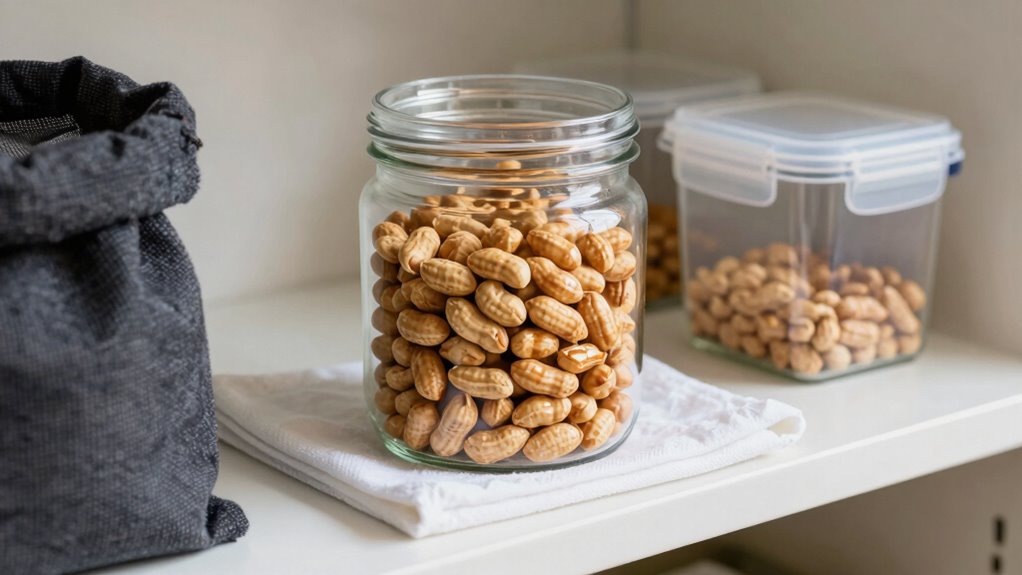
To prevent the growth of aflatoxins in your peanuts, proper storage is essential. After peanut shelling, ensure your peanuts are completely dry and stored in airtight containers. Here are three tips to help:
- Keep peanuts in a cool, dry place away from direct sunlight, since warmth encourages mold growth.
- Use airtight containers to limit exposure to humidity and pests, which can promote aflatoxin development.
- Be mindful of peanut farming techniques; choose peanuts from sources that follow good practices, reducing the risk of contamination from the beginning.
- Incorporate proper storage practices based on reputable guidelines to further minimize the risk of mold and toxin formation.
How to Roast and Prepare Peanuts Safely

When roasting peanuts, use even heat and avoid overcooking to reduce the risk of aflatoxin formation. Make sure to store your roasted peanuts in a cool, dry place to keep them fresh and safe. Proper techniques and storage are key to enjoying peanuts without health concerns. Additionally, monitoring storage conditions can help prevent mold growth that produces aflatoxins. Being aware of peanut quality before purchase can also lower the chances of contamination. Ensuring proper handling techniques during processing can further minimize risks associated with aflatoxins. Paying attention to moisture levels during storage is also essential to inhibit mold development.
Proper Roasting Techniques
Proper roasting techniques are essential for guaranteeing peanuts are both safe to eat and flavorful. To avoid triggering a peanut allergy or creating unsafe levels of aflatoxins, always monitor the roasting temperature carefully.
Here’s what you should do:
- Preheat your oven to 350°F (175°C) — consistent roasting temperature helps prevent over-roasting.
- Spread peanuts evenly on a baking sheet to ensure uniform heat exposure.
- Roast for 15-20 minutes, stirring occasionally, until golden brown and fragrant.
Safe Storage Practices
Ensuring safe storage practices starts right after roasting your peanuts. To maximize their peanut shelf life, store them in an airtight container in a cool, dry place. Keep the storage temperature low to prevent mold growth and limit moisture exposure, which can promote aflatoxin development. Avoid storing peanuts near strong-smelling foods, as they can absorb odors. If you’ve already opened the package, transfer remaining peanuts to a sealed container to maintain freshness and safety. Proper storage not only preserves flavor but also minimizes the risk of aflatoxin contamination. Regularly inspect stored peanuts for signs of spoilage, such as mold or an off smell. Additionally, understanding the importance of vetting peanut products can help ensure your snacks are safe and free from harmful toxins. Being aware of aflatoxin risks and how to prevent them is essential for safe peanut handling. Maintaining proper storage conditions is a crucial part of preventing mold growth and ensuring the safety of your peanuts. Incorporating proper handling techniques can further reduce the likelihood of toxin development. Following these practices guarantees your peanuts stay safe and tasty for longer.
Choosing Safe, Fresh Peanuts in Stores

How can you tell if peanuts are safe and fresh when shopping? First, check for a clean, dry appearance with no signs of mold, shriveling, or pests. Second, smell the peanuts; fresh ones should have a mild, nutty aroma, not a sour or musty scent. Third, read the packaging for proper labeling, especially if you have a peanut allergy—look for allergen warnings and expiration dates. When choosing roasted peanuts, consider the roasting temperature; higher temperatures may reduce aflatoxin risk but can affect freshness. Opt for those that look evenly roasted without burnt spots. Freshness is key for flavor and safety, so choose reputable stores that store nuts properly. Proper storage techniques can help maintain peanut quality and safety at home. Additionally, understanding how water quality impacts food safety can further ensure your nuts remain uncontaminated. Moreover, being aware of processing methods can help you select peanuts that are less likely to contain harmful contaminants.
When Should You Discard Peanuts Due to Contamination?
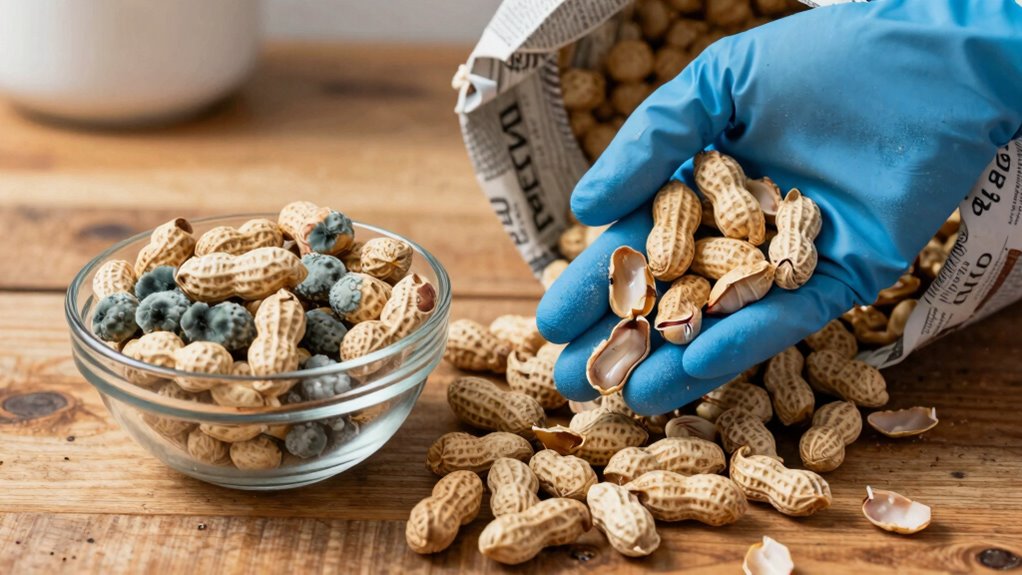
You should discard peanuts immediately if you notice visible mold, such as fuzzy white or greenish patches, since mold can produce harmful mycotoxins like aflatoxins. Peanut mold indicates possible contamination beyond safe limits, especially if it’s widespread or persistent. Even if the mold isn’t obvious, you should avoid peanuts that have an off smell, slimy texture, or discoloration, as these signs can suggest toxin levels exceeding safe thresholds. Keep in mind that aflatoxins can produce serious health risks at relatively low concentrations, so it’s better to err on the side of caution. If peanuts show any signs of mold or spoilage, discard them to prevent exposure to harmful toxins and protect your health.
What Labels and Packaging Indicate About Peanut Safety
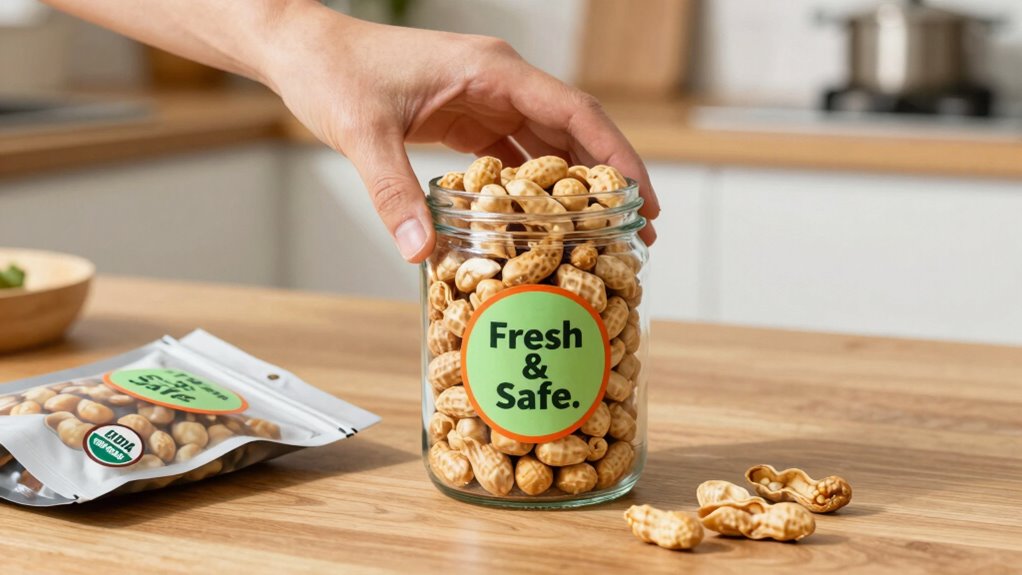
Labels and packaging can provide important clues about the safety and quality of peanuts. First, check the lot labeling; a clear, legible lot number helps trace the product’s origin and quality. Second, look for packaging indicators like airtight seals, which keep out moisture and reduce mold risk. Third, pay attention to expiration or “best by” dates—consuming peanuts past these dates increases the chance of contamination. Proper lot labeling ensures you can verify freshness and safety if issues arise. Packaging indicators such as foil or vacuum-sealed packs suggest freshness, while damaged or torn packages could mean compromised quality. Being mindful of these details helps you select safer peanuts and avoid those more likely to contain harmful aflatoxins.
How Regulations Keep Your Peanuts Safe From Aflatoxins
Regulations set strict standards for peanut quality, ensuring contaminated nuts are removed before reaching you. They require regular monitoring and testing to catch any presence of aflatoxins early. By following these rules, authorities help keep your peanuts safe and healthy to eat.
Regulations on Peanut Quality
To protect consumers from the risks of aflatoxin contamination, strict regulations are in place that govern the quality of peanuts. These aflatoxin regulations set clear standards to ensure safe consumption. When it comes to peanut farming, these rules influence everything from harvest timing to storage practices. Here’s what you should know:
- The maximum allowable aflatoxin levels are strictly enforced to prevent contaminated peanuts from reaching your table.
- Suppliers must regularly test peanuts to ensure they meet safety standards before sale.
- Quality control measures include proper drying and storage techniques to minimize mold growth.
These regulations help maintain high peanut quality and keep aflatoxin risks at bay, giving you confidence in the peanuts you buy and enjoy.
Monitoring and Testing Standards
Regular testing and monitoring are essential to guarantee peanuts stay within safe aflatoxin levels. In peanut farming, strict aflatoxin testing helps identify contaminated batches early, preventing unsafe peanuts from reaching consumers. Authorities often set specific standards for aflatoxin levels, requiring farmers and processors to conduct regular tests during harvesting and post-harvest handling. These tests, using advanced laboratory techniques, ensure that peanuts meet safety regulations. By adhering to these monitoring standards, growers can catch contamination before it spreads, reducing health risks. Consistent aflatoxin testing also promotes transparency and accountability within the supply chain. Ultimately, this rigorous process helps protect your health by ensuring that only peanuts with safe aflatoxin levels make it to your home, reinforcing the importance of regulated testing in peanut production.
Frequently Asked Questions
Are Organic Peanuts Less Likely to Contain Aflatoxins?
Organic peanuts aren’t necessarily less likely to contain aflatoxins since aflatoxin contamination depends more on storage and environmental conditions than farming practices. While organic farming avoids synthetic pesticides, it doesn’t eliminate the risk of mold growth. To reduce your risk, buy from reputable sources, store peanuts in cool, dry places, and inspect for mold or discoloration. Proper handling helps keep your peanuts safe, regardless of whether they’re organic or conventional.
Can Cooking or Roasting Destroy Aflatoxins in Peanuts?
Think of roasting peanuts like trying to burn away a sneaky villain—unfortunately, it’s not that simple. Roasting or cooking won’t fully destroy aflatoxins, so focus on proper peanut storage and mold prevention instead. Keep peanuts in airtight containers in a cool, dry place, and check for mold or discoloration before eating. That way, you prevent aflatoxin risks rather than trying to cook them away.
What Are the Signs of Aflatoxin Contamination in Peanut Products?
You should look for signs of aflatoxin contamination through visual inspection, checking for mold presence or discoloration on the peanuts. If you notice any mold, dark spots, or a fuzzy appearance, it’s safest to discard the product. Remember, aflatoxins aren’t always visible, so avoid consuming peanuts with unclear or questionable appearance, especially if they smell off or show signs of spoilage. When in doubt, throw it out to stay safe.
Do All Peanut Varieties Have Equal Risk of Aflatoxin Development?
Not all peanut varieties have the same aflatoxin risk. Some varieties are more resistant to mold growth, which reduces aflatoxin development, while others are more susceptible. You should be aware that peanut variety can influence safety, especially if stored improperly. To minimize aflatoxin risk, choose reputable sources, store peanuts in a cool, dry place, and inspect for mold or discoloration before consumption.
How Do Weather Conditions Influence Aflatoxin Levels in Peanuts?
Weather conditions profoundly influence aflatoxin levels in peanuts. High humidity increases moisture, requiring you to focus on moisture control during storage. Warm temperatures also promote mold growth, so managing temperature is essential. By keeping peanuts dry and cool, you reduce the risk of aflatoxin development. Make sure good ventilation and store peanuts in a sealed container to maintain ideal conditions, preventing mold and toxin formation effectively at home.
Conclusion
By following these tips, you can enjoy peanuts safely at home. For example, imagine noticing a musty smell or mold on your bag of peanuts—it’s best to discard them to avoid health risks. Staying vigilant about storage, checking labels, and roasting properly helps prevent aflatoxin contamination. Taking these simple steps guarantees your snack time remains both delicious and safe for you and your loved ones.