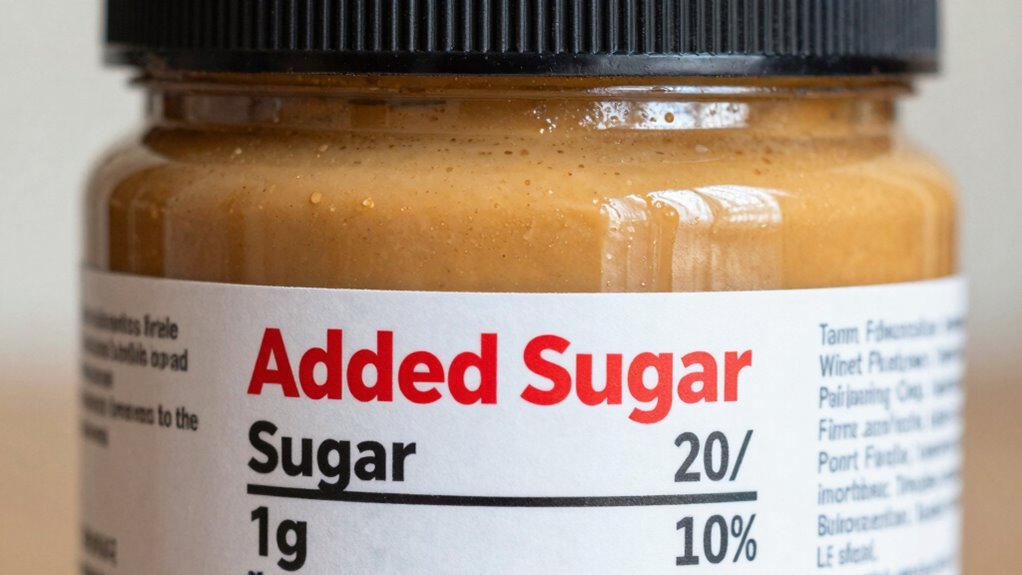

Added sugar on peanut butter labels shows how processed the product is and how it might affect your health. It signals the level of sweetness and can lead to blood sugar spikes, especially if hidden in ingredients or combined with artificial flavorings. Checking for added sugars helps you make smarter choices and identify healthier options with natural or plant-based sweeteners. If you keep exploring, you’ll discover more signs of wholesome, less processed peanut butters.

Get kitchen staples and gadgets delivered free with Prime
- Fast, free delivery on millions of items
- Prime Video, Amazon Music and more included
- Member-only deals all year
Key Takeaways
- Added sugar increases the overall sugar content listed on peanut butter labels, signaling a less healthy option.
- It can be hidden under terms like “sugar,” “corn syrup,” or “dextrose,” making it harder to identify.
- Higher added sugar levels may affect taste, making products sweeter but less natural.
- Excess added sugar can lead to blood sugar spikes and reduced health benefits.
- Reading labels helps identify products with minimal or no added sugar for healthier choices.
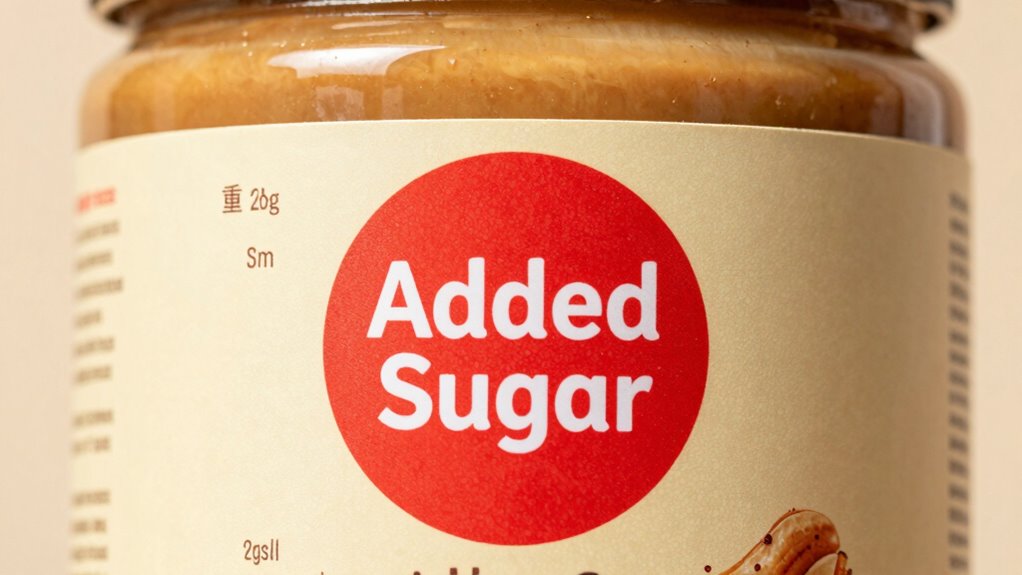
Many brands now also incorporate sugar alternatives to keep their products appealing without the negative health impacts of traditional sugars. These alternatives—such as stevia, erythritol, or monk fruit extract—offer sweetness without the blood sugar spike. When you see these on the label, it signals that the product is designed to be lower in sugar but still flavorful. It’s important, though, to check how these sugar alternatives are listed, as some consumers prefer to avoid artificial or processed sweeteners altogether. The presence of natural flavorings combined with sugar alternatives can give you a better idea of what you’re getting in your jar—more natural, less processed, and often healthier. Additionally, reading ingredient lists carefully helps you identify products that truly match your dietary preferences. Understanding how added sugar impacts peanut butter labels helps you make smarter choices. For example, if you’re trying to cut back on sugar, opting for peanut butters with natural flavorings and natural sugar alternatives is a good move. These options often have fewer ingredients, and the sweetness comes from plant-based or natural sources, making them more wholesome. Furthermore, label transparency is a key factor, as brands that clearly specify their use of natural flavorings and sugar alternatives tend to be more transparent, which is a good sign. Being aware of natural sweetener sources can further help you select healthier options. Manufacturers’ ingredient choices also influence the overall healthfulness of the product, highlighting the importance of scrutinizing labels carefully. Recognizing hidden sources of sugar in processed foods can also help you make more informed choices. By understanding what’s behind the ingredient list, you gain control over what you’re eating and can enjoy peanut butter that’s both tasty and better for you.
natural peanut butter with no added sugar
As an affiliate, we earn on qualifying purchases.
As an affiliate, we earn on qualifying purchases.
Frequently Asked Questions
How Is Added Sugar Different From Natural Sugar in Peanut Butter?
Added sugar differs from natural sugar in peanut butter because it’s processed and added during manufacturing, while natural sugar comes from ingredients like honey or fruit. Natural versus processed highlights the sugar source differentiation; natural sugars are less refined and often come with beneficial nutrients. When you check labels, look for added sugars to avoid excess, since they can spike your blood sugar more than natural sugars, impacting your health over time.
Can Added Sugar Affect Peanut Butter’s Shelf Life?
Adding sugar to peanut butter can positively affect its shelf life by acting as a preservative, thanks to sugar preservation properties. It helps prevent microbial growth, which extends shelf life, especially in homemade or less processed options. However, too much sugar may alter flavor and texture. So, if you want shelf life extension without sacrificing taste, moderate added sugar can be beneficial, but balance is key.
Are Organic Peanut Butters Lower in Added Sugar?
Think of organic peanut butter as a clear stream—less cluttered with hidden additives. Yes, it generally has lower sugar content because organic certification limits added sugars, allowing only natural sweetness. When you choose organic, you’re steering toward a product that stays truer to its roots, with fewer sweeteners masking the nutty richness. So, if you’re watching your sugar intake, organic peanut butter is a more transparent choice.
Does Added Sugar Impact Peanut Butter’s Nutritional Claims?
Added sugar definitely impacts peanut butter’s nutritional claims because it influences sweetness perception, making the product taste sweeter than natural peanut butter. This can align with consumer preferences for sweeter flavors, but it also means the label might highlight lower fat or higher protein, masking the added sugar content. As a result, you might think you’re choosing a healthier option, but added sugar can subtly alter the perceived nutritional value.
How Does Added Sugar Influence Peanut Butter’s Taste and Texture?
Adding sugar to peanut butter boosts flavor enhancement, making it taste sweeter and more appealing, especially for those who prefer a milder, less nutty flavor. It also influences texture modification, often creating a creamier, smoother consistency that spreads easily. However, too much sugar can mask the natural peanut flavor and alter the overall mouthfeel, so balancing sweetness is key for a satisfying taste and texture.
Conclusion
By checking for added sugars on peanut butter labels, you’re steering your health ship clear of hidden sweet traps. Think of added sugar as a sneaky guest crashing your nutritious party; it can turn a healthy snack into a sugar crash waiting to happen. Staying vigilant helps you choose options with less or no added sugar, keeping your energy steady and your body happy. Remember, reading labels is your secret weapon in the fight for smarter snacking.
Halloween Picks
halloween
As an affiliate, we earn on qualifying purchases.