TL;DR

Get kitchen staples and gadgets delivered free with Prime
- Fast, free delivery on millions of items
- Prime Video, Amazon Music and more included
- Member-only deals all year
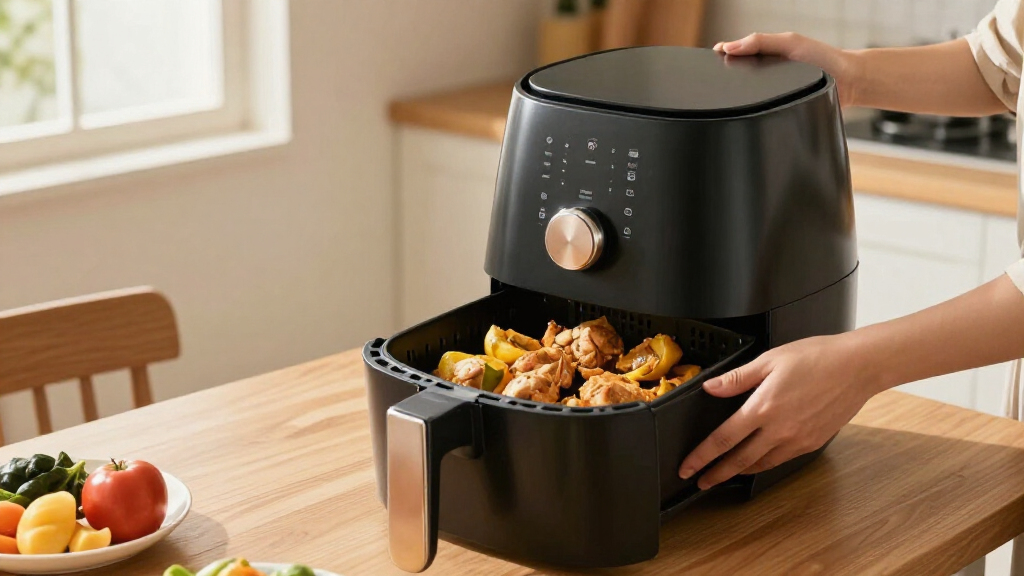
Air fryers with large capacity can make family meals and bigger portions easier, but advertised quarts or liters do not tell you what will fit in one batch. Compare the basket’s usable width and height, leave room for hot air to circulate, and check the appliance’s footprint and cleaning needs before you buy.
A family-size basket can still leave you cooking fries in two rounds. That’s because advertised capacity measures volume, while dinner depends on shape: a wide basket fits more flat pieces than a narrow, deep one.
This guide helps you choose among air fryers with large capacity by matching usable space to the food you actually make. You’ll learn when a single basket beats two cooking zones, what to measure on your counter, and how to avoid overcrowding. Those details matter when you want crisp, evenly browned food without turning a quick weeknight dinner into a string of batches.
Think about last Tuesday’s meal: chicken thighs, broccoli, and potatoes, all due at once. The right appliance can make that routine smoother, but only if its basket, controls, and cleanup suit your kitchen. Use the practical checks below to find a model that earns its counter space.
Treat 5–6 quarts as a rough starting point for many households of three or four; compare the basket’s actual shape and dimensions.
Choose one wide basket for bulky or broad foods, or dual baskets when you want to cook two foods separately.
Leave gaps around food for hot-air circulation; cook in batches when pieces overlap heavily.
Measure the appliance’s footprint, height, and required vent clearance before choosing a counter spot.
Check cleaning instructions, allowed accessories, warranty, and replacement-part availability alongside cooking features.
Choose capacity by the meals you cook, not the box label
Air fryers with large capacity are built to cook bigger portions than compact basket models, but “large” has no standard definition. Start with the amount and shape of food you usually cook, then compare the basket’s usable dimensions. A quart figure alone can’t tell you whether four chicken thighs fit in one layer. That matters because food piled in a deep basket may occupy less of the cooking surface than the same volume spread across a wide one. More volume can help with tall or bulky ingredients, while more floor space is often what lets several pieces brown at once.
As a rough guide, 5–6 quarts (about 4.7–5.7 liters) may suit many households of three or four, while 7 quarts or more can help with larger portions. These are starting points, not guarantees. A broad, shallow basket may fit more fries or vegetables than a taller basket with the same listed volume. The useful question is not just how much food the basket holds, but how much can sit with gaps around it. If your usual meal needs two batches in a given shape, a larger number on the box may not solve the problem.
Picture a household that serves salmon fillets and asparagus on Monday, then makes a big batch of potato wedges on Friday. The first meal may fit neatly in a modest basket; the wedges need enough floor space to spread out. Before buying, check the interior width and height and look for the manufacturer’s examples of foods that fit. A large-capacity air fryer is designed to cook bigger portions, yet the foods still need room for moving hot air. If one batch is your priority, compare the dimensions against the arrangement you would actually use, not just the total weight the appliance can hold.
Measure your go-to ingredients if you often cook bulky items. For a small whole chicken or a 12-inch pizza, check the actual usable interior and the model’s instructions. Two models with the same quart rating can behave like a roomy baking tray and a narrow bucket: both hold volume, but only one may suit your dinner. Allow for the space food needs around it, too; an item that technically fits may still be hard to position or may block airflow. This check helps you avoid paying for capacity that is awkwardly shaped for your meals.
Products Worth Considering

Ninja Foodi Smart 6-in-1 Indoor Grill and Air Fryer, 4 Qt, Black/Silver, FG551

Ninja Foodi 8-Qt DualZone 6-in-1 Air Fryer, Grey, DZ201

Instant Pot Rio 6-Quart 7-in-1 Electric Pressure Cooker, Black
As an affiliate, we earn on qualifying purchases.
Pick one roomy basket or two zones for separate foods
A single large basket suits wide or bulky foods, while a dual-basket model lets you cook two foods separately. Which layout works better depends on whether you need one broad cooking surface or two independent compartments. Dual zones can sometimes coordinate finish times, but each basket may offer less usable space than one large compartment. The tradeoff is flexibility versus uninterrupted room: separate baskets help keep foods apart and let you use different settings, while a single surface may make it easier to lay out a larger item or spread one food in a broad layer.
For example, imagine serving chicken drumsticks and crisp Brussels sprouts at the same time. Two baskets let you set different temperatures or cooking times, which can make the meal easier to coordinate. If one food cooks faster, synchronized finish settings may help you serve both together, depending on the model. If you want to cook a small whole chicken or lay out several fish fillets in one layer, a single broad basket may be a better fit. Each compartment has its own walls, so check its usable width rather than adding the two advertised capacities together and assuming they function like one open basket.
| Layout | Works well for | Check before buying |
|---|---|---|
| Single basket | Bulky items and wide layers of food | Basket width, height, and space for airflow |
| Dual basket | Two foods with different cooking needs | Each compartment’s usable dimensions |
| Countertop oven style | Tray-shaped foods and multiple rack positions | Interior size, rack positions, and counter footprint |
Recent models increasingly offer dual cooking zones, viewing windows, larger baskets, and oven-style designs that roast or bake as well as air-fry. App controls and presets can be handy, but they don’t replace a basket that fits your portions. A window may let you check browning without opening the appliance, while extra racks can increase the number of surfaces but may make it harder to keep food evenly spaced. Features and availability vary by market, so check the manufacturer’s current specifications before making a short list. Consider which features solve a real problem in your routine; each can add controls, parts, or cleaning steps.
Try a simple test: sketch the footprint of your usual meal on paper or compare it with the interior dimensions in the manual. A 12-inch pizza needs that much clear width, while a pile of vegetables needs enough room to spread out. The shape of tonight’s dinner should guide your choice. For dual baskets, sketch each food separately and see whether the portions fit without crowding. This quick comparison can reveal whether the convenience of two cooking zones is worth giving up a single broad surface.
Leave room for crisp edges instead of packing the basket
For even browning, hot air needs to circulate around food, so a large basket still needs breathing room. Overfilling can leave some pieces pale while others cook through, and it may stretch the cooking time. The printed capacity is not a promise that every meal will cook well in one batch. In practice, the amount you can cook at once depends on how the food sits: pieces spread in a loose layer expose more surfaces to hot air, while a mound shields the lower pieces and traps moisture. A larger basket helps only if it gives you enough room to arrange the food this way.
Think of a crowded basket of frozen fries: pieces buried underneath can steam while the exposed ones turn golden. Spread them out in a loose layer, shake or turn them during cooking if the instructions call for it, and cook a second batch when needed. A few extra minutes may give you a better result than forcing every serving into one round. Shaking redistributes the pieces, but it cannot fully fix a basket packed so tightly that air has nowhere to move. If you often need multiple rounds, that is useful evidence that the basket’s floor area or layout may not match your usual portions.
- Check the recipe’s portion size and compare it with your usual meal.
- Arrange food with gaps so air can move between pieces.
- Turn or shake as directed to expose more sides to the hot air.
- Cook in batches if food overlaps heavily or browns unevenly.
For example, if your family eats a large tray of wedges, divide them into two loose layers of cooking time rather than stacking them into a mound. Air frying uses rapidly circulating hot air; it does not deep-fry food. A light coating of oil can improve browning for some foods, though many items need little or none. Batch cooking takes longer overall, but it can produce more consistent browning than trying to cook the entire portion at once. Whether that tradeoff is acceptable depends on when you need dinner ready and whether you can keep the first batch warm.
Meal timing matters, too. If a second batch will sit while you finish the rest of dinner, start the slower batch first or use another appliance for a side dish. Some models offer shake reminders or coordinated dual-zone settings, but you still need to arrange food so it can cook evenly. When comparing models, think about the whole meal timeline: a bigger basket may reduce rounds, while separate zones may let two foods finish together. Neither layout removes the need to leave room around the food.
Make sure the appliance fits your counter and cleanup routine
A large air fryer needs space to sit and vent, so measure its footprint, height, and required clearance before it arrives. Check the manufacturer’s guidance for the distance around vents and for overhead cabinets. A model that fits under a cabinet on paper may be awkward if you need to pull it forward every time you cook. That affects how often it is convenient to use: if moving it is a hassle, a high-capacity appliance may end up stored away. Include room to open a door or remove a hot basket, since the appliance’s listed footprint may not account for that working space.
Consider a small kitchen with one clear counter beside the stove. A broad oven-style unit might offer useful racks, but its door could crowd the walkway or leave no room to set down a hot tray. A single basket could be easier to store, though you should still check its weight if you plan to move it into a cupboard after every meal. The compromise is often between capacity and access: an appliance that stays on the counter needs a permanent spot, while one that gets stored must be practical to lift and retrieve. Consider the path from storage to counter as well as the dimensions at the destination.
Cleaning is part of the purchase decision. Look for removable baskets and trays that are easy to reach, and verify which parts the manufacturer marks dishwasher-safe. After a batch of sticky glazed wings, a smooth, removable tray is much less frustrating to clean than corners that trap grease. Check whether replacement parts are available if a basket coating wears over time. More trays or racks can add cooking flexibility, but they also mean more surfaces to wash and more pieces to store. If you expect to use the appliance several times a week, small cleaning inconveniences can accumulate and make a model less appealing in everyday use.
For safe use, place the appliance on a stable, heat-resistant surface and keep the vents clear. Follow the manual’s instructions for clearances, accessories, and cleaning. Let removable parts cool before washing, and don’t immerse the main electrical unit. Use foil or parchment only if the manufacturer allows it; liners must not block airflow or reach the heating element, and loose paper can move in the fan. These instructions affect more than safety: blocked vents or poorly placed liners can interfere with cooking, while following the cleaning guidance helps protect the basket’s coating and the appliance over time.
Compare power, controls, and convenience against your real routine
A large air fryer can make a smaller meal convenient because it heats a compact cooking area quickly, but energy use depends on cooking time, appliance power, food quantity, and what you’re comparing it with. Many countertop models draw substantial power while operating. Their shorter cook times may lower total energy for some meals, but there’s no single result that applies to every kitchen. The practical comparison is the whole cooking task: a fast preheat and shorter run may use less energy than heating a full-size oven for a small side, while a large meal or long cook may narrow that difference. Look at the appliance’s power rating as one part of the picture, not as a direct forecast of your bill.
Imagine reheating two portions of roasted vegetables on a busy evening. A compact countertop appliance may be simpler than heating a full-size oven, while a large roast could need longer or more space than the basket provides. Compare the manufacturer’s power rating and cooking guidance, then consider how often you’ll use the appliance and what it replaces. If it replaces an oven for small, frequent meals, convenience may be the main benefit even when the energy difference is uncertain. If it duplicates equipment you already use, counter space and storage may matter more than rated wattage.
Useful controls usually include an adjustable temperature, timer, and clear display. Preheat settings or shake reminders can help with recipes that need them. Wi-Fi, recipe programs, and a viewing window add convenience, but a reliable timer and controls you can read at a glance may matter more. Think about whether you’d actually use an app while cooking or reach for a simple dial instead. Extra presets can shorten setup, yet they are only useful if they match your foods and let you adjust the result. Controls that are easy to understand can matter especially when two zones have separate settings.
Air frying can reduce the oil needed compared with deep-frying, but it doesn’t make every meal healthy. Nutrition still depends on ingredients, portions, and preparation. For example, a basket of lightly oiled vegetables is different from a large serving of breaded snacks, even if both come out crisp. A larger appliance can also make it easy to prepare more food than you need, so consider portion size along with capacity. Choose the tool for how it cooks and fits your routine rather than treating the appliance itself as a health benefit.
Before you buy, compare warranty terms and replacement-part availability along with temperature range and cleaning instructions. Product designs change, and features vary by market. Check the latest manufacturer information or retailer listing for the exact model you’re considering; an old review may describe a different version. These details affect the cost and usefulness of ownership: a generous warranty can help if a fault occurs, while available baskets and trays may make it easier to keep using the appliance if a removable part wears out. Include those practical costs when deciding whether a larger model is worth its counter space.
Frequently Asked Questions
What size air fryer do I need for a family of four?
As a rough starting point, 5–6 quarts may suit many households of three or four, but your meals and basket shape matter. Check the usable dimensions and compare them with foods you cook often; a wide basket may fit a family meal differently from a deep, narrow one.
Can a large air fryer cook a whole chicken or a 12-inch pizza?
That depends on the model’s usable width and height and its cooking instructions. Check the interior dimensions rather than relying on the capacity label, then confirm that the manufacturer permits the food you want to cook.
Does a bigger air fryer cook more evenly?
Not automatically. Food needs space for hot air to circulate, so a crowded basket can cook unevenly even when the appliance is large. Spread pieces out, turn or shake them as directed, and use another batch when needed.
Is a dual-basket air fryer better than one large basket?
Dual baskets help when you want to cook two different foods or set separate cooking conditions. One large basket may suit wide or bulky items better. Compare the usable dimensions of each compartment with the meals you plan to make.
How much counter space does a large air fryer need?
Check its footprint, height, weight, and vent clearance, then measure the place where you plan to use or store it. Follow the manufacturer’s clearance guidance so hot air can escape, and consider whether you’ll need to move the unit around other kitchen items.
Can I use foil or parchment in an air fryer?
Use foil or parchment only when the manufacturer permits it. A liner must not block airflow or touch the heating element; lightweight paper can shift in the fan. Follow the model’s instructions for positioning and safe use.
Conclusion
Choose by the meals you make most: check usable basket dimensions, picture your usual portions spread out, and measure the counter space around the appliance. That quick check can tell you more than a big capacity number on the box.
A roomy air fryer works best when food has space to brown and the appliance has space to breathe. Pick the layout that suits your dinners, then let a little hot air turn ordinary Tuesday potatoes golden at the edges.