If your kitchen air is dry, a bread box still matters because it creates a controlled environment that balances humidity and airflow, helping your bread stay fresh longer. It prevents crusts from hardening and keeps the soft inside from drying out too quickly. Proper ventilation inside the box guarantees moisture doesn’t escape or build up excessively. Keep in mind, the right design can make a big difference in preserving bread, and there’s more to discover if you keep exploring.
Key Takeaways
- Bread boxes create a controlled microenvironment that helps maintain moisture and softness in dry kitchen conditions.
- Proper ventilation in bread boxes prevents excess dryness and mold growth, even in low-humidity environments.
- They regulate humidity levels better than open air or paper wraps, extending bread freshness in dry climates.
- Bread boxes prevent crust hardening and staling by balancing airflow and artificial humidity.
- They are especially beneficial in dry seasons, keeping bread soft and flavorful longer despite low ambient moisture.
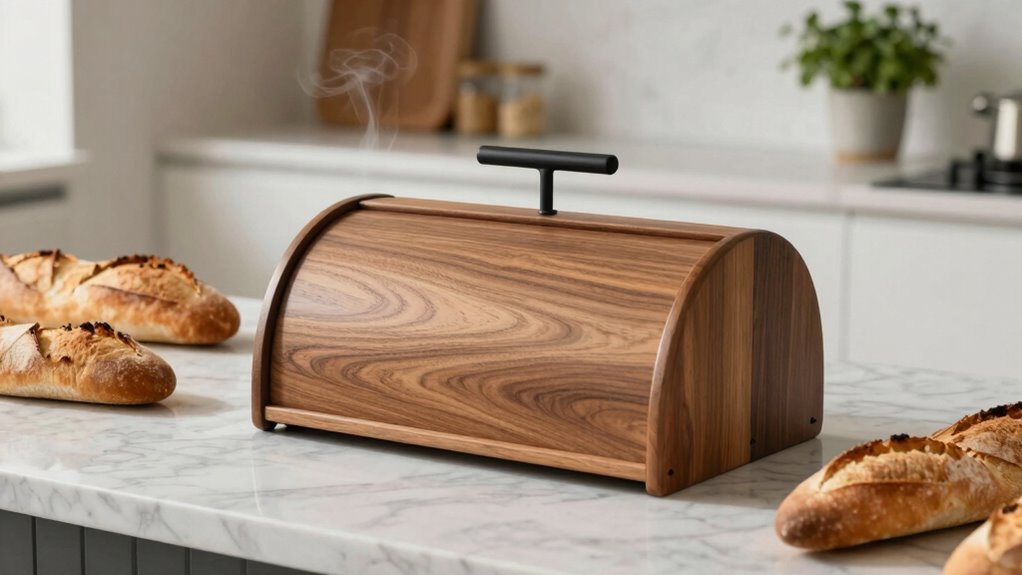
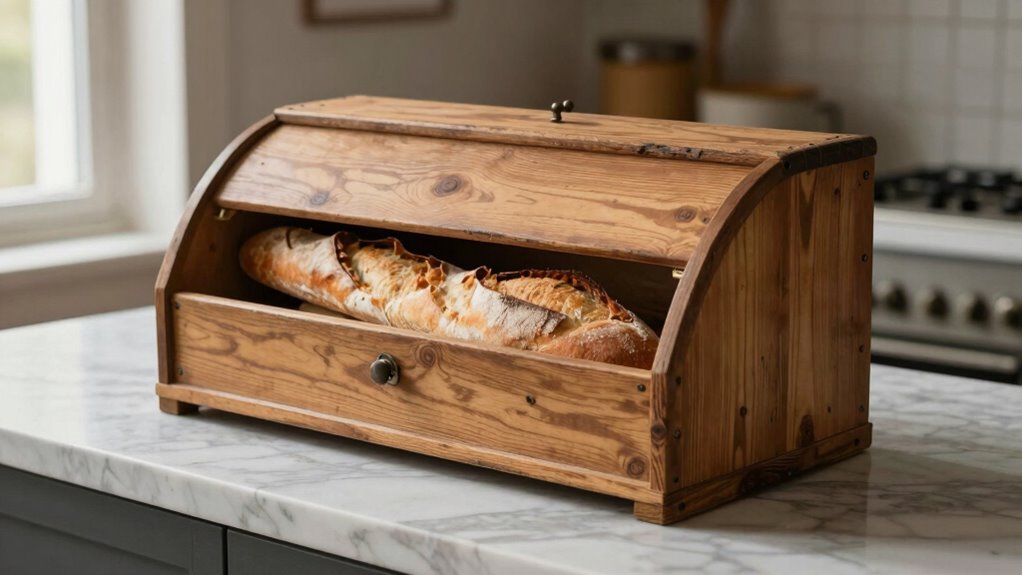
Even if your kitchen air feels dry, a bread box remains a valuable tool for keeping your bread fresh. The key reason is that bread preservation isn’t solely about moisture levels; it’s about creating a controlled environment that slows down the staling process. While many assume that a dry kitchen means bread will quickly turn stale, bread boxes are designed to strike a balance between preventing mold and maintaining the right level of humidity. They offer a form of artificial humidity, which helps preserve bread’s soft texture and fresh flavor longer than if you left it out on the counter exposed to open air.
A bread box balances humidity to keep bread fresh and soft longer, even in dry kitchens.
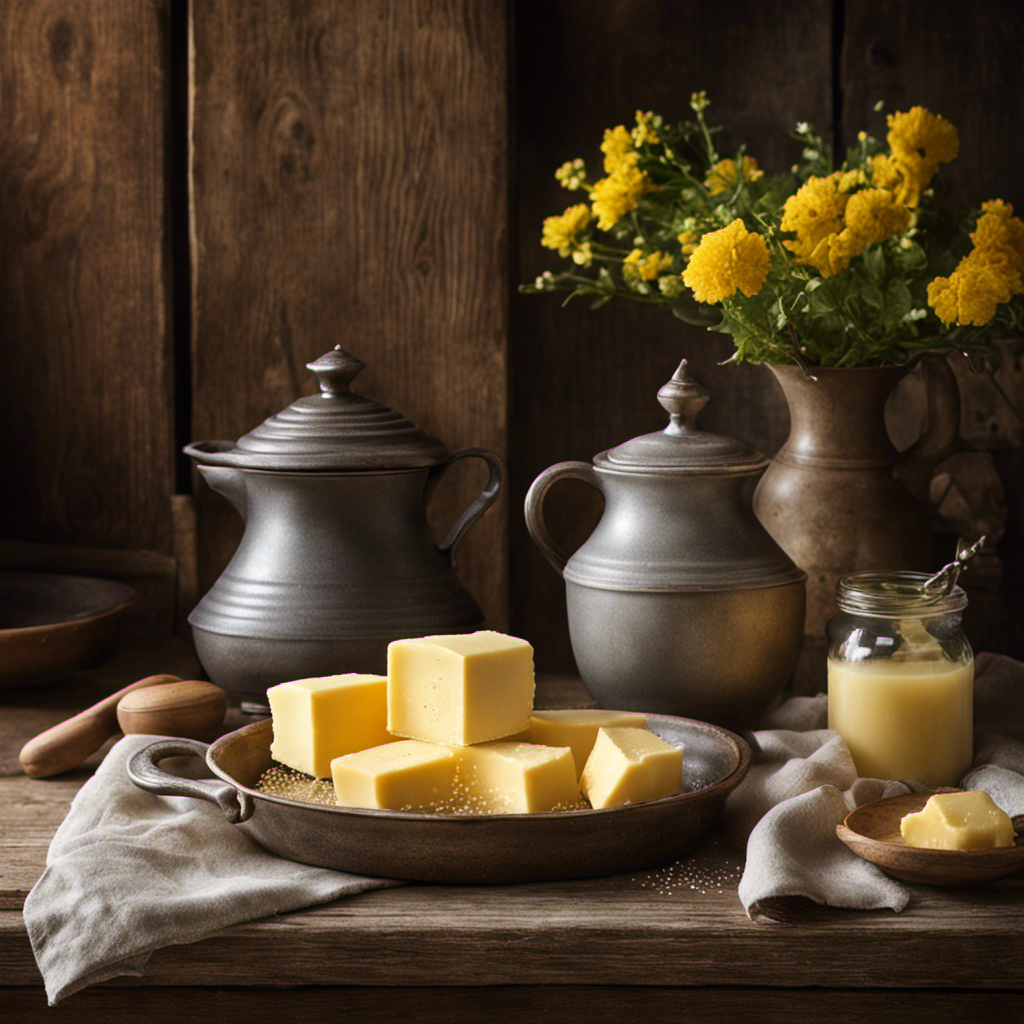
When you store bread in a bread box, you fundamentally create a microenvironment that regulates moisture levels. This artificial humidity is vital because it prevents the crust from becoming too hard and the bread from drying out too quickly. Unlike plastic bags or paper wraps, which can trap excess moisture or allow too much to escape, a well-designed bread box maintains a stable atmosphere. It’s especially helpful if your kitchen tends to be dry, as it compensates for the lack of natural humidity. This environment slows down the staling process, making your bread last several days longer without losing its softness or flavor.
You might wonder why a simple bread box is better than storing bread in a plastic bag or container. While plastic can trap moisture, it often creates a humid environment that encourages mold growth if not monitored carefully. Conversely, a bread box offers enough airflow to prevent mold while maintaining a consistent level of humidity. This balance is indispensable for effective bread preservation, especially in dry climates or during winter months when indoor air tends to be particularly arid. The design of most bread boxes allows moisture to escape gradually, preventing the buildup of excess humidity that can spoil your bread. Additionally, choosing a ventilated design can further enhance air circulation and help prevent mold.
Even in dry environments, a bread box’s ability to provide artificial humidity makes a noticeable difference. It keeps bread softer longer and maintains its crust without making it soggy. This controlled environment helps you avoid the waste of bread that turns stale or moldy too quickly. Proper air circulation is essential because it prevents moisture from becoming trapped inside, which can lead to mold growth. Good ventilation, which many modern bread boxes incorporate, ensures that air flows freely and moisture levels stay balanced. With a simple, well-ventilated bread box, you harness the power of artificial humidity to optimize bread preservation, ensuring your loaf stays fresh, flavorful, and appealing for days. So, even if your kitchen is dry, don’t overlook the value of a bread box—it’s still one of the best tools to keep bread at its best.
As an affiliate, we earn on qualifying purchases.
Frequently Asked Questions
Can Bread Boxes Prevent Mold in Dry Kitchen Air?
Yes, a bread box can help prevent mold in dry kitchen air. Proper bread box maintenance, like keeping it clean and dry, reduces moisture buildup where mold can thrive. Additionally, using mold prevention techniques, such as storing bread in a cool, dark place and avoiding excess moisture, keeps your bread fresh longer. A well-maintained bread box provides a controlled environment that discourages mold growth, even in dry conditions.
What Materials Are Best for Bread Boxes in Dry Environments?
Oh, definitely pick a bread box made of metal or ceramic—because who doesn’t want durability and style? These materials resist cracking and look sleek, even in dry environments. Wood might be charming, but it warps faster without humidity. So, go for sturdy, aesthetically appealing options that stand up to the dry air, keeping your bread fresh and your kitchen chic. Who knew practicality could look so good?
How Often Should I Check My Bread Box for Moisture?
You should check your bread box for moisture levels at least once a week. Regularly monitoring helps you maintain proper humidity control, preventing your bread from drying out or becoming moldy. If you notice excess moisture, adjust the humidity by opening the box slightly or adding a moisture absorber. Keeping an eye on moisture levels guarantees your bread stays fresh longer and your bread box functions effectively, especially in dry kitchen environments.
Do Bread Boxes Help Keep Bread Fresh Longer?
Sure, bread boxes are your secret weapon against the tyranny of stale bread. They help keep bread fresh longer by creating a cozy microclimate, perfect for bread preservation. While they don’t work miracles, they do extend freshness by preventing drying out or mold. So, if you want to enjoy soft, delicious bread for days, a bread box is your best ally in the quest for freshness extension.
Can Bread Boxes Be Used for Storing Other Baked Goods?
Yes, you can use bread boxes for storing other baked goods like muffins, bagels, or croissants. They’re versatile Baked goods storage options that keep items fresh while preventing mold. If you don’t have a bread box, consider bread box alternatives such as paper bags, cloth bags, or ceramic containers. Just guarantee proper airflow and avoid airtight containers to maintain the freshness and texture of your baked treats.
Conclusion
Even in a dry kitchen, a bread box is your cozy sanctuary for bread, a gentle fortress guarding against the harsh, arid air. Think of it as a nurturing cloud where softness and freshness are sheltered from the desert winds outside. So, don’t toss that bread box aside—let it be your trusty guardian, keeping your bread’s tender heart beating strong, no matter how dry the air gets. It’s your bread’s safe harbor amidst the dryness.