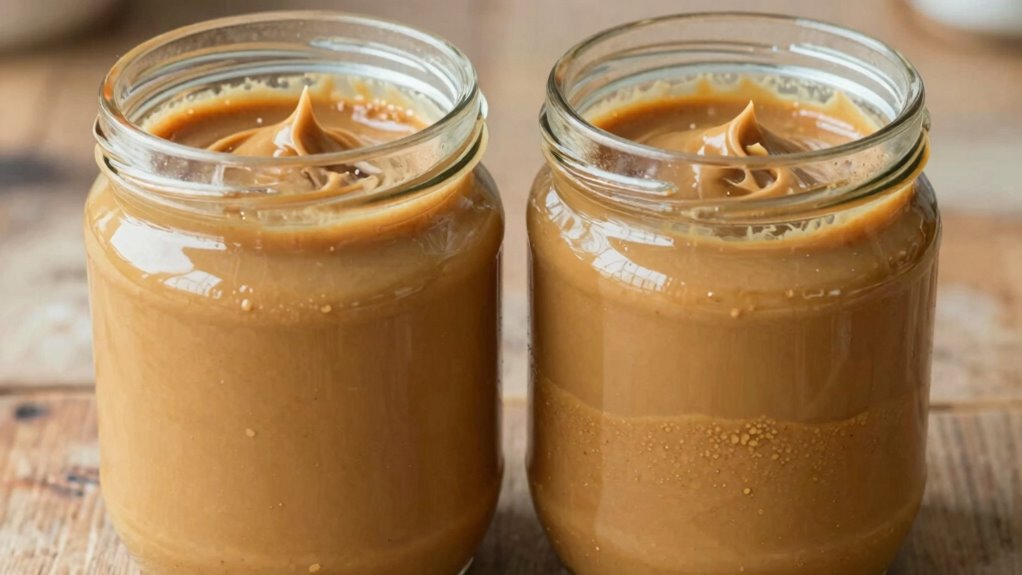

Stirred peanut butter usually doesn’t last as long as no-stir types because its natural oils are exposed to air, leading to quicker oxidation and rancidity. Without stabilizers, the oils tend to separate and can spoil faster, especially if not stored properly in the fridge after stirring. No-stir varieties, with added preservatives, stay fresh longer and are less prone to spoilage. Want to discover how storage habits can extend their shelf life? Keep exploring to learn more.

Get kitchen staples and gadgets delivered free with Prime
- Fast, free delivery on millions of items
- Prime Video, Amazon Music and more included
- Member-only deals all year
Key Takeaways
- No-stir peanut butter has added stabilizers, extending shelf life by preventing oil separation and reducing oxidation risks.
- Stirred peanut butter is more prone to quicker rancidity due to natural oil exposure to air after stirring.
- Proper refrigeration of stirred peanut butter slows oxidation, but its shelf life remains shorter than no-stir varieties.
- No-stir types typically last several months longer than stirred versions due to preservatives and stabilized oils.
- Both types require proper storage and regular checks for spoilage signs to maximize shelf life.
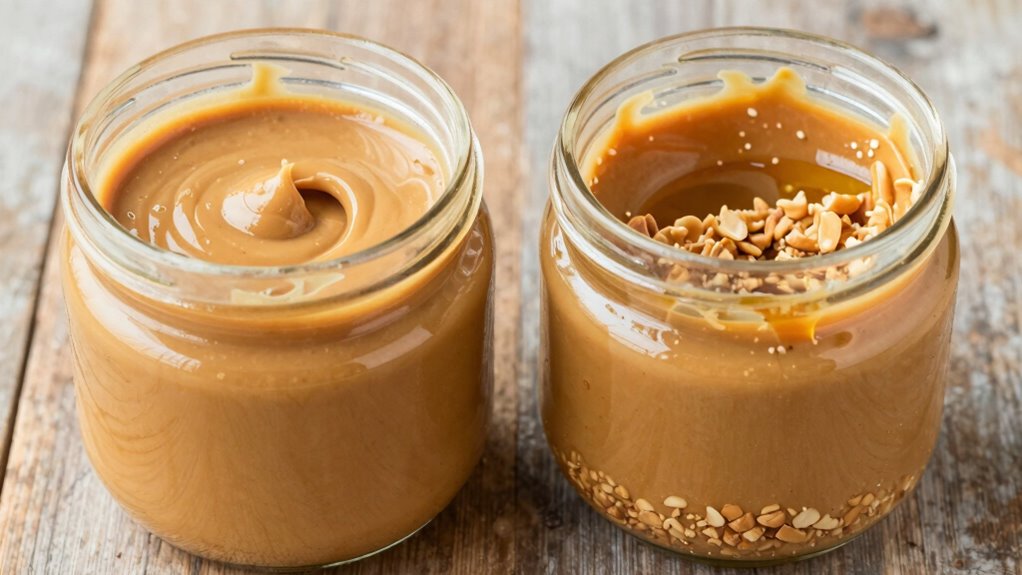
When it comes to storing peanut butter, understanding how stirring or not stirring affects its shelf life can make a difference in quality and safety. If you prefer natural oils in your peanut butter, you’ll notice that stirring brings these oils back into suspension, which influences both texture and longevity. Natural oils tend to separate over time, rising to the top and creating a layer of liquid on the surface. When you stir your peanut butter, you mix these oils back in, resulting in a more uniform texture, but this process also exposes the product to air and potential contaminants. This exposure can slightly decrease its shelf life, as the oils become more accessible to oxidation, which can lead to rancidity sooner than expected. Additionally, the oil separation process is a natural occurrence that reflects the absence of stabilizers, making it a key consideration for natural product enthusiasts. Proper storage techniques after stirring are essential to slowing down oxidation and maintaining freshness. Using airtight containers can further help reduce exposure to air and prolong freshness.
On the other hand, no-stir or “commercial” peanut butter is processed to prevent oil separation. These products usually contain added stabilizers or emulsifiers that keep the oil integrated, maintaining a consistent texture without stirring. Because of this added stability, no-stir peanut butter tends to have a longer shelf life, often remaining fresh for several months beyond stirred varieties. The uniform texture consistency means there’s less exposure to air, which helps slow down oxidation and preserves flavor and freshness longer. However, this also means you’re relying on preservatives, which some people prefer to avoid by choosing natural, stirred versions. It’s also worth noting that even stabilized peanut butter can eventually spoil if stored improperly or past its expiration date. In addition, proper storage conditions play a crucial role in extending its usability and safety.
If you choose to stir your peanut butter, keep in mind that you’ll need to store it properly afterward to maximize its shelf life. Once stirred, it’s best to keep it tightly sealed and refrigerated to slow down the natural oils’ oxidation process. Doing so helps prevent the oils from turning rancid quickly, which would compromise both flavor and safety. In contrast, if you opt for no-stir peanut butter, you can store it in a cool, dark pantry, as the added stabilizers help maintain its quality longer without refrigeration. Still, always check the expiration date and look for any signs of spoilage, like foul smell or mold, regardless of the type. Regularly inspecting the product ensures safe consumption and helps you enjoy your peanut butter at its best. Proper storage methods can further extend its shelf life and ensure you get the most out of your purchase.
Products Worth Considering

KitchenAid Classic Series 4.5 Quart Tilt-Head Stand Mixer K45SS, Onyx Black

Instant Pot Duo Crisp Ultimate 6.5-Quart 13-in-1 Pressure Cooker and Air Fryer

Cuisinart SM-50R 5.5-Quart Stand Mixer, Ruby Red
As an affiliate, we earn on qualifying purchases.
Frequently Asked Questions
How Does Storage Temperature Affect Peanut Butter Shelf Life?
You should store peanut butter at ideal temperatures, ideally in a cool, dry place, to prolong its shelf life. Temperature fluctuations can cause fats to spoil faster or lead to separation, especially in no-stir varieties. Keep it away from heat sources or direct sunlight, and avoid frequent temperature changes. Proper storage helps maintain freshness, flavor, and texture, ensuring your peanut butter stays good longer.
Can Natural Oils Cause Peanut Butter to Spoil Faster?
Sure, natural oils love to throw a party called oxidation, which can subtly spoil your peanut butter faster. When exposed to air, these oils undergo the oxidation process, turning your spread rancid sooner. So, yes, those oils can speed up spoilage, making your peanut butter less delightful over time. Keep it sealed tight and stored cool—your taste buds will thank you, and your peanut butter will stay fresher, longer.
Does Stirring Peanut Butter Reduce Its Shelf Life?
Stirring peanut butter can slightly reduce its shelf life because it introduces more oxygen, which can accelerate spoilage. When you stir, you cause a texture change and mix in the oil separation, but this process may expose the product to air and contaminants. While it’s usually safe for a few extra weeks, keep an eye out for any signs of mold or rancidity, especially if stored for extended periods.
Are There Specific Preservatives Used in Commercial Peanut Butter?
Commercial peanut butter often contains artificial preservatives like sodium benzoate or potassium sorbate to extend its shelf life, helping it stay fresh longer. Some brands also use natural additives such as vitamin E or citric acid to preserve flavor and prevent spoilage. These preservatives and additives work together to keep your peanut butter safe and tasty, whether you prefer stirred or no-stir varieties.
How Can I Tell if Peanut Butter Has Gone Bad?
If your peanut butter starts to grow mold or emits a rancid smell, it’s definitely gone bad—don’t ignore these warning signs! Mold appears as fuzzy spots, and the rancid smell is a sharp, sour odor that hits you like a punch. If either occurs, toss it immediately. Trust your nose and eyes—peanut butter’s freshness is no joke, and eating spoiled spread can harm your health.
Conclusion
In the battle of stirred versus no-stir peanut butter, remember that the choice impacts more than just texture—your shelf life depends on it. While stirred varieties may seem more convenient, they often have a shorter lifespan due to added stabilizers. No-stir versions, like a steadfast fortress, maintain freshness longer. So, choose wisely, for your pantry’s happiness depends on it—after all, isn’t the true standoff between convenience and longevity?