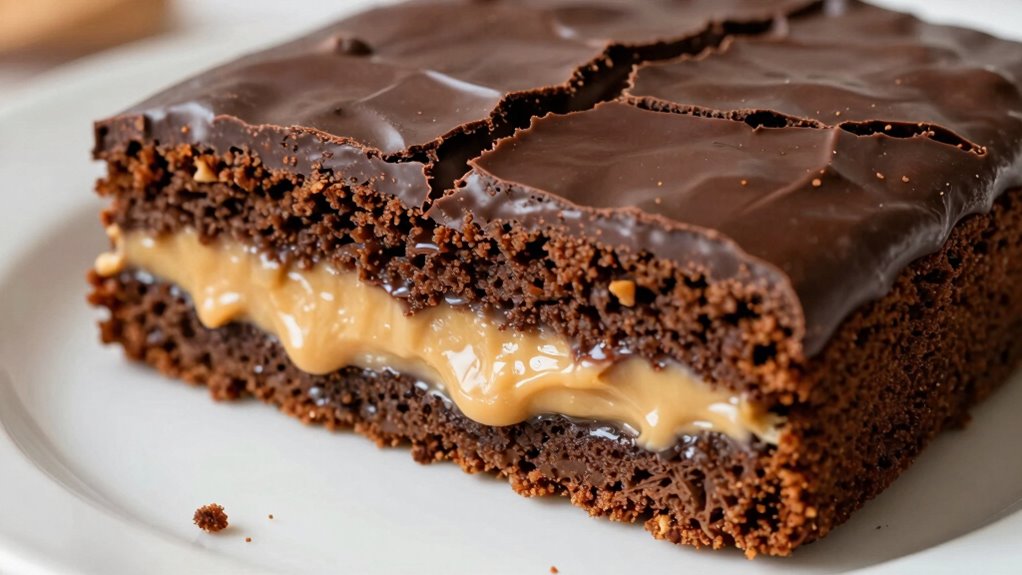

When you add peanut butter to baking, it can dry out cakes because its high fat content absorbs moisture and affects batter consistency. Natural or unsweetened varieties tend to absorb even more, leading to crumbliness or density. Overmixing or overbaking can also make cakes drier. To keep your cakes moist, it’s important to adjust liquids, incorporate moisture-retaining ingredients, and not overbake. If you’re curious about how to prevent it, there’s more you can try.
Key Takeaways
- Natural or unsweetened peanut butter has less oil, increasing the risk of dryness in baked goods.
- Overmixing batter or using too much peanut butter reduces moisture and can lead to dryness.
- Excess peanut butter without adjusting liquids pulls moisture from the cake, causing it to dry out.
- Overbaking cakes with peanut butter accelerates moisture loss, resulting in a dry texture.
- Using processed or stabilized peanut butter helps maintain moisture and prevents dryness during baking.
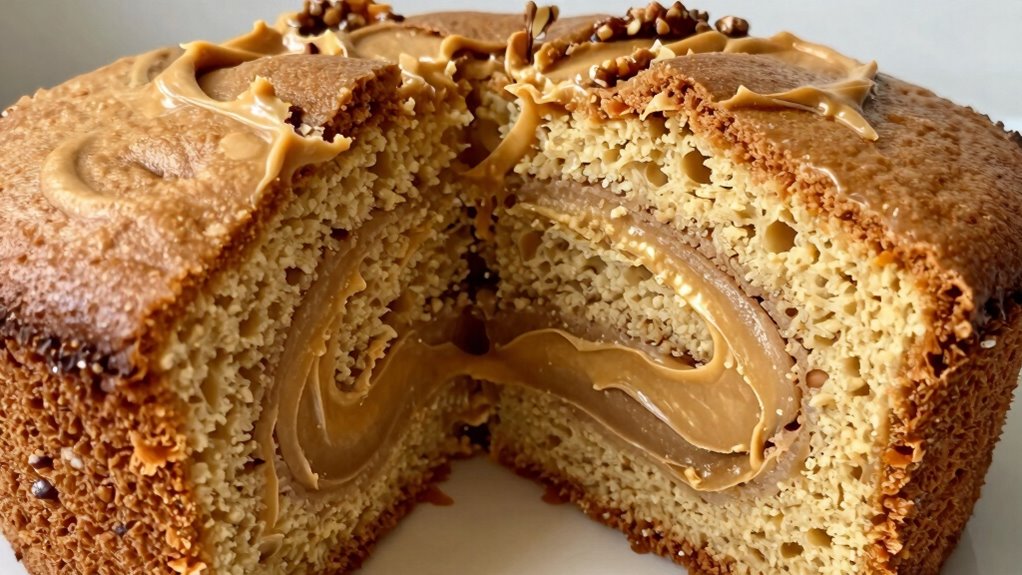
Peanut butter adds a rich, nutty flavor and creamy texture to baked goods, making it a versatile ingredient in the kitchen. It’s not just about taste—peanut butter also offers notable nutritional benefits, including healthy fats, protein, and fiber, which can enhance the nutritional profile of your baked treats. When used thoughtfully, it pairs well with a variety of flavors like chocolate, honey, bananas, and oats, elevating your baked goods to a new level. But despite its many advantages, incorporating peanut butter into your recipes can sometimes lead to unexpected issues, like drying out your cakes.
Peanut butter enhances flavor and nutrition but can cause cakes to dry out if not balanced properly.
One common reason your cake might turn out dry is that peanut butter, especially natural or unsweetened varieties, contains a high fat content that can behave unpredictably during baking. The fats in peanut butter can cause the batter to become dense or crumbly if not balanced properly with other ingredients. If you overmix the batter or add too much peanut butter without adjusting the liquid components, your cake can lose moisture and become dry. Additionally, because peanut butter is dense and oily, it can interfere with the proper rise of your batter, leading to a crumbly texture once baked.
Another factor to contemplate is the type of peanut butter you use. Natural peanut butter, which has less oil and added stabilizers, might absorb more moisture from the batter, contributing to dryness. Conversely, processed or commercial peanut butter tends to be more stable and may produce a moister result. To prevent your cakes from drying out, it’s vital to balance the peanut butter with enough moisture. This might mean adding extra eggs, dairy, or even a splash of oil or milk to maintain the right consistency. Using proper baking techniques can also help ensure your cake retains moisture and avoids drying out. Incorporating moisture-retaining ingredients like applesauce or yogurt can also help keep baked goods moist when using peanut butter. Furthermore, understanding how fat content influences baking outcomes can help you adjust your recipe accordingly. Being aware of ingredient interactions can also help you modify your recipe to better control moisture levels and prevent dryness.
Temperature and baking time also play a role. Overbaking a cake that contains peanut butter can quickly dry it out, especially since the fats can burn or evaporate more readily. Keep a close eye on your baking time and temperature, and consider using a toothpick test to ensure your cake is just done. When incorporating peanut butter, start with small amounts and gradually increase, paying attention to how it affects the batter’s texture and moisture level. Additionally, using appropriate baking techniques can help mitigate the risk of dryness caused by the fats in peanut butter.
natural unsweetened peanut butter
As an affiliate, we earn on qualifying purchases.
As an affiliate, we earn on qualifying purchases.
Frequently Asked Questions
Can Different Types of Peanut Butter Affect Cake Dryness?
Yes, different types of peanut butter can affect cake dryness. Creamy peanut butter adds moisture and smoothness, while natural or chunky varieties might absorb more liquid, leading to dryness. Your flavor pairing choices and desired texture variation influence this too. For a moist, flavorful cake, opt for creamy peanut butter, and adjust liquid ingredients accordingly. Mixing in different types can create unique textures, but watch out for dryness if the peanut butter is too dry or oily.
How Does Peanut Butter’s Moisture Content Vary by Brand?
You might notice that peanut butter’s moisture content varies by brand, often influenced by its consistency and flavor profiles. Sometimes, a jar’s creaminess hints at higher moisture, while natural or crunchy options may feel drier. The coincidence is that selecting a brand with a richer consistency can help keep your cakes moist, but flavor profiles differ too, so you’ll want to balance moisture with taste for the perfect bake.
Does Natural Peanut Butter Cause More Dryness Than Processed?
Natural peanut butter often causes more dryness than processed because it contains less oil and more natural solids, leading to less moisture retention. This impacts flavor enhancement, making the peanut butter taste more authentic, but it can also alter the cake’s texture, making it drier. To counteract this, you might add extra moisture or oil when baking, ensuring your cake stays moist and flavorful.
Can Reducing Peanut Butter Quantity Prevent Cake Dryness?
Reducing peanut butter quantity can dramatically prevent cake dryness. By doing so, you avoid overpowering moisture loss, ensuring a moist, tender crumb. Using alternative ingredients like applesauce or yogurt can further enhance moisture retention. Employing smart baking techniques—like not overmixing and adjusting oven temperature—also helps. Balance your recipe carefully, and you’ll achieve a perfectly moist cake that doesn’t suffer from dryness caused by excess peanut butter.
How Does Storage Affect Peanut Butter’s Impact on Baking?
Storage greatly impacts peanut butter’s effect on baking. If you keep it at ideal storage temperature, usually cool and dark, it maintains its shelf stability and prevents oil separation, which can cause dryness in cakes. When stored improperly, like in a warm or humid environment, the oils may spoil or separate, leading to uneven moisture and dryness in your baked goods. Proper storage helps keep peanut butter fresh and preserves its baking qualities.
Conclusion
So, when you bake with peanut butter, remember to balance moisture, adjust your recipes, and understand its drying effects. Keep an eye on your batter’s consistency, add a touch of liquid if needed, and don’t overmix. Because, ultimately, baking is about precision, patience, and passion. Stay attentive, stay flexible, and enjoy the process. With these tips, you’ll turn your peanut butter cakes from dry to delicious every time.