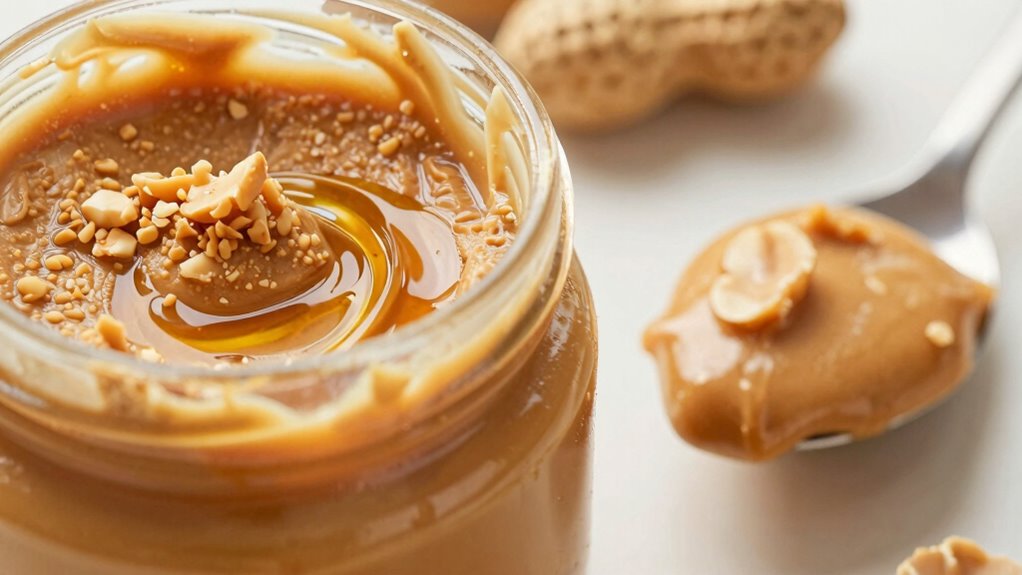

Natural peanut butter contains only peanuts and salt, often separated by oil that needs stirring, while no-stir peanut butter has added stabilizers or emulsifiers to prevent oil separation, offering convenience. Natural versions usually have fewer ingredients and may spoil faster, whereas no-stir types last longer and are easier to use. Your choice depends on whether you prefer pure, minimal ingredients or hassle-free convenience—if you stay tuned, you’ll discover even more about these differences.
Key Takeaways
- Natural peanut butter contains only peanuts and salt, often with oil separation, while no-stir varieties include stabilizers for a uniform texture.
- No-stir peanut butter offers convenience by eliminating the need to stir, unlike natural versions that may require mixing before use.
- Natural peanut butter tends to have a shorter shelf life due to lack of stabilizers, whereas no-stir options are more shelf-stable.
- Texture preferences vary: creamy or chunky natural peanut butter offers pure ingredients, while no-stir provides a consistent, processed texture.
- Ingredient transparency is higher in natural peanut butter, often with fewer additives compared to no-stir varieties.
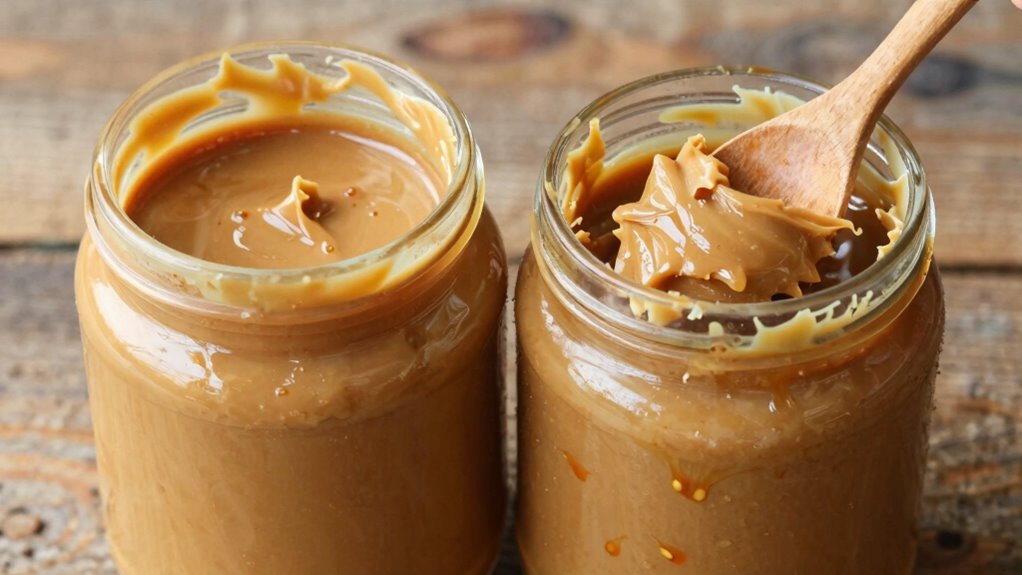
If you’ve ever reached for a jar of peanut butter and wondered what sets natural apart from no-stir varieties, you’re not alone. The differences can be confusing at first glance, but understanding the key distinctions helps you choose the right one for your taste and lifestyle. One of the first things you notice is the texture—creamy vs. chunky. Creamy peanut butter offers a smooth, velvety spread that melts easily on bread or mixes well into recipes. It’s perfect if you prefer a uniform texture and enjoy a silky mouthfeel. Chunky peanut butter, on the other hand, contains larger pieces of peanuts, providing a crunch that adds texture and a more robust peanut flavor. Depending on your preference, you might choose one over the other, but both types are available in natural and no-stir options.
When it comes to natural versus no-stir peanut butter, the primary difference lies in their ingredients and how they’re processed. Natural peanut butter typically contains just peanuts and maybe a bit of salt, with no added sugars or preservatives. It often requires stirring because the natural oils separate and rise to the top, creating a layer of liquid that you need to mix back in before spreading. No-stir peanut butter, however, is processed to keep the oil evenly distributed, so you don’t have to stir it before use. This convenience appeals to many who dislike the mess or inconvenience of stirring, but it also often involves added stabilizers or emulsifiers that extend shelf life. Additionally, oil separation is a common characteristic of natural peanut butter, which is why stirring is necessary to blend the oils back in. To better understand why this separation occurs, it’s helpful to know that natural oils tend to separate from the solids over time due to the absence of stabilizers. Moreover, some consumers prefer minimal ingredients in their food, which natural peanut butter often provides. Understanding these differences can help you make an informed choice based on your preference for ingredients and processing, especially when considering the role of stabilizers and other additives.
natural peanut butter with minimal ingredients
As an affiliate, we earn on qualifying purchases.
As an affiliate, we earn on qualifying purchases.
Frequently Asked Questions
Which Type of Peanut Butter Has a Longer Shelf Life?
No-stir peanut butter typically has a longer shelf life because its flavor preservation is enhanced by added stabilizers that prevent oil separation. The packaging impact also plays a role; airtight jars help maintain freshness longer. Natural peanut butter, lacking these stabilizers, may spoil faster due to oil separation and exposure to air. So, if longevity matters most, no-stir peanut butter is your best bet for lasting freshness.
Are Natural and No-Stir Peanut Butters Suitable for Baking?
Yes, both natural and no-stir peanut butters are suitable for baking. Natural peanut butter offers ingredient transparency, so you know exactly what’s in it, and it can enhance flavor consistency in your baked goods. No-stir varieties are convenient and maintain a stable texture, ensuring your recipes turn out predictable. Just keep in mind that natural peanut butter might require stirring before use, which can affect the overall texture and mixing process.
How Do Storage Requirements Differ Between the Two Types?
Imagine your peanut butter as a delicate treasure chest; how you store it keeps its magic alive. Natural peanut butter often needs a storage container in the fridge, especially after opening, to prevent oil separation and spoilage. No-stir varieties can stay fresh longer at room temperature, but for ideal quality, a cool, dark spot works. Both types benefit from airtight containers to preserve flavor and prevent contamination.
Can Allergies Vary Between Natural and No-Stir Peanut Butter?
You might find that allergy risk varies slightly between natural and no-stir peanut butter, mainly due to potential cross-contamination during processing. Natural options often have fewer additives, but they can sometimes be made in facilities handling other allergens, increasing cross-contamination concerns. Always check labels carefully, especially if you have severe allergies, and consider choosing products with clear allergen statements to minimize risk.
Which Is More Environmentally Friendly to Produce?
You’ll find natural peanut butter generally more environmentally friendly due to its sustainability practices and ingredient sourcing. It often uses fewer additives and is produced with minimal processing, reducing energy consumption. No-stir versions may involve additional stabilizers and packaging, which can impact sustainability. By choosing natural peanut butter, you support eco-friendly farming and production methods, making it a better choice for reducing your environmental footprint.
Conclusion
So, next time you’re at the store, it’s funny how a simple jar can spark a moment of coincidence—maybe you’ll find yourself choosing natural or no-stir peanut butter just because of that one extra ingredient or texture you never noticed before. Sometimes, it’s the little things, like a peanut butter choice, that unexpectedly remind us how small decisions can lead to surprising discoveries. Enjoy your crunchy or creamy find, and savor every bite—who knows what tasty coincidence awaits?