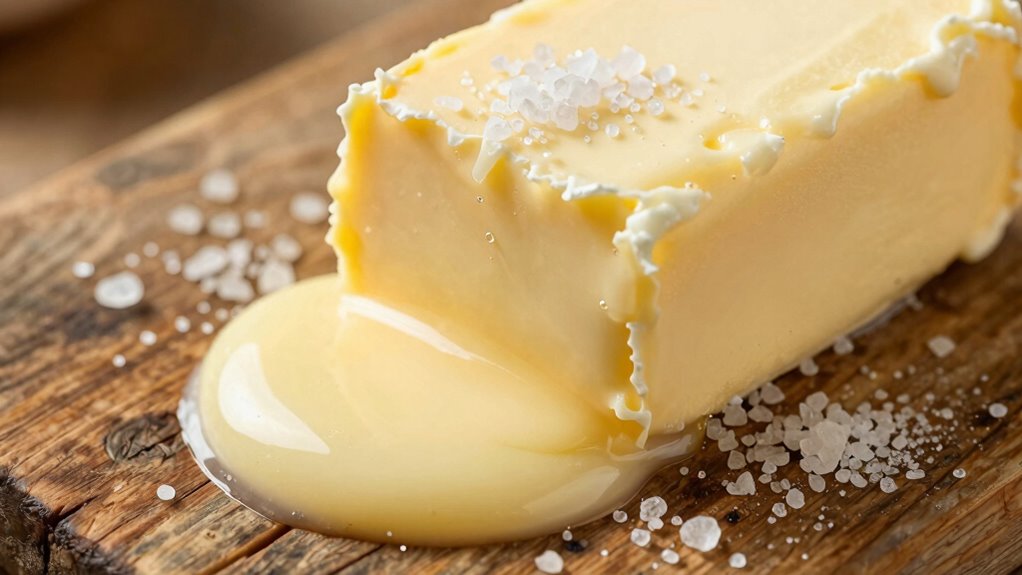

Salted butter can unexpectedly boost your sodium intake because small servings add up quickly across multiple meals. A tablespoon contains about 90-100 mg of sodium, and frequent use makes it easy to surpass daily limits. Since many people underestimate how much salt they consume from butter, overusing it can silently increase your sodium levels. Paying attention to portion sizes and salt content helps control intake. Keep going to discover simple strategies to manage your sodium more effectively.
Key Takeaways
- A tablespoon of salted butter adds about 90-100 mg of sodium, quickly accumulating with multiple servings.
- Regular use in various meals can push daily sodium intake beyond recommended limits unnoticed.
- Small servings may seem harmless but can add up significantly over time, increasing sodium consumption.
- Combining salted butter with other salty ingredients accelerates reaching sodium thresholds faster.
- Using unsalted butter and monitoring portion sizes effectively reduces rapid sodium intake from butter.

Salted butter is a flavorful addition to many dishes, but it also contains a notable amount of sodium that can impact your health. When you spread it on bread, melt it over vegetables, or use it in baking, you’re not just adding richness—you’re also increasing your sodium intake more than you might realize. Salted butter‘s flavor enhancement makes it a popular choice, but it’s essential to recognize how quickly its sodium can add up, especially if you’re not paying close attention. Small servings here and there seem harmless, yet the cumulative effect can be significant over time.
Many people underestimate how much sodium they get from butter because they don’t think of it as a salty food. But just a tablespoon of salted butter can contain around 90 to 100 milligrams of sodium. If you regularly include it in your meals, whether on toast, in sauces, or baked goods, you’re steadily contributing to your daily sodium total. This can be problematic for those managing their blood pressure or trying to follow dietary considerations that limit salt intake. The convenience and flavor enhancement salted butter offers make it easy to overlook how quickly it can tip your sodium levels beyond recommended limits.
A tablespoon of salted butter adds about 90-100 mg of sodium, quickly increasing your daily intake.
It’s tempting to use salted butter liberally because it enhances the taste of foods effortlessly. However, understanding how it influences your dietary considerations is *vital*. If you’re aiming to reduce your sodium intake, you might opt for unsalted butter and add salt separately when needed. This gives you more control over the amount of sodium in your meals. Remember, even small differences matter—using just a little less salted butter can make a noticeable impact on your overall sodium consumption without sacrificing flavor. If you’re cooking for a family or hosting guests, being mindful of how much salted butter you use can help everyone stay within healthier limits.
Furthermore, the cumulative effect of daily use can accelerate your sodium intake faster than you think. While one serving may seem insignificant, multiple servings across different meals can quickly push your intake past daily recommendations. This is especially true if you combine salted butter with other salty ingredients like cheese, processed foods, or canned products. Paying attention to these details helps you stay within your dietary considerations without sacrificing flavor. Additionally, reading nutrition labels can help you make more informed choices about the ingredients you use. Being aware of hidden sources of sodium in your diet is also crucial for maintaining health and avoiding excess intake. Monitoring portion sizes is another effective strategy to keep sodium levels in check. Ultimately, understanding the role salted butter plays in your diet empowers you to make smarter choices—balancing deliciousness with health needs. Recognizing the sodium content in common ingredients is crucial for maintaining a healthy diet.

Amazon Grocery, Sweet Cream Butter, Unsalted, 16 Oz
One 16-ounce box of Unsalted Sweet Cream Butter
As an affiliate, we earn on qualifying purchases.
As an affiliate, we earn on qualifying purchases.
Frequently Asked Questions
Does Salted Butter Contain More Sodium Than Unsalted Butter?
Salted butter does contain more sodium than unsalted butter, primarily for flavor enhancement. The added salt boosts taste, making it more palatable, but it also increases your sodium intake. When comparing sodium content, check the labels carefully—unsalted butter usually has negligible sodium, while salted varieties can have considerably more. Being aware of this sodium comparison helps you make better choices for your health and flavor preferences.
How Much Salted Butter Is Safe to Consume Daily?
You should limit salted butter to about one to two tablespoons daily, depending on your sodium needs. Salted butter enhances flavor, but excessive consumption can spike your sodium intake. Comparing brands reveals some contain more salt, so choose carefully. Enjoying salted butter in moderation allows you to savor its flavor enhancement without risking health issues. Always check labels to manage your sodium intake effectively.
Can Salted Butter Contribute to High Blood Pressure?
Yes, salted butter can contribute to high blood pressure because of its sodium content. When you use salted butter for flavor enhancement, your body absorbs sodium, which can raise your blood pressure over time. Even small amounts add up, especially if you regularly include it in your diet. To manage your blood pressure, consider limiting salted butter and opting for unsalted versions or other flavor enhancers.
Are There Healthier Alternatives to Salted Butter for Sodium Reduction?
Yes, there are healthier alternatives to salted butter for sodium reduction. You can use flavor enhancement options like herbs, spices, or lemon juice to boost taste without added salt. Dietary substitutions such as unsalted butter, avocado, or hummus offer creamy textures with less sodium, helping you enjoy your meals while managing your salt intake effectively. These options allow you to maintain flavor without compromising your health goals.
Does Cooking With Salted Butter Increase Sodium Content in Dishes?
Cooking with salted butter massively boosts sodium content in your dishes, turning a simple meal into a flavor explosion! That salt not only enhances flavor but also transforms your cooking versatility, making every bite richer and more satisfying. But beware—this sodium boost can add up quickly, so if you’re watching your intake, consider using unsalted butter and adding salt separately. It’s a simple way to control your sodium without sacrificing taste!
Amazon Grocery, Sweet Cream Butter, Unsalted, 16 Oz
One 16-ounce box of Unsalted Sweet Cream Butter
As an affiliate, we earn on qualifying purchases.
As an affiliate, we earn on qualifying purchases.
Conclusion
Remember, salted butter can sneakily boost your sodium intake faster than you’d expect, like a tide creeping up unnoticed. Even small amounts add up over time, impacting your health without you realizing it. So, next time you’re spreading butter, consider whether it’s worth the extra salt rush. Being mindful of these little choices helps you stay in control, turning what seems like a simple habit into a powerful step toward better health.

Nilayo Butter Slicer – One Click Butter Cutter, Dispenser – White Kitchen Gadget
Easy One-Click Slicing: This innovative Butter Slicer allows you to cut individual pats with a simple squeeze. It…
As an affiliate, we earn on qualifying purchases.
As an affiliate, we earn on qualifying purchases.

Norpro Butter Spreader,White
Measures: 3" x 2" x 2" / 7.5cm x 5cm x 5cm
As an affiliate, we earn on qualifying purchases.
As an affiliate, we earn on qualifying purchases.