
Almonds take longer to turn into butter because they behave differently in the grinder. Their unique structure and tight oil retention make them resistant to quick processing, unlike peanuts or cashews. You need to work patiently, gradually grinding and scraping the sides to release their natural oils. Pushing too hard can cause undesirable textures, so understanding these factors helps. Keep going, and you’ll discover how to achieve the perfect almond butter.
Key Takeaways
- Almonds resist quick oil release, requiring extended grinding to achieve smooth butter.
- Their unique structure slows down the transformation from coarse nuts to creamy paste.
- Unlike other nuts, almonds tightly retain their oils, necessitating patience for natural oil extraction.
- Controlled, longer grinding helps break down almonds without overprocessing or grittiness.
- Understanding almond behavior allows for more efficient grinding and better butter consistency.

If you’ve ever tried making almond butter at home, you’ve probably noticed it takes longer than expected. Almonds are tricky to turn into smooth, creamy butter because they behave differently in the grinder compared to other nuts. Unlike peanuts or cashews, almonds have a unique structure that impacts the way they release oil and break down during nut grinding techniques. This makes the process more time-consuming and requires a bit more patience.
Almonds resist quick transformation, requiring patience and careful technique for smooth, homemade almond butter.
The reason for this is rooted in how almonds store their oils. Almond oil extraction happens naturally within the nut, but it’s not released easily during grinding. As you grind, the nuts release oil gradually, which helps create a smooth texture. However, almonds tend to hold onto their oil tightly, so the grinding process needs to be extended to allow enough friction to coax the oil out. The longer you grind, the more the almonds break down, but it’s a delicate balance—overgrinding can cause the butter to become oily or gritty, while undergrinding leaves it too chunky.
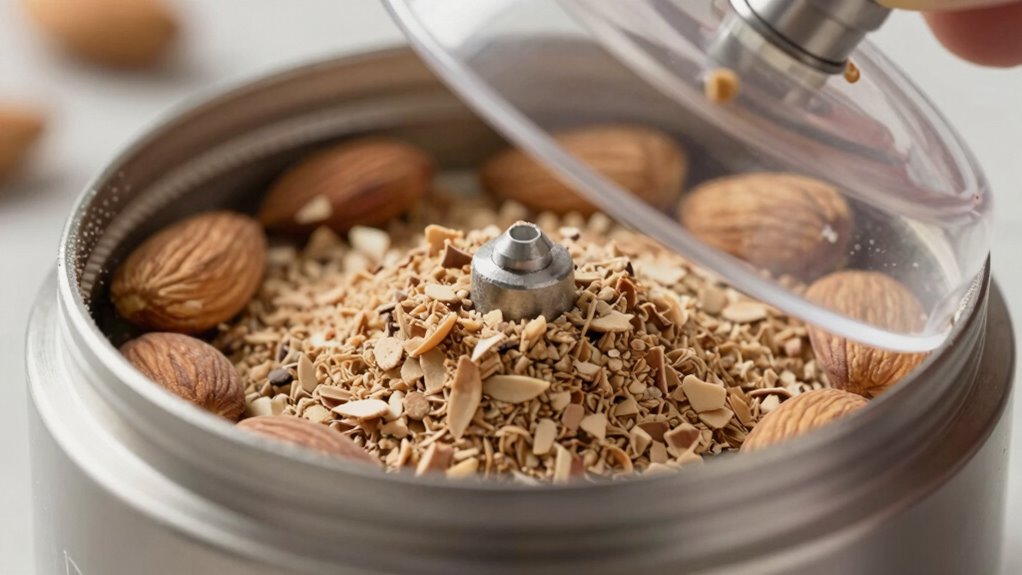
Your choice of nut grinding techniques plays a significant role here. For example, starting with a coarse grind and gradually moving to finer textures helps release more oil in a controlled way. Pulsing your food processor or high-powered blender can also give you better control, preventing the nuts from turning into a paste too quickly or overheating. As the almonds break down, you’ll notice a change in texture, from coarse crumbs to a ball of dough, then finally to a silky butter—if you keep at it long enough. Additionally, understanding the oil content of almonds can help you tailor your approach for better results. Incorporating a better understanding of oil release patterns can further optimize your process and prevent overprocessing.
Moreover, knowing the nut’s behavior during grinding can help you develop a more efficient technique, saving time and effort. It’s important to recognize that almonds don’t behave the same as other nuts because of their oil content and structure. They require a more methodical approach, and patience is key. You might need to stop and scrape the sides of your blender or processor to ensure even grinding. Sometimes, adding a small amount of oil can help, but be cautious—too much will make your almond butter greasy. The goal is to coax out natural oils through persistent grinding rather than forcing the process with extra oil or high heat. When working with almonds, knowing their oil release pattern can help you avoid overprocessing and achieve a better texture.
In the end, making almond butter at home takes longer because almonds resist quick transformation. They need careful handling and a variety of nut grinding techniques to turn into that creamy, spreadable consistency you’re after. Once you understand their behavior and adjust your process accordingly, you’ll be rewarded with homemade almond butter that’s fresh and full of flavor.
As an affiliate, we earn on qualifying purchases.
Frequently Asked Questions
Does the Type of Almond Affect Grinding Time?
Yes, the type of almond affects grinding time because different almond varieties vary in oil content and hardness, impacting grinding consistency. For instance, softer almonds grind faster, producing smoother almond butter, while harder varieties take longer and may require more effort. You’ll notice these differences when preparing almond butter, and choosing the right almond variety can help you achieve your preferred texture more efficiently.
Can Adding Oil Speed up the Almond Butter Process?
Adding oil can speed up the process, acting like a lubricant that helps break down the almonds faster. It also enhances flavor and makes the texture creamier, which many find more enjoyable. Keep in mind, though, that too much oil can make your almond butter overly greasy. Start with a small amount, blend, and adjust until you reach your desired consistency and flavor, turning a sluggish task into a smoother ride.
Is There an Optimal Grinder Setting for Almonds?
Yes, there is a suitable grinder setting for almonds. You should start with a medium setting to achieve a smooth texture consistency without overheating the nuts. As you grind, adjust slightly to finer settings if you want creamier almond butter, but avoid going too fine to prevent oil release and bitterness. Properly tuning your grinder helps develop flavor and guarantees a balanced, smooth texture.
How Does Moisture Content Influence Almond Grinding?
Moisture impact plays a significant role in almond grinding because higher moisture levels can make almonds stick together, leading to uneven grinding. When almonds are too dry, they may produce a coarse texture, but with some moisture, you get better grinding consistency. However, too much moisture can clog the grinder or cause clumping. To achieve the best results, aim for a balanced moisture level that promotes smooth, even grinding.
Are There Health Benefits to Longer Grinding Times?
Think of longer grinding as a slow dance, allowing flavors to fully develop and nutrients to gently unfold. This process enhances flavor and helps retain more nutrients, giving you a richer, healthier spread. By taking your time, you maximize nutrient retention and flavor enhancement, making every spoonful more satisfying. So, yes, longer grinding can boost the health benefits, turning simple almonds into a nourishing, flavorful treat.
Conclusion
Just like Pandora’s box, grinding almonds reveals a world of complexity, making your task take longer than expected. Their unique texture and oil content resist quick transformation, reminding us that some things—like patience and perseverance—are worth the wait. So, as you continue your culinary quest, remember that even the most stubborn almonds have their own story to tell. Embrace the process, and soon, you’ll savor your homemade almond butter, a reward fit for Hercules himself.