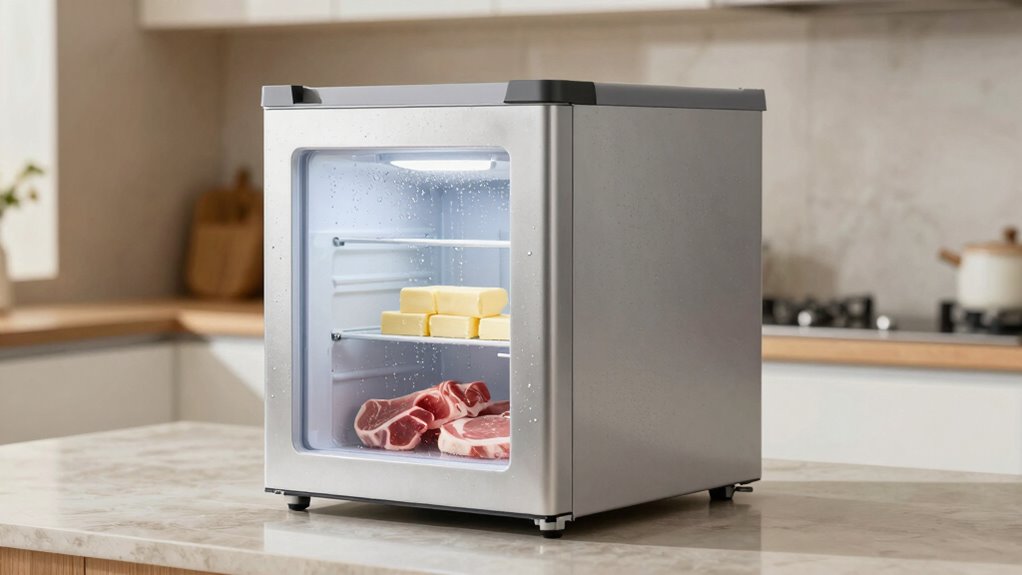

Portable fridge freezers are ideal for keeping butter and meat fresh, but managing condensation is key. You should maintain a consistent temperature just above freezing for butter and slightly colder for meat, using adjustable thermostats. Place your unit in a cool, dry spot with good airflow, and regularly check seals to prevent moisture entry. Controlling humidity with dehumidifiers or silica gel helps reduce condensation, ensuring your food stays fresh. Keep exploring to discover more tips for best condensation control.

Get kitchen staples and gadgets delivered free — and shop member deals
- Fast, free delivery on millions of items
- Access to Prime Big Deal Days deals on October 6–7
- Prime Video, Amazon Music and more included
Key Takeaways
- Proper placement in cool, dry areas reduces humidity and condensation inside the portable fridge freezer.
- Maintain consistent internal temperatures above freezing for butter and colder for meat to prevent spoilage.
- Regularly check and clean seals to ensure airtightness, preventing moist air from entering.
- Use dehumidifiers or silica gel packs nearby to absorb excess moisture and control internal humidity.
- Good ventilation around the unit and stable external conditions minimize temperature fluctuations and condensation buildup.
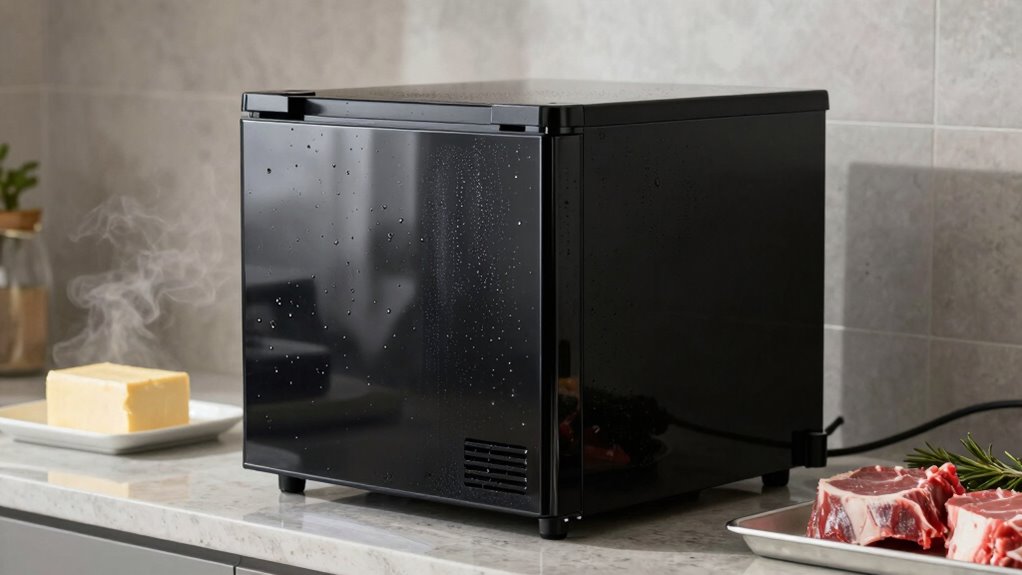
Portable fridge freezers are a convenient way to keep your food and drinks cold on the go, but managing condensation can be a common challenge. When you use one to store butter and meat, maintaining proper temperature regulation becomes vital. If the temperature swings too high or too low, condensation can form on the inside or outside of the unit, which not only risks spoilage but can also lead to mold and corrosion. To prevent this, you need to keep the fridge freezer at a consistent temperature, ideally just above freezing for butter and slightly colder for meat, depending on your storage needs. Many models come with adjustable thermostats, allowing you to fine-tune the temperature for best preservation and reduce excess condensation.
Energy efficiency plays a significant role in managing condensation as well. The more efficient your portable fridge freezer, the less energy it consumes, which in turn minimizes temperature fluctuations that promote condensation. Look for units with good insulation and energy-saving features, like auto shut-off or eco modes. These help keep the internal temperature stable without overworking the compressor, saving power and reducing the chances of condensation buildup. When your fridge freezer runs efficiently, it maintains a steady temperature, reducing the moisture that can escape from stored foods and condense on cooler surfaces.
Another key point is proper placement. Position your portable fridge freezer in a cool, dry area away from direct sunlight or heat sources, which can cause temperature fluctuations and increase condensation risks. Ensuring good ventilation around the unit helps it operate more efficiently, reducing strain on the compressor and maintaining consistent temperature regulation. Additionally, regularly cleaning the seals and ensuring they are airtight prevents warm, moist air from entering—another factor that contributes to condensation. Monitoring environmental factors such as humidity levels helps you better control condensation risks, and using dehumidifiers or silica gel packs nearby can help absorb excess moisture. Proper air circulation inside and outside the unit also plays a crucial role in minimizing condensation buildup. Furthermore, understanding temperature regulation techniques is essential for optimal operation and food preservation in portable fridge freezers. Maintaining a stable environment around your unit is equally important to prevent condensation problems.
portable fridge freezer with adjustable thermostat
As an affiliate, we earn on qualifying purchases.
As an affiliate, we earn on qualifying purchases.
Frequently Asked Questions
Can Portable Fridge Freezers Operate Without External Power Sources?
Portable fridge freezers can’t operate without external power sources, as they rely on electricity to keep items cold. When considering energy efficiency and portability concerns, you should look for models with battery options or solar compatibility for off-grid use. However, most portable fridge freezers need a reliable power source to function properly. If you’re planning to go off-grid, choose a unit designed for such scenarios to avoid spoilage.
What Is the Ideal Temperature Setting for Storing Butter and Meat?
Set your portable fridge freezer to around 0°F (-18°C) for ideal butter storage and meat preservation. This temperature keeps butter firm and prevents it from melting, while ensuring meat stays fresh and safe. If you go higher, you risk spoilage; lower, and you might freeze delicate items unnecessarily. Keep a close eye on the temperature, especially if you’re managing condensation, to maintain the perfect environment for your perishables.
How Long Can a Portable Fridge Freezer Run on Battery Power?
A portable fridge freezer typically runs for 8 to 12 hours on battery power, depending on its battery life and power efficiency. To maximize run time, make certain the unit is fully charged and keep the temperature settings optimized. Using energy-efficient models helps extend battery life, so you can keep your butter and meat cold longer without needing a power source. Regular maintenance also boosts overall power efficiency.
Are Portable Fridge Freezers Suitable for Outdoor Camping Trips?
Yes, portable fridge freezers are perfect for outdoor camping trips. You might worry about power sources, but many models run on batteries or car adapters, making them versatile camping gear. They provide reliable food storage for fresh meat, dairy, and snacks, ensuring your food stays fresh longer. Just remember to manage condensation and choose a compact, durable unit suited for outdoor conditions, so your camping experience remains enjoyable and hassle-free.
What Maintenance Is Required to Prevent Condensation Buildup?
To prevent condensation buildup, you need to focus on humidity control and insulation maintenance. Regularly wipe down the door seals and keep the interior dry. Check insulation for any damage and repair it if necessary to prevent moisture ingress. Ventilate the area around your fridge freezer when possible, and avoid opening it in humid conditions. These steps help reduce condensation, keeping your fridge freezer efficient and your food fresh.
Conclusion
To keep your portable fridge freezer running smoothly, stay vigilant about condensation—it’s the silent thief of freshness. Think of it as a dance; if you don’t lead, moisture will step in and spoil your butter and meat. Regularly wiping down surfaces and ensuring proper ventilation keeps this dance in harmony. With a little effort, your fridge becomes a fortress of freshness, preserving your food like a treasure chest. Keep it dry, and your food will thank you.
Fall Picks
fall essentials
As an affiliate, we earn on qualifying purchases.