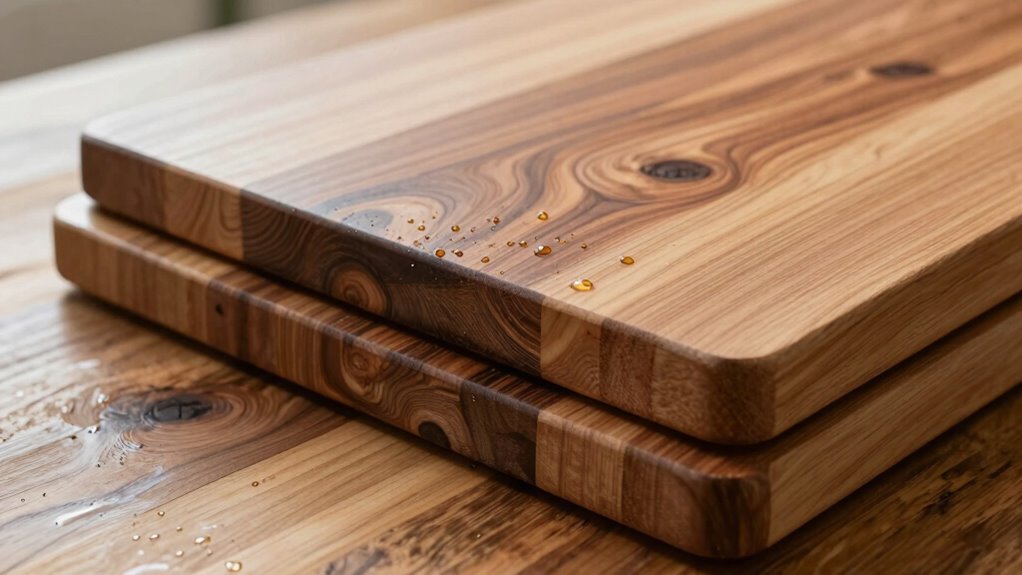

You should use minimal water when cleaning your butcher block to prevent moisture from seeping into the porous wood, which can promote bacteria and mold growth. After wiping with a damp cloth or sponge, it’s essential to dry the surface thoroughly—air drying upright or using a dry cloth helps. Proper drying not only keeps your board hygienic but also prevents warping or cracking. If you continue, you’ll learn more about maintaining your butcher block’s longevity and safety.

Get kitchen staples and gadgets delivered free with Prime
- Fast, free delivery on millions of items
- Prime Video, Amazon Music and more included
- Member-only deals all year
Key Takeaways
- Use a damp cloth or sponge, avoiding submerging the board in water.
- Properly dry the surface completely after cleaning to prevent bacterial growth.
- Porous wood absorbs excess moisture, risking damage and mold if not dried thoroughly.
- Limit water use during cleaning to maintain the board’s integrity and hygiene.
- Regularly oil the surface to create a moisture barrier and reduce water absorption.
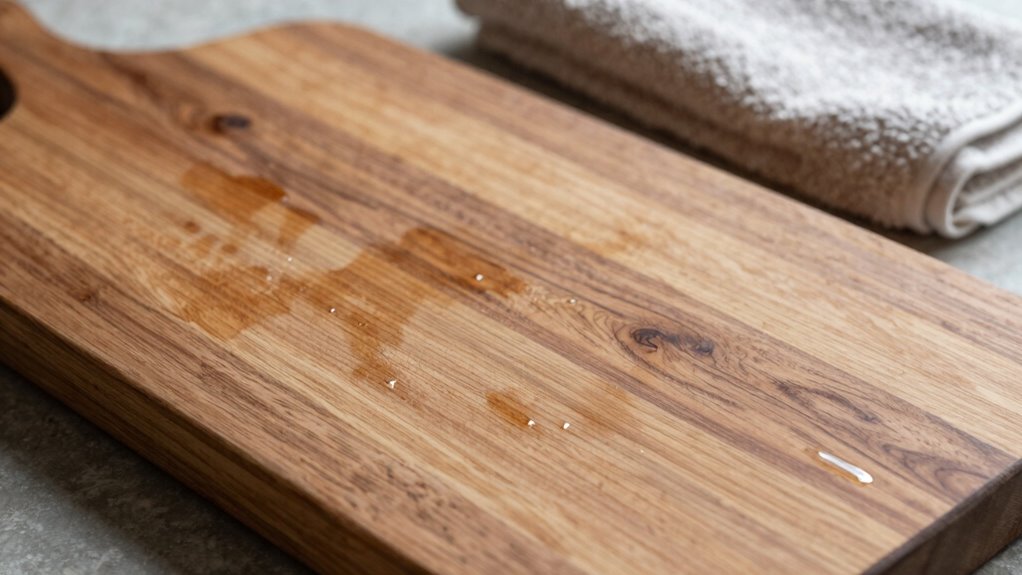
If you’re caring for your butcher block boards, you might be surprised to learn that they actually need less water during cleaning and more time to dry thoroughly. Unlike other cutting surfaces, these wooden boards are porous, which means excess moisture can seep in if not handled carefully. Using too much water or cleaning with a soaked sponge can compromise food safety by encouraging bacterial growth beneath the surface. Instead, your goal should be to use just enough water to wipe away debris, followed by a thorough drying process. Proper maintenance tips emphasize the importance of controlling moisture levels to preserve the integrity of the wood and ensure safe food handling. Additionally, understanding the porous nature of wood helps explain why moisture management is so crucial for maintaining a hygienic surface. When you clean your butcher block, avoid submerging it in water or letting it soak. Instead, opt for a damp cloth or sponge to wipe down the surface. Using a mild soap can help eliminate bacteria, but avoid harsh chemicals that could damage the wood or leave residues. After cleaning, it’s essential to dry the surface completely. Leave the board to air dry in an upright position or use a dry cloth to remove any residual moisture. This drying process is crucial because lingering dampness creates an environment conducive to bacteria and mold. Regular maintenance tips also include oiling your butcher block periodically. Applying a food-grade mineral oil creates a protective barrier that repels water, reducing the risk of warping or cracking. Understanding the moisture absorption properties of wood can help you better understand how to keep your butcher block in optimal condition. Proper moisture management is key to extending the lifespan of your cutting board and maintaining its safety. Incorporating proper cleaning techniques can further enhance the effectiveness of your maintenance routine.
butcher block board cleaning sponge
As an affiliate, we earn on qualifying purchases.
As an affiliate, we earn on qualifying purchases.
Frequently Asked Questions
How Often Should I Reapply Oil to My Butcher Block?
You should reapply oil to your butcher block whenever the wood grain looks dry or dull, typically every 4 to 6 weeks. Regular oiling helps maintain the wood’s natural beauty and prevents excessive oil absorption, which can lead to cracks. Keep an eye on the surface, and if it starts to feel rough or loses its shine, it’s time for another coat. Consistent oiling keeps your board in top condition.
Can I Use Regular Dish Soap for Cleaning?
You can use regular dish soap for cleaning your butcher block, but consider dish soap alternatives for gentler, more natural options. Regular dish soap sometimes leaves residue, so it’s best not to overuse it. Focus on cleaning frequency; wipe down after each use, and deep clean weekly. Using the right soap and proper drying helps maintain your board’s condition, preventing warping and bacteria buildup.
What Signs Indicate My Butcher Block Needs Resealing?
You’ll know your butcher block needs resealing when the wood grain looks dry or dull, and water no longer beads on the surface. If you notice cracks, deep stains, or the sealant’s durability seems compromised, it’s time to reseal. Regularly check the wood grain’s appearance and test water resistance to maintain ideal protection. Resealing restores both the appearance and durability of your butcher block, ensuring it stays functional and beautiful.
Is It Safe to Cut Directly on the Butcher Block?
Did you know that using proper knife safety reduces cutting accidents by 50%? Yes, you can cut directly on your butcher block, but only if you follow correct cutting techniques. Always use a sharp knife, keep your blades clean, and cut with controlled, even pressure. This not only protects your knife but also prevents damage to the board. Remember, safe cutting habits keep you and your tools in top shape.
How Do I Remove Deep Stains or Odors From the Wood?
To remove deep stains or odors from your butcher block, start with a mixture of coarse salt and lemon juice for stain removal, scrubbing gently. For odor elimination, sprinkle baking soda over the surface and let it sit overnight, then wipe clean. Rinse with water and dry thoroughly. Regularly oil your board afterward to maintain its condition and prevent future stains or odors.
Conclusion
Remember, caring for your butcher block board is like tending a garden—you need less water, but patience for it to dry properly. By using less water and giving it ample dry time, you’re nurturing its longevity and beauty. Visualize your board as a sturdy oak tree standing tall—resilient and strong—if you nurture it with care and patience. Keep this in mind, and your butcher block will serve you well for years to come.
NFL season / tailgating Picks
team gear
As an affiliate, we earn on qualifying purchases.