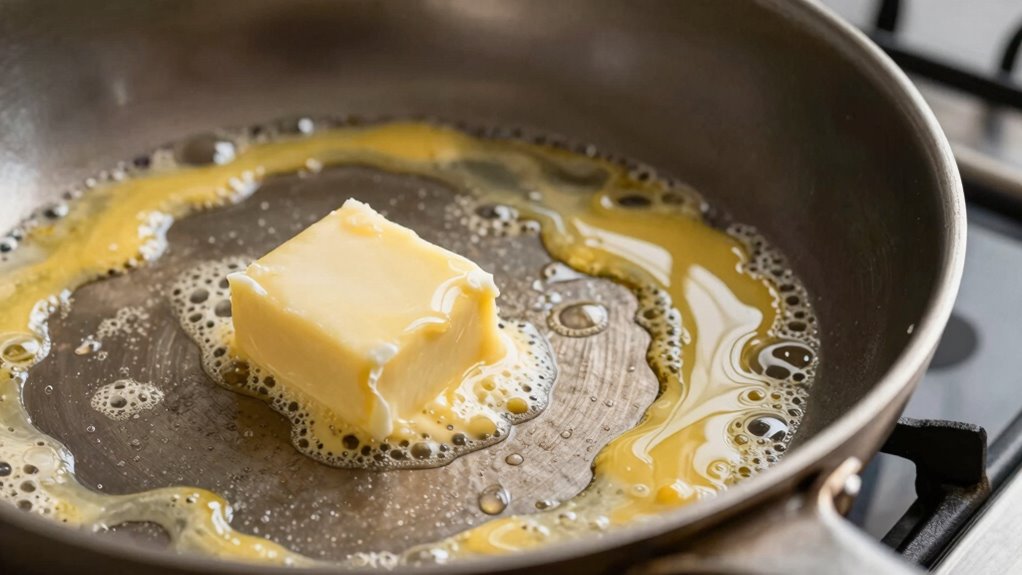
You’ll notice butter burns faster in pans like thin aluminum or stainless steel because they heat up quickly and often develop hot spots. These hot spots cause butter to scorch and brown unevenly, making it easy to burn. Heavier pans like cast iron or copper distribute heat more evenly, helping you melt butter smoothly. Understanding how pan material affects heat transfer can improve your cooking, and if you keep exploring, you’ll uncover even more tips to prevent burning.

Get kitchen staples and gadgets delivered free with Prime
- Fast, free delivery on millions of items
- Prime Video, Amazon Music and more included
- Member-only deals all year
Key Takeaways
- Thin pans like aluminum and stainless steel heat quickly, creating hotspots that can burn butter faster.
- Hotspots in unevenly heated pans cause localized burning and browning of butter.
- Heavier pans such as cast iron and copper distribute heat more evenly, reducing burning risk.
- Material properties influence how fast and uniformly heat transfers, affecting butter’s melting process.
- Proper heat management and choosing the right pan material help prevent butter from burning.
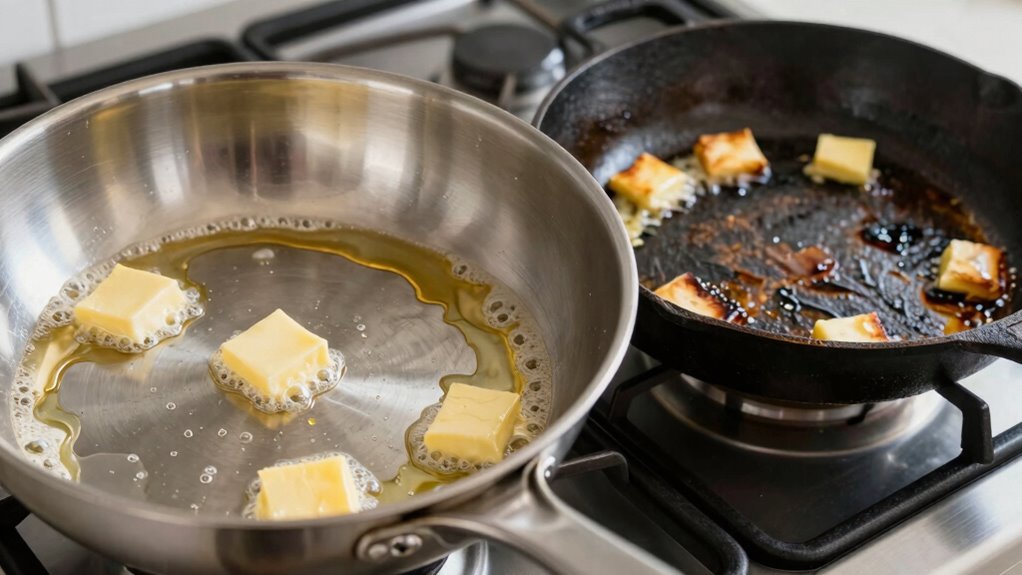
When you melt butter in different pans, you might notice it burns faster in some than in others. This happens because the pan material plays a crucial role in how heat is transferred to the butter. For example, thin aluminum or stainless steel pans tend to heat up quickly and can create hot spots, which cause the butter to burn more easily. On the other hand, heavier pans like cast iron or copper distribute heat more evenly, reducing the chances of burning. The material determines how fast and uniformly your pan heats up, directly influencing how your butter behaves during melting.
Heat distribution is key here. When your pan distributes heat unevenly, some areas become much hotter than others. These hotspots can scorch the butter almost instantly, especially because butter melts at a relatively low temperature. If you’re using a pan with poor heat distribution, you’ll notice that the butter might bubble and brown in certain spots while remaining liquid in others. This uneven heating makes it harder to control the melting process, increasing the risk of burning. Conversely, a pan with good heat distribution allows the butter to melt smoothly and evenly, giving you more control and preventing scorching. Additionally, understanding heat conduction can help you choose the best pan for delicate tasks like melting butter. Recognizing the thermal properties of different materials can further improve your cooking results and prevent unnecessary burns. Being aware of material composition can also guide you in selecting pans that are less prone to creating hot spots and uneven heating. Knowing how heat transfer occurs in different materials can help you anticipate how your pan will perform during melting. Being mindful of cooking techniques can also help you better manage heat levels and avoid burning delicate ingredients like butter.
As an affiliate, we earn on qualifying purchases.
Frequently Asked Questions
Does the Type of Butter Affect How Quickly It Burns?
Yes, the type of butter affects how quickly it burns. Different butter flavors, like clarified or salted, have varying fat and moisture levels, which influence their burn rate. Also, poor heat distribution in your pan causes uneven heating, making some butter parts burn faster. To prevent this, choose butter with a higher smoke point and use pans that distribute heat evenly, ensuring your butter melts smoothly without burning quickly.
Can Using Non-Stick Pans Influence Butter’s Burning Point?
Did you know non-stick pans can raise the burning point of butter by about 20°C? Using a non-stick pan influences butter’s burning point because the smooth, coated surface helps with temperature control, preventing hotspots that cause burning. The pan coating distributes heat more evenly, reducing the risk of butter burning quickly. So, if you want to cook butter without burning, non-stick pans can be a smarter choice for better temperature control.
How Does Altitude Impact Butter Burning in Different Pans?
At high altitude, butter burns faster because the lower atmospheric pressure raises its melting point, making it more prone to burning. Thinner pans heat unevenly, increasing the risk of hotspots that cause butter to burn quickly. To prevent this, use thicker pans for better heat distribution and cook at slightly lower temperatures. Adjusting for high altitude and pan thickness helps you control butter’s burning point effectively.
Is There a Specific Pan Material That Prevents Butter From Burning?
Think of your pan as a loyal shield in a battle. A non-stick pan with a good coating offers even heat distribution, preventing butter from burning. Cast iron heats uniformly and retains heat well, making it another reliable choice. These materials help control heat, reducing the risk of burning. So, choosing a pan with quality coatings or cast iron guarantees your butter melts smoothly without scorching, keeping your cooking game strong.
Do Different Cooking Techniques Change How Fast Butter Burns?
Yes, different cooking techniques can change how fast butter burns. For example, cooking over low heat allows better temperature control, preventing the butter from reaching its smoke point too quickly. This helps you develop flavor without burning the butter. Stirring frequently distributes heat evenly, promoting better flavor development and avoiding hot spots. By adjusting your technique, you can slow down burning and enhance the richness and depth of your dish.
Conclusion
So, next time you cook with butter, remember that the right pan can make all the difference. A good-quality, thick-bottomed pan distributes heat more evenly, preventing burning. Don’t forget the old adage: “A penny saved is a penny earned.” Investing in the right tools saves you time, effort, and frustration. With the right pan, you’ll enjoy perfectly cooked butter without the worry of burning—making every meal a success.
Fall Picks
fall essentials
As an affiliate, we earn on qualifying purchases.