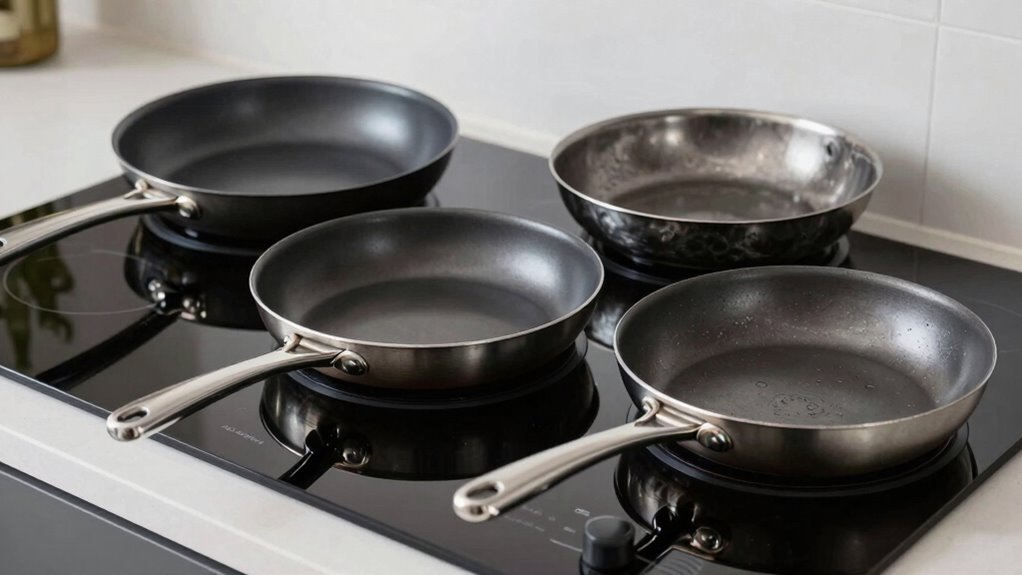
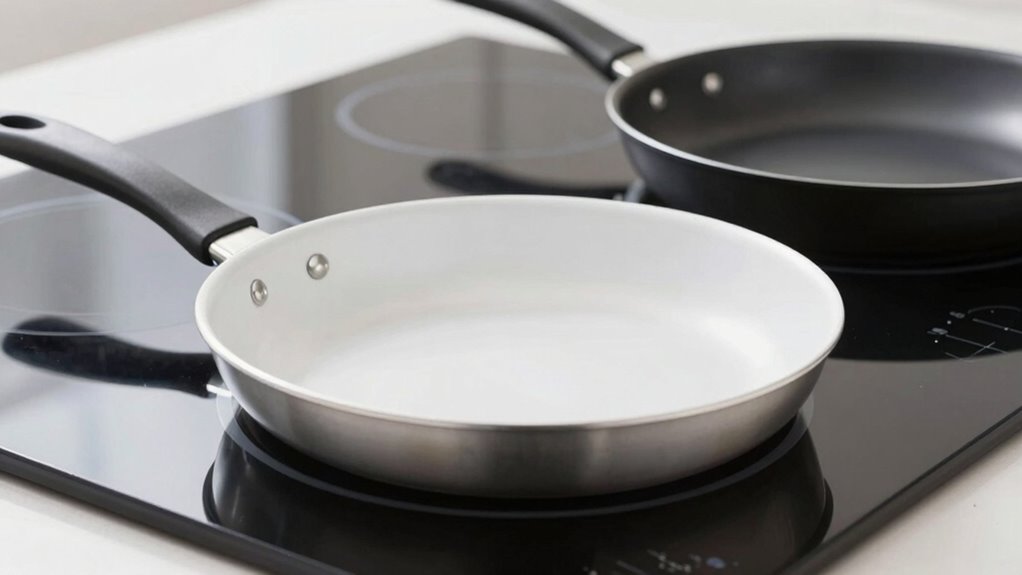
Induction cooktops work best with flat, smooth-bottomed pans because they create direct contact with the stove’s electromagnetic field, providing efficient heat transfer. Warped or uneven pans reduce contact, which can cause the cooktop to reduce power or refuse to heat altogether. This guarantees safer, more consistent cooking. Staying mindful of your cookware’s flatness maximizes performance and prevents issues—if you want to discover tips on choosing and maintaining the right pans, keep going.

Get kitchen staples and gadgets delivered free — and shop member deals
- Fast, free delivery on millions of items
- Access to Prime Big Deal Days deals on October 6–7
- Prime Video, Amazon Music and more included
Key Takeaways
- Induction cooktops require flat-bottomed pans for effective electromagnetic heat transfer.
- Warped pans reduce contact with the surface, leading to poor heating and potential sensor detection.
- Sensors detect uneven cookware and may refuse to heat or lower power on warped pans.
- Flat pans ensure consistent, even heat distribution, optimizing cooking performance.
- Proper maintenance of flat cookware prolongs lifespan and maintains induction efficiency.
Have you ever wondered why induction cooktops are gaining popularity among home chefs? The answer lies in their efficiency and the way they interact with cookware. Unlike traditional stoves, induction cooktops use electromagnetic fields to generate heat directly in the pan. This technology makes cooking faster, safer, and more energy-efficient. For you, this means less wasted heat and quicker meal prep. Many modern induction cooktops also support smart cookware, which can communicate with the stove to optimize heating. This integration allows you to control temperature more precisely, making your cooking more consistent and easier to manage. Smart cookware often features sensors that adjust heat automatically, reducing the chance of burning or undercooking. As a result, your cooking experience becomes more efficient, and you save both time and energy. Additionally, the technology behind induction cooking ensures that only compatible flat-bottomed pans will work effectively, further emphasizing the importance of selecting the right cookware. Choosing the correct cookware not only improves performance but also helps prolong the lifespan of your pots and pans. Energy efficiency is a major advantage of induction cooking, especially if you’re conscious about your utility bills or environmental impact. Because induction heats only the pan and not the surrounding air, it minimizes heat loss. This focused heating means your kitchen stays cooler, and you consume less electricity or gas. You’ll notice faster boiling times and quicker responses when adjusting heat levels. Plus, since induction cooktops heat up instantly and cool down just as fast, they give you more control over your cooking process. This efficiency isn’t just about convenience; it translates to real savings over time and a smaller carbon footprint.
When it comes to flat pans, induction cooktops treat them differently than warped ones. Flat, smooth-bottomed pans make direct contact with the cooking surface, allowing the electromagnetic field to transfer heat efficiently. If your pan is warped or uneven, the contact is compromised, and the induction cooktop detects this irregularity. Many models have sensors that detect whether the pan is properly aligned and flat. When they sense warping, the stove either refuses to heat or substantially reduces power to prevent uneven cooking. This means that warped pans are effectively penalized, as they won’t work well or at all on these cooktops. Conversely, flat pans are rewarded with consistent, rapid heating, giving you a reliable cooking experience. This design encourages you to choose high-quality, flat-bottomed cookware, which maximizes the benefits of induction technology. Overall, induction cooktops reward flat pans by providing efficient, even heat, while penalizing warped ones to ensure your food cooks evenly and safely. Proper cookware maintenance can help keep your pans in optimal condition for induction cooking.
As an affiliate, we earn on qualifying purchases.
Frequently Asked Questions
Can I Use Non-Metallic Pans on Induction Cooktops?
You can’t use non-metallic cookware on induction cooktops because they require induction-compatible materials to work. Non-metallic cookware, like glass or ceramic, isn’t suitable since it doesn’t conduct magnetic fields. To guarantee your cookware is induction compatible, look for pots and pans with a magnetic base. This way, you’ll get efficient heating and safe use. Always check the manufacturer’s label for induction compatibility before cooking.
Do Induction Cooktops Work With Cast Iron Cookware?
Using cast iron on an induction cooktop is like fitting a puzzle piece—if it’s properly flat, it works well. Cast iron durability makes it highly induction compatible, and it heats evenly, giving you precise control. Just make certain your pan is flat and smooth; warped ones won’t make proper contact, reducing efficiency. So yes, cast iron cookware is a great choice for induction cooktops if it’s flat and compatible.
How Do I Test if My Pan Is Compatible?
To test if your pan is compatible with an induction cooktop, check its thickness and material—most compatible pans are magnetic and have a flat, thick base for better heat distribution. Place a magnet on the bottom; if it sticks firmly, your pan is likely compatible. Thicker pans tend to heat more evenly, ensuring ideal performance. Warped pans usually don’t make good contact, so avoid using those to get consistent heating.
Are There Safety Concerns With Warped Pans?
Warped pans can pose safety concerns, such as uneven heating, which might cause hot spots and potential burns. To guarantee safe cooking, maintain your pans properly by checking for warping regularly. Always use safety precautions like handling hot cookware with oven mitts. If your pan is warped, consider replacing it to prevent accidents and improve cooking performance. Proper pan maintenance helps ensure your cooking is both safe and efficient.
What Materials Are Best for Induction-Compatible Pans?
For induction-compatible pans, you want materials that blend durability with excellent heat conduction efficiency. Stainless steel with an aluminum or copper core often strikes this balance, offering sturdy construction and quick, even heating. Cast iron works well too, providing superb heat retention, though it’s heavier. Avoid warped or thin pans, as they don’t make proper contact with your cooktop, reducing efficiency and risking uneven cooking. Choose wisely for a smooth, reliable cooking experience!
Conclusion
Remember, an induction cooktop is like a picky dance partner—you’ll want a flat pan to keep the rhythm smooth. Warped pans are the villains that can trip you up, causing uneven cooking and frustration. Stick with flat-bottomed cookware, and you’ll find your kitchen routines flowing effortlessly, like a well-rehearsed waltz. When everything aligns perfectly, cooking becomes less of a chore and more of a harmonious symphony.
Fall Picks
fall essentials
As an affiliate, we earn on qualifying purchases.