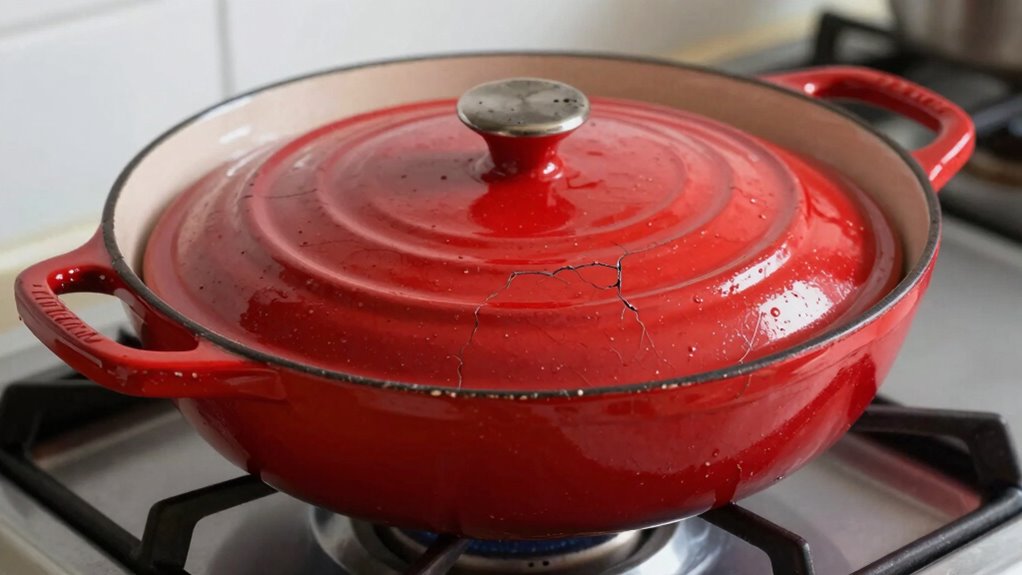
Enameled cast iron is easy to use and attractive, but it’s vulnerable to thermal shock. Sudden temperature changes, like pouring cold water into a hot pan or placing a hot dish into the fridge, can cause cracks or chips in the enamel. To keep your cookware looking its best and lasting longer, you need to handle it carefully. Want to find out more about preventing damage and ensuring your cookware stays beautiful? Keep exploring for useful tips.

Get kitchen staples and gadgets delivered free — and shop member deals
- Fast, free delivery on millions of items
- Access to Prime Big Deal Days deals on October 6–7
- Prime Video, Amazon Music and more included
Key Takeaways
- Enameled cast iron is easy to use but vulnerable to cracks from sudden temperature changes.
- Thermal shock occurs when hot cookware contacts cold water or cold environments.
- Rapid temperature shifts can cause enamel to chip, crack, or weaken over time.
- Proper handling involves gradual cooling and avoiding quick temperature transitions.
- Preventing thermal shock extends the cookware’s lifespan and maintains its aesthetic appeal.
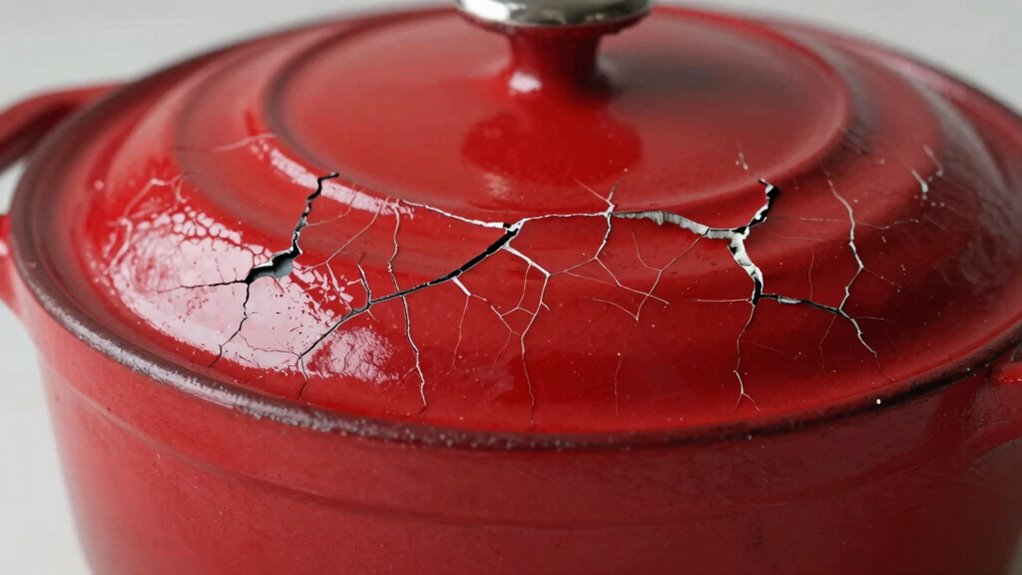
Enameled cast iron is prized for its durability and attractive finish, but it can be vulnerable to thermal shock if not used carefully. When you’re cooking with enameled cast iron, you might notice how the vibrant colors of the enamel stay vivid over time. This color retention is one of its most appealing features, making your cookware look new even after repeated use. However, that beautiful exterior can give a false sense of invincibility. Beneath its glossy surface, the enamel relies on even heat distribution and proper handling to maintain its surface durability. When you suddenly expose the hot pan to cold water or place it directly into a cold oven, you risk damaging the enamel, which can crack or chip unexpectedly.
Thermal shock occurs when there’s a rapid change in temperature, and with enameled cast iron, it’s a common enemy. You might think it’s fine to pour cold liquids into a hot pan, but doing so can cause the enamel to expand and contract abruptly. Over time, this stress weakens the surface, leading to cracks that mar its smooth finish. Once the surface durability is compromised, the enamel becomes more susceptible to chips and scratches, reducing its lifespan and aesthetic appeal. It’s important to handle your cookware gently, especially when *switching* between heat sources and cool environments. Proper handling and understanding of thermal shock can significantly extend the life of your cookware.
Avoid rapid temperature changes to protect enameled cast iron from cracks and damage. Handle gently.
You can prevent thermal shock by avoiding quick temperature changes. For example, don’t run a hot pan under cold water or put a cold dish directly into a preheated oven. Instead, let the cookware cool gradually before cleaning or transferring it to a different temperature setting. This gentle approach preserves both the color retention and surface durability of the enamel. Additionally, understanding the material composition of enameled cast iron can help you better care for it and prevent unnecessary damage. Also, use low to medium heat settings during cooking, as high heat can cause uneven expansion and increase the risk of cracking. When cleaning, avoid abrasive scrubbers that could scratch the surface or expose the underlying cast iron, which is more vulnerable to rust and damage.
In the end, caring for enameled cast iron means respecting its limits. Keep in mind that while the enamel’s color retention keeps your cookware looking vibrant, its surface durability depends on your careful handling. Preventing thermal shock is *vital* to maintaining its stunning appearance and ensuring your cookware lasts for years. Treat it with patience, avoid sudden temperature changes, and your enameled cast iron can truly be a reliable, eye-catching tool in your kitchen.
enameled cast iron cookware care kit
As an affiliate, we earn on qualifying purchases.
As an affiliate, we earn on qualifying purchases.
Frequently Asked Questions
How Can I Tell if My Cast Iron Is Properly Seasoned?
You can tell if your cast iron is properly seasoned by checking its surface: it should be smooth, dark, and slightly shiny. When well-seasoned, it offers better seasoning longevity and rust prevention. You’ll notice food releasing easily without sticking. If it’s dull or sticky, it’s time to re-season. Regular use and proper maintenance keep your cast iron in top shape, ensuring long-lasting performance and protection against rust.
What Are the Best Cleaning Methods for Enameled Cast Iron?
Did you know enameled cast iron cookware can last decades with proper care? For cleaning techniques, use warm, soapy water and a soft sponge to maintain its glossy finish. To remove stains, avoid abrasive cleaners—try baking soda paste or a gentle scrub with a non-metal brush. These methods protect the enamel, making stain removal effective without damaging the surface, ensuring your cookware stays pristine and functional for years.
Can Enameled Cast Iron Be Used on Induction Cooktops?
Yes, enameled cast iron can be used on induction cooktops because it’s compatible with cooktop compatibility requirements. You should make certain your cookware has a magnetic base for induction safety. When using enameled cast iron on an induction stove, avoid sudden temperature changes to prevent thermal shock. Proper care guarantees your cookware remains durable and safe, providing efficient heat transfer and even cooking.
How Do I Prevent Thermal Shock When Cooking?
To prevent thermal shock when cooking, avoid sudden temperature fluctuations that can damage your cookware’s durability. Gradually heat your enameled cast iron by starting on low or medium heat, then increasing gently. Never immerse hot cookware in cold water, and always allow it to cool gradually before cleaning. These habits help maintain your cookware’s integrity, ensuring it lasts longer and performs well over time.
Are There Specific Brands Known for Thermal Shock Resistance?
Yes, brands like Le Creuset and Staub are known for their thermal shock resistance, thanks to their strong reputation and high material durability. These manufacturers use quality enamel and durable cast iron, making their cookware less prone to cracking from quick temperature changes. When choosing cookware, opt for these trusted brands to enjoy long-lasting performance and reduce the risk of thermal shock, ensuring safer and more reliable cooking experiences.
Conclusion
Think of enameled cast iron like a delicate glass sculpture—you cherish its beauty, but a sudden jolt can shatter that perfection. Thermal shock is that abrupt impact, reminding you to handle it with care. Just as you’d avoid dropping fragile glass, you must warm it gradually and avoid extreme temperature changes. Treat it with respect, and your cookware will reward you with lasting durability, transforming your kitchen into a gallery of culinary art instead of a battlefield of broken pieces.
Halloween Picks
halloween
As an affiliate, we earn on qualifying purchases.