To prevent your pellet grill pellets from going bad, store them in airtight, moisture-proof containers like metal or heavy-duty plastic, kept in a cool, dry place away from sunlight. Avoid exposure to humidity and temperature fluctuations, which can cause mold, swelling, or brittleness. Regularly check for signs of moisture or mold, and re-dry damp pellets if needed. Want to keep your pellets fresh and enhance your grilling? Continue here for expert tips and tricks.
Key Takeaways
- Store pellets in airtight, moisture-resistant containers to prevent humidity absorption and mold growth.
- Keep pellets in a cool, dry place away from sunlight and temperature fluctuations.
- Regularly check for signs of moisture, mold, or crumbling pellets to ensure quality.
- Use desiccant packs and proper ventilation for long-term storage, especially in bulk.
- Avoid storing pellets in cardboard or fabric bags, which are not airtight and can lead to spoilage.
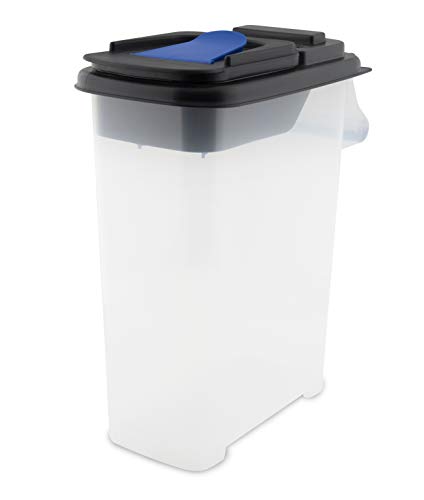
Broil King 66900 Pellet Storage Bin, Black
- Pellet Capacity: Holds one 20 lbs. bag of pellets
- Easy Pour Handle: Heavy-duty handle and retractable spout
- Full Spout Access: Open hatch for easy scooping
As an affiliate, we earn on qualifying purchases.
As an affiliate, we earn on qualifying purchases.
Why Do Pellets Go Bad? Key Signs to Watch For
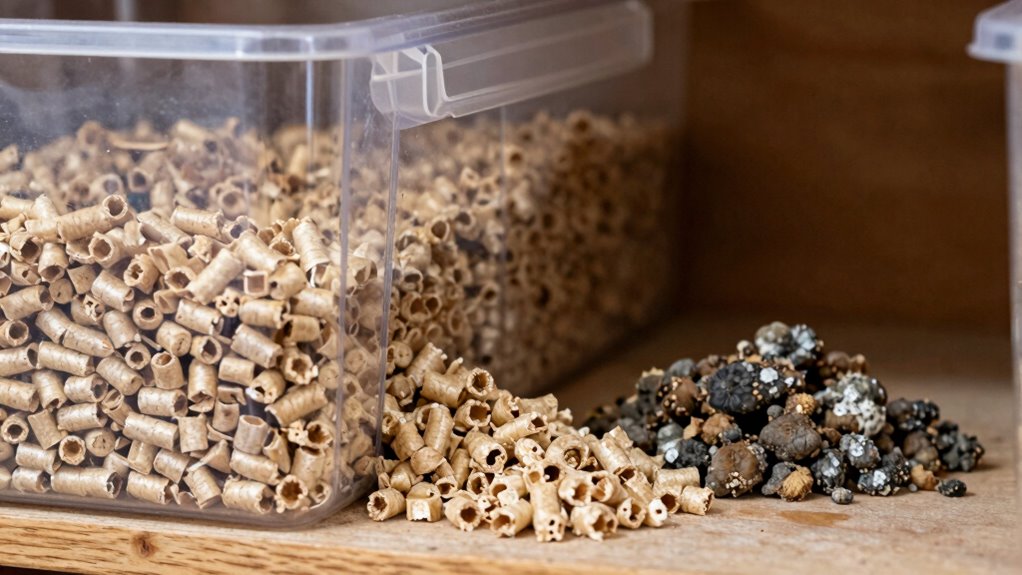
Pellets can go bad over time, especially if they aren’t stored properly, which can affect your grilling performance. Poor storage hygiene accelerates deterioration, reducing pellet durability and making them less effective for smoking. When pellets absorb moisture or dirt, they become prone to mold and clog your grill’s system. Look out for signs like crumbling or excessive dust, which indicate compromised quality. If pellets feel soft or break apart easily, they’ve likely absorbed too much humidity. Using degraded pellets can cause uneven burns, poor smoke production, and even damage your grill. To maintain their integrity, store pellets in a dry, airtight container away from humidity and dirt. Proper storage ensures your pellets stay fresh longer, giving you consistent, flavorful results every time you grill. Additionally, understanding the fire dynamics of your pellet grill can help you optimize smoke output and overall performance. Properly stored pellets also help in maintaining sustainable grilling practices, reducing waste and environmental impact. For best results, always check for pellet freshness before use and consider rotating your stock regularly to prevent old pellets from degrading.
Top Factors That Cause Pellet Quality to Decline Over Time
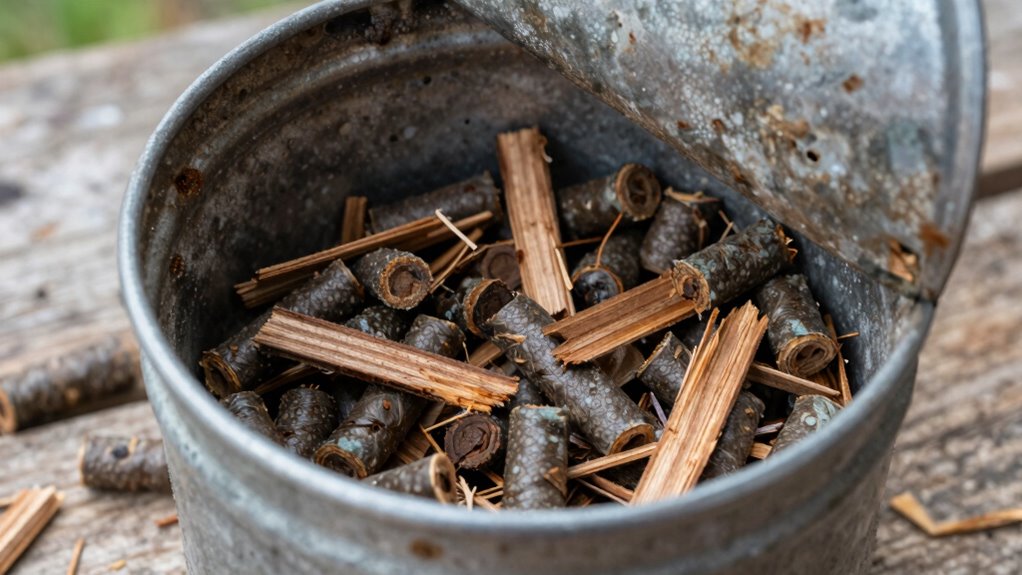
Proper storage is essential to preserving pellet quality, but even under ideal conditions, several factors can cause pellets to break down over time. One major factor is exposure to moisture, which can lead to mold and greatly diminish pellet flavor. To prevent this, using moisture-resistant containers can significantly extend shelf life. Temperature fluctuations also play a role; high heat can cause pellets to degrade faster, while cold storage helps maintain freshness. Additionally, extended storage duration naturally affects quality, as pellets lose potency and consistency the longer they sit unused. Proper storage practices are crucial for maintaining pellet integrity and ensuring optimal performance during cooking. Furthermore, air circulation can influence moisture buildup and should be managed to prevent spoilage. Maintaining a consistent environment helps preserve the quality of pellets over time.
How Poor Storage Can Ruin Your Pellets and Your Smoke

Poor storage habits can quickly turn your high-quality pellets into ineffective fuel and compromise your smoking experience. When pellets aren’t stored properly, they can absorb moisture, leading to poor combustion and inconsistent smoke. This inconsistency can affect the overall food quality and your satisfaction with your smoked dishes. Proper data management plays a crucial role in maintaining pellet quality, especially when considering long-term storage solutions. Moisture-laden pellets tend to produce more ash and less smoke, which affects the taste of your food. Over time, exposure to humidity and temperature fluctuations can cause pellets to deteriorate, making them less efficient and potentially damaging your grill’s components. To keep your pellets at their best, avoid storing them in damp or unsealed containers. Proper storage helps maintain their pellet integrity, ensuring you get the full flavor and performance you expect. Temperature control is also essential to prevent degradation and preserve pellet integrity over time.
Best Containers and Materials to Keep Pellets Fresh

Have you considered how the right storage containers can keep your pellets fresh and ready for use? The best containers are airtight and moisture-resistant, preventing humidity from harming the wood pellets. Metal or heavy-duty plastic storage containers work well because they won’t absorb odors or allow air to seep in. When choosing containers, consider the wood types of your pellets—hardwood pellets like oak or hickory stay fresh longer in sealed environments. Clear containers let you see the level of your pellets without opening them, reducing exposure to air. Avoid flimsy bags or open bins, as they let moisture and air in, leading to spoilage. Proper storage containers are essential to maintaining the quality and longevity of your pellets for ideal grilling performance. Proper storage techniques are key to preventing mold and ensuring consistent burn quality. Additionally, using moisture-resistant materials can further prolong pellet freshness by safeguarding against humidity exposure. Ensuring your storage solutions are airtight and durable helps maintain optimal pellet quality over time. Incorporating storage safety tips can also help prevent accidents and preserve pellet integrity, especially considering the importance of haute couture craftsmanship in creating high-quality garments.
How to Store Pellets for Maximum Freshness : A Step-by-Step Guide

To keep your pellets fresh and ready for your next cookout, you need to follow a simple, step-by-step storage routine. First, choose the right storage containers that are airtight and moisture-proof to preserve pellet flavor. Store your pellets in a cool, dry place away from direct sunlight and heat sources. Avoid exposure to humidity, which can cause pellets to swell or mold. Seal the containers tightly after each use to prevent air from degrading the quality. Label your containers with the pellet type and date to track freshness. Regularly check for any signs of moisture or spoilage, and replace pellets if needed. Following these steps ensures your pellets stay fresh, maintain their flavor, and deliver perfect results every time you fire up your grill.
Common Storage Mistakes That Wreck Your Pellets (And How to Avoid Them)

Storing your pellets improperly can lead to moisture getting in and ruining their quality. Using the wrong container increases the risk of exposure to humidity and pests. To keep your pellets fresh, avoid these common mistakes and choose the right storage methods.
Moisture Exposure Risks
Moisture exposure is one of the biggest risks to your pellet grill pellets, as even a small amount of water can cause them to swell, break apart, or become unusable. The pellet composition makes them especially vulnerable—most are made from compressed wood or biomass, which readily absorbs moisture. If your storage container materials aren’t moisture-proof, water can seep in, compromising the pellets’ quality. Avoid storing pellets in open or porous containers that allow humidity to penetrate. Instead, opt for airtight, moisture-resistant containers designed to keep out humidity and prevent water from damaging the pellets. Proper storage can extend their shelf life and ensure they ignite and burn efficiently, giving you consistent results every time you grill.
Improper Container Choices
Choosing the wrong container for your pellet grill pellets can quickly lead to problems, as many common options aren’t built to keep out moisture or air. Using improper container materials, like flimsy plastic bags or unsealed containers, exposes pellets to humidity, causing them to degrade. To prevent this, select containers with airtight seals, such as metal or heavy-duty plastic. Clearly labeled storage labels help you track freshness and avoid cross-contamination. Here’s a quick comparison:
| Container Material | Pros & Cons |
|---|---|
| Metal | Durable, airtight, long-lasting |
| Plastic | Lightweight, affordable, needs seals |
| Glass | Airtight, but fragile |
| Cardboard | Not airtight, not recommended |
| Fabric Bags | Not suitable for storage |
Choose wisely to keep your pellets fresh and ready to use.
How Temperature and Humidity Affect Pellet Preservation

Temperature and humidity play essential roles in how well pellet grill pellets stay preserved. Excessive heat can cause pellets to soften, lose shape, or even ignite prematurely, highlighting the significance of temperature effects. Humidity control is equally critical; high moisture levels can lead to mold or swelling, while low humidity may cause pellets to become brittle and prone to cracking. To protect your pellets, keep these in mind: proper storage conditions are vital for maintaining pellet quality over time. Use airtight containers to maintain proper humidity levels and prevent moisture intrusion. Additionally, monitoring ambient storage environment helps ensure optimal preservation conditions are maintained. Understanding moisture content is key to preventing spoilage and ensuring consistent performance when grilling. Ensuring the right air circulation around stored pellets can also help prevent condensation and mold growth.
Easy Tips to Organize Your Pellet Storage Area for Freshness
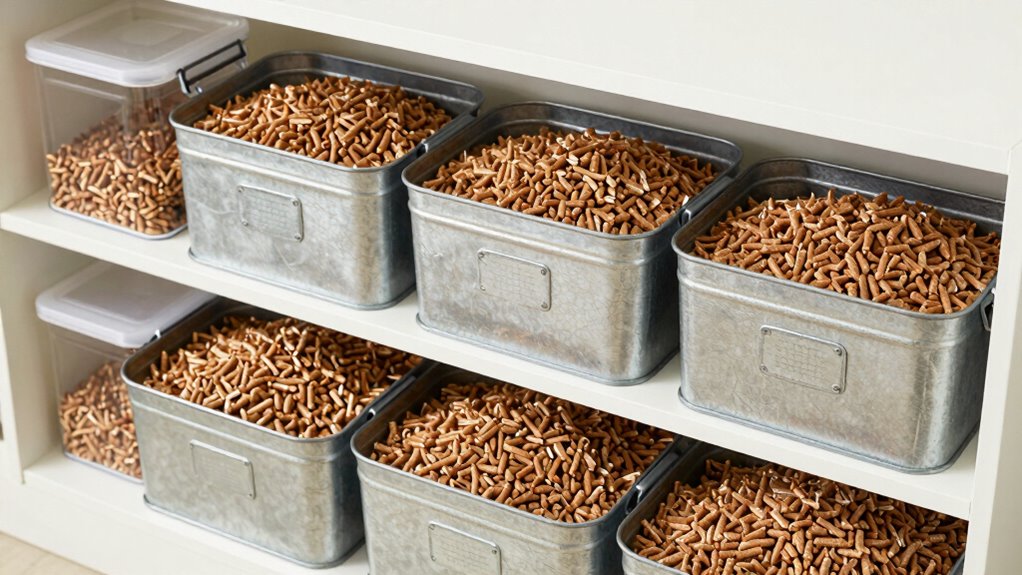
Organizing your pellet storage area effectively guarantees your pellets stay fresh and ready to use. Keep pellets in a cool, dry spot away from direct sunlight to preserve pellet flavor and prevent moisture buildup, which can cause ash formation. Use airtight containers or bins to prevent humidity from seeping in. Label each container by flavor for quick access and to avoid cross-contamination. Store different pellet types separately to maintain their unique qualities. Consider using a shelving system to maximize space and keep pellets off the ground. Regularly check for moisture or signs of mold. Proper storage can also help prevent pests and spoilage, ensuring your pellets remain in optimal condition. Proper organization not only extends pellet shelf life but also ensures consistent cooking results and reduces waste. Additionally, choosing vetted storage solutions can further optimize your setup and protect your investment in quality pellets. For added protection, consider using moisture-absorbing packets inside your containers to maintain dryness and freshness. Implementing air circulation in your storage area can help prevent stale odors and moisture buildup, further preserving pellet quality. Incorporating humidity control measures can make a significant difference in maintaining pellet integrity over time.
Long-Term Pellet Storage Tips for Off-Season and Bulk Buying

To keep your pellets fresh during the off-season or when buying in bulk, you need to store them properly. Make sure they’re in airtight containers and kept in a cool, dark place to prevent spoilage. Avoid moisture and humidity, which can ruin your pellets and affect your grilling experience.
Store in Airtight Containers
Storing pellet grill pellets properly is essential to maintaining their quality over time. Using airtight containers prevents moisture and air from reaching the pellets, preserving their flavor infusion and preventing spoilage. To get the best results, consider these tips:
- Choose containers with tight-fitting lids to prevent air exchange.
- Label containers with pellet branding and purchase date for easy tracking.
- Keep containers in a cool, dry place away from sunlight to avoid temperature fluctuations.
Keep in Cool, Dark Place
Keeping pellet grill pellets in a cool, dark place is essential for long-term storage, especially when buying in bulk or during the off-season. Exposure to heat and light can accelerate pellet degradation, reducing their quality and burn efficiency. For seasonal storage, choose a location like a cellar, pantry, or basement that maintains a consistent temperature below 70°F. Pay attention to pellet branding, as different brands may have varying sensitivities to storage conditions. Proper storage preserves the integrity of the pellets, ensuring they stay fresh and effective when you’re ready to use them again. Avoid areas with direct sunlight or temperature fluctuations. Keeping pellets in a dark, cool environment helps prevent moisture absorption and maintains their performance over extended periods.
Avoid Moisture and Humidity
Moisture and humidity are among the biggest threats to long-term pellet quality, especially when storing in bulk or during the off-season. Excess moisture can cause pellets to swell, mold, and lose flavor retention, diminishing their effectiveness and ruining your pellet branding. To protect your investment, keep these tips in mind:
- Store pellets in airtight, sealed containers to prevent humidity from seeping in.
- Use desiccant packs inside storage bins to absorb any residual moisture.
- Keep the storage area dry and well-ventilated, avoiding damp basements or garages.
Troubleshooting Pellet Performance Issues Caused by Storage Errors
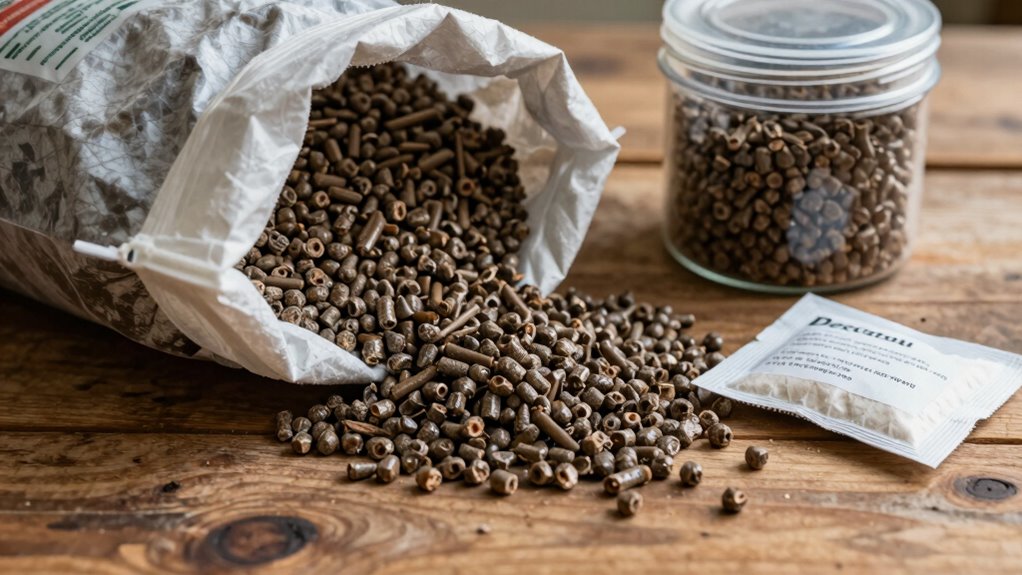
Poor storage conditions can considerably impact pellet performance, leading to issues like inconsistent burning, poor heat output, or even clogging your grill. If pellets are exposed to moisture or pests, they won’t burn efficiently, causing uneven cooking. To troubleshoot these problems, check if your pellets are dry and free from pests—proper pest prevention is key. Storing pellets in airtight containers helps maintain quality and prevents pest infestation, which can ruin your stock. Also, consider pellet branding; some brands are more resistant to moisture and pests, ensuring better performance. If you experience burning issues, try switching to a different brand or re-drying damp pellets before use. Correct storage practices directly improve pellet ignition, consistency, and overall grill performance.
Frequently Asked Questions
Can Storing Pellets Near Heat Sources Cause Them to Go Bad Faster?
Storing pellets near heat sources can definitely cause them to go bad faster. Heat exposure accelerates moisture loss and can lead to mold or spoilage, while temperature fluctuations cause the pellets to expand and contract, potentially degrading their quality. Keep your pellets in a cool, dry place away from heat sources to maintain freshness and prevent premature spoilage. Proper storage guarantees your pellets burn efficiently and last longer.
How Do I Identify Mold or Pests in My Stored Pellets?
You should regularly check your stored pellets for pest signs like tiny holes, webbing, or droppings, and look for mold, which appears as fuzzy, gray, green, or white patches. Use moisture detection to verify pellets stay dry, as excess moisture promotes mold growth and pest attraction. If you spot any signs, promptly discard the affected pellets and clean your storage area to prevent further issues.
Are There Specific Brands of Containers Better for Pellet Storage?
Ironically, the best containers aren’t fancy brands—they’re ones with the right container materials and airtight seals. You want durable, food-safe plastics or metal, and a lid that seals tight to keep out moisture and pests. While many brands claim to be the best, focus on those with reliable airtight seals and sturdy build quality. That way, your pellets stay fresh, no matter the brand on the container.
How Long Can Pellets Be Stored Before Their Quality Significantly Declines?
You can store pellets for up to 6 months before their quality declines substantially. To maximize freshness, keep storage humidity low and avoid exposing pellets to moisture, which can cause mold. Pellet composition, such as hardwood versus softwood, also influences shelf life—hardwood tends to last longer. Store them in an airtight container in a cool, dry place, and check periodically for any signs of moisture or mold to guarantee peak performance.
Does Storing Pellets in the Freezer Extend Their Shelf Life Effectively?
Think of your pellets as delicate seeds that thrive in the cool, dark soil of a freezer. Storing them in freezer storage indeed extends their shelf life, slowing down moisture loss and mold growth. By keeping pellets cold, you preserve their quality longer, ensuring they ignite easily and burn evenly. Just remember to seal them tightly so they don’t absorb unwanted flavors, and you’ll enjoy fresh-smoking goodness whenever you fire up.
Conclusion
Properly storing your pellets is key to keeping them fresh and flavorful, much like nurturing a delicate garden. If you overlook storage tips, your pellets can spoil faster than you’d like, sabotaging your smoking sessions. By paying attention to temperature, humidity, and container choices, you’ll guarantee your pellets stay at their best, ready to turn your grill into a symphony of smoky perfection. Treat your pellets right, and they’ll reward you with every delicious bite.