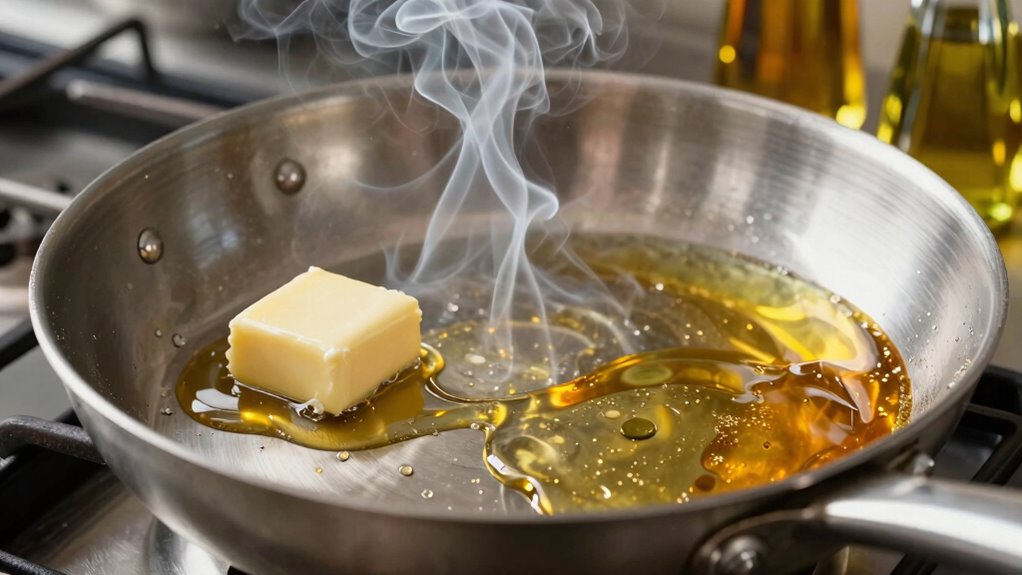

Understanding smoke points helps you choose the right fat for your cooking. Butter has a lower smoke point because of milk solids, making it best for low to medium heat. Ghee’s higher smoke point comes from removing those solids, so it handles higher temperatures. Refined oils like avocado or canola can withstand even more heat, perfect for frying. If you want safer, tastier results, knowing these differences is key—there’s more to discover about selecting the best fat for your dishes.

Get kitchen staples and gadgets delivered free with Prime
- Fast, free delivery on millions of items
- Prime Video, Amazon Music and more included
- Member-only deals all year
Key Takeaways
- Butter has a lower smoke point than ghee and refined oils due to milk solids burning at lower temperatures.
- Ghee’s clarified fats give it a higher smoke point than butter, making it suitable for higher heat cooking.
- Refined oils, like avocado or canola, generally have higher smoke points, ideal for frying and searing.
- Unrefined oils, such as extra virgin olive oil, have lower smoke points and are best for low to medium heat.
- Choosing fats based on their smoke points ensures flavor preservation, safety, and prevents harmful compound formation.
As an affiliate, we earn on qualifying purchases.
What Is a Smoke Point and Why Does It Matter?
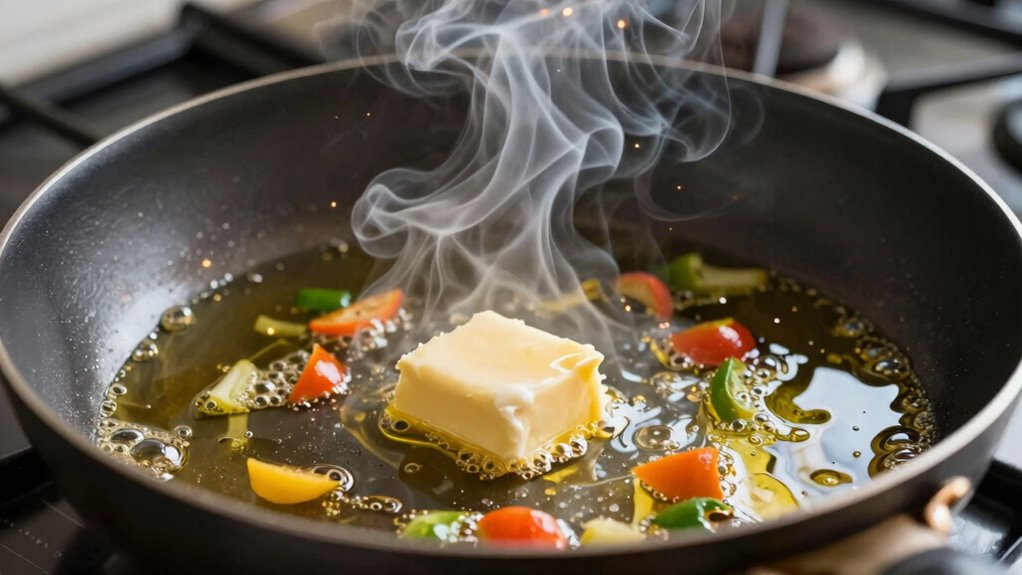
Have you ever wondered why some oils smoke and burn faster than others when heated? That’s because each oil has a specific smoke point—the temperature at which it begins to produce visible smoke. Knowing this matters because exceeding an oil’s smoke point can negatively affect flavor preservation, causing a burnt taste and unpleasant aroma. It also impacts the nutritional profile, as harmful compounds form when oils break down at high temperatures. Choosing oils with appropriate smoke points ensures you maintain the desired flavor and protect the nutritional integrity of your food. Understanding the smoke point helps you cook more effectively, avoiding unnecessary health risks and ensuring your dishes taste fresh and vibrant. It’s a key factor in making healthier, better-tasting meals.
How Do Different Fats and Oils Compare in Smoke Points?
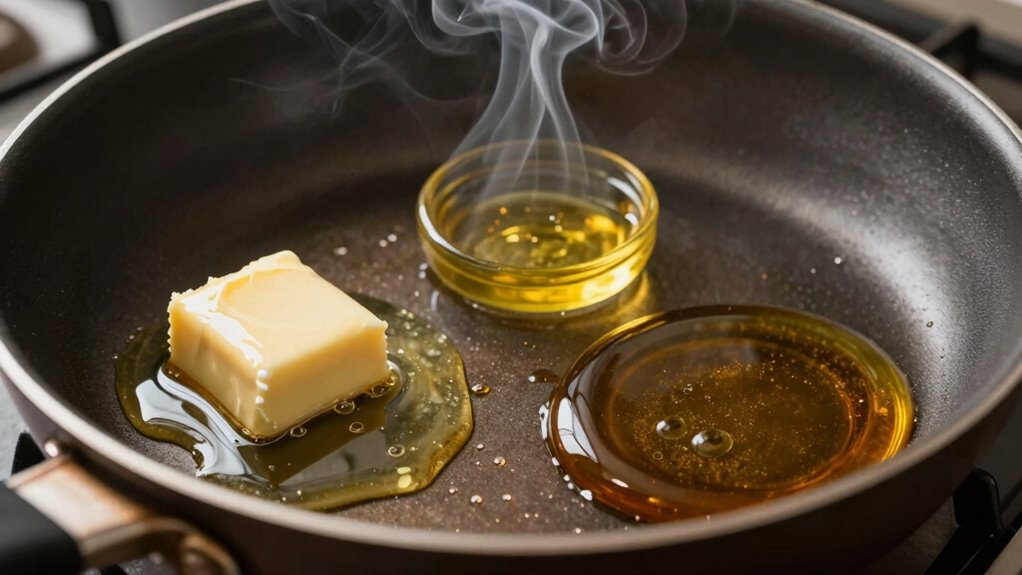
Ever wonder why some oils are better suited for high-heat cooking while others are not? It all comes down to a fats comparison, especially their smoke points. Different oil varieties have varying smoke points, which determine their heat tolerance. For example, refined oils like canola and avocado have higher smoke points, making them ideal for frying or sautéing at high temperatures. On the other hand, unrefined oils like extra virgin olive oil have lower smoke points, so they’re better for dressings or low-heat cooking. Butter and ghee also differ, with ghee having a higher smoke point than butter. Understanding these differences helps you choose the right fat or oil for your cooking method, ensuring safety and flavor without burning or damaging nutrients. Knowing the smoke point of each fat helps prevent accidental burning and preserves nutrients during cooking.
Which Fats Are Best for High-Heat Cooking?
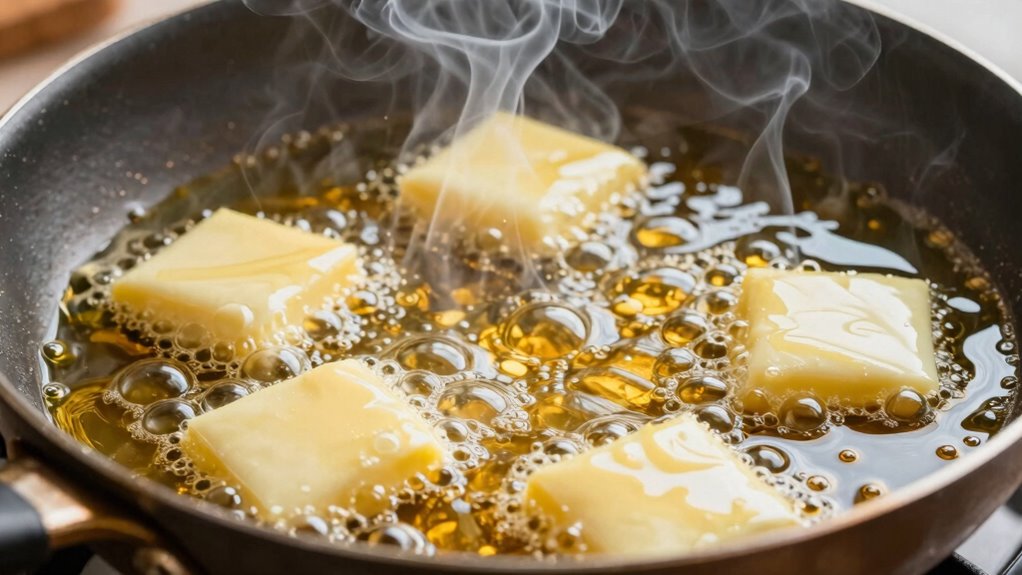
When you’re choosing fats for high-heat cooking, selecting oils and fats with high smoke points is essential to prevent burning and preserve flavor. For frying techniques like searing or stir-frying, opt for fats such as refined avocado oil, light vegetable oil, or ghee, which withstand higher temperatures. These fats not only prevent smoke but also maintain their stability, reducing the formation of harmful compounds. Keep in mind the health implications: some high-smoke-point oils contain more omega-6 fatty acids or undergo refining processes. For healthier options, choose fats like extra virgin olive oil for medium heat or unrefined options for lower temperatures. Remember, the right fat enhances your cooking and supports your health. Consider these options:
- Refined avocado oil
- Ghee
- Light vegetable oil
- Refined coconut oil
- Peanut oil
How to Choose the Right Cooking Fat for Your Needs
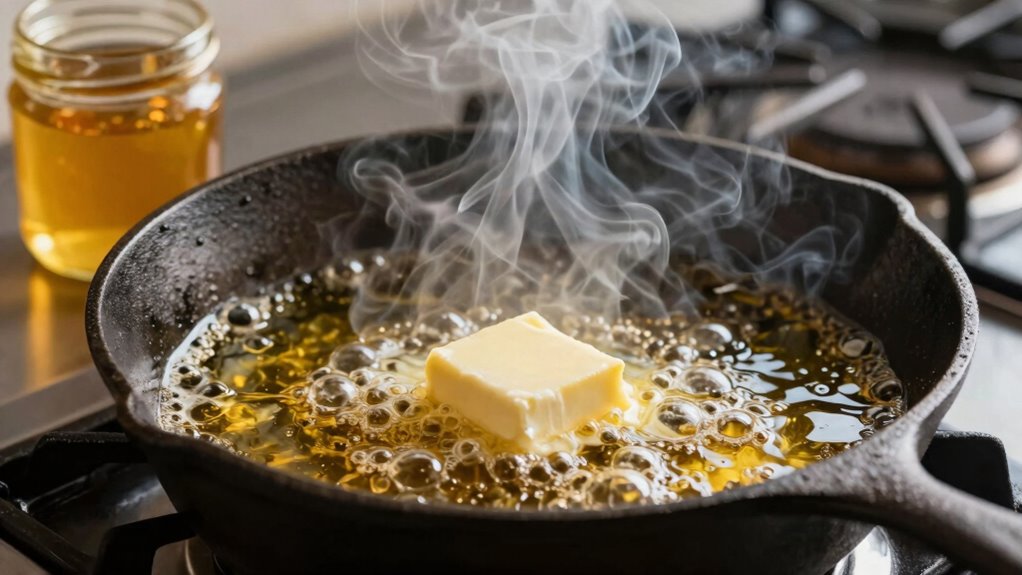
Choosing the right cooking fat depends on your specific needs and cooking style. Consider flavor profiles—whether you want the rich, buttery taste of butter, the nutty notes of ghee, or the neutral profile of oils. Your health considerations also play a crucial role; for example, some fats are higher in saturated fats, while others contain beneficial unsaturated fats. If you’re aiming for heart health, opt for oils rich in monounsaturated fats like olive oil. For high-heat cooking, select fats with higher smoke points to prevent burning and smoke. Think about how the fat complements your dishes and your dietary goals. Additionally, selecting energy-efficient cloud servers can help reduce environmental impact in your kitchen’s tech setup and promote sustainable practices. Being aware of smoke point can help you choose fats that won’t burn or produce harmful compounds at high temperatures, ensuring both safety and flavor. By balancing flavor preferences and health considerations, you can choose a cooking fat that enhances your meals while aligning with your lifestyle.
Common Mistakes That Cause Burning Food and Smoke
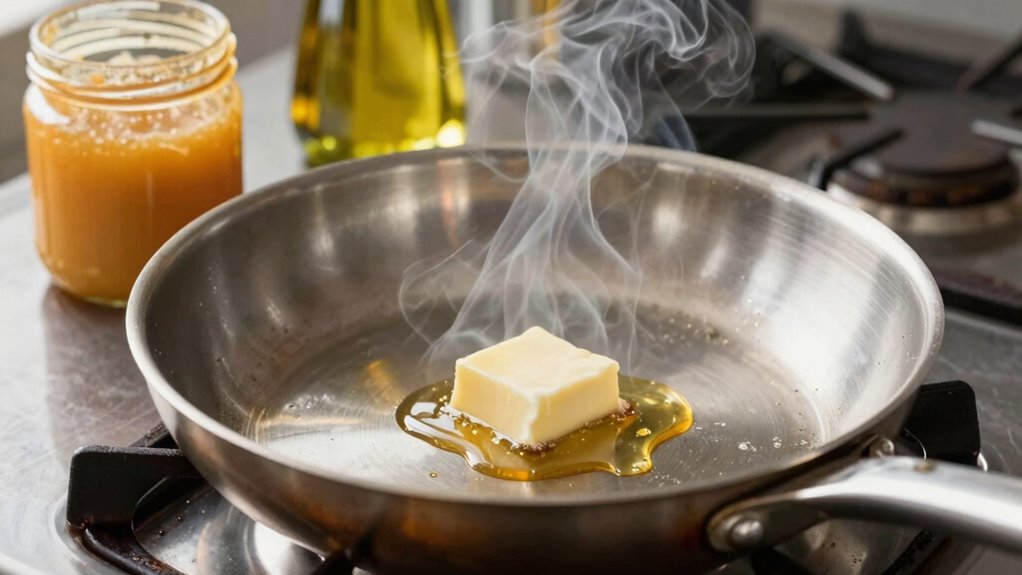
One common mistake that leads to burning food and excessive smoke is using a cooking fat with a smoke point lower than the cooking temperature. When you push beyond that point, oil splatters increase, and your food burns quickly. To avoid this, pay attention to your seasoning techniques; adding salt or spices too early can cause uneven heating and smoking. Also, overcrowding the pan traps heat, making oil more likely to burn. Using ingredients cold from the fridge can cause sudden splatters. Additionally, not monitoring the heat can result in overheating, which burns fats prematurely. Be mindful of your temperature, and choose fats appropriate for your cooking method to prevent smoke and burnt flavors. Proper heat control ensures safe, tasty results without the mess. Moreover, using the right oil types for different cookings can significantly reduce smoke production and improve overall results. Additionally, regularly checking your air quality around the cooking area can help identify smoke buildup and prevent it from affecting indoor air.
Tips for Cooking Safely at Various Temperatures
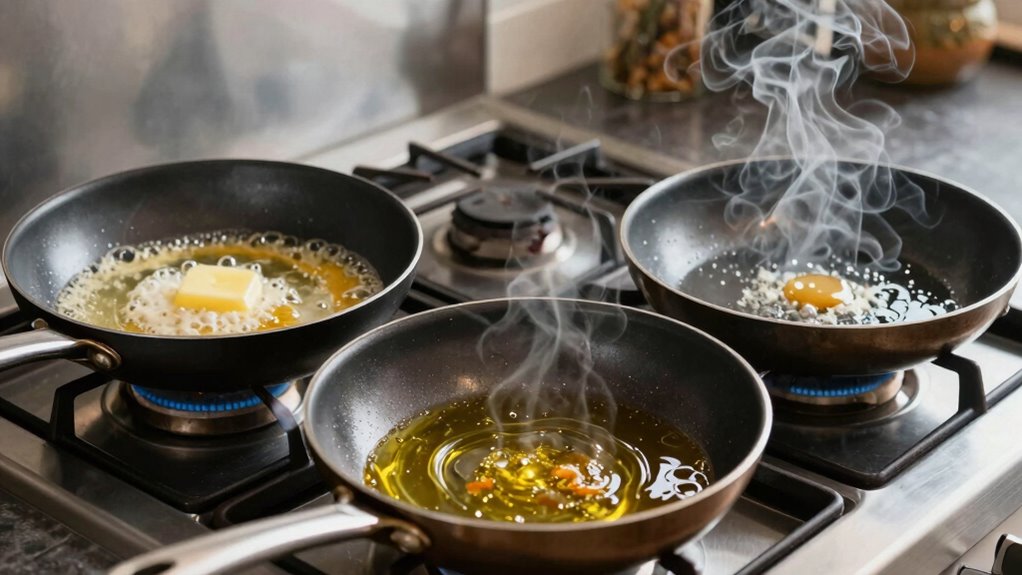
Cooking safely at various temperatures requires paying close attention to your heat levels to prevent accidents and burnt food. Keeping the temperature steady helps preserve flavor retention and minimizes the nutritional impact of your ingredients. Use a thermometer to monitor your stove or pan temperature, especially when cooking oils or fats with lower smoke points. Avoid overheating, which can cause the fat to break down and produce harmful compounds. Adjust the heat as needed and don’t leave your cooking unattended. Properly managing your heat preserves the food’s natural flavors and nutrients, ensuring a healthier, tastier dish. Remember that different fats require different temperatures, so tailor your approach to the specific ingredient to maximize safety and quality. Additionally, understanding the smoke point of various cooking fats helps prevent the breakdown of fats and the formation of potentially toxic compounds during cooking. Being aware of fat stability under heat conditions can further help you choose the right fats for your cooking method. For optimal results, consider the type of cooking and the specific fat’s characteristics to avoid undesirable reactions. Knowing the proper temperature ranges for different fats can guide you in achieving the best flavor and safety.
How to Pick the Best Fat for Flavor and Safety
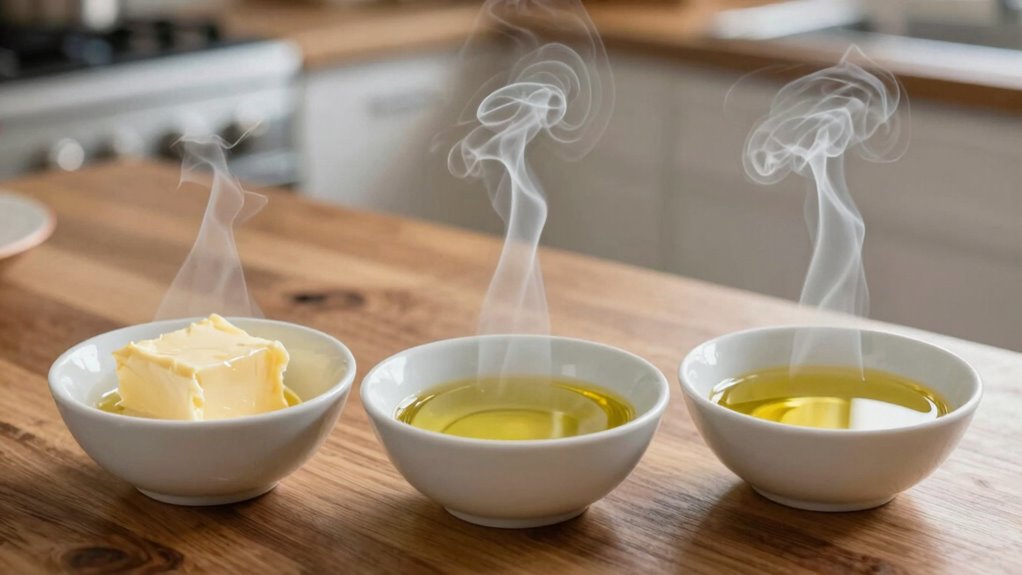
Selecting the right fat for your cooking not only enhances flavor but also guarantees safety. To choose wisely, consider both nutritional benefits and flavor profiles. Nutritional benefits include healthy fats, antioxidants, and vitamins, which support overall health. Flavor profiles vary from rich and buttery to neutral or nutty, influencing your dish’s final taste. When picking fats, keep these points in mind:
- Opt for fats with higher smoke points for high-temperature cooking
- Balance flavor intensity with the dish’s requirements
- Prioritize fats rich in monounsaturated and polyunsaturated fats for health benefits
- Consider ghee or clarified butter for a nutty flavor and higher smoke point
- Use oils like avocado or refined olive oil for versatility and safety at higher temperatures
- Understanding smoke points helps prevent burning and ensures safe cooking. Being aware of fat stability during cooking can also prevent the formation of harmful compounds.
Frequently Asked Questions
Can the Smoke Point of Fats Change Over Time or With Storage?
Yes, the smoke point of fats can change over time, especially with storage. Poor storage stability can lead to oxidation effects, which lower the smoke point and degrade the fat’s quality. Keep fats in cool, airtight containers away from light to maintain their stability. Regularly check for rancidity or off smells, as these indicate oxidation that can affect the smoke point and overall safety when cooking.
How Does Refining Affect the Smoke Point of Oils and Fats?
Imagine a golden oil pouring smoothly into your pan—refining sharpens that flow. The refining process removes impurities, which can lower the smoke point, so your oil heats more cleanly. By eliminating these impurities, refining raises the smoke point, giving you a more stable oil for high-temperature cooking. This means fewer worries about smoking or burning, making your dishes safer and more flavorful.
Are There Health Benefits Associated With Cooking at Lower Smoke Points?
Cooking at lower smoke points can offer health benefits by encouraging gentler cooking techniques, which help preserve nutrients and reduce harmful compounds formation. Using oils or fats with lower smoke points for sautéing or simmering allows you to avoid overheating, maintaining their nutritional integrity. This mindful approach supports overall health, promotes better digestion, and encourages flavorful, wholesome meals without risking the creation of potentially harmful substances.
How Do Additives or Impurities Influence a Fat’s Smoke Point?
Impurities and additives are like shadows lurking beneath the surface, quietly lowering your fat’s smoke point. Additive impacts and impurity effects introduce foreign substances that can destabilize the fat’s structure, causing it to smoke sooner. These contaminants act as catalysts for breakdown, making your cooking less safe and flavorful. To protect your culinary creations, choose purified oils and fats, and avoid those with added chemicals or impurities that could compromise heat stability.
Can Mixing Different Fats Alter the Overall Smoke Point of a Dish?
Mixing different fats, known as fat blending, can alter the overall smoke point of your dish. It often enhances smoke point stability, especially when combining high-smoke-point oils with those that have lower thresholds. This way, you reduce the risk of sudden smoking or burning. To guarantee safe cooking, choose fats with compatible smoke points and mix them carefully, keeping an eye on heat levels for ideal results.
Conclusion
Now that you understand smoke points, you can choose fats wisely, cook confidently, and avoid burnt dishes. Whether you prefer butter’s rich flavor, ghee’s high heat stability, or oils’ versatility, selecting the right fat at the right temperature makes all the difference. Embrace the knowledge, master your kitchen, and enjoy safer, tastier meals every time. Cook smart, cook safe, and let every dish reflect your care and expertise.
Halloween Picks
halloween
As an affiliate, we earn on qualifying purchases.