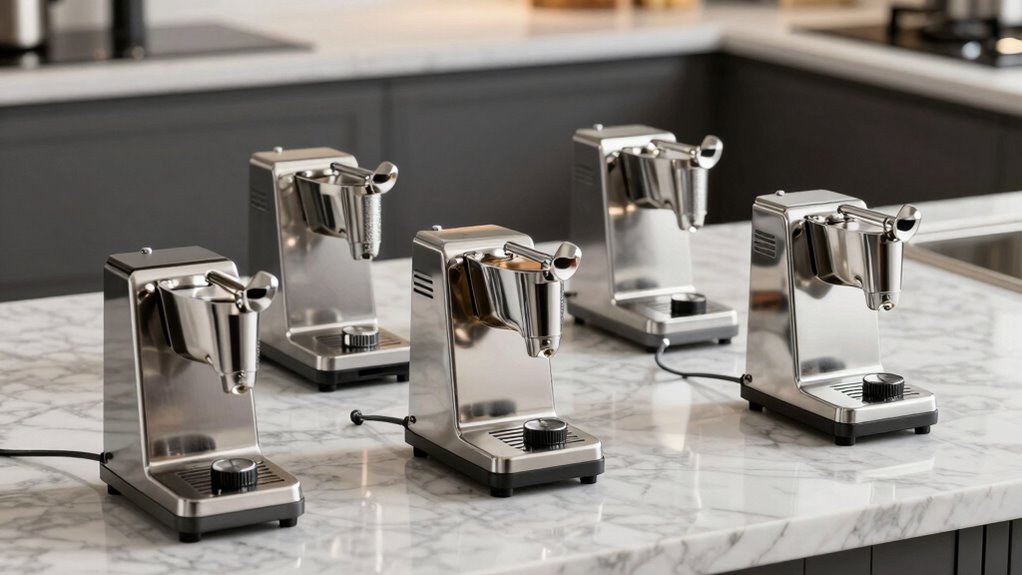

A countertop meat tenderizer machine spans a surprisingly wide range: fifty-blade manual stamps, clamp-on rolling cubers, and stainless steel electric machines that can chew through dozens of steaks an hour. The VEVOR 750W Commercial Electric Tenderizer earns my best overall pick for combining genuine throughput with 304 stainless construction at a mid-tier commitment level, while the Weston Manual Tenderizer and Cuber stands out as the smarter choice for home cooks who want cubed cube steaks without an electric motor. The main tradeoff in this category is muscle versus motor: manual crank models cost less, clean up faster, and never break down, but they demand effort and a sturdy mounting surface; electric models deliver speed and consistency but need more storage space and careful blade maintenance. Where you fall on that spectrum depends on whether you’re tenderizing two chicken breasts a week or prepping bulk venison and cube steak. Keep reading for the full breakdown, including which budget picks actually earn their spot and which premium machines are overkill for a home kitchen.

Get kitchen staples and gadgets delivered free with Prime
- Fast, free delivery on millions of items
- Prime Video, Amazon Music and more included
- Member-only deals all year
Key Takeaways
- Blade count and motor wattage matter far less than feed width and build material — the 5.8-inch VEVOR manual feed port handled larger cuts than some electric models with narrower throats.
- Every manual stamp-style model (the 48-blade and COFUN picks) shared the same weakness: uneven penetration on thick cuts, making them best as steak accessories rather than true machines.
- The clamp-on commercial cuber and the countertop-mounted manual cubers produced nearly identical results, so mounting convenience — not performance — is the real differentiator between them.
- Adjustable spacing (the COFUN 3-setting model) turned out to be the most underrated feature in the lineup, letting one tool move between delicate fish and tough chuck without tearing.
- Electric tenderizers only justify their price and counter footprint above roughly 20 pounds of meat per week; below that, every crank model in this roundup did comparable work.
| Cofun Manual Meat Tenderizer Tool | 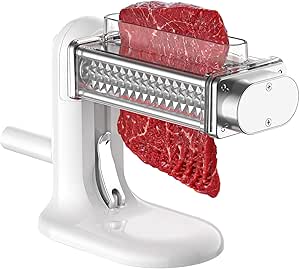 | Best for Simple Manual Tenderizing | Operation: Manual | Material: Metal | Base: Slip-free suction base | VIEW ON AMAZON | See Our Full Breakdown |
| Electric Meat Tenderizer Tool with 5 Adjustable Speed Levels | 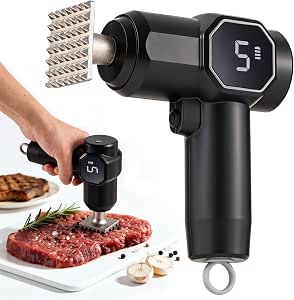 | Best Cordless Pick | Operation: Cordless electric | Speed levels: 5 adjustable | Battery: 3000mAh | VIEW ON AMAZON | See Our Full Breakdown |
| Commercial Meat Tenderizer Cuber – Heavy Duty Clamp-on Rolling Steak Tenderizer Tool |  | Best for Mixed Home and Commercial Prep | Operation: Manual hand crank | Material: Aluminum and food-grade ABS | Mounting: Clamp-on | VIEW ON AMAZON | See Our Full Breakdown |
| Manual Meat Tenderizer Cuber, Heavy Duty Steak Tenderizer with 4.75″ Wide Feed | 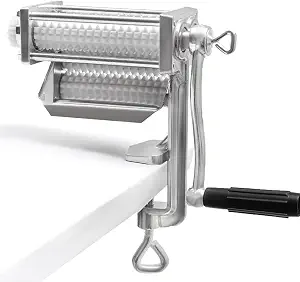 | Best for Smaller Cuts and Marinades | Material: Aluminum body and rolls, food-grade ABS | Rollers: 2 cast iron spike rollers | Maximum meat thickness: 1/2 inch | VIEW ON AMAZON | See Our Full Breakdown |
| VEVOR 750W Commercial Electric Meat Tenderizer, 304 Stainless Steel |  | Best for High-Volume Countertop Prep | Power: 750W | Blade count: 67 | Blade material: 304 stainless steel | VIEW ON AMAZON | See Our Full Breakdown |
| VEVOR Commercial Manual Meat Tenderizer, Stainless Steel, 5.8-Inch Feed Port |  | Best for Small Commercial Kitchens | Operation: Manual hand-crank | Blade count: 31 | Gear material: 420 stainless steel | VIEW ON AMAZON | See Our Full Breakdown |
| Weston Manual Meat Tenderizer and Cuber |  | Best for Cube Steak | Operation: Manual hand-crank | Blades: 31 stainless steel blades | Maximum meat size: 4.5 in wide x 0.75 in thick | VIEW ON AMAZON | See Our Full Breakdown |
| Meat Tenderizer with 48 Stainless Steel Blades |  | Best Compact Handheld Pick | Blades: 48 stainless steel needles, double-sided | Material: Stainless steel blades, ABS grip | Dimensions: 5.9 x 4.9 x 1.7 inches | VIEW ON AMAZON | See Our Full Breakdown |
| COFUN Manual Meat Tenderizer with 3 Adjustable Spacing Options |  | Best for Adjustable Thickness Control | Spacing options: 10 mm, 12.5 mm, 15 mm | Material: Food-grade construction with rust-resistant metal pins | Cleaning: Detachable; hand wash only | VIEW ON AMAZON | See Our Full Breakdown |
| YBSVO 7-Inch Commercial Meat Tenderizer Machine (MMT-740) |  | Best Heavy-Duty Manual Machine | Blades: 40 stainless steel blades | Feed chute width: 7 inches | Throat capacity: 7 in wide x 1.1 in thick | VIEW ON AMAZON | See Our Full Breakdown |
| meat tenderizer machine countertop | Operation | Material |
|---|---|---|
| Cofun Manual Meat Tenderizer T | Manual | Metal |
| Electric Meat Tenderizer Tool | Cordless electric | — |
| Commercial Meat Tenderizer Cub | Manual hand crank | Aluminum and food-grade ABS |
| Manual Meat Tenderizer Cuber | Manual | Aluminum body and rolls, food-grade ABS |
| VEVOR 750W Commercial Electric | Electric | — |
| VEVOR Commercial Manual Meat T | Manual hand-crank | — |
| Weston Manual Meat Tenderizer | Manual hand-crank | — |
| Meat Tenderizer with 48 Stainl | — | Stainless steel blades, ABS grip |
| COFUN Manual Meat Tenderizer w | Manual press | Food-grade construction with rust-resistant metal pins |
| YBSVO 7-Inch Commercial Meat T | Manual hand-crank | — |
More Details on Our Top Picks
Cofun Manual Meat Tenderizer Tool
The Cofun Manual Meat Tenderizer Tool suits cooks who want a countertop tool for firm cuts without adding a motor or battery to their kitchen. Its suction base helps steady it while the metal gears and blades work through steaks, venison, and similar meats. It disassembles for rinsing, though cleanup is still hands-on because the parts are not dishwasher safe. Compared with the clamp-on Commercial Meat Tenderizer Cuber, Cofun uses suction rather than a clamp, so it may fit counters where clamping is awkward. Its narrower meat range is a real limit: the product is not intended for fish or poultry, while the cuber is described for chicken as well as beef. Choose Cofun for straightforward manual use on firm cuts; skip it if you need broader meat compatibility or machine-washable parts.
Pros:- Metal gears and blades are built for firm cuts such as steak and venison.
- Suction base helps hold the tool steady during use.
- Disassembles for access to parts during rinsing.
Cons:- Not suitable for fish or poultry.
- Parts must be rinsed by hand and are not dishwasher safe.
Best for: Home cooks who regularly tenderize steaks or venison and want a manual countertop tool with a suction base.
Not ideal for: Cooks who prepare fish or poultry, or who need dishwasher-safe parts for cleanup.
- Operation:Manual
- Material:Metal
- Base:Slip-free suction base
- Cleaning:Disassembles; rinse with warm water
- Dishwasher safe:No
- Suitable cuts:Steaks, venison, and other firm cuts
- Not suitable for:Fish or poultry
Our verdict“Choose the Cofun for manual tenderizing of firm cuts when a suction-mounted base fits your counter setup.”
Electric Meat Tenderizer Tool with 5 Adjustable Speed Levels
This cordless Electric Meat Tenderizer Tool is the most portable option in this group: its rechargeable battery removes the need to mount a hand-crank cuber to a counter. Five speed settings let the cook adjust the pace for different cuts, and the 30 mm stainless steel needles are designed to pierce meat rather than press it through spike rollers. The removable head is dishwasher safe, giving it a cleanup advantage over the hand-washed Cofun Manual Meat Tenderizer Tool. Its stated capacity of 50-plus steaks per charge also favors meal prep or outdoor cooking where an outlet is unavailable. The tradeoff is that meat must be fully defrosted before use, and this handheld format may be less suited to repeated, high-volume batches than the VEVOR 750W Commercial Electric Meat Tenderizer.
Pros:- Five adjustable speed levels accommodate different cuts.
- Cordless 3000mAh battery is rated for 50-plus steaks per charge.
- Removable dishwasher-safe head simplifies cleanup.
- USB-C charging and carry strap support portable use and compact storage.
Cons:- Meat must be fully defrosted before use.
- Handheld design may be less suited to sustained high-volume processing than a commercial machine.
Best for: Cooks who tenderize batches of fully thawed meat for barbecues, meal prep, or camping and want cordless operation.
Not ideal for: Buyers processing large volumes continuously, or anyone who needs to tenderize meat before it is fully defrosted.
- Operation:Cordless electric
- Speed levels:5 adjustable
- Battery:3000mAh
- Charging:USB-C
- Needle material:Food-grade 304 stainless steel
- Needle depth:Up to 30mm
- Capacity:50+ steaks per charge
- Head and cleaning:Removable head; dishwasher safe
- Storage:Carry strap for wall hanging
Our verdict“Pick this cordless model for portable, adjustable tenderizing and easy head cleanup when your meat is fully thawed.”
Commercial Meat Tenderizer Cuber – Heavy Duty Clamp-on Rolling Steak Tenderizer Tool
The Commercial Meat Tenderizer Cuber earns its place for cooks who want a clamp-on hand-crank machine that can serve home or commercial prep. Its rolling cuber format works across beef, chicken, and other meats, giving it broader stated use than the Cofun Manual Meat Tenderizer Tool, which is limited to firm cuts and excludes poultry. Aluminum and food-grade ABS keep the construction focused on a compact countertop setup, while the crank drives meat through the tenderizing mechanism without a motor. That simplicity also sets the limit: each batch takes manual effort, unlike the powered VEVOR 750W Commercial Electric Meat Tenderizer. It also needs a counter or table edge that can accept its clamp, so buyers without a suitable surface should look elsewhere. This is a practical fit for varied prep at a manageable scale.
Pros:- Clamp-on layout keeps the cuber compact between uses.
- Aluminum and food-grade ABS construction.
- Hand-crank operation avoids reliance on a motor or power outlet.
- Described for beef, chicken, and other meats.
Cons:- Manual cranking can be slower than electric tenderizing for larger batches.
- Requires a suitable surface for the clamp.
Best for: Small food businesses and home cooks who process several kinds of meat and have a counter edge suitable for clamping.
Not ideal for: Buyers who need electric throughput or cannot clamp equipment securely to their work surface.
- Operation:Manual hand crank
- Material:Aluminum and food-grade ABS
- Mounting:Clamp-on
- Intended use:Home and commercial meat tenderizing
- Meat types:Beef, chicken, and other meats
- Format:Rolling meat cuber
Our verdict“Choose this cuber for varied meat prep at home or in a small commercial kitchen when manual cranking and clamping suit your setup.”
Manual Meat Tenderizer Cuber, Heavy Duty Steak Tenderizer with 4.75″ Wide Feed
This manual cuber is a focused choice for cooks who want spike rollers to open up smaller pieces for marinade or sauce. The 4.75-inch feed and half-inch thickness limit make its working range more explicit than the general clamp-on Commercial Meat Tenderizer Cuber, whose supplied details do not specify a maximum cut size. That limit helps buyers judge fit before committing: this model is aimed at modest steaks and portions, not wide or thick cuts. Its cast iron spike rollers puncture the meat as the user cranks it through, with no pounding required. Like the other manual cubers, it needs a secure clamp point and hand effort. Compared with the powered VEVOR 750W Commercial Electric Meat Tenderizer, it has a smaller stated feed range but avoids a motorized countertop machine.
Pros:- Cast iron spike rollers puncture meat to help marinades and sauces penetrate.
- No pounding or hammering is required.
- Clamp fits tables or countertops up to 1 1/2 inches thick.
- Defined feed limits help buyers match it to smaller cuts.
Cons:- Feed accommodates meat only up to 4.75 inches long and 1/2 inch thick.
- Manual operation requires hand cranking.
- Requires a suitable surface for clamping.
Best for: Home cooks tenderizing smaller steaks or portions up to 4.75 inches long and 1/2 inch thick for better marinade penetration.
Not ideal for: Cooks handling large or thick cuts, or those who want powered operation instead of hand cranking.
- Material:Aluminum body and rolls, food-grade ABS
- Rollers:2 cast iron spike rollers
- Maximum meat thickness:1/2 inch
- Maximum meat length:4 3/4 inches
- Feed width:4.75 inches
- Mounting:Table clamp
- Maximum surface thickness:1 1/2 inches
- Operation:Manual
Our verdict“Pick this cuber for smaller cuts and marinade prep if its feed limits match the meat you usually prepare.”
VEVOR 750W Commercial Electric Meat Tenderizer, 304 Stainless Steel
For repeated countertop batches, the VEVOR 750W Commercial Electric Meat Tenderizer offers the most clearly specified powered capacity in this set: a 750W motor drives 67 stainless steel blades, and the stated thickness range reaches 22 mm. Its 304 stainless steel body and included tray, tong, and brush support a more equipment-oriented prep station than the handheld cordless electric model. That scale comes with a narrower audience. Compared with the portable Electric Meat Tenderizer Tool with 5 Adjustable Speed Levels, VEVOR is built around a fixed commercial workflow rather than battery-powered use for camping or small jobs. The product description calls for cleaning after use, so the buyer should expect cleanup as part of each session. This makes most sense for commercial kitchens or serious batch prep, not occasional steak dinners.
Pros:- 750W motor is designed for powered tenderizing.
- 67 precision blades are made from 304 stainless steel.
- Specified thickness range accommodates meat from 3 to 22 mm.
- Includes a meat tong, cleaning brush, and tray.
Cons:- Commercial design may be more machine than a typical home cook needs.
- Requires cleaning after use.
Best for: Commercial kitchens and high-volume home cooks who need a powered countertop machine for repeated batches.
Not ideal for: Occasional home cooks with limited counter space who do not need a commercial-style motorized machine.
- Power:750W
- Blade count:67
- Blade material:304 stainless steel
- Body material:304 stainless steel
- Tenderizing length:0.24–6.61 in (6–168 mm)
- Tenderizing thickness:0.12–0.87 in (3–22 mm)
- Included accessories:Meat tong, cleaning brush, and tray
- Operation:Electric
Our verdict“Choose the VEVOR for repeated countertop batches when a commercial electric machine fits your volume and workspace.”
VEVOR Commercial Manual Meat Tenderizer, Stainless Steel, 5.8-Inch Feed Port
This VEVOR model sits in a useful middle ground between home-grade tools and full electric units like the VEVOR 750W Commercial Electric Tenderizer. The 31-blade assembly and 420 stainless steel gears deliver consistent results across batch after batch, while the 0.26-inch comb spacing actively prevents the jamming that plagues cheaper crank models. What makes this option stand out is stability: the fixed clamp plus stainless steel clip keeps the unit planted during cranking, which matters when you’re processing dozens of portions in a row. The tradeoff is the same one every manual machine carries — it demands arm effort, and the blade assembly has to come apart for cleaning, which adds minutes to your end-of-shift routine. Compared with the YBSVO MMT-740, the 5.8-inch feed port is narrower, so wide cuts like full flank steak need trimming first.
Pros:- 31 blades with 420 stainless steel gears for uniform, repeatable tenderizing
- Tight 0.26-inch comb spacing resists clogging during continuous use
- Dual mounting hardware (fixed clamp and steel clip) keeps the unit stable under load
- Detachable parts simplify cleanup relative to one-piece commercial designs
Cons:- Manual cranking requires sustained physical effort during high-volume runs
- Blade assembly must be fully disassembled for proper cleaning
- 5.8-inch feed port is narrower than competing 7-inch commercial chutes
Best for: Small restaurants, butcher shops, and cafeterias that need commercial throughput without the cost or wiring demands of an electric tenderizer
Not ideal for: Home cooks or anyone processing small quantities — the commercial build and disassembly cleaning routine are overkill for occasional dinner prep
- Operation:Manual hand-crank
- Blade count:31
- Gear material:420 stainless steel
- Comb spacing:0.26 in
- Feed port:5.8 in
- Body material:Die-cast aluminum
- Mounting:Fixed clamp and stainless steel clip
- Cleaning:Detachable parts
Our verdict“A sensible semi-commercial crank machine for kitchens that process serious volume daily but can’t justify an electric unit.”
Weston Manual Meat Tenderizer and Cuber
What separates the Weston from every other crank tenderizer in this lineup is its dual function: it doesn’t just pierce meat, it produces genuine cubed steaks — the flattened, textured cut that chicken-fried steak demands. The 4.5-inch chute with 0.75-inch thickness capacity handles thicker cuts than most pierce-style tools like the 48-blade needle tenderizer, which can’t flatten or cube anything. I’d point out two real constraints: the chute ceiling means anything wider than 4.5 inches needs to be cut down first, and unlike the VEVOR commercial unit’s fixed clamp setup, the Weston’s freestanding option only works well on a genuinely non-slip surface. The cast aluminum body with food-grade coating is durable and corrosion-resistant, though coated aluminum never quite matches the longevity of the YBSVO’s 304 stainless steel build.
Pros:- Dual function: tenderizes and produces authentic cubed steaks
- Large chute accepts cuts up to 4.5 inches wide and 0.75 inches thick
- Flexible mounting — clamp it down or use it freestanding
- Cast aluminum body with corrosion-resistant food-grade coating
Cons:- Manual cranking takes physical effort, especially on dense cuts
- Hard limits on cut size exclude large roasts and wide steaks
- Coated aluminum is less durable long-term than solid stainless steel construction
Best for: Home cooks and small kitchens that specifically want cube steak and chicken-fried steak, not just tenderized meat
Not ideal for: Buyers processing wide cuts like full brisket flats or large roasts — the 4.5-inch chute width will force you to trim everything down first
- Operation:Manual hand-crank
- Blades:31 stainless steel blades
- Maximum meat size:4.5 in wide x 0.75 in thick
- Construction:Cast aluminum with food-grade coating
- Mounting:Slip-free base with included C-clamps
- Function:Tenderizing and cubing
Our verdict“The clear pick if cube steak is the goal, but pass it up if you mainly need to pierce and marinade large cuts.”
Meat Tenderizer with 48 Stainless Steel Blades
If the crank machines in this roundup feel like too much machine for your kitchen, this handheld 48-needle tenderizer is the natural alternative. Instead of feeding meat through rollers, you press the tool onto the surface — the double-sided blades create channels that cut cooking time and pull marinade deeper into the flesh, all without flattening or reshaping the cut the way the Weston cuber does. Safety is handled well here: blades retract automatically when you lift the tool, and a protective cover guards the needle bed in a drawer. The real limitations are capacity and cleanup. Where the VEVOR commercial model chews through trays of meat continuously, this one demands repeated pressing on each steak, and bone-in cuts are off the menu entirely since needles will deflect or break.
Pros:- 48 double-sided needles create marinade channels without altering the meat’s shape
- Cuts cooking time by up to 40% via heat channels
- Automatic blade retraction and protective cover make it safe around a busy kitchen
- Dishwasher safe with a 1-year warranty
Cons:- Cannot be used on bone-in cuts of meat
- Cleaning between individual blades requires soaking and brushing
- Impractical for batch processing compared with crank or electric models
Best for: Home cooks who tenderize a few steaks or chicken breasts at a time and want drawer-sized storage with zero setup
Not ideal for: Anyone processing large batches or bone-in cuts — repeated pressing is slow, and the needles can’t safely contact bones
- Blades:48 stainless steel needles, double-sided
- Material:Stainless steel blades, ABS grip
- Dimensions:5.9 x 4.9 x 1.7 inches
- Weight:11.3 ounces
- Safety features:Automatic blade retraction, protective cover
- Cleaning:Dishwasher safe; soak in warm soapy water
- Warranty:1 year
Our verdict“The right choice for weeknight steak dinners where speed of setup matters more than throughput.”
COFUN Manual Meat Tenderizer with 3 Adjustable Spacing Options
Most tools in this roundup take a one-size-fits-all approach to puncture depth, but the COFUN’s three spacing settings (10, 12.5, and 15 mm) let you match the treatment to the cut — finer spacing for thin pork chops, wider spacing for a thick lamb leg. That adjustability is the entire reason this model earns a slot, because nothing else in the lineup offers it; the 48-blade handheld tenderizer is fixed, and the crank machines give you no control over needle density at all. The detachable design does make hand washing more manageable, though note the complete absence of dishwasher compatibility. Compared with the commercial VEVOR or YBSVO units, this is clearly a home-and-grill tool rather than a volume machine: there’s no clamp, no crank, and no feed chute — you’re pressing it by hand, which limits how much meat you’ll want to process in one session.
Pros:- Three spacing settings let you tune tenderizing intensity to meat thickness
- Rust-resistant metal spikes break down muscle fibers and improve seasoning penetration
- Detachable design makes hand cleaning more manageable
- Versatile across beef, pork, lamb, and other red meats for kitchen or grill use
Cons:- Not dishwasher safe — hand wash only after every use
- No mounting or crank mechanism, so batch processing is slow and tiring
- Better suited to red meats than poultry or delicate fish
Best for: Home cooks and grillers who work with a variety of meat thicknesses and want control over puncture density
Not ideal for: High-volume users or anyone who wants dishwasher cleanup — hand washing is mandatory and throughput is limited by manual pressing
- Spacing options:10 mm, 12.5 mm, 15 mm
- Material:Food-grade construction with rust-resistant metal pins
- Cleaning:Detachable; hand wash only
- Suitable meats:Beef, pork, lamb, and other red meats
- Operation:Manual press
- Use cases:Home cooking, outdoor grilling
Our verdict“A smart pick for the cook who wants adjustable control over tenderness rather than raw processing speed.”
YBSVO 7-Inch Commercial Meat Tenderizer Machine (MMT-740)
This is the most capable crank machine in the batch. With a 7-inch feed chute and 1.1-inch throat capacity, it swallows whole flank steaks, brisket sections, and venison without the pre-trimming the VEVOR 5.8-inch model or the Weston’s 4.5-inch chute demand. The construction is also a step up: 304 stainless steel throughout rather than coated aluminum or die-cast bodies, which is what you want if the machine runs daily in a professional kitchen. The two-piece detachable comb system is a genuine practical advantage — it resists jamming and comes apart for cleaning faster than one-piece designs. The costs are weight and effort: at 13.57 pounds this is a bench fixture, not something you’ll move around, and the hand crank still depends on your arm where an electric unit would not. Hand washing is the only care option to preserve blade sharpness.
Pros:- Widest chute in the lineup at 7 inches with 1.1-inch throat for large cuts
- Full 304 stainless steel construction built for daily professional use
- Two-piece detachable comb system resists jamming and speeds cleaning
- Preserves meat texture while boosting marinade absorption and cutting cook time
Cons:- Hand-crank operation demands sustained physical effort
- At 13.57 pounds, it’s effectively a fixed bench station with no portability
- Hand wash only to protect blade sharpness
Best for: Butcher shops, hunters processing venison, and busy kitchens handling large cuts at real volume without electric power
Not ideal for: Home cooks with limited counter space — the 13.57-pound build and near-18-inch height make it a permanent fixture, and the crank demands effort
- Blades:40 stainless steel blades
- Feed chute width:7 inches
- Throat capacity:7 in wide x 1.1 in thick
- Construction:304 stainless steel
- Operation:Manual hand-crank
- Dimensions:11.8 x 7 x 17.9 inches
- Weight:13.57 lbs
- Care:Hand wash recommended
Our verdict“The strongest manual machine here — buy it if large cuts and daily volume justify its footprint and arm work.”
How We Picked
I ranked these ten machines against four questions a buyer actually asks: how much meat can it process without struggling, how much effort does each pound require, how does the build hold up over repeated use, and how painful is cleanup. Throughput and effort separated the electric tier from the crank tier immediately — a 750W motor with a wide feed port processes in minutes what a hand stamp does in twenty. Within each tier, build quality broke ties: full 304 stainless bodies and removable blade assemblies ranked above painted housings and sealed components that trap meat residue.
The ranking logic also reflects who each machine is for, not just raw capability. A commercial-grade cuber that outperforms everything else still ranks below a mid-range electric if it demands permanent counter space and a drill-into-the-counter mount that most home cooks refuse. Conversely, the budget manual picks rank above their price class because they nail one job cleanly rather than doing three jobs poorly. Versatility — the ability to handle fish, chicken, and beef without adjustment — was scored as a bonus, never a substitute for core tenderizing performance.
| meat tenderizer machine countertop | Operation | Material |
|---|---|---|
| Cofun Manual Meat Tenderizer T | Manual | Metal |
| Electric Meat Tenderizer Tool | Cordless electric | — |
| Commercial Meat Tenderizer Cub | Manual hand crank | Aluminum and food-grade ABS |
| Manual Meat Tenderizer Cuber | Manual | Aluminum body and rolls, food-grade ABS |
| VEVOR 750W Commercial Electric | Electric | — |
| VEVOR Commercial Manual Meat T | Manual hand-crank | — |
| Weston Manual Meat Tenderizer | Manual hand-crank | — |
| Meat Tenderizer with 48 Stainl | — | Stainless steel blades, ABS grip |
| COFUN Manual Meat Tenderizer w | Manual press | Food-grade construction with rust-resistant metal pins |
| YBSVO 7-Inch Commercial Meat T | Manual hand-crank | — |
Factors to Consider When Choosing Meat Tenderizer Machine Countertop
Before committing to any of these machines, it helps to understand the forces that actually shape satisfaction in this category. Most disappointment I see traced back to buyers matching the wrong mechanism to their cooking volume, not to product quality. These six factors are the ones worth settling before you compare models.
Match the Mechanism to Your Weekly Volume
The single most common mistake in this category is buying an electric tenderizer for occasional use or a manual stamp for bulk prep. As a rough guide, under five pounds of meat per week belongs to a blade stamp or small crank cuber; five to twenty pounds suits a manual rolling cuber with a solid mount; beyond twenty pounds, electric starts paying for itself in saved time and arm fatigue. The trap is that electric machines feel like an upgrade when you buy them, then become a storage problem you haul out twice a year. A cheap manual tool used confidently beats an expensive motor used reluctantly. Be honest about your actual cooking rhythm before falling for wattage numbers.
Feed Width Determines What You Can Actually Process
Feed port size is the spec buyers most often overlook, yet it dictates whether a whole chicken breast, a thick chuck roast slice, or a venison backstrap passes through whole or needs pre-cutting. A four-and-three-quarter-inch feed handles most steak cuts comfortably, while narrower throats force you to slice meat into strips first — adding prep time that erodes the speed advantage of an electric motor. If you process wild game or larger roasts, prioritize the widest feed you can afford and accept the larger footprint that comes with it. Also check the throat height, not just width, because a tall opening matters for doubled-over thick cuts. Manufacturers sometimes advertise width while glossing over a shallow passage that pinches thick meat.
Stainless Steel Grade and Blade Access
Not all stainless is equal, and the difference shows up within months. Full 304 stainless bodies resist corrosion from salt brines and acidic marinades, whereas coated or painted housings chip at blade contact points and create rust pockets. Equally consequential is whether the blade assembly disassembles without tools — tenderizer blades trap fibrous meat residue between the discs, and a unit you can’t fully break down becomes a sanitation risk no matter how sharp the blades started. Look for removable combs and rollers, and check whether replacement blades are sold separately. A machine that dulls and can’t be re-bladed is a disposable appliance at a commercial price.
Mounting Reality Check
Clamp-on and bolt-on models are only as good as the surface you attach them to. Thin laminate countertops flex under crank pressure, hollow-core tables crack, and a slipping clamp mid-pass is both dangerous and messy. Before choosing a manual machine, confirm you have an edge of at least an inch and a half of solid counter or bench overhang. If your kitchen lacks that, an electric model or a handheld stamp sidesteps the mounting problem entirely — that constraint alone may decide your tier. Commercial buyers should plan for a dedicated workbench, since these units are designed for permanent installation rather than closet storage.
Adjustability and Meat Type Range
Fixed-spacing tenderizers do one texture extremely well and everything else adequately. If you alternate between delicate fish, chicken breasts, and tough round steak, adjustable blade spacing lets you protect fragile proteins from shredding while still breaking down dense cuts. This matters most for households with varied proteins and least for buyers who exclusively cube cheap beef for chicken-fried steak. Electric models with multiple speed settings serve a similar purpose, letting you slow the roller for thin cuts. The mistake to avoid is paying for adjustability you’ll never touch — plenty of cooks use one setting for the entire life of the machine.
Cleaning Time Is Part of the Price
Tenderizing machines are among the harder kitchen tools to sanitize because raw meat gets pushed mechanically into every seam. Budget fifteen minutes of disassembly and scrubbing per session for multi-blade units, and check whether parts are dishwasher-safe before assuming cleanup will be easy. Blade stamps look simple but require a brush to clear the needle bed between proteins, especially when moving from chicken to beef to avoid cross-contamination. If a model’s manual shows glued or permanently assembled blade housings, treat that as a red flag regardless of its other specs. The machines people actually keep using are the ones that are quick to clean, not the ones that cut the best on day one.
Frequently Asked Questions
Is an electric meat tenderizer worth it if I only cook for my family?
For most families of four cooking a few steaks or chicken breasts weekly, an electric tenderizer is usually more machine than the job requires. A quality manual crank cuber or a multi-blade stamp handles that volume in under five minutes with no motor to store or maintain. Electric units start earning their keep when you regularly process bulk purchases, wild game, or large batches for freezer prep — the time savings compound quickly above roughly twenty pounds per session. There’s also a noise and counter-space cost to electric models that casual cooks often underestimate. If you’re on the fence, a mid-range manual model first is the lower-regret purchase, and you can upgrade later without having wasted much money.
What’s the difference between a blade tenderizer and a cuber?
A blade tenderizer punctures meat with rows of thin needles or blades, severing internal fibers while keeping the cut’s shape and surface largely intact — ideal for steaks you’ll grill, since marinade penetrates the needle channels and cooking stays even. A cuber, sometimes called a cube steak machine, presses meat between toothed rollers that flatten and score it on both sides, producing the thin, textured pieces used for chicken-fried steak or schnitzel. Cubers also tenderize aggressively, but they change the cut’s form factor. Some machines, like the Weston, do both in one pass, which is why that versatility earned it a top-tier spot in this comparison. Choose a blade tenderizer if presentation matters; choose a cuber if you want maximum breakdown for cheap, tough cuts.
Can these machines handle frozen or partially frozen meat?
No consumer-grade tenderizer in this category should process frozen meat, and attempting it is the fastest way to bend blades or strip gears. Meat should be fully thawed and preferably patted dry — wet meat slips in manual cranks and gums up blade assemblies, while ice crystals are hard enough to dull even stainless combs quickly. Partially frozen meat that’s just soft enough to dent with a fingernail is still too firm for most home machines, though some commercial electric units tolerate firm-but-pliable cuts better than manual ones. The professional approach is to tenderize refrigerated meat, then freeze the finished portions. Treating blade sharpness as a consumable, like knives, is the mindset that keeps these machines working for years.
How do I keep the blades sanitary between different meats?
Full disassembly is the answer, which is exactly why blade access factored so heavily into my rankings. Between chicken and beef, you need to remove the roller or blade assembly and wash it with hot soapy water, then sanitize — a quick soak in a diluted bleach solution or a food-safe sanitizer, followed by complete air drying before reassembly. Needle-style stamps need a stiff brush to clear the blade bed, since fibers and residue lodge between the needles where a rinse won’t reach. Never move from poultry to other proteins without this step, since the mechanical action pushes surface bacteria into the meat interior. Machines with tool-free disassembly make this a two-minute job; sealed designs make it impossible, which is why I’d avoid them entirely.
Do manual crank tenderizers really work on tough cuts like chuck or venison?
They do, and often as well as electric models, provided you make two adjustments: slice the meat against the grain into strips that fit the feed width, and pass it through twice in perpendicular directions. The rolling mechanism does the fiber-severing work — your arm just supplies rotation, so toughness of the cut matters far less than consistency of feeding. Where manual models fall behind is speed and stamina: after ten pounds, cranking gets tiresome, and venison processors doing fifty pounds at once will feel it the next day. For a couple of chuck roasts turned into cube steak, though, a good crank cuber matches motorized output nearly cut for cut. The Weston and VEVOR manual units in this lineup are both built exactly for that job.
Conclusion
If you process meat in serious volume — wild game, bulk beef, or small-batch commercial work — the VEVOR 750W Commercial Electric Tenderizer is the clear best overall choice, pairing real throughput with stainless construction and a wide feed. For the best value, the Weston Manual Tenderizer and Cuber delivers dual-function performance at a fraction of the electric price, and it’s the pick I’d point most home cooks toward. The YBSVO 7-Inch Commercial Machine takes the premium slot for buyers who want maximum feed capacity and shop-grade durability in a countertop footprint. Beginners should start with the 48-blade stainless stamp — it’s inexpensive, nearly foolproof, and teaches you whether you even need a machine before you invest in one. For specific needs: the COFUN 3-spacing model suits varied proteins from fish to chuck, the clamp-on commercial cuber fits buyers with a dedicated workbench, and the adjustable-speed electric tool bridges the gap for small operations that want motor power without full commercial cost. Whatever your volume, buy for the meat you actually cook, not the meat you imagine cooking — that single rule separates the satisfied owners from the resale listings.
Halloween Picks
halloween
As an affiliate, we earn on qualifying purchases.