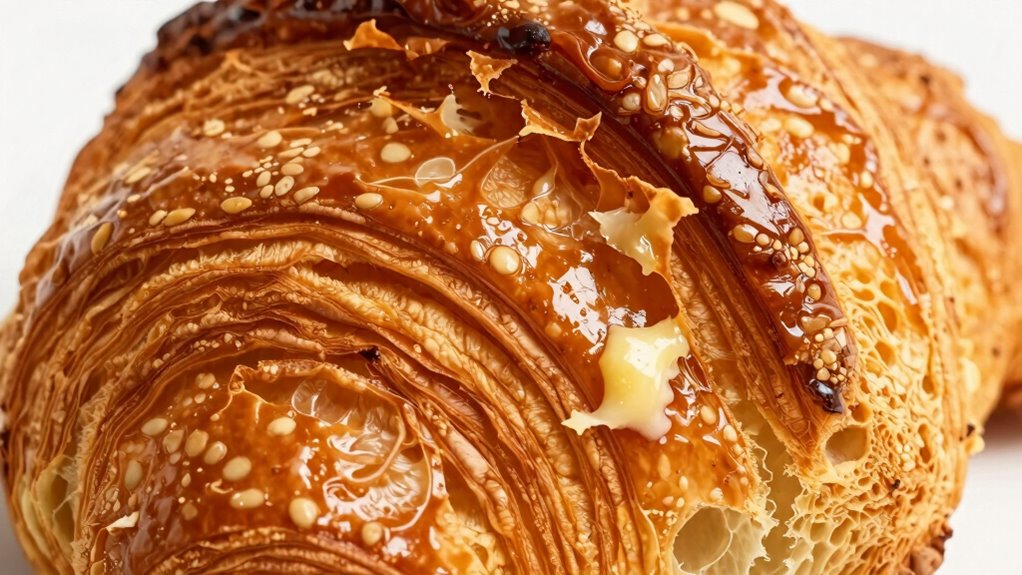

Croissant lamination often fails when your butter isn’t at the right temperature. If the butter is too cold, it’s hard to spread and resists folding, causing tears and uneven layers. If it’s too warm, it melts into the dough, leading to greasy, sticky layers that don’t laminate well. Maintaining a butter temperature between 60°F and 65°F is key. Continue exploring to discover how to keep your butter perfectly tempered every time.

Get kitchen staples and gadgets delivered free — and shop member deals
- Fast, free delivery on millions of items
- Access to Prime Big Deal Days deals on October 6–7
- Prime Video, Amazon Music and more included
Key Takeaways
- Butter that is too warm melts into the dough, disrupting lamination and causing greasy, uneven layers.
- Overly cold butter resists spreading, leading to tears, gaps, and poor layering during folding.
- Incorrect butter temperature prevents proper pliability, resulting in layers that don’t hold or separate cleanly.
- Maintaining butter within 60-65°F ensures it stays firm yet pliable, crucial for successful lamination.
- Regular temperature checks help prevent butter from melting or hardening, ensuring consistent croissant layers.
As an affiliate, we earn on qualifying purchases.
Why Butter Temperature Is Key to Perfect Croissant Layers
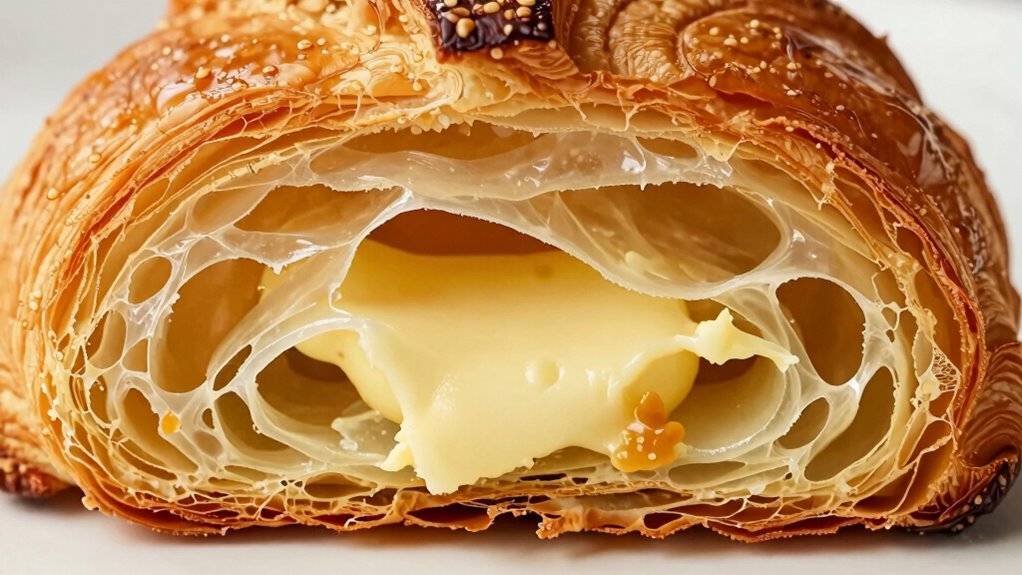
Butter temperature plays a crucial role in achieving the ideal croissant layers because it directly affects how well the dough folds and laminates. If the butter is too cold, it becomes stiff, making lamination techniques difficult and causing uneven layers. Conversely, if the butter is too warm, it melts into the dough, resulting in a greasy texture and poor separation of layers. Proper butter temperature ensures the butter remains firm yet pliable, allowing for smooth, even folds. Additionally, the butter’s flavor can be compromised if it’s overheated or too cold, impacting the overall taste of your croissants. Maintaining suitable butter temperature helps you execute precise lamination techniques, creating those distinct, flaky layers that define a perfect croissant. Temperature control is essential for achieving consistent results in laminated dough. To ensure optimal results, it’s also important to understand butter consistency and how it influences the lamination process. **butter temperature can be affected by ambient conditions, so adjusting your environment accordingly can make a significant difference.**
What’s the Ideal Butter Temperature for Croissant Lamination?
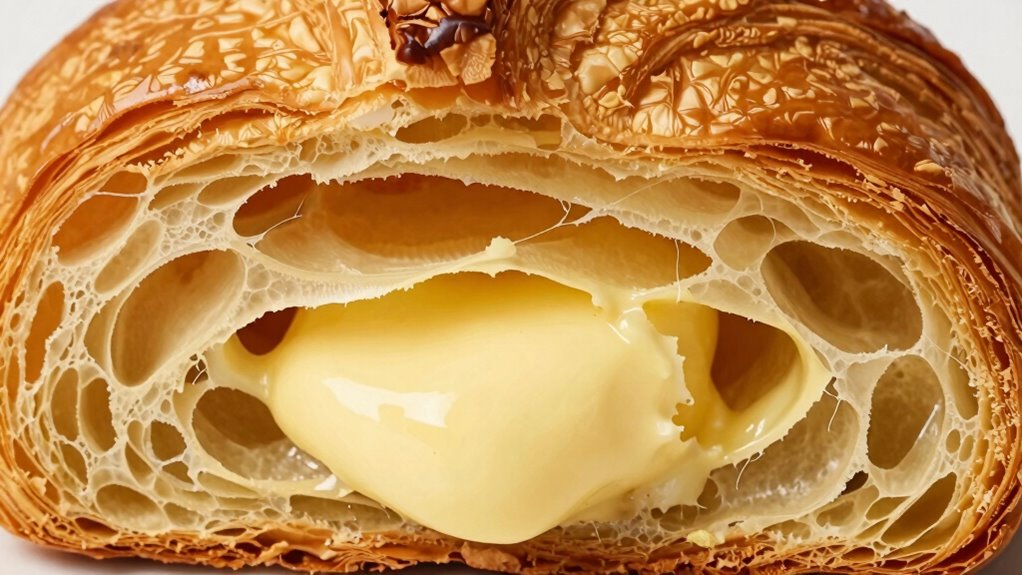
The ideal butter temperature for croissant lamination is between 60°F and 65°F, ensuring it’s firm yet pliable. Too cold, and the butter won’t spread evenly, causing uneven layers; too warm, and it may melt into the dough, ruining the lamination. Finding that perfect range helps you achieve flaky, well-structured croissants every time. Maintaining the correct temperature is essential for optimal layering and texture. Proper butter consistency prevents the butter from breaking through the dough during rolling and folding, which is crucial for a successful lamination process. Additionally, understanding how butter temperature affects the overall dough structure can significantly improve your pastry results. Controlling butter temperature also helps prevent tear-through of the dough, ensuring clean, even layers.
Ideal Butter Temperature Range
Maintaining the right butter temperature is essential for successful croissant lamination, as it directly affects how easily the butter layers with the dough. The ideal butter temperature range is between 60°F and 65°F (15°C to 18°C). At this temperature, the butter maintains a firm yet pliable consistency, ensuring it doesn’t melt or crack during lamination. To achieve this, you should regularly perform temperature testing, feeling the butter’s firmness without it sticking to your fingers. Visualize butter that’s cold enough to hold its shape but soft enough to spread smoothly. When butter is within this range, your layers will be even, creating flaky, tender croissants. Proper butter consistency makes all the difference in lamination success. Consistent temperature control is vital to prevent unexpected butter softening or hardening during the process. Additionally, understanding the butter’s melting point helps in maintaining optimal conditions throughout the lamination process. Being aware of butter’s melting behavior can help bakers troubleshoot issues during layering and prevent lamination failures, especially when considering temperature fluctuations in your workspace. Incorporating tools like infrared thermometers can further enhance your control over butter temperature and improve your lamination results.
Effects of Too Cold Butter
When butter is too cold, it becomes excessively firm and difficult to work with during lamination. This increased butter firmness hampers proper layering, causing uneven dough layers and poor lamination. Maintaining ideal temperature control is essential to achieve the desired pliability. Cold butter resists spreading and folding, leading to tears and gaps in the dough. Proper temperature control can make or break your pastry results. Additionally, using accurate temperature measurements ensures consistent results and optimal butter consistency during preparation. Being attentive to butter temperature helps prevent common lamination failures and leads to a flaky, well-layered croissant. To optimize results, it’s also helpful to understand how butter composition affects its firmness at different temperatures, ensuring you select the best butter for lamination. Furthermore, understanding the science behind fat melting points can assist bakers in choosing the right butter for perfect lamination.
Risks of Overly Warm Butter
If butter becomes too warm, it can quickly turn into a liquid, compromising the structure of your croissant dough. When this happens, butter melting disrupts the lamination process, making it difficult to achieve the flaky layers you want. Overly warm butter also affects temperature stability, causing the dough to become greasy and sticky. You might notice:
- Butter seeping into the dough, weakening the layers
- Loss of distinct lamination folds
- Increased difficulty in rolling and shaping
Warm butter reduces control during lamination, leading to uneven layers and poor rise. To avoid these risks, keep your butter chilled but pliable, maintaining a stable temperature that allows for clean, crisp lamination without melting. Proper temperature balance is key to perfect croissants. Smart temperature control helps ensure your butter stays at the ideal consistency throughout the lamination process, preventing unintended melting and ensuring better layer adhesion.
How Cold Butter Can Make Lamination Difficult (and Cause Tears)
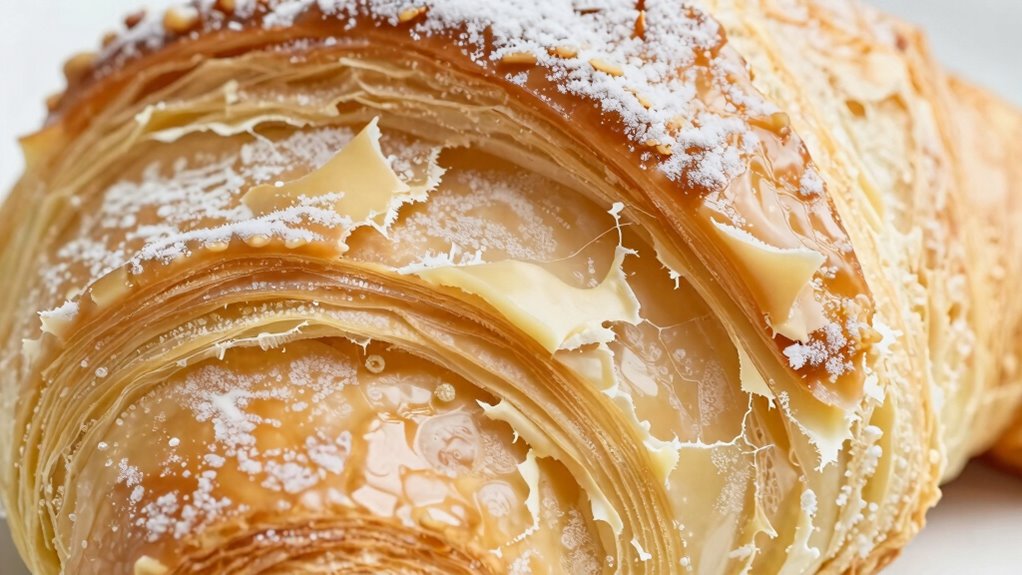
Cold butter can sabotage your lamination process because it’s too firm to roll out smoothly. When butter’s butter consistency is too cold, it resists shaping and causes tears in the dough. This happens because low temperature control results in butter that’s too stiff, making it difficult to incorporate evenly into the dough layers. Instead of creating a seamless lamination, cold butter creates uneven layers and tears, which compromise the final croissant texture. To avoid this, you need to strike a balance in butter temperature—warm enough to spread easily but not so warm that it melts. Proper temperature control ensures the butter remains pliable enough for smooth rolling, leading to clean layers and better lamination. Remember, maintaining the right butter consistency is key to successful croissants. Additionally, using advanced temperature control tools can help you achieve consistent results every time.
Why Using Warm Butter During Folding Can Ruin Your Layers
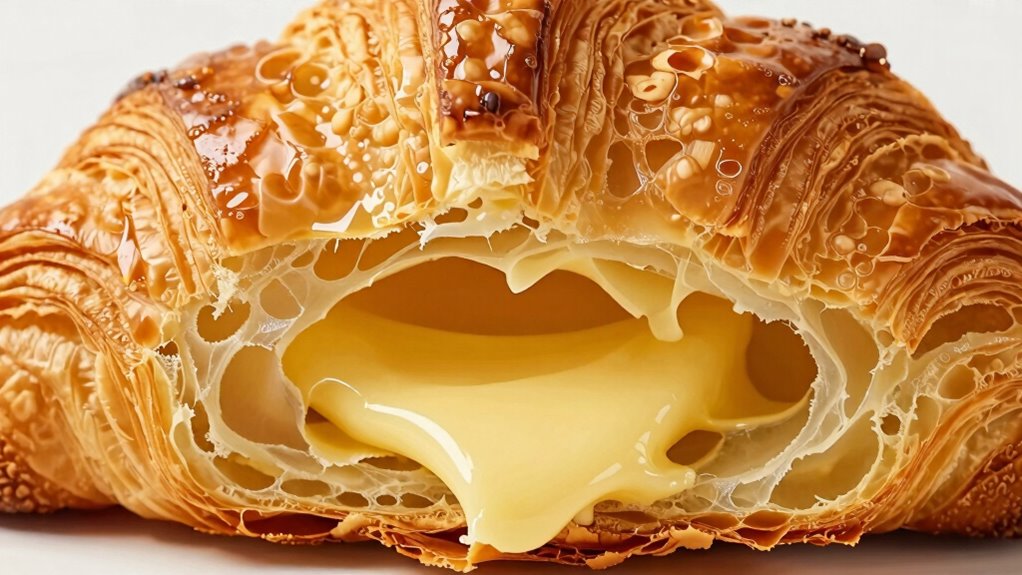
Using warm butter during the folding process might seem like a good idea to make spreading easier, but it can quickly backfire. When butter is too warm, its consistency becomes greasy and runny, making it hard to maintain clean, even layers. Poor temperature control causes the butter to seep into the dough, disrupting lamination and resulting in uneven layers. Instead of crisp, flaky croissants, you risk a greasy, dense texture. Visualize:
- Butter oozing out of the dough as you fold
- Layers failing to hold shape, collapsing under pressure
- A shiny, slick surface instead of matte, flaky layers
Maintaining the right butter temperature ensures proper consistency, allowing you to fold smoothly without compromising your layers. Proper temperature is essential for achieving the ideal flaky texture. Additionally, using the correct temperature helps prevent the butter from melting too quickly, which is crucial for lamination quality and achieving the perfect layers. Proper temperature control also helps preserve the integrity of each layer, preventing collapse or uneven distribution. Being attentive to butter consistency can significantly improve your baking results and avoid common lamination pitfalls.
How to Test and Adjust Butter Temperature Before Rolling
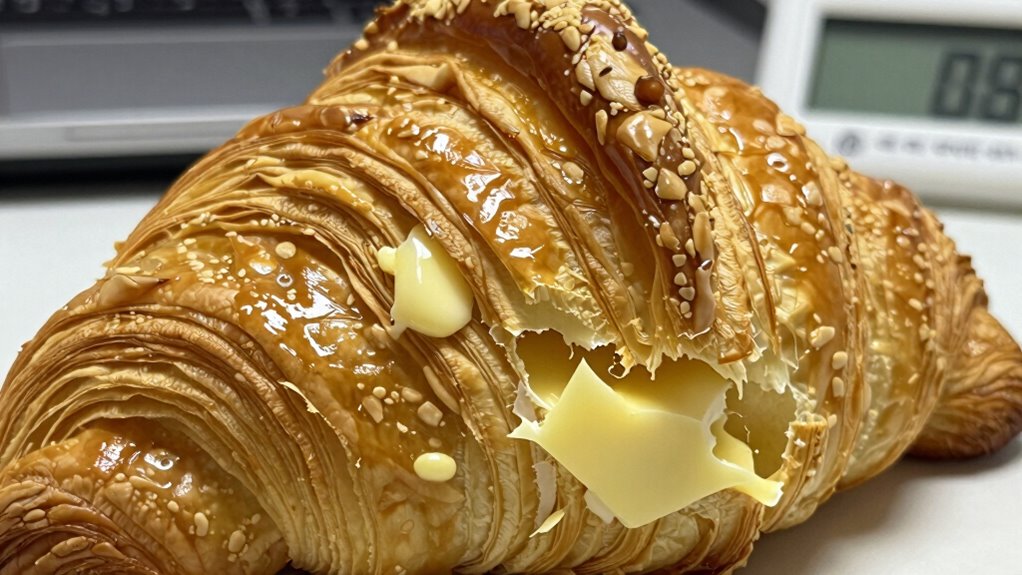
Before you start rolling, check your butter’s consistency to make sure it’s firm but pliable. Use a thermometer to get an accurate reading and adjust the temperature if it’s too soft or too hard. Properly testing and adjusting your butter helps create perfect layers and prevents lamination failures.
Check Butter Consistency
Ensuring your butter is at the right temperature is essential for achieving flaky, laminated layers. To check butter consistency, gently press it with your fingers. It should feel firm but yield slightly without sticking or cracking. Proper butter layering depends on consistent temperature control, preventing uneven melting or tearing during rolling.
- Visualize butter that’s cool enough to hold its shape but soft enough to spread easily.
- Imagine pressing your finger into a stick of butter that leaves a slight indentation without denting or cracking.
- Picture butter that’s just the right temperature, smooth and pliable, ready for lamination.
Use a Thermometer
To accurately assess your butter’s temperature, grab a reliable kitchen thermometer and give it a quick check. Proper temperature control guarantees the butter is just soft enough for lamination without becoming greasy. Use your thermometer to test the butter’s internal temperature before rolling. For visual guidance, consider this table:
| Temperature (°F) | Butter Softness | Suitable for Lamination |
|---|---|---|
| 40-45 | Firm but pliable | Ideal |
| 46-50 | Slightly softer, workable | Acceptable |
| 51-55 | Too soft, greasy | Not recommended |
| Below 40 | Too cold, hard | Needs warming |
| Above 55 | Very soft, sticky | Avoid |
Maintaining the right butter softness through temperature control helps prevent lamination failures.
Adjust Temperature Accordingly
Testing your butter’s temperature is essential before rolling out your dough. Proper temperature control assures the butter’s firmness is just right for lamination, preventing tears or misalignment. If the butter feels too soft, place it in the fridge for 10–15 minutes, then re-test. If it’s too hard, let it sit at room temperature for a few minutes until it softens slightly. To visualize, imagine:
- A cool, firm block that yields gently under pressure
- Butter that feels pliable but not greasy
- A temperature that allows smooth, even layering without cracking
Adjusting the butter temperature accordingly helps achieve ideal lamination. Mastering this step guarantees your croissants will have perfect layers and flaky texture. Proper temperature control is the key to success.
Tips to Keep Butter at the Right Temperature During Your Bake
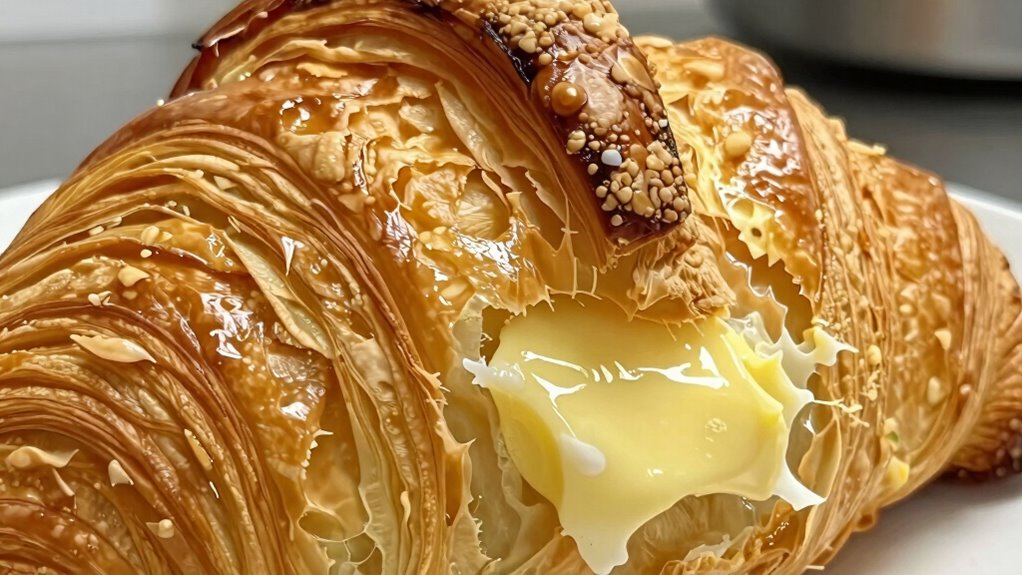
Maintaining the right butter temperature is essential for achieving flaky, layered croissants. Start by proper butter storage: keep your butter cold but not frozen, ideally around 40°F (4°C). Before you begin lamination, chill your butter and dough separately to guarantee consistent temperature control. When working, handle the butter as little as possible to prevent warming. If the butter begins to soften too much, briefly refrigerate it to firm up before continuing. During the lamination process, keep your workspace cool, and consider placing the dough in the fridge between folds. Use a thermometer to monitor butter and dough temperatures regularly. These steps help prevent butter from melting into the dough, ensuring the perfect lamination and flaky layers in your croissants.
Common Mistakes That Lead to Butter Temperature Problems
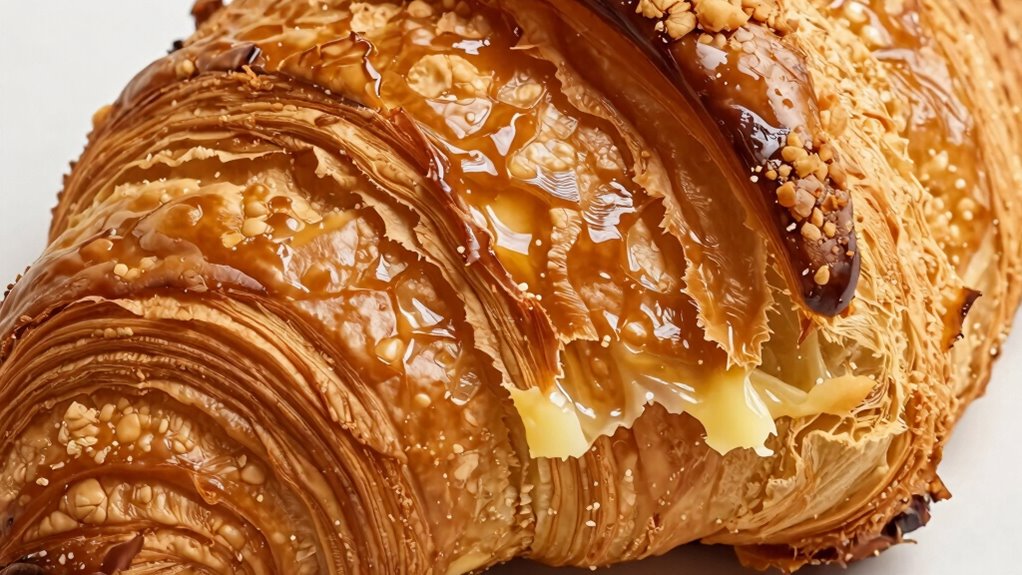
One common mistake that causes butter temperature issues is handling it too much during the lamination process. Overworking the dough or butter can increase its temperature, making the butter lose its ideal consistency. This results in uneven lamination and poor rise. To prevent this, avoid frequent touching and check your butter’s temperature testing regularly.
Common mistakes include:
- Using butter that’s too warm or too cold, disrupting butter consistency.
- Not monitoring temperature during rolling, leading to butter melting or hardening.
- Overworking the dough, which warms the butter and causes it to blend into the dough instead of creating layers.
Staying attentive to butter temperature and handling it minimally helps ensure your lamination stays perfect.
How to Troubleshoot Lamination Failures Caused by Butter Temperature
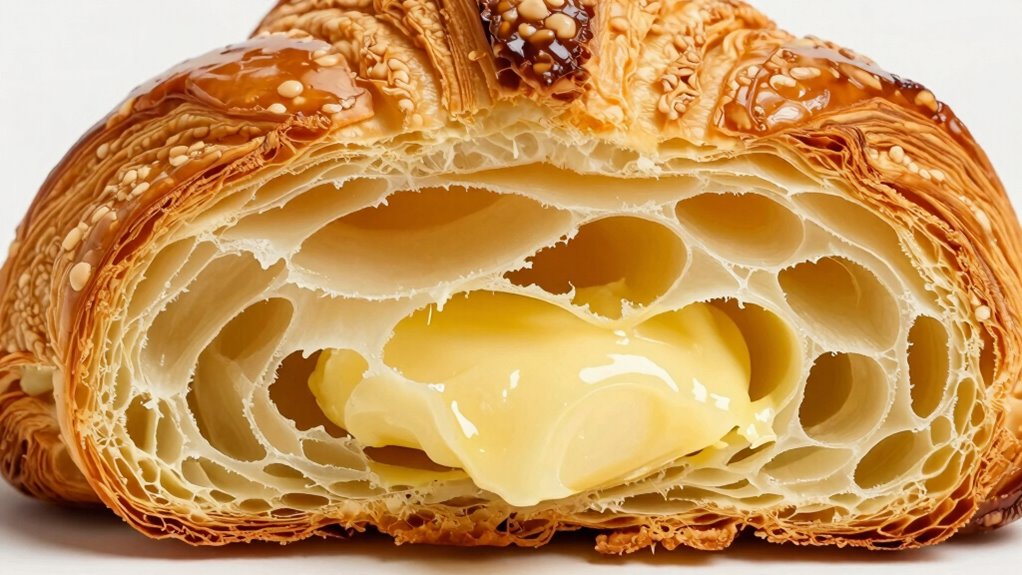
When lamination fails due to butter temperature issues, the first step is to identify whether the butter was too warm or too cold during the process. Check the butter’s consistency by touch; it should be pliable but not greasy or firm. If it feels too soft, it’s likely too warm, causing it to smear or leak through the dough. If it’s too stiff, it’s probably too cold, making lamination difficult and causing tears. Conduct temperature testing by using a thermometer to measure the butter’s temperature. For ideal lamination, butter should be around 60°F (15°C). Adjust your process accordingly—warm the butter slightly if it’s too cold or chill it if it’s too warm. Proper butter consistency is key to achieving flaky, well-laminated croissants.
Quick Tips to Ensure Your Butter Is Perfectly Tempered Every Time
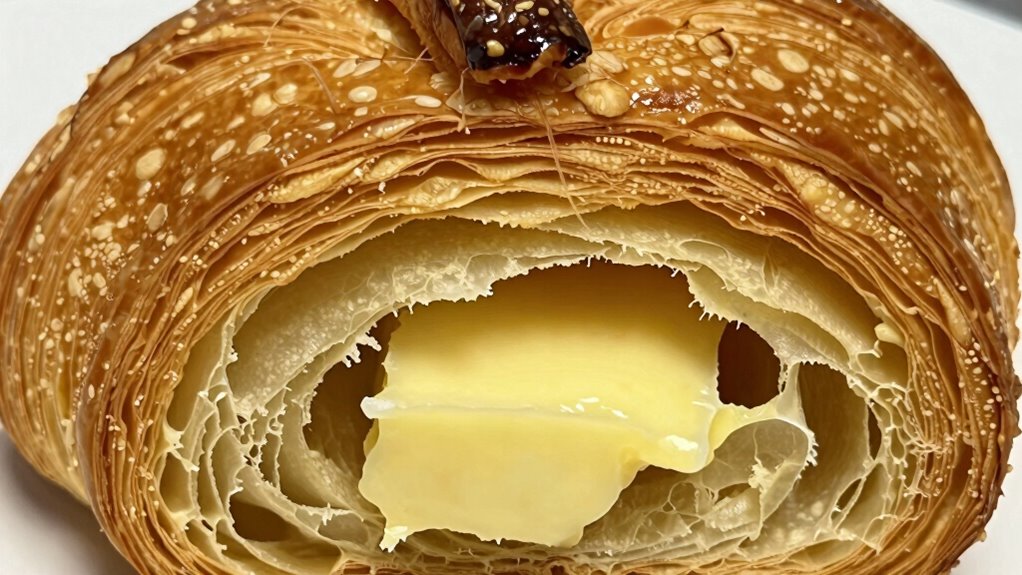
Getting your butter to the perfect temperature every time can save you from lamination mishaps. Proper butter tempering hinges on good butter storage and ensuring ingredient freshness. To achieve consistent results, keep your butter refrigerated until just firm but pliable, around 60-65°F (15-18°C). Before working, cut it into smaller pieces to speed up temperature equilibration. Avoid leaving butter out too long, which risks over-softening.
- Visualize butter as smooth, cool, and slightly firm, ready to roll without cracking
- Imagine wrapping butter in parchment, then chilling it briefly to lock in freshness
- Picture opening a fridge where butter is perfectly stored, ready for lamination perfection
Frequently Asked Questions
Can Butter Temperature Affect Croissant Flavor?
Yes, butter temperature can affect croissant flavor. When butter is too cold, it doesn’t melt properly, which can hinder the butter aroma and result in less flavorful layers. If it’s too warm, the butter may leak out, reducing flavor preservation and causing uneven lamination. Properly tempered butter guarantees the best aroma and flavor development, giving your croissants a richer, more satisfying taste.
How Does Butter Type Influence Lamination Success?
Think of butter as the heart of your croissant; its type directly influences lamination success. Using high-quality, cold butter with the right consistency guarantees smooth, even layers, preventing tears and uneven rise. The flavor impact is equally important—premium butters add richness without overpowering. When you select the right butter, your dough becomes a resilient partner, making lamination a dance rather than a battle.
Is It Better to Chill Butter After Folding?
Yes, chilling butter after folding is better. Proper butter storage guarantees the right temperature for lamination techniques, preventing it from melting or tearing the dough. When you chill the butter, it stays firm, making it easier to fold smoothly and achieve those perfect layers. Always refrigerate your butter between folds, and avoid over-softening, so your croissants turn out flaky and beautifully layered.
What Tools Help Maintain Optimal Butter Temperature?
Wondering how to keep your butter at just the right temperature? Lamination tools like a digital thermometer and a butter paddle become your secret weapons. They help you monitor butter temperature precisely, preventing it from melting or becoming too hard. With these tools, you gain control, ensuring perfect layers in your croissants. Don’t let inconsistent butter temperature sabotage your lamination—trust these simple tools to deliver flaky, golden pastries every time.
How Long Can Butter Stay at the Correct Temperature?
You should keep butter at the right temperature for up to 24 hours if stored properly. For ideal temperature stability, store butter in the refrigerator at 35-40°F, wrapped tightly to prevent moisture and odor absorption. If you need it at room temperature, use it within 2 hours to avoid spoilage. Regularly monitor your butter’s storage conditions to ensure it stays fresh and maintains the right consistency for lamination.
Conclusion
Mastering butter temperature is like tuning a delicate instrument—when you get it just right, your croissants will sing with flaky, buttery layers. Keep it too cold or warm, and your dough’s harmony falls apart. With a keen eye and a gentle touch, you’ll orchestrate perfect lamination every time, transforming simple ingredients into a symphony of buttery perfection. Trust your senses, and let your baking flourish like a well-composed masterpiece.
NFL season / tailgating Picks
team gear
As an affiliate, we earn on qualifying purchases.