
When choosing butter, you’ll notice fat percentages vary by country. In the U.S., butter typically has around 80% fat, while France and Germany boast richer options of 82% to 85%. Scandinavian countries produce cultured butter with 80% to 84% fat, offering unique flavors. These regional differences are influenced by local farming practices and consumer preferences. Interested in how these factors shape your butter options? There’s more to discover about the diversity of butter types worldwide!
Key Takeaways
- Butter fat percentages typically range from 80% to 85% across various countries, with notable variations based on regional practices.
- In France and Germany, butter generally contains 82% to 85% fat, reflecting local dairy farming practices.
- The United States commonly produces butter with around 80% fat, catering to consumer preferences for lighter options.
- Scandinavian countries offer cultured butter with fat content between 80% and 84%, known for its tangy flavor due to fermentation.
- Consumer health trends are influencing the dairy industry, leading to the development of lower-fat butter alternatives and blends.
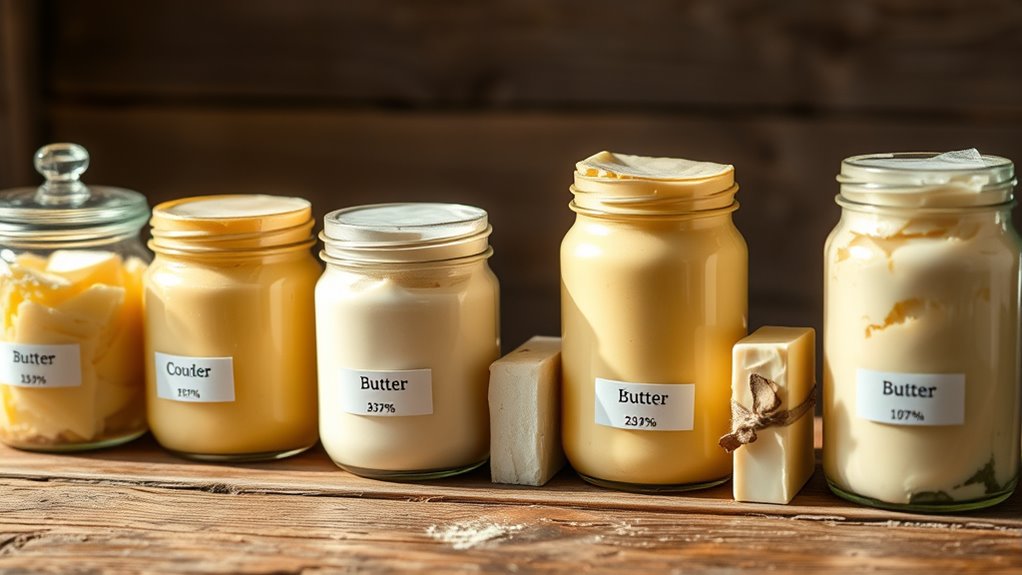
Have you ever wondered how butter fat percentages vary across different countries? It’s fascinating how milk composition can influence the products we enjoy daily, like butter. In some regions, you might find butter with higher fat content, while in others, it may be lower. This variation isn’t just a matter of taste; it’s deeply rooted in the dairy industry trends, local farming practices, and even dietary preferences.
When you look at countries like France and Germany, you’ll notice they often produce butter with fat percentages ranging from 82% to 85%. This high-fat butter is a staple in many kitchens, used for everything from baking to spreading on fresh bread. The milk composition in these countries, particularly the breed of cows and their diet, contributes considerably to the richness of the butter. For instance, the French typically raise cows on lush pastures, leading to milk that’s richer in fat and flavor.
On the flip side, in countries like the United States, the butter fat percentage often hovers around 80%. This lower fat content is a result of different dairy farming practices and consumer preferences. Americans generally favor a lighter butter, and as such, the dairy industry has adapted to meet these demands. The milk composition here is influenced by various factors, including feed types and cow breeds, but the focus remains on creating a product that appeals to a broader audience.
In the U.S., butter typically has around 80% fat, catering to a preference for lighter options.
In Scandinavian countries, you might find a unique product called “cultured butter,” which can contain anywhere from 80% to 84% fat. This butter undergoes a fermentation process, lending it a tangy flavor that’s quite different from the sweet cream butter commonly found elsewhere. The milk composition used in these regions is also tailored to enhance the butter’s flavor and texture, showcasing how local practices shape dairy products.
Emerging dairy industry trends are also worth noting. As health consciousness rises globally, some regions are experimenting with lower-fat butter alternatives or butter blends. These products often contain added oils or flavorings to maintain the rich taste while lowering the overall fat content. This shift reflects changing consumer preferences and a growing awareness of dietary impacts.

Beurre D'Isigny French AOP Unsalted Butter
Our favprite butter on the market, once you try it you'll never go back "regular" butter
As an affiliate, we earn on qualifying purchases.
As an affiliate, we earn on qualifying purchases.
Frequently Asked Questions
How Is Butter Fat Percentage Determined in Dairy Products?
You determine butter fat percentage through dairy testing that analyzes milk composition. Typically, you’ll use methods like the Gerber test or the Babcock test to measure the fat content in milk. These tests involve separating the fat from the milk and calculating its volume compared to the total milk volume. By understanding this percentage, you get insights into the milk’s quality and how it can be used in various dairy products.
What Health Benefits Does Butter Fat Provide?
Butter fat’s got incredible health benefits! It’s packed with essential vitamins like A, D, E, and K, which support your immune system and bone health. In the sphere of dairy nutrition, these nutrients shine, especially when combined with the flavor from butter processing. Plus, the healthy fats in butter can boost your energy and keep you feeling satisfied. So, don’t shy away; enjoy butter in moderation for a tasty, nutritious choice!
How Does Butter Fat Affect Baking Results?
Butter fat plays a vital role in baking, affecting both texture and flavor. When you use butter with higher fat content, you’ll notice improved butter consistency, leading to tender pastries and moist cakes. The fat melts during baking, creating air pockets that help your baked goods rise. Additionally, it enhances flavors, making your treats richer and more delicious. So, for the best results, opt for butter with a higher fat percentage in your recipes.
Can I Substitute Low-Fat Butter in Recipes?
You can substitute low-fat butter in recipes, but it might alter the texture and butter flavor. Notably, low-fat butter typically contains about 50% less fat than regular butter, which can affect how your baked goods rise. During dairy processing, the fat contributes to moisture and richness, so you might end up with drier results. To maintain flavor and texture, consider using a mix of low-fat butter and a full-fat alternative.
What Is the Ideal Butter Fat Percentage for Cooking?
The ideal butter fat percentage for cooking is typically around 80%. This fat content, derived from dairy farming, guarantees rich flavor and proper emulsification in recipes. When you use butter with this percentage, you’ll achieve better texture and moisture in baked goods. If you’re looking for options, consider checking fat analysis for different butters to find the best fit for your cooking needs. Stick to that 80% for ideal results!

Landmark Creamery® Cultured Unsalted – European Butter French Style (6 Pack) – Small Batch & Hand Shaped – Made with Cream from Small Family Farms in Wisconsin – 6 pack of 8 oz sticks
Gourmet French Style Experience – Transform ordinary dishes into gourmet delights; indulge in the rich heritage style of…
As an affiliate, we earn on qualifying purchases.
As an affiliate, we earn on qualifying purchases.
Conclusion
So, whether you’re whipping up a French pastry or crafting a classic Italian risotto, knowing the butter fat percentage by country can elevate your culinary game. Just like a master painter chooses the right shades, you can select the perfect butter for your dishes. With this knowledge in hand, you’re ready to set out on a flavorful adventure, ensuring each bite is as rich and satisfying as a scene from a gourmet film. Happy cooking!

Land O Lakes Light Butter with Canola Oil, Contains Less Fat, Fewer Calories and Less Cholesterol Than Regular Butter, 15 oz Tub
One 15 oz tub of Land O Lakes Light Butter with Canola Oil
As an affiliate, we earn on qualifying purchases.
As an affiliate, we earn on qualifying purchases.

SKIPPY Reduced Fat SUPER CHUNK Extra Crunchy Peanut Butter Spread, 16.3 Ounce
Crunchy Peanut Butter Spread: Craving peanut taste that packs a crunch? Look no further! Every jar is blended…
As an affiliate, we earn on qualifying purchases.
As an affiliate, we earn on qualifying purchases.