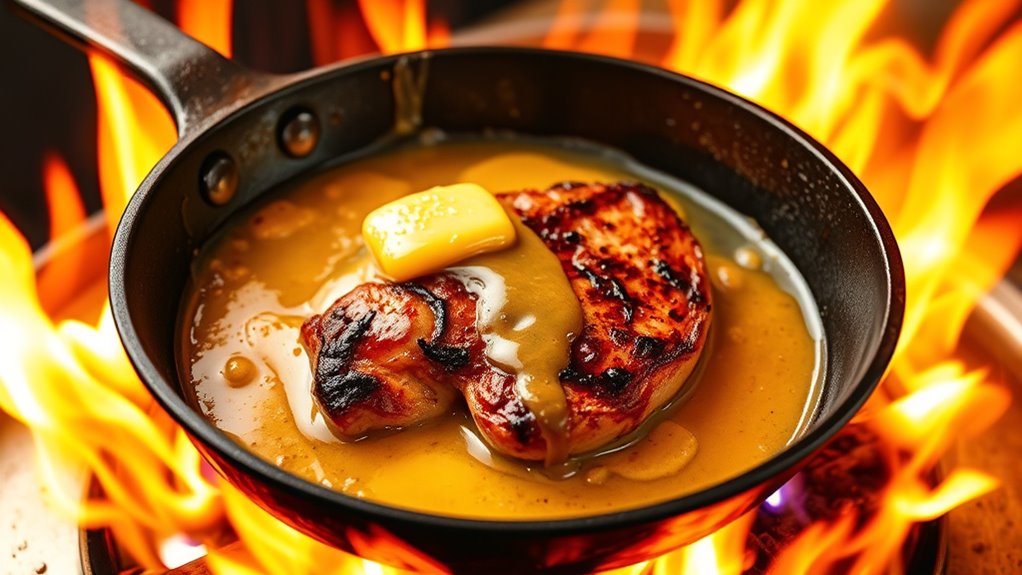

Using butter in cast-iron searing brings rich, nutty flavors and helps create a perfect crust on your meats. To avoid burning, start with a splash of high smoke point oil, then melt a generous pat of butter once the oil is hot. Add the butter towards the end of cooking to enhance flavor and moisture without risk. This technique elevates your dish to restaurant quality, and there’s more effective tips to master this method.
Key Takeaways
- Combine butter with high smoke point oil to prevent burning while searing at high temperatures.
- Use clarified butter or ghee for higher smoke points and better flavor retention during searing.
- Heat your cast-iron skillet over medium-high heat before adding oil and then butter for optimal results.
- Sear meat in oil first to develop a crust, then baste with melted butter towards the end for enhanced flavor.
- Butter infuses rich flavors and moisture, elevating the overall dish while achieving restaurant-quality searing.
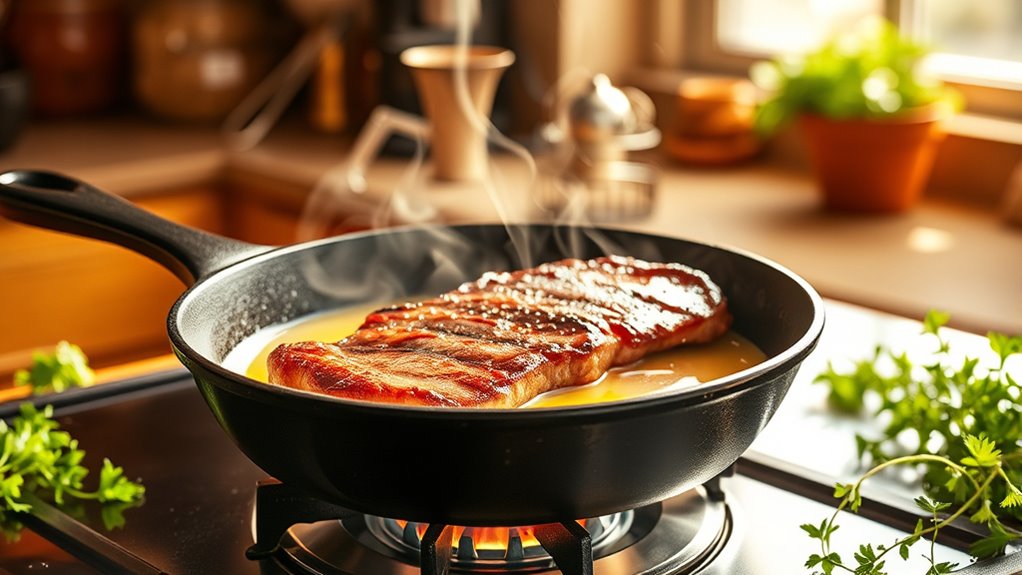
Have you ever wondered how to elevate your searing game? Using butter in your cast-iron skillet can take your cooking to the next level, infusing rich flavors while ensuring that perfect crust on your meats. The key lies in understanding how to manage butter’s unique properties, particularly its smoke point, which is essential for achieving that ideal sear.
Elevate your searing technique by using butter in your cast-iron skillet for rich flavors and a perfect crust on meats.
When you’re searing, you want to hit that sweet spot where your meat develops a beautiful brown crust without burning. Butter has a lower smoke point than many oils, around 350°F (175°C), which means it can burn easily if you’re not careful. To avoid this, you can combine butter with a high smoke point oil, like canola or grapeseed oil. This blend allows you to enjoy the flavor enhancement of butter without sacrificing the cooking temperature needed for a good sear.
Start by heating your cast-iron skillet over medium-high heat. Once it’s hot, add a splash of your chosen oil and let it warm up for a moment. Then, toss in a generous pat of butter. As the butter melts and foams, you’ll notice that nutty aroma filling your kitchen, signaling that you’re ready to sear your meat. The oil helps elevate the smoke point, allowing the butter to contribute its rich flavor without burning.
Another great tip is to add the butter towards the end of the cooking process. You can sear your meat in oil first, getting that nice crust, and then add butter in the last few minutes. This method not only enhances the flavor but also allows you to baste your meat with the melted butter, keeping it moist and adding even more depth to the taste.
Don’t forget to think about the type of butter you’re using. If you can, opt for clarified butter or ghee, which has a higher smoke point and retains that lovely buttery flavor without the risk of burning. This can be a game-changer, especially if you’re cooking at higher temperatures.
Incorporating butter into your cast-iron searing process can dramatically enhance the flavors of your dish while ensuring that perfect crust. By understanding smoke point considerations and using a combination of fats, you’ll be well on your way to achieving restaurant-quality results right in your own kitchen. Additionally, consider engaging in family-friendly activities to celebrate the delicious meals you prepare. So why not give it a try? Your taste buds will thank you!

Lodge Pre-Seasoned Cast Iron Skillet with Silicone Handle Holder, 12 Inches
- Versatile Cooking Use: Suitable for searing, sautéing, baking, frying, and camping
- Pre-Seasoned & Non-Toxic: Pre-seasoned with natural vegetable oil, PFAS-free
- Even Heat Distribution: Heavy-duty cast iron for consistent cooking
As an affiliate, we earn on qualifying purchases.
As an affiliate, we earn on qualifying purchases.
Frequently Asked Questions
Can I Use Salted Butter for Searing in Cast Iron?
Yes, you can use salted butter for searing in cast iron, but it’s often better to choose unsalted. Salted butter has a lower melting point, which might lead to burning before your food cooks properly. Unsalted butter gives you more control over seasoning and can handle higher temperatures, making it ideal for searing. If you prefer salted, just keep an eye on the heat to avoid any unwanted flavors.
What’s the Best Butter Temperature for Searing?
So, you think butter’s just a spread, huh? Well, when it comes to searing, the best butter temperature for peak searing effectiveness is around 350°F (175°C). At this point, it’ll melt beautifully, enhancing your dish without burning. If it’s too cold, it’ll just sit there, sulking. Too hot, and you’ll have a smoky disaster. Aim for that sweet spot, and you’ll elevate your searing game to a whole new level!
How Do I Clean Butter Residue From Cast Iron?
To clean butter residue from your cast iron, start by rinsing it with hot water. Use a stiff brush or non-metal scrubber to scrub away the residue, focusing on stubborn spots. If needed, sprinkle coarse salt for extra abrasion during residue removal. Rinse again and dry immediately with a cloth or heat it on the stove to evaporate moisture. Finally, apply a thin layer of oil to maintain the seasoning.
Can I Mix Oils With Butter for Searing?
Yes, you can mix oils with butter for searing! Oil blending can enhance the cooking process by raising the butter’s smoking point. Since butter has a lower smoking point, combining it with a high-temperature oil like canola or grapeseed helps prevent burning. Just be mindful of the ratios, so you still enjoy that rich buttery flavor while achieving a perfect sear. Experiment to find the blend that works best for your dish!
Does Butter Affect the Flavor of the Food Being Seared?
Absolutely, butter enhances the flavor of the food you’re searing. Studies show that cooking with butter can elevate your dish’s flavor profile by up to 30%. The rich, creamy taste and buttery aroma infuse into your ingredients, creating a delicious depth that oils alone can’t achieve. You’ll notice a significant difference in taste, making your meals more enjoyable and satisfying. So, don’t shy away from using butter in your cooking!
Conclusion
Incorporating butter into your cast-iron searing not only enhances flavor but also elevates your cooking experience. Did you know that studies show using fats like butter can increase the perception of umami in food by up to 20%? So, next time you’re searing that perfect steak, don’t hesitate to toss in a pat of butter. You’ll not only get a beautiful crust, but you’ll also create a mouthwatering dish that’s packed with savory goodness. Enjoy!